Last Updated: November 23, 2026
Quick Summary
The safest rodent control for homes with toddlers relies on sealed entry points, lockable tamper-resistant bait stations, and traps kept out of small hands’ reach. Electronic traps suit indoor areas with kids, while snap traps belong only inside locked cupboards. Never place loose poison bait where a toddler can reach it.
- Mice get through gaps as small as a coin, so seal every gap wider than a pencil.
- Lock, anchor and place bait stations where a toddler cannot reach them.
- Never dry-sweep droppings; spray them wet with disinfectant first.
- Call the Poisons Information Centre on 13 11 26 for suspected bait exposure.
- Keep a sketch or photo record of every bait station placement.
Table of Contents
- Why Rodent Control Needs Extra Care Around Toddlers and Pets
- Mouse Control Without Poison: What Actually Works
- Rodent Bait Station Safety: Lockable, Tamper-Resistant and Out of Reach
- Cleaning Mouse Droppings Safely: A Step-by-Step Protocol
- Sealing Entry Points and Removing Food and Water Sources
- A Toddler-Focused Room-by-Room Safety Plan
- Professional Rodent Control With Children at Home
- Booking a Child-Safe Rodent Inspection in Werribee
- Frequently Asked Questions
Why Rodent Control Needs Extra Care Around Toddlers and Pets
The safest rodent control methods for homes with toddlers never put poison within reach: sealed entry points, locked tamper-resistant stations, and traps placed where small hands cannot follow.
A common pattern is a parent who hears scratching in the roof cavity, panics, and buys the strongest bait on the shelf, usually the riskiest choice in the house.
How Toddlers Are Exposed to Rodent Baits and Traps
Toddlers explore with their mouths and hands. They crawl, climb, and open low cupboards. Bait blocks look like lollies. Snap traps sit at floor level, exactly where a two-year-old plays.
The Pediatric Environmental Health Center guidance on household pests is blunt: if baits or traps must be used, keep them strictly out of reach of children.
Local Conditions That Drive Rodent Activity in Werribee Homes
Werribee sits on the edge of Melbourne’s west, where new estates back onto open grassland and drainage channels. Mice and rats follow those corridors straight into garages, subfloors, and roof cavities. Older weatherboard homes near the river corridor leak warmth in winter, and rodents notice.
Mouse Control Without Poison: What Actually Works
Mouse control without poison comes down to three options: snap traps, live traps, and electronic traps. All three work; the difference is how much risk each adds around a toddler.
Snap Traps, Live Traps and Electronic Traps Compared
Here is how the main non-poison methods stack up for a household with young kids.
| Method | Child Risk | How It Works | Best For |
|---|---|---|---|
| Snap trap | Moderate | Kills instantly on trigger | Inside locked cupboards |
| Live trap | Low | Catches rodent alive for release | Outdoors, away from play areas |
| Electronic trap | Low | Kills with a high-voltage charge | Indoor areas with kids |
| Lockable bait station | Low if locked | Holds bait or trap securely | Homes with toddlers and pets |
| Loose poison bait | High | Kills through ingestion | Not recommended with toddlers |
Snap traps are cheap and effective, but a set snap trap is a finger hazard.
Live traps let you release the rodent outside. They suit garages and sheds.
Electronic traps are the standout for indoor use.
Watch out: never leave a live trap where a child can open it.
Rodent Bait Station Safety: Lockable, Tamper-Resistant and Out of Reach
Rodent bait station safety rests on three rules: lock it, anchor it, and put it where a toddler cannot reach. A station that fails any one of those is a poison box on your floor.
A 2026 guide on pest control safe for toddlers and dogs names tamper-resistant bait stations as the primary safety measure for homes with young children. The toxic block stays locked inside.
What “Tamper-Resistant” Actually Means in Australia
In Australia, rodenticides sold for domestic use are registered by the Australian Pesticides and Veterinary Medicines Authority (APVMA), and the label is the legal instruction for use. Before you accept any bait placement in a home with a toddler, check three things on the label:
- The product is registered for domestic or in-and-around-home use, not agricultural or commercial-only use.
- The label specifies a tamper-resistant or lockable bait station as the required presentation.
- The label states the distance or placement restrictions (for example, away from areas accessible to children and pets).
If a technician cannot show you the label or explain why that station suits that product, ask them to switch to a non-chemical method. A station that meets the label is also the one that survives a toddler pushing, dragging, or tipping it.
The Pre-Bait Checklist for a Home With a Toddler
- The station locks with a key or tool, not a clip
- It is screwed or pegged down so it cannot be dragged
- It sits behind furniture, in a roof cavity, or in a locked shed
That last point gets skipped constantly. Keep a simple sketch or photo of each placement, and note the product name and the date it was set. If you ever call a poisons information service, that record is the first thing they will ask for.
Why Food-Lure Traps and Loose Baits Are a Poor Fit
Food-lure traps and poison baits can be a poor fit for homes with toddlers, since they may draw rodents toward living spaces.
A common pattern is a station placed correctly but a spare bait block left in a garage drawer “for later”.
Watch out: a station that is locked but not anchored can still be tipped over, and a station that is anchored but not locked can still be opened.
Cleaning Mouse Droppings Safely: A Step-by-Step Protocol
Cleaning mouse droppings safely means never dry-sweeping them, because dry droppings release dust that carries bacteria and viruses into the air your toddler breathes. The gap most guides leave is what to do next, and when a home with a toddler should hand the job to someone else.
Why Toddlers Are the Highest-Risk Person in the Room
A toddler crawls at floor level, puts hands in the mouth, and cannot be relied on to stay out of a room while you work. That makes droppings cleanup a containment job, not just a wiping job. Move the child to another part of the house before you open a cupboard, lift a kickboard, or pull out nesting material.
The Cleanup Sequence
- Move children and pets to another room and close the door.
- Open windows and doors for ventilation.
- Put on disposable gloves and a mask.
- Spray the droppings with a disinfectant until wet. Do not sweep or vacuum first.
- Wipe up with paper towel, then bag it.
- Disinfect the surface again.
- Wash your hands with soap and warm water.
- Throw away gloves and mask in a sealed bag.
Never vacuum or sweep droppings dry. Wear gloves even for small amounts. Keep children and pets out of the room until it is dry, and wash your hands again after you remove the gloves.
When to Stop and Call a Professional
A common pattern is a parent who cleans a small scatter under the sink, then finds a much larger nest behind the dishwasher or in the roof cavity insulation. At that point the exposure is no longer a wipe-down job. Stop and call a professional if any of these apply:
- The droppings are in insulation, behind fixed cabinetry, or in a roof cavity you cannot safely reach.
- The area is larger than a small scatter, or there is visible nesting material.
- Anyone in the home has asthma or a weakened immune system.
A licensed technician can remove contaminated material, disinfect the space, and identify the entry route so the problem does not return.
If You Suspect a Toddler Has Touched Droppings or Bait
Do not try to treat at home. Call the Poisons Information Centre on 13 11 26 (available 24 hours across Australia) for advice on suspected bait or rodenticide exposure, and call Triple Zero (000) if the child is unwell, drowsy, or having trouble breathing.
Watch out: a toddler who has been in a room with droppings may have put a hand in the mouth before you noticed. Treat any unexplained mouth contact as a reason to call for advice rather than to wait and see.
Sealing Entry Points and Removing Food and Water Sources
Sealing entry points and cutting off food and water is the most durable rodent control there is. No trap, bait, or spray beats a house rodents cannot get into.
Walk the outside of your home and fill every gap wider than a pencil. Mice get through gaps as small as a coin.
For a deeper walkthrough, see our guide on how to identify rodent entry points in your home. If you are tackling subfloor gaps, our practical guide to sealing subfloor entry points covers the common routes.
Screening Doors, Windows and Other Openings
Screens and seals do the quiet work. Fit flyscreen mesh over vents and weep holes. Add door sweeps to external doors, including the garage. Our article on how to seal gaps under doors for pests covers the basics of door sealing.
Hygiene, Clutter Removal and Food Storage
Rodents need food, water, and cover. Take away all three:
- Store cereal, flour, and pet food in sealed plastic or glass containers
- Fix dripping taps and clear standing water
- Clear cardboard, newspaper, and old furniture from garages
Clutter is the one most families miss. A stacked garage is a rodent hotel.
A Toddler-Focused Room-by-Room Safety Plan
Kitchen. Lock bait stations inside a cupboard with a child latch.
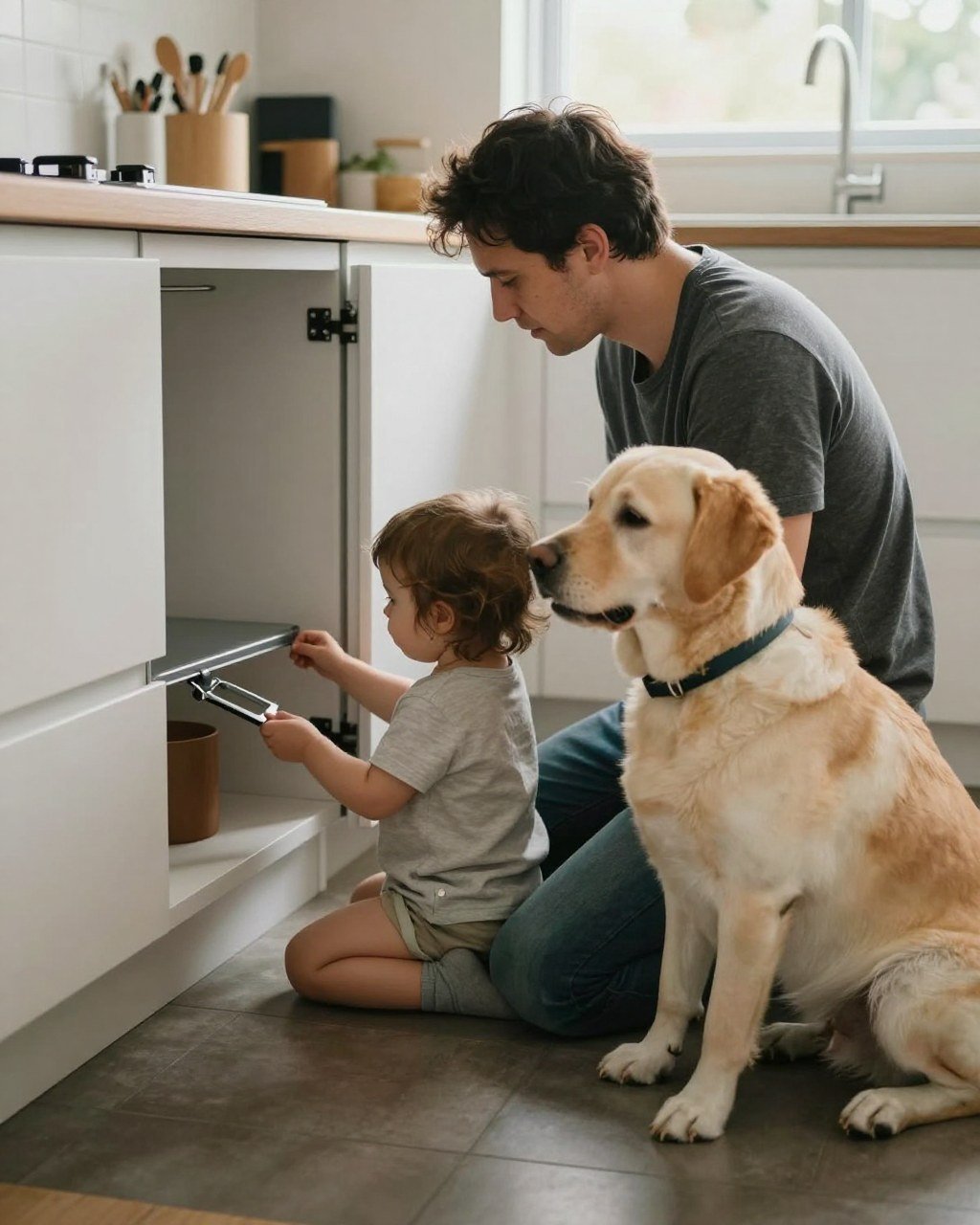
Laundry and bathroom. Seal pipe penetrations with mesh and steel wool.
Garage and shed. This is where stations and traps belong. Lock the door.
Roof cavity. Bait stations here are fine, because no toddler climbs up.
Living areas. No poison. No set traps at floor level.
Professional Rodent Control With Children at Home
Professional rodent control with children at home should reduce risk, not add to it.
Here is what to ask before you book:
- Which methods will you use, and are any of them chemical?
- Where will bait stations go, and are they lockable?
- How long should children and pets stay clear of treated areas?
If a parent is also weighing product safety more broadly, our pet-safe pest control methods guide covers the wider picture.
At Trident Pest Control, our licensed and insured technicians use kids and pet-safe methods, with fixed pricing and no hidden charges.
Booking a Child-Safe Rodent Inspection in Werribee
Booking a child-safe rodent inspection in Werribee starts with a call or an online quote.
Want to know what happens on the day? Read what happens during a pest inspection before you book.
A toddler in the house changes every decision about rodent control. Poison goes up high or stays out.
Get started with Trident Pest Control and make your home safe for small hands and curious pets.
Frequently Asked Questions
What is the safest way to get rid of mice when you have a toddler?
Start with poison-free methods: snap traps, live traps or electronic traps placed inside locked, tamper-resistant stations in areas your toddler cannot reach, such as roof cavities or behind appliances. Seal entry points with metal mesh or steel wool, store food in sealed containers and remove water sources. If you use any bait, it must sit inside a lockable bait station and be recorded so you know exactly where it is. A licensed technician can confirm the method suits your home and family.
Are rodent bait stations safe around toddlers?
Only when they are lockable, tamper-resistant and positioned out of reach. A standard open bait tray is not safe: a toddler can pick up blocks or pellets and put them in their mouth. Lockable stations keep the rodenticide secured inside, but they still need to be fixed to a surface or placed in a roof cavity, crawl space or locked cupboard. Check the station after every service and keep a written record of locations so nothing is missed during a move or renovation.
What should I do if my toddler touches rodent bait?
Move your child away from the area, remove any bait from their hands and mouth, and do not induce vomiting. Call the Poisons Information Centre on 13 11 26 immediately for advice, and call 000 if your child is drowsy, vomiting or unwell. Take the bait packaging or station label with you to the phone or hospital so the product and active ingredient can be identified. Then have a licensed pest technician audit every bait station in the home.
How long should toddlers stay away after rodent treatment?
It depends on the method. Mechanical traps and sealed bait stations usually need no vacating period once they are secured, but keep children out of the treated room while the technician works. If any spray or dust is applied, follow the technician’s written re-entry time, which is typically a few hours. Ask for the advice in writing before the visit and plan a park trip or a visit to family so nobody is tempted to go back early.
