Last Updated: November 18, 2026
Quick Summary
A pest inspection is a structured, non-invasive visual assessment of a property’s accessible areas, inside and out, to find live pests, pest evidence and the conditions that invite them. It follows a set order, starting at the building perimeter and ground line before moving through the roof void, subfloor, interior rooms and outbuildings, and it ends with a written report of findings and recommendations.
- The technician checks the ground first, looking for soil contact with timber, cracked paths and pooling drainage.
- The roof void, subfloor, interior rooms, garages and outbuildings are all covered in a standard inspection.
- Clear access to the subfloor hatch and roof manhole before the visit gets you a more complete report.
- Sealed wall cavities, boxed-in plumbing and tiled wet areas cannot be checked on a routine visual inspection.
- Act immediately on live termites, fresh mud tubes or swarmers, and monitor old damage with no live activity.
Table of Contents
- A Step-by-Step Look at What Happens During a Pest Inspection
- What Does a Pest Inspection Include? The Areas Checked
- How Long Does a Pest Inspection Take?
- How to Prepare for a Pest Inspection
- Reading Your Termite Inspection Report and Prioritising Next Steps
- Inspection Scope and Limitations: What a Technician Cannot Access
- Pest Inspections for Rentals, Apartments and Local Seasonal Risks
- Book Your Pest Inspection with Trident Pest Control
- Frequently Asked Questions
A Step-by-Step Look at What Happens During a Pest Inspection
Most homeowners picture a bloke with a torch and a clipboard. The reality is closer to a forensic walk-through, and knowing the sequence takes the mystery out of it.
A pest inspection is a structured visual assessment of a property’s accessible areas, carried out to find live pests, pest evidence, and the conditions that invite them in.
Before the Technician Arrives
The visit starts before anyone knocks, with the booking details and property information reviewed beforehand.
On the day, access should be confirmed with gates unlocked and pets secured.
The Visual Walkthrough Begins
The inspection itself opens with a walk around the building perimeter. The technician is looking at the ground first, not the walls, because that is where the story usually starts: soil contact with timber, cracked paths against the slab, drainage that pools water near the footings.
The inspection then continues with a slow, methodical circuit of the property.
Watch out: if you spot mud tubes on a foundation wall or a swarm of winged insects near a window during this stage, say so immediately. It changes the inspection from routine to urgent, and it is worth arranging an emergency termite inspection the same day rather than waiting on the report.
Here is the inspection sequence in the order the technician follows it.
| Step | What happens |
|---|---|
| Before arrival | Booking details and property information reviewed beforehand |
| On the day | Gates unlocked and pets secured to confirm access |
| Visual walkthrough | Slow, methodical circuit starting at the building perimeter |
| Ground check first | Soil contact with timber, cracked paths, pooling drainage |
| Report | Written report of findings and recommendations |
What Does a Pest Inspection Include? The Areas Checked
A standard inspection covers every accessible area, inside and out. A standard inspection covers the accessible areas, inside and out.
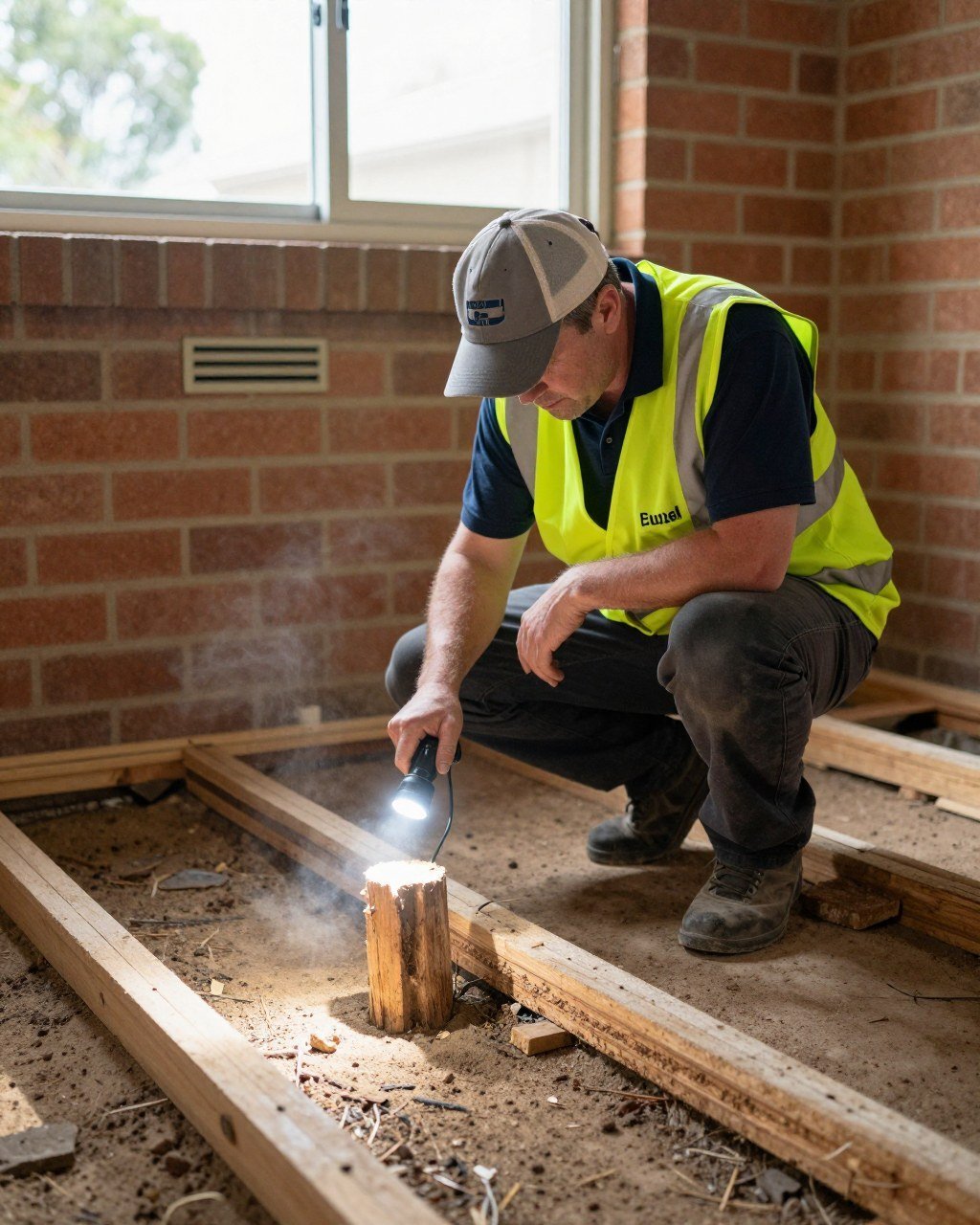
A pest inspection includes the building perimeter, external structures, roof void, subfloor, interior rooms, and any outbuildings or garages. Each zone is checked for live activity, damage, and the moisture or access conditions that let pests establish.
The Building Perimeter and External Areas
The perimeter is checked first because it is where most termite pressure originates.
Fences, retaining walls and any timber structures attached to the house get particular attention, because a fence line is a termite highway. Stacked firewood, stored timber, pot plants and building materials left against an external wall are all recorded, since they bridge the gap between soil and the building.
The Roof Void
The roof void hides a lot of evidence and is often the area homeowners have never seen. Insulation is lifted at intervals, since termite workings and rodent runs follow timbers rather than open ceiling space.
Access matters here. A manhole that is painted shut, screwed down or buried under stored boxes means the void is recorded as inaccessible rather than inspected, and that distinction belongs in the report.
The Subfloor
The subfloor gets similar treatment. Bearers, joists and stumps are probed where reachable, with attention to where timber meets masonry or soil. Damp conditions are noted, since moisture attracts termites and fungal decay alike, and poor ventilation is a standing invitation to both. The technician also checks for bridging, soil, rubble or stored goods giving termites a path past a barrier, and drainage faults.
Interior Rooms
Inside, the sweep is for signs rather than pests: droppings in cupboards and along skirting, insect wings near windows, exit holes in skirting and architraves, frass beneath timber, smear marks, and unusual smells. Kitchens, laundries and bathrooms get closer attention because moisture and food concentrate there. Bubbling paint, soft skirting, sagging floors and sticking doors can all point to moisture or termite damage behind the surface.
Outbuildings, Garages and Attached Structures
Sheds, garages, carports and attached pergolas are inspected as part of the property. They are common termite reservoirs, often timber-framed, poorly ventilated and packed with stored material. Because stored belongings can conceal timber and restrict access, clearing key areas before an inspection helps the inspector assess the property more fully, a step Your Australian Property Buyers Agents can help buyers plan for.
If you want to recognise these signs yourself between visits, our guide on how to identify termite damage walks through what to look for.
How Long Does a Pest Inspection Take?
The length of an inspection depends largely on the property rather than the technician’s pace.
Smaller properties generally take less time than larger, multi-level homes or properties with extensive outbuildings.
Access is the biggest variable. If the subfloor hatch is screwed shut, the roof void is full of boxes, or half the yard is locked, the inspection takes longer or those areas get recorded as inaccessible.
How to Prepare for a Pest Inspection
Preparation is simple, and it directly affects how much of your property gets properly checked. A few minutes of tidying saves the technician time and gets you a more complete report.
- Clear access to the subfloor hatch and roof manhole
- Move stored items away from walls in the garage and laundry
- Unlock gates, sheds and any external structures
- Secure pets in a room or outside run
- Trim back vegetation touching external walls
- Have any previous inspection reports or treatment records ready
- Note any signs you have seen: droppings, damage, live insects, noises in the roof
That last point matters more than people expect. A technician who knows where you saw activity will focus attention there first.
Reading Your Termite Inspection Report and Prioritising Next Steps
The report is the actual product of the visit, and where most homeowners get stuck. A termite inspection report records what was found, where, what could not be accessed, and what the technician recommends next. The useful part is knowing how to read it, because two reports with identical findings can call for very different responses.
The Four Things a Report Should Tell You
A well-structured report answers four questions: what was found (live pests, past activity, or damage without visible cause); where, by zone; what could not be accessed and why; and what the technician recommends, separated into urgency categories rather than one block of advice.
Reports vary in layout, but useful ones share that structure: findings by area, evidence described plainly, recommendations split into urgent, monitoring and preventative, and photographs for anything significant.
Evidence Is Not the Same as Activity
This is the distinction most homeowners miss. Live termites, fresh mud tubes and active swarmers are current activity. Old workings, abandoned galleries and damage with no live insects present are evidence of past activity, which is a different problem with a different response.
Read the wording carefully. “No evidence of termites” and “no live termites observed” are not the same statement, and neither one means the property is termite-free. An inspection is a snapshot of accessible areas on the day it was carried out.
Prioritising the Recommendations
Prioritise in this order: safety issues first, live activity second, conditions that invite pests third, preventative maintenance last. Safety issues include anything affecting structural integrity or wiring, rodent gnawing on cabling, significant timber decay, or a roof member that has lost section. Live activity comes next because it worsens while you decide.
A report noting “inaccessible areas” is not a clean bill of health. It means part of the property was never examined, and that gap should be closed before you treat the findings as complete.
When to Act Immediately and When to Monitor
Homeowners either over-react to minor findings or under-react to significant ones. Act immediately on live termites, fresh mud tubes, swarmers inside the building, or rodent activity near wiring. Monitor where the report records old damage with no live activity, conditions trending toward a problem, or inaccessible areas.
If you have just received a report on a property you are buying, you can see how a pre-purchase timber pest inspection is structured and reported before you decide on next steps.
Inspection Scope and Limitations: What a Technician Cannot Access
An inspection is visual and non-invasive, and that boundary is deliberate. No ethical technician drills into walls or pulls up floorboards on a routine visit, because the damage from probing would outweigh the benefit.
That means some areas cannot be checked: sealed wall cavities, boxed-in plumbing, tiled wet areas, concrete-encased timbers, and fully enclosed roof spaces without a manhole.
A good report names these gaps explicitly. If yours doesn’t, ask. Knowing what was not inspected is as important as knowing what was.
Pest Inspections for Rentals, Apartments and Local Seasonal Risks
Rentals and apartments follow a different rhythm to freestanding homes, and the inspection adapts. In a rental, the technician needs tenant cooperation for access, and findings usually get split between landlord responsibilities and tenant housekeeping.
Werribee and the surrounding west brings its own seasonal pattern. Warm months push ants and spiders indoors, and rodent activity picks up as temperatures drop.
A seasonal schedule helps you stay ahead of it. Our seasonal pest control schedule for Melbourne homes sets out when inspections and treatments matter most across the year.
Book Your Pest Inspection with Trident Pest Control
The inspection is only as useful as the follow-through.
At Trident Pest Control, our licensed and insured technicians cover Werribee and surrounding regions. Fixed pricing, kid and pet-safe treatments, and same-day service are available.
Call our 24-hour termite inspection line if you have found mud tubes, swarmers, or damaged timber and need someone out fast.
Pests rarely announce themselves politely, and the window between “a few ants” and “a structural problem” closes faster than most homeowners expect.
Frequently Asked Questions
What does a pest inspector check during an inspection?
A pest inspection covers the accessible parts of the property: roof void, subfloor, internal rooms, external walls and the building perimeter. The technician looks for termite activity such as mud tubes, timber damage, borers, and signs of rodents or insects like droppings, smear marks and insect wings. Moisture-prone areas and damp conditions get extra attention because they attract pests. Findings are recorded in a written report.
Do pest inspectors check inside walls?
No. A pest inspection is a non-invasive visual inspection, so technicians do not drill into walls or pull up floorboards. They check accessible areas for signs that suggest activity behind surfaces.
How long does a pest inspection take on an average home?
Most standard homes take between 45 minutes and two hours, depending on size, age and how easily the technician can access the roof void and subfloor. A larger property, a home with limited access points, or a combined building and pest inspection will take longer. Ask the company for an estimate when you book so you can plan your day.
Can I stay home during a pest inspection?
Yes, you can usually stay home. The technician needs access to the property, but you do not have to be in every room. It often helps to be available at the start to unlock gates, move pets and answer questions about any signs of infestation you have noticed. If you are a tenant, check with your landlord or property manager about access arrangements before the visit.
Will a pest inspection find termites?
A visual pest inspection finds termite activity and termite damage when it is visible in accessible areas. It cannot guarantee a property is termite-free, because termites can be hidden inside walls or under floors. That is why reports use language like no visible activity rather than no termites.
What happens after a pest inspection?
You receive a written report with inspection findings. Use the report to prioritise next steps.
