Last Updated: October 29, 2026
Quick Summary
To identify termite damage, look for mud tubes on brick or concrete, timber that sounds hollow when tapped, bubbling paint, sticking doors and windows, and sawdust-like droppings near skirting boards. Termites eat timber from the inside out, so surfaces often look fine while the core is gone. Check your home every few months.
- Rot is soft, crumbly and damp, while termite damage is dry, hollow and often lined with mud.
- Tap along skirting boards and door frames; a hollow ring means trouble.
- Mud tubes are pencil-width tunnels running along foundations, piers and fence lines.
- Book a professional assessment straight away if you spot any warning signs.
- Get a professional termite assessment before you renovate so a treatment plan is set before new timber goes in.
Table of Contents
- Start With the Signs of Termites in House Structures
- How to Tell Termite Damage vs Wood Rot
- What Termite Damage Looks Like Inside Walls and Floors
- Mud Tubes and Galleries: Reading the Evidence
- What to Do If You Find Termite Damage
- When to Book a Termite Inspection in Werribee
- Get a Professional Termite Assessment Before You Renovate
- Frequently Asked Questions
Start With the Signs of Termites in House Structures
Knowing how to identify termite damage starts with spotting the early clues. Look for mud tubes, hollow timber and bubbling paint. These signs of termites in house structures show up long before a floorboard gives way.
Termites eat timber from the inside out. The surface often looks fine while the core is gone.
Here’s what to check:
- Mud tubes on brick, concrete or stumps
- Timber that sounds hollow when tapped
- Paint that bubbles or ripples like water damage
- Doors and windows that suddenly stick
- Fine sawdust-like droppings near skirting boards
A common mistake is waiting for visible holes. The CSIRO termite research notes that subterranean termites stay hidden and rarely break the surface until damage is advanced.
Check your home every few months.
How to Tell Termite Damage vs Wood Rot
Telling termite damage vs wood rot comes down to texture and moisture. Rot is soft, crumbly and damp. Termite damage is dry, hollow and often lined with mud.
Wood rot is a fungal problem. It needs moisture, so you’ll find it near leaks, bathrooms and poorly ventilated subfloors. The timber feels spongy and breaks apart in your fingers.
Termite damage looks different. The timber keeps its shape but loses its guts. You may see rippled surfaces or mud packed into the gaps.
Use this quick guide:
| Feature | Termite Damage | Wood Rot |
|---|---|---|
| Texture | Dry and hollow | Soft and crumbly |
| Cause | Insects eating timber | Fungus from moisture |
| Debris | Mud and droppings | None, just decay |
| Smell | Musty but faint | Strong damp, fungal smell |
| Location | Anywhere timber meets soil | Near leaks and damp areas |
If you’re unsure, don’t guess. Both problems spread, and both need a professional look.
What Termite Damage Looks Like Inside Walls and Floors
Inside walls and floors, termite damage is harder to see. You’ll often notice it through sound and feel before you see it.
Tap along skirting boards and door frames. A hollow ring means trouble.
Watch for these internal signs:
- Sagging or springy floorboards
- Cracks in plaster above doorways
- Loose tiles on concrete slabs
- Skirting boards that pull away from the wall
- A faint rustling sound inside walls at night
The researchers behind the study on termite attack in buildings recorded galleries as trails covered with soil, wood particles and droppings. That mix is the giveaway. If you see soil packed into a crack in your wall, treat it as a warning.
Mud Tubes and Galleries: Reading the Evidence
Mud tubes are the clearest proof you’ll get. These pencil-width tunnels run along foundations, piers and fence lines. Termites build them to stay moist while they travel.
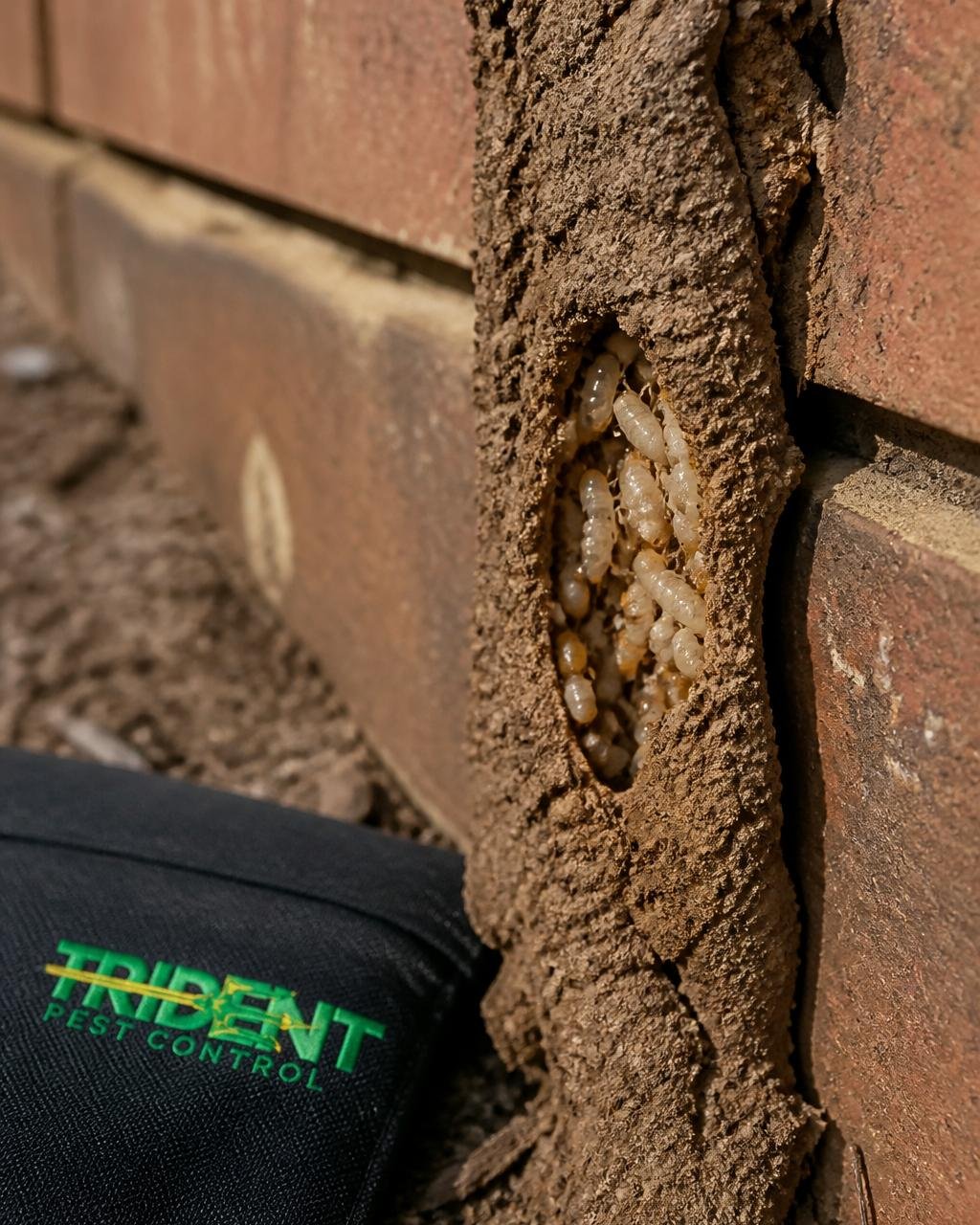
These structures serve as a primary indicator of an active infestation, making the process of inspecting homes for termites a vital component of maintaining structural integrity before finalizing a property purchase.
Galleries are the internal version. They’re the hollowed-out tunnels termites carve through timber. You’ll spot them when timber splits or when you cut into damaged wood.
Check along:
- The base of external walls
- Around garden beds touching the house
- Under the house on stumps and bearers
- Fence posts and retaining walls
What to Do If You Find Termite Damage
Finding damage is not a reason to panic. It is a reason to act quickly and avoid making things worse.
Third, book a professional assessment.
If you’re buying or selling, a pre purchase timber pest inspection gives you a clear picture before money changes hands. If you’re weighing treatment options, our guide on how long termite treatment lasts explains what to expect.
When to Book a Termite Inspection in Werribee
Book a termite inspection in Werribee straight away if you’ve spotted any warning signs.
Book sooner if you notice:
- Mud tubes anywhere on the property
- Hollow-sounding timber
- Sticking doors or windows
- A previous treatment with no recent follow-up
For local details on how we work across the area, see our Werribee service page.
Get a Professional Termite Assessment Before You Renovate
Get a professional termite assessment before you renovate. For commercial properties, see our commercial termite management Melbourne details.
- A full inspection of the existing structure
- Identification of the termite species present
- A treatment plan before new timber goes in
- Advice on termite-resistant materials and barriers
Our licensed and insured technicians across Melbourne, Geelong and Werribee provide pest management services. Same-day service is available.
Frequently Asked Questions
What are the first signs of termite damage?
Early signs include mud tubes on foundation walls, hollow-sounding timber when tapped, and paint that bubbles or ripples like water damage. You may also notice discarded wings near windows or doors after a swarm. Check skirting boards, door frames and subfloor areas first. If you spot any of these, arrange a professional inspection promptly.
How can you tell termite damage from water damage or wood rot?
Termite damage can leave timber hollowed out with tunnels and mud packing, while wood rot can be soft and crumbly. Water damage can cause swelling and staining.
Do mud tubes always mean termites are active?
Mud tubes can be old and abandoned. Treat any tube as a reason to call a professional.
When should I arrange a professional termite inspection in Werribee?
Book an inspection if you see any signs of termites in house structures or if you are buying a property. If you find damage, call a licensed technician. Trident Pest Control offers same-day service.
Termite damage rarely stays put. The sooner you act, the less it costs to fix. Get started with Trident Pest Control and book a professional assessment today.
