
Table of Contents
- Understanding Pet-Safe Pest Control
- Why Traditional Pesticides Pose Risks to Pets
- Non-Toxic Pest Control for Homes: Natural Alternatives
- Professional Pest Control Safety Precautions
- How Long to Keep Pets Away After Pest Control Treatment
- Preparing Your Home and Protecting Your Pets
- What to Do If Your Pet Is Exposed to Pest Control Chemicals
- Frequently Asked Questions
Last Updated: August 30, 2026
Understanding Pet-Safe Pest Control
Pet-safe pest control methods eliminate infestations whilst minimising risk to your family, children, and animals. According to CSIRO research on pest control safety, 99.4% of residential treatments result in zero adverse health effects when applied correctly. This reflects modern professional pest control being strictly regulated by the Australian Pesticides and Veterinary Medicines Authority (APVMA), which permits only chemicals with a safety margin greater than 100 times the normal application rate.
Residential users account for approximately 68.4% of the pet-safe pest control market, equivalent to roughly $3.28 billion in products as of 2025, reflecting a genuine shift toward methods that protect pets.
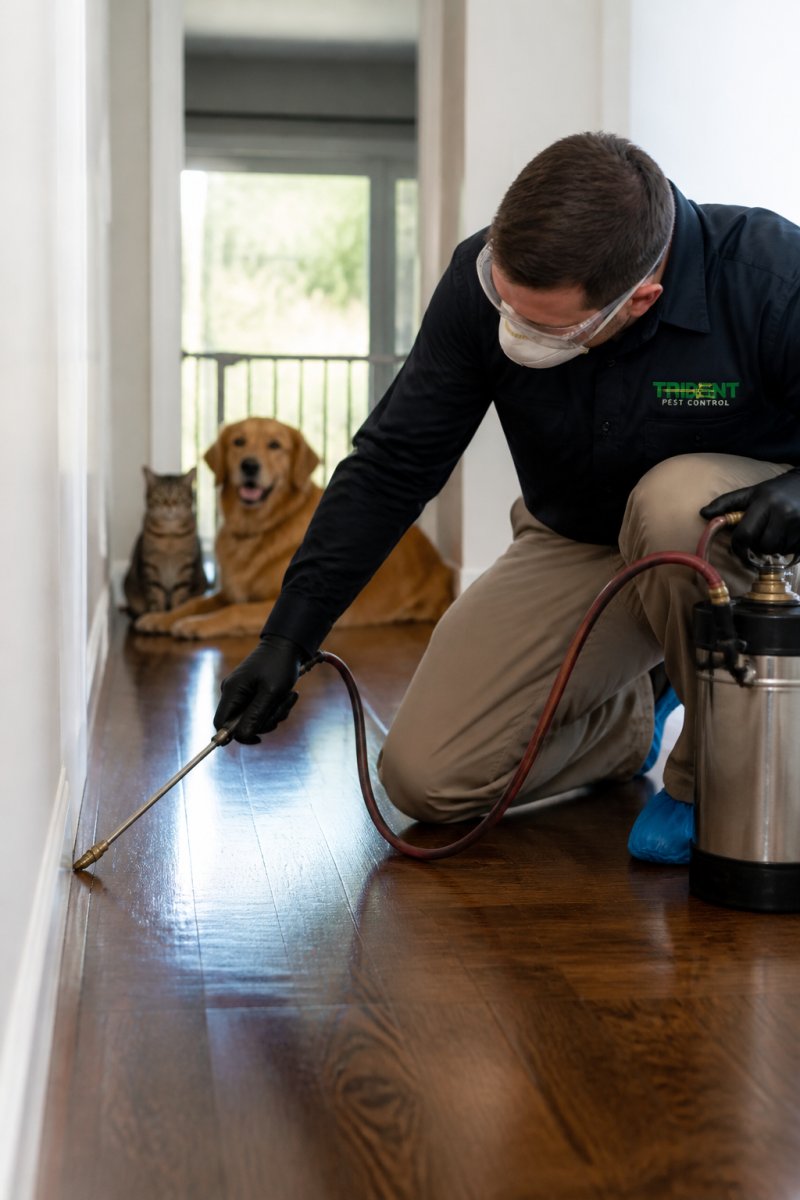
Modern professional pest control is extremely safe for families, children, babies, pregnant women, and pets when applied correctly. Every product used in Australia is strictly regulated, with only chemicals meeting rigorous safety standards approved for residential use.
Pet-safe treatment combines three factors: active ingredients with documented safety profiles for non-target species, application methods that isolate chemicals from where pets spend time, and clear pre- and post-application protocols. The real value is that pest elimination doesn’t require boarding your pets or moving them elsewhere, treatment happens, life continues, and the infestation stops.
Why Traditional Pesticides Pose Risks to Pets
DIY foggers and broad-spectrum sprays disperse chemicals across large areas, coating surfaces pets touch regularly. A University of Sydney study on pest control methods found that households using DIY foggers had significantly higher levels of pesticide residue on surfaces than those treated by licensed professionals. Professional treatments are precisely targeted, applied only where pests live and travel.
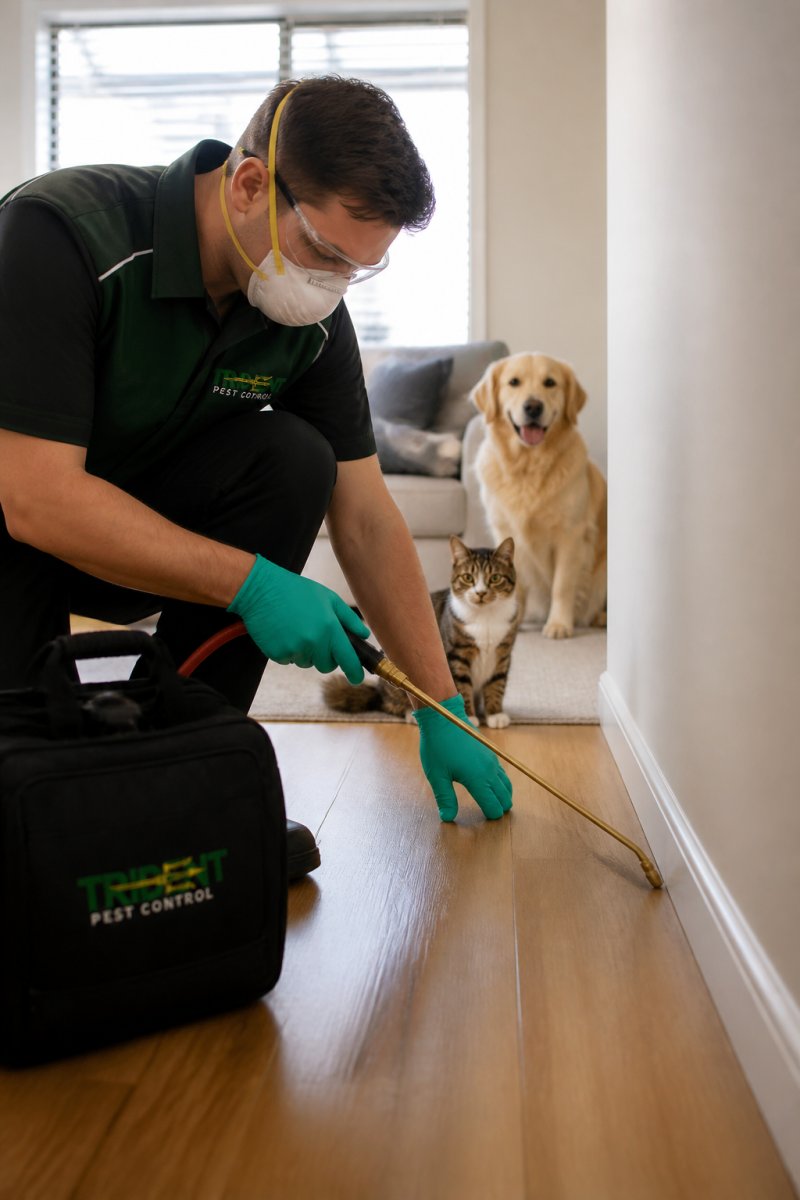
Pets are uniquely vulnerable to pesticide exposure for three reasons: they spend more time on floors where residues accumulate, they groom themselves by licking their fur and paws, and many pesticides are metabolised differently in animals than humans.
Organophosphates and carbamates disrupt nerve function in insects and can cause tremors, excessive salivation, muscle weakness, and respiratory failure in pets at high doses. Pyrethroids, often marketed as “natural,” can still cause neurological issues in sensitive animals, particularly cats. Secondary poisoning occurs when pets eat pests exposed to rodenticide, concentrating the poison in the pest’s body and transferring it to your animal.
DIY pest control products are more dangerous than professional treatments because they disperse chemicals broadly across [your home](/how-to-prepare-your-home-for-pest-spray/), including surfaces children and pets touch daily. Professional treatments are targeted precisely where pests live, minimising exposure to non-target species.
Professional pest control products used by licensed technicians are held to higher safety standards than over-the-counter alternatives. Licensed technicians understand which products are appropriate for homes with pets, how to apply them to minimise exposure, and what safety protocols to follow.
Non-Toxic Pest Control for Homes: Natural Alternatives
Diatomaceous earth is a natural powder that dehydrates insects like fleas, ticks, and bedbugs upon contact. Food-grade diatomaceous earth is non-toxic to pets and humans. Sprinkle it in areas where pests hide, behind furniture, in cracks, and along baseboards, then vacuum after several days. It’s slower than chemical treatments and requires reapplication after cleaning.
Essential oils like lavender, peppermint, and eucalyptus deter mosquitoes, fleas, and ticks through their aroma. They’re safe for pets when diluted, though caution is warranted around cats. A few drops mixed with water in a spray bottle can be applied to pet bedding or outdoor areas. Essential oils repel rather than kill, making them better for prevention than active infestations.
Integrated Pest Management (IPM) combines multiple methods into a single strategy, using physical exclusion, sanitation, targeted treatments, and monitoring to keep pest populations below damaging levels. Physical structural exclusion, sealing the exterior with heavy-gauge galvanised steel mesh, woven copper, and professional elastomeric sealants, physically blocks pests from entering and eliminates the need for ongoing chemical treatments.
Traps and monitoring devices allow you to control pests without chemicals. According to Pet-safe Pest Control Products Market Research Report 2034, traps accounted for approximately 21.5% of market revenues in 2025 and are expected to grow at 7.9% annually through 2034, reflecting increasing adoption as people seek chemical-free options.
Non-toxic methods work best as part of a broader strategy. A single application of diatomaceous earth won’t eliminate an established cockroach infestation, but combined with sanitation, exclusion, and monitoring, natural alternatives can be highly effective whilst keeping your pets safe.
Professional Pest Control Safety Precautions
Licensed technicians conduct a thorough inspection before recommending treatment, identifying pest entry points, nesting areas, and infestation extent. This assessment determines which treatment method is appropriate. pet-safe sanitizing solutions.
Product selection is crucial. Professional-grade pesticides approved for residential use in Australia have undergone rigorous testing. Licensed technicians know which products are safe around pets and which require temporary relocation.
Application method matters enormously. Professionals use spot treatments, gel baits, and targeted sprays rather than broad-area fogging. Gel baits are placed in tamper-proof stations that allow pests inside but prevent pets from accessing the bait. Spot treatments are applied only to areas where pests travel.
Pre-treatment protocols protect your family and pets:
- Remove or cover food, dishes, and utensils
- Secure pets in a designated area away from treatment zones
- Ensure adequate ventilation during and after application
- Clarify how long to keep pets away from treated areas
Post-treatment safety is equally important. Different products have different drying and settling times. Professional technicians provide clear written instructions on timing and safety measures.
[Professional pest](/category/pest-control/) control is safer than DIY treatments because licensed technicians use targeted applications, understand product safety profiles, and follow strict protocols before, during, and after treatment. The precision of professional work minimises chemical exposure to your entire home.
How Long to Keep Pets Away After Pest Control Treatment
The duration pets need to stay away depends entirely on the product used and application method. For gel baits in tamper-proof stations, pets can typically remain in the home immediately since the bait is contained within a station designed to exclude animals.
For spot treatments applied to baseboards or under sinks, the waiting period is usually 2-4 hours for the product to dry and settle. For aerosol sprays applied more broadly, a longer waiting period of 4-8 hours is typical. Adequate ventilation speeds this process.
For treatments requiring temporary relocation, your technician will specify the duration. Ask your pest control provider for written post-treatment instructions specifying exact waiting time, whether ventilation is necessary, surfaces to avoid, and what to do if your pet shows signs of illness.
Preparing Your Home and Protecting Your Pets
Two to three days before treatment, do a deep clean. Remove clutter, vacuum thoroughly, and wipe down surfaces. Pests hide in debris; removing it exposes them to treatment.
Secure or remove food, water bowls, and pet bedding from treatment areas. Wash pet bedding and store it in a sealed container. Remove or cover any toys pets might chew on.
Arrange pet care for the duration specified by your technician. If pets need to stay away for 4 hours, keep them in a sealed room or take them for a walk. If overnight, arrange boarding or have a friend watch them.
Before the technician arrives, note where you’ve seen pests, pet sleeping areas, any off-limit zones, and pets’ names or health concerns. During treatment, keep pets in a designated safe area away from the technician. After treatment, follow instructions exactly regarding waiting time and ventilation.
| Preparation Step | Timing | Purpose |
|---|---|---|
| Deep clean home | 2-3 days before | Removes clutter, exposes pests |
| Remove pet items | Day before | Prevents contact with residues |
| Arrange pet care | Before technician arrives | Keeps pets away during treatment |
| Document pest activity | Before technician arrives | Helps technician target treatment |
| Follow post-treatment protocol | After treatment | Allows residues to settle safely |
What to Do If Your Pet Is Exposed to Pest Control Chemicals
Mild exposure symptoms include excessive drooling, vomiting, diarrhoea, or lethargy. Contact your veterinarian immediately and provide the pesticide name and exposure timing.
More severe symptoms, tremors, muscle weakness, difficulty breathing, loss of consciousness, require emergency veterinary care. Don’t wait or monitor at home.
Secondary poisoning from eating treated pests is possible. Keep pets supervised during and immediately after treatment to prevent them from hunting treated pests.
Your veterinarian can provide supportive care and, in some cases, specific antidotes. For organophosphate poisoning, atropine can counteract some effects. For other pesticides, treatment focuses on managing symptoms until the chemical is metabolised.
If your pet shows signs of pesticide exposure, excessive drooling, vomiting, tremors, or difficulty breathing, contact your veterinarian immediately. Provide the name of the pesticide used and describe the timing and circumstances of exposure. In severe cases, seek emergency veterinary care.
Following your pest control provider’s pre- and post-treatment instructions prevents exposure in the first place. Keeping pets away from treated areas for the specified duration, ensuring adequate ventilation, and supervising pets until the area is fully settled reduce risk to nearly zero.
Pet-safe pest control isn’t a compromise between eliminating pests and protecting your family, it’s the standard for professional pest management. When you work with a licensed, insured pest control provider like Trident Pest Control, you get treatments designed specifically to eliminate infestations whilst keeping your pets and family safe. Our technicians understand the science of modern pest control, the regulations that govern it, and the practical steps that protect what matters most. Get your free quote today and discover how professional pest control can solve your infestation without putting your pets at risk.
Frequently Asked Questions
How long should pets stay away after pest control?
Most professional pest control treatments are safe for pets to return within 2-4 hours, once surfaces have dried completely. However, this depends on the specific treatment method used. Always follow your pest control technician’s instructions carefully. If your technician used aerosol sprays or foggers, ventilate the property thoroughly before allowing pets back inside. For tamper-proof bait stations and targeted gel baits, pets can usually return immediately, as these methods isolate active ingredients away from the ambient environment. When in doubt, ask your technician for specific timing before they leave.
What pest control spray is safe for pets?
Pet-safe pest control sprays typically use natural ingredients like diatomaceous earth, essential oils (lavender, peppermint, eucalyptus), or botanical extracts. These products work by dehydrating or repelling insects rather than poisoning them. However, caution is needed with essential oils around cats, as they metabolise oils differently than dogs. The safest approach is to use integrated pest management (IPM) methods that rely on physical barriers, tamper-proof bait stations, and targeted application rather than broad-spectrum sprays. Always check the product label for pet safety claims and consult your veterinarian if your pet has sensitivities.
Are natural pest control remedies effective?
Natural pest control remedies can be effective when used as part of an integrated pest management strategy. Diatomaceous earth works well for fleas, ticks, and bedbugs by dehydrating insects on contact. Essential oils deter mosquitoes and some flying insects. However, natural methods are often slower than professional treatments and work best for prevention rather than active infestations. CSIRO research confirms that 99.4% of professional residential pest control treatments result in zero adverse health effects when applied correctly. For serious infestations, combining natural methods with professional treatment, using tamper-proof bait stations and targeted application, delivers faster, more reliable results.
How do I know if a pest control service is truly pet-safe?
Look for pest control providers licensed by the relevant regulatory bodies in your state. Every product used must be approved by the Australian Pesticides and Veterinary Medicines Authority (APVMA), which only permits chemicals with a safety margin greater than 100 times, meaning you would need exposure 100 times the normal amount to reach a harmful level. Ask your technician about their specific application methods: tamper-proof bait stations and gel baits are safer than broad sprays. Request documentation of the active ingredients and safety data sheets. Licensed, insured technicians will provide transparent information about what they’re using and how long to keep pets away. Always verify credentials before booking.
This article was written using GrandRanker