
Table of Contents
- Why Standard Pesticides Put Pets at Risk
- Safe Pest Control Alternatives That Actually Work
- Integrated Pest Management (IPM) for Home Owners
- Pet-Friendly Cockroach Control: Baits, Traps, and Low-Tox Sprays
- Safe Spider Control for Homes with Dogs and Cats
- Pest Control Exclusion Periods for Pets: What You Need to Know
- When Safe Pest Control Requires a Licensed Professional
- Conclusion
Last Updated: August 25, 2026
One in five pet poisonings in NSW are linked to incorrect household pesticide use, with flea treatments and cockroach baits topping the list of culprits, according to the APVMA 2025 Annual Report. For households in Point Cook, Tarneit, Truganina, Hoppers Crossing, and Williams Landing, where warmer months bring heavy pressure from cockroaches, spiders, and ants, choosing safe pest control alternatives for homes with pets is a genuine safety issue. Below, we cover what actually works, what the "non-toxic" label really means, and how to protect your animals without surrendering your home to pests.
Why Standard Pesticides Put Pets at Risk
Most standard residential pesticides are formulated for human-sized exposure thresholds. Pets, particularly cats and small dogs, are far more vulnerable to the same compounds. They groom themselves after walking across treated surfaces, sniff along skirting boards where residual sprays concentrate, and spend far more time low to the ground than any adult in the house.
Dogs can experience neurological symptoms from pyrethrin overexposure. Cats, lacking the liver enzymes to metabolise certain compounds, face higher acute toxicity risk from the same concentrations. Rodenticides, particularly second-generation anticoagulants used in some bait stations, pose serious secondary poisoning risk: a pet that eats a poisoned rodent can ingest a lethal dose indirectly.
The ‘Non-Toxic’ Label Problem
"Non-toxic" is not a regulated term in Australia. Any company can print it on a label. According to the Australian Environmental Pest Managers Association, 68% of NSW homeowners find claims of "100% non-toxic" or "completely chemical-free" confusing, while 41% admitted choosing a service based on those promises that failed to fix their problem (AEPMA, 2025).
If a product were genuinely non-toxic to insects, it would not control them. Effective pest control works because it is toxic to the target organism. The question is not whether a product contains active compounds, but whether those compounds are selective, correctly applied, and safe for your specific animals at the concentrations used.
Safe Pest Control Alternatives That Actually Work
Safe pest control for homes with pets means choosing products and methods whose toxicity profiles are well-understood, whose application can be managed to minimise pet exposure, and whose residual effects are predictable.
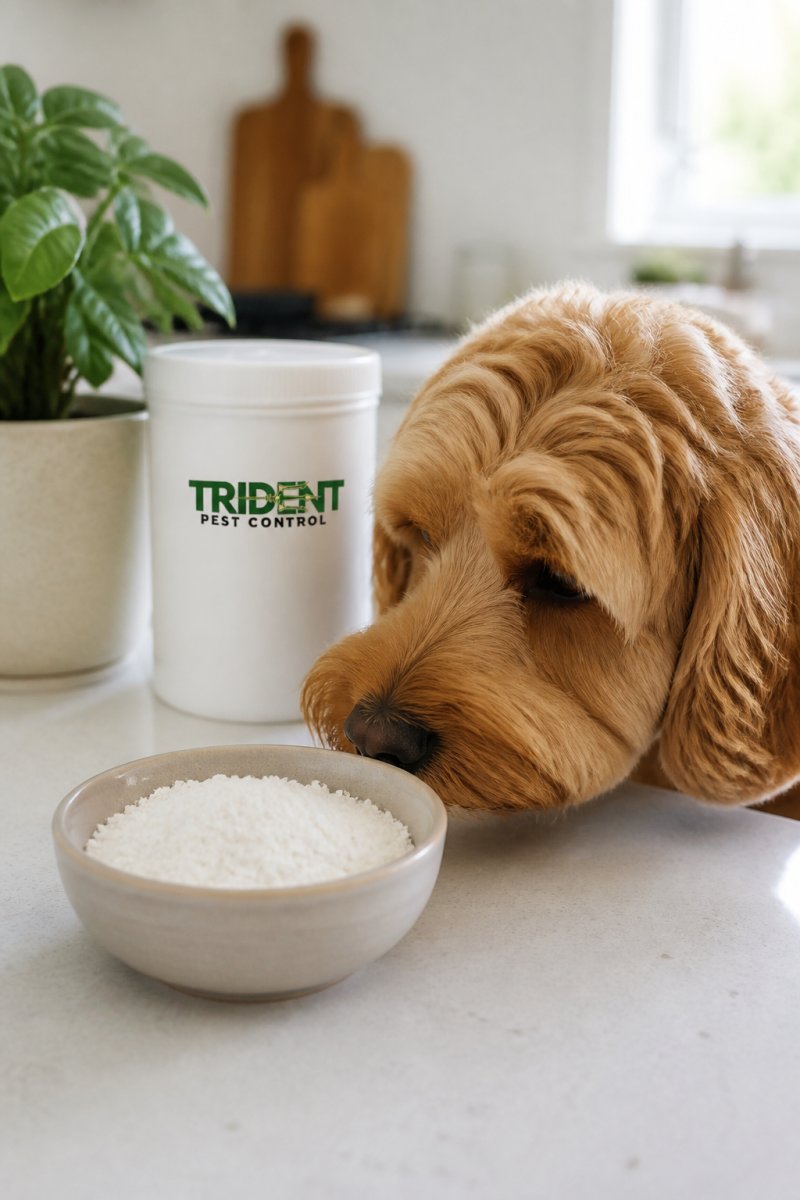
The alternatives below are ranked by their practical effectiveness across the pest pressures common in western Melbourne suburbs, from cockroach problems in Hoppers Crossing to white-tail spider issues in newer estates around Truganina and Williams Landing.
| Alternative | Best For | Pet Safety | Limitations |
|---|---|---|---|
| Food-grade diatomaceous earth | Crawling insects, fleas | Non-toxic when dry | Ineffective when wet; respiratory irritant if inhaled |
| Essential oils / cedar oil | Repelling ants, spiders, mosquitoes | Generally low-risk | Prevention only; not for active infestations |
| Biological controls | Soil-dwelling pests, lawn grubs | Safe for pets | Outdoor use; slow-acting |
| Adhesive traps | Cockroaches, rodents | Non-toxic | Monitoring/supplementary use only |
| Ultrasonic deterrents | Rodents, cockroaches | Safe for dogs and cats | Limited by walls and obstructions |
| Low-tox professional sprays | Broad-spectrum indoor/outdoor | Safe once dry | Requires correct exclusion period |
Diatomaceous Earth (Food Grade)
Food-grade diatomaceous earth kills crawling insects, fleas, ants, cockroaches, and mites by physically damaging their exoskeletons and causing dehydration. Insects cannot develop resistance to it.
For pet households, the critical distinction is food-grade versus industrial-grade. Food-grade diatomaceous earth is non-toxic to mammals when used correctly. Apply it in thin layers along skirting boards, under appliances, in roof voids, and in pet bedding areas. The genuine risk is respiratory: fine dust inhaled in quantity can irritate airways. Keep pets out during application and allow dust to settle before re-entry. Effectiveness drops to zero when wet, so it’s unsuitable for bathrooms without reapplication.
Natural Repellents and Essential Oils
Peppermint oil, cedar oil, and neem oil function as natural deterrents rather than killers.
Essential oil-based repellents are preventative, not curative. They will not clear an active cockroach infestation in a Tarneit kitchen but work well around door frames, window sills, and garden entry points. For cat owners: several essential oils, including tea tree, eucalyptus, and concentrated peppermint, are toxic to cats at high concentrations. Always check species-specific safety before applying any essential oil product in a home with felines.
Biological Control Methods
Beneficial nematodes are microscopic soil-dwelling organisms that parasitise and kill lawn grubs, fleas in soil, and other ground-dwelling pests. They are completely safe for pets, children, and wildlife, and leave no chemical residue. Apply by mixing with water and watering into lawn areas. They require moist soil and moderate temperatures to establish, making spring and autumn optimal in the western Melbourne climate.
Traps and Ultrasonic Deterrents
Adhesive cockroach traps capture crawling insects without any toxin, useful for monitoring infestation levels and reducing cockroach populations in targeted areas like under the fridge or behind the dishwasher.
Ultrasonic deterrents emit cycling sound waves in the 15-70 kHz range, inaudible to humans, dogs, and cats, designed to irritate rodents and cockroaches into vacating an area. A single unit typically covers up to 120 square metres in open indoor spaces. Ultrasonic waves do not penetrate solid walls, so a single device will not protect a multi-room home. Both options work best as supplementary tools within a broader pest management strategy.
Integrated Pest Management (IPM) for Home Owners
Integrated Pest Management is the most effective framework for households wanting safe pest control without compromising results. IPM combines prevention, monitoring, and targeted treatment, using chemical intervention only when necessary and at the lowest effective concentration.
For residential use in western Melbourne, IPM means: inspect first to identify the pest species and entry points; prioritise exclusion by sealing gaps and storing food in sealed containers; apply targeted treatments using the most selective product for the specific pest; and monitor outcomes by checking traps and adjusting the approach.
Preventative Home Maintenance and Pest Exclusion
Prevention is the safest and most sustainable pest management strategy. A home that is structurally inhospitable to pests needs far fewer chemical interventions, which directly reduces pet exposure risk.
Practical exclusion steps for western Melbourne homes include sealing gaps around pipe penetrations, installing door sweeps on external doors and garage entries, fixing dripping taps and condensation issues, storing pet food in sealed containers, clearing leaf litter and wood piles from the house perimeter, and trimming vegetation away from external walls. A 2025 urban pest audit found that 72% of Sydney homes with ongoing cockroach, ant, or spider issues had previously tried DIY or cheap non-toxic treatments that failed to reach wall cavities, roof voids, or subfloor breeding sites (Sydney’s Best Pest Control, 2025).
Identifying Pet-Safe Ingredients on Product Labels
Reading a pest control label correctly is a practical skill. The active ingredient section is what matters; marketing language on the front is not regulated in the same way.
Lower-risk active ingredients for pet households:
- Pyrethrins (natural, derived from chrysanthemum), toxic to insects, low mammalian toxicity, but dangerous to cats in concentrated form
- Spinosad, derived from soil bacteria, effective against fleas and some beetles, low toxicity to mammals
- Diatomaceous earth, physical mode of action, no chemical toxicity
- Boric acid, low acute toxicity, but avoid areas where pets can ingest directly
Higher-risk active ingredients to approach with caution:
- Permethrin and other synthetic pyrethroids, toxic to cats even at low concentrations
- Second-generation anticoagulant rodenticides, high secondary poisoning risk for pets
- Organophosphates, higher acute toxicity profile; avoid in homes with small animals
The Australian Pesticides and Veterinary Medicines Authority (APVMA) approves all pesticides sold commercially in Australia. If a product carries APVMA registration, it has been assessed for safety, but "assessed" does not mean "safe for all animals in all situations." Check the label for specific pet safety guidance and re-entry intervals. pet safe exterior cleaning.
Pet-Friendly Cockroach Control: Baits, Traps, and Low-Tox Sprays
Cockroach control is the most common safe pest control request from households in Hoppers Crossing, Tarneit, and surrounding suburbs. Cockroach management is one area where genuinely pet-safe options are highly effective.
Gel baits are the preferred professional approach for pet households. A small amount of bait is placed in targeted locations inside hinges, behind appliances, and in wall cavity entry points, where cockroaches access it but pets cannot. When applied correctly by a licensed technician, gel baiting poses minimal risk to pets and is far more effective than broad-area spraying for German cockroach infestations.
Adhesive trap boxes work well for monitoring and supplementary control. Products like the EnviroBug Non-Toxic Cockroach Trap Box use a strong adhesive surface with no chemical attractant, making them completely safe for households with curious animals.
Low-tox surface sprays applied to external entry points, door frames, weep holes, and external walls create a perimeter barrier without requiring broad indoor application. The key is correct drying time before allowing pets to access treated areas.
Never apply permethrin-based cockroach sprays in areas accessible to cats. Even residual contact with dried permethrin on surfaces can cause acute toxicity in felines. Check the APVMA label before applying if unsure which active ingredient a product contains.
Safe Spider Control for Homes with Dogs and Cats
Spider control in western Melbourne requires a different approach from cockroach management. Redback spiders, white-tail spiders, and huntsmen are the most common concerns in suburbs like Williams Landing, Truganina, and Point Cook. Each has a different harborage preference, which affects treatment strategy.
The most effective pet-safe spider control combines web removal, perimeter barrier sprays applied to external entry points when pets are inside and given adequate drying time, and dust treatments in roof voids and subfloors applied by professionals in areas pets cannot access.
Huntsmen and white-tails found inside are usually transient visitors. Redback spiders build permanent webs in sheltered spots under outdoor furniture, in garden edging, and in letter boxes. Targeting those specific sites is far more effective than broad-area indoor spraying.
For households with dogs that spend time in the garden, focus exterior spider treatments on ground-level harborage sites: under decking, in retaining wall gaps, along fence lines. These are the contact points where dogs are most likely to disturb a redback web.
Pest Control Exclusion Periods for Pets: What You Need to Know
Pest control exclusion periods for pets refer to the time your animals must remain out of a treated area after a pesticide application. This is one of the most important safety factors in any treatment, and it varies significantly by product type.
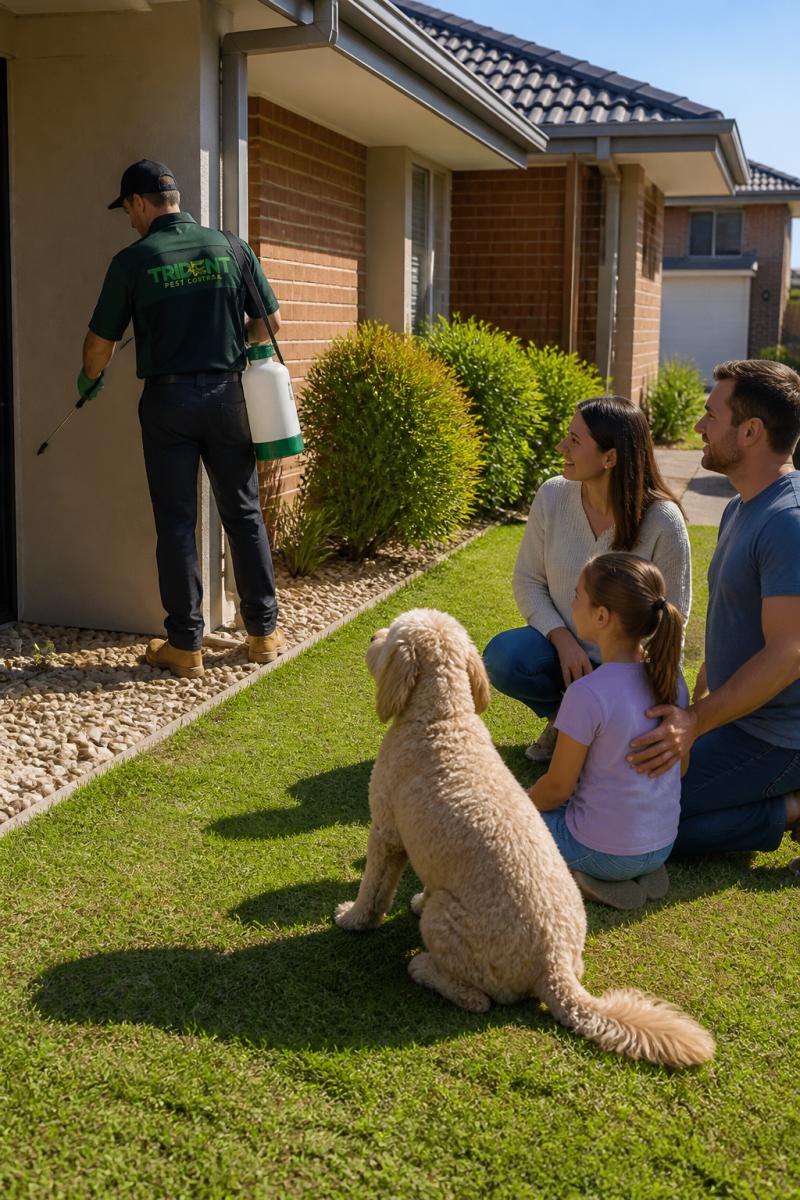
General exclusion period guidelines:
| Treatment Type | Typical Exclusion Period | Notes |
|---|---|---|
| Surface spray (indoor) | 2-4 hours (until fully dry) | Longer in humid conditions |
| Gel bait (cockroach) | None required after application | Baits are placed in inaccessible locations |
| Perimeter spray (exterior) | 1-2 hours | Until surfaces are dry to touch |
| Roof void / subfloor dust | No restriction (inaccessible areas) | Sealed access points prevent pet contact |
| Rodent bait stations | Stations must be tamper-resistant | Secondary poisoning risk if rodent is consumed |
| Flea treatment (indoor) | 2-4 hours minimum | Vacuum before re-entry |
CSIRO research confirms that 99.4% of residential treatments result in zero adverse health effects when modern professional pest control is applied correctly (CSIRO, 2026). The emphasis is on "correctly", which includes respecting exclusion periods and following label instructions. If the treated surface is still wet, it’s not safe. For cats specifically, extend any manufacturer-recommended period by at least 30 minutes and ensure surfaces are thoroughly aired before allowing access.
Emergency Response: What to Do If Your Pet Is Exposed
If you suspect your pet has been exposed to a pesticide through skin contact, ingestion, or inhalation, act quickly.
Immediate steps:
- Remove your pet from the treated area immediately
- If skin or coat contact occurred, wash the affected area with mild soap and water
- Do not induce vomiting unless specifically directed by a vet
- Call your veterinarian or the Animal Poisons Helpline immediately, have the product name and active ingredient ready
- Bring the product label or packaging to the vet if possible
Symptoms of pesticide exposure in pets include excessive salivation, vomiting, muscle tremors, lethargy, dilated pupils, and difficulty breathing. Cats showing any neurological signs after pyrethrin or pyrethroid exposure require emergency veterinary care.
The Animal Poisons Helpline operates 24/7 and can provide immediate guidance on whether a specific product poses a risk to your animal. Save the number before you need it.
When Safe Pest Control Requires a Licensed Professional
DIY alternatives handle a lot. They do not handle everything.
Active infestations in wall cavities, roof voids, and subfloor spaces require access to harborage sites that most homeowners cannot safely or effectively treat without professional equipment. A 2025 audit found that 72% of homes with persistent cockroach, ant, or spider problems had previously attempted DIY treatments that failed to reach these breeding sites (Sydney’s Best Pest Control, 2025).
Licensed technicians use APVMA-registered products applied at precisely the right concentrations, in the right locations, with clear pet exclusion guidance provided before and after every treatment. Professional services cover western Melbourne suburbs including Point Cook, Tarneit, Truganina, Hoppers Crossing, and Williams Landing.
Situations that warrant professional treatment include cockroach infestations that have persisted through two or more DIY attempts, redback spider activity in areas children or pets access regularly, any rodent activity inside the home, end-of-lease flea treatments required for bond compliance, and suspected termite activity.
The IMARC Group’s 2025 Australia pest control market analysis notes that demand for environmentally friendly pest control solutions is growing rapidly, with consumers moving away from conventional chemical-based treatments toward IPM strategies and organic options. Professional pest control services that deliver both effective outcomes and pet-safe methods are the direction the industry is heading.
Keeping a home pest-free when animals are part of the household is genuinely achievable, but it requires choosing the right tools for the right situations and knowing when professional expertise is the safer option. Licensed, insured technicians offer pet-safe treatments for homes across western Melbourne. Contact a local provider to find out how a properly structured treatment plan protects your home without putting your animals at risk.
Frequently Asked Questions
Q: Can I get professional pest control if I have pets at home?
A: Yes. Licensed technicians use APVMA-approved, low-toxicity formulations specifically selected for homes with pets. Before the visit, move pets, their bedding, food bowls, and water to an untreated area. Keep them away for the recommended exclusion period, typically two to four hours for most spray treatments, then ventilate the home before allowing re-entry. Always tell the technician what animals you have, including fish and birds, as sensitivities vary by species.
Q: How long should pets stay away after a professional pest treatment?
A: Exclusion periods depend on the product used and the treatment area. Most interior spray treatments require pets to stay out for two to four hours while surfaces dry. Rodenticide placements in roof voids or subfloors may require longer restrictions. Gel cockroach baits placed in cracks and crevices generally need no exclusion period at all. Your technician should provide a written exclusion period specific to the products applied, if they do not, ask before they leave.
Q: What are the safest non-toxic pest control methods for households?
A: Food-grade diatomaceous earth kills crawling insects by dehydration and poses minimal risk to pets when applied correctly. Adhesive cockroach trap boxes, natural pyrethrin sprays derived from chrysanthemum daisies, neem oil for garden pests, and beneficial nematodes for lawn grubs are all low-toxicity options. Combining these with pest exclusion, sealing gaps, fixing moisture issues, removing food sources, reduces reliance on any chemical treatment.
Q: Are there natural alternatives to chemical cockroach sprays?
A: Several options work for mild to moderate cockroach activity. Non-toxic adhesive trap boxes catch cockroaches without any chemical exposure. Food-grade diatomaceous earth dusted along skirting boards and behind appliances dehydrates insects on contact. Gel baits placed deep in cracks and crevices are highly targeted and pose very low ingestion risk to pets. For persistent or heavy infestations, a licensed technician applying APVMA-approved low-tox formulations in targeted locations is the most reliable approach.
Q: How do I keep my dog or cat safe during a spider treatment?
A: Exterior spider repellents containing bifenthrin are safe for pets once fully dried, but wet product is a contact hazard. Remove pets, their water bowls, and outdoor toys before treatment begins. Keep them indoors until all treated surfaces are completely dry, usually two to four hours depending on weather. For indoor treatments, ask the technician to focus on cracks, crevices, and roof voids rather than broad surface sprays. Always confirm the products used are registered with the APVMA and ask for the Safety Data Sheet.
This article was written using GrandRanker