
Table of Contents
- Why Bed Bug Control Matters in Your Home
- Signs of Bed Bugs: Early Detection Saves Time and Money
- Professional Bed Bug Treatment vs. DIY Approaches
- Understanding Bed Bug Treatment Cost and Your Options
- How to Prevent Bed Bugs: Practical Steps for Protection
- Insecticide Resistance: Why Modern Bed Bugs Are Harder to Control
- What Makes Professional Bed Bug Control Different
- Frequently Asked Questions
Last Updated: August 27, 2026
Why Bed Bug Control Matters in Your Home
Bed bug infestations have surged dramatically over the past two decades. According to Bed Bugs: The Australian Response from the National Institutes of Health, bed bug infestations increased by 4,500% across the nation between 1999 and June 2006, with the estimated cost of eradication reaching approximately AUS$100 million by 2006, potentially doubling by early 2011. More recent data shows the problem remains acute: by 2003, 79% of short-stay accommodation facilities in Sydney had recently experienced bed bug infestations, and 62% of new bed bug infestations start outside residential homes, meaning your home’s vulnerability isn’t just about travel.
At Trident Pest Control, we’ve seen firsthand how quickly infestations spiral when homeowners delay action. The difference between catching bed bugs early and dealing with a full-blown infestation often comes down to weeks. Early detection saves thousands in treatment costs and months of disrupted sleep.
What makes bed bug control particularly challenging today is insecticide resistance. According to data from the University of Melbourne Pest Research Unit, 78% of Australian bed bug samples show recorded insecticide resistance, meaning supermarket sprays and older chemical treatments frequently fail to deliver results (peer-reviewed research). This resistance has fundamentally changed how professional pest control operators approach infestations, a single treatment rarely works anymore.
Bed bugs are not a sign of poor hygiene or cleanliness. As Dr Stephen Doggett, Australia’s leading bed bug expert at ICPMR Westmead Hospital, explains: “There are a number of common misconceptions about bed bugs, including that they only live in dirty locations. This is false, even five-star hotels are not immune.” Infestations can happen to anyone, anywhere.
Signs of Bed Bugs: Early Detection Saves Time and Money
Spotting bed bugs early transforms your treatment options and costs. The longer an infestation persists undetected, the more time bed bugs have to spread through your home and develop resistant populations. Early action means fewer rooms affected, fewer treatment cycles required, and significantly lower overall expense.
Physical signs to look for
The most obvious sign is bites on your skin, typically small red welts appearing in clusters or lines on exposed areas like arms, legs, and torso. However, not everyone reacts to bed bug bites, so absence of bites doesn’t mean absence of bugs.
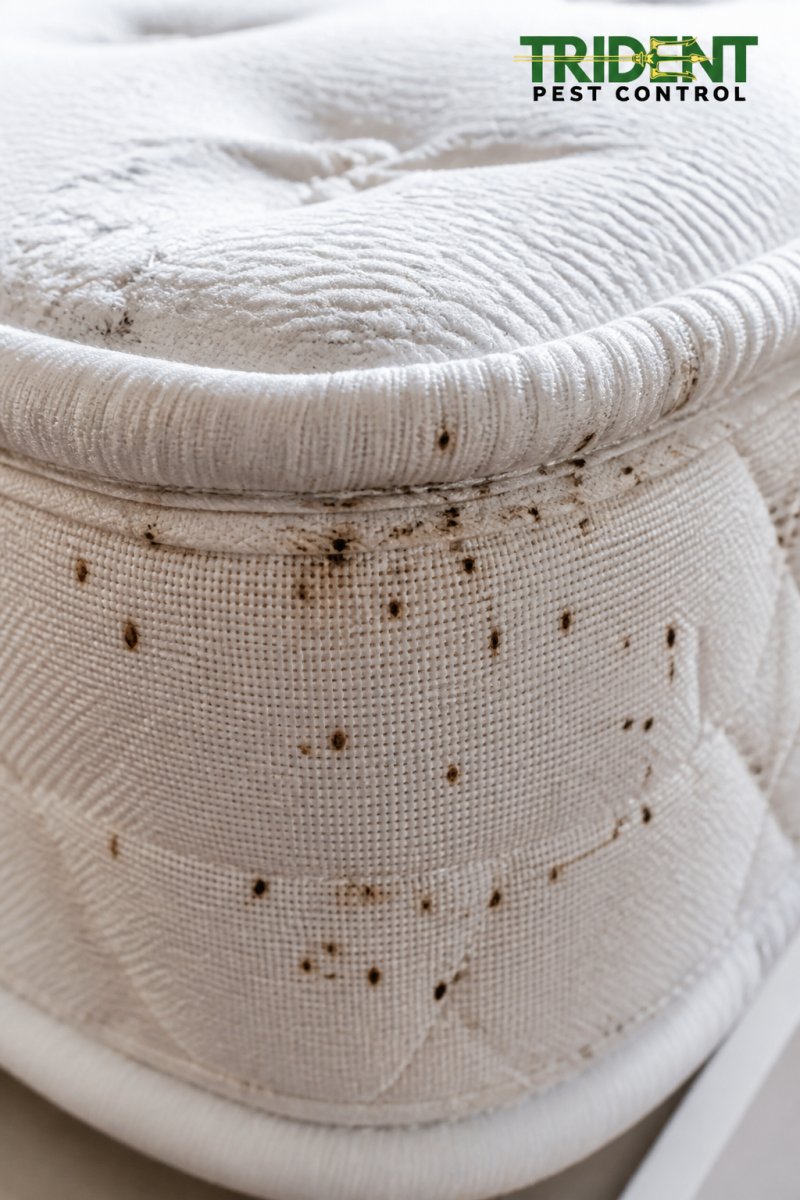
Look for dark spots or smears on your sheets, pillowcases, and mattress. These are bed bug faeces and crushed bugs, and they’re often the first physical evidence homeowners notice. You might also spot shed skin casings, translucent brown shells about the size of a grain of rice, in and around your bed frame.
Live bed bugs themselves are visible to the naked eye: reddish-brown, flat, oval-shaped insects roughly the size of an apple seed. They’re most active at night, so checking your mattress seams and bed frame after dark with a torch gives you the best chance of spotting them.
Where bed bugs hide in your home
Bed bugs are expert hiders. They don’t just live in mattresses, that’s a common myth that leads people to miss infestations entirely. These insects hide in wall voids, behind skirting boards, inside furniture joints, under wallpaper, and within electrical outlets. They can survive weeks without feeding, so they’ll wait patiently in cracks and crevices far from your bed.
In apartment buildings, bed bugs frequently move between units through shared walls, plumbing penetrations, and service areas. This is critical for renters to understand: treating a single bedroom while the rest of the house remains infested almost guarantees reinfestation within weeks. Professional pest control specialists know this, which is why comprehensive inspections of the entire property are non-negotiable.
Check behind headboards, under bed skirts, inside bedside tables, and along the edges of carpets. Inspect second-hand furniture carefully before bringing it into your home, this is how many infestations start.
Professional Bed Bug Treatment vs. DIY Approaches
The choice between professional treatment and DIY methods often comes down to one hard truth: DIY almost never works completely. Understanding why helps you make the right decision for your situation.
Why DIY treatments often fail
Supermarket insecticides kill some adult bed bugs but leave eggs untouched. Since bed bug eggs are protected by a hard shell and hidden in inaccessible crevices, the surviving eggs hatch within 7-10 days, regenerating the population. You spray, see results for a few days, then the bites return.
The resistance problem makes this worse. Most commercial sprays rely on pyrethroid insecticides, the same class that 78% of Australian bed bug samples have developed resistance to. You’re essentially spraying with a product that doesn’t work on the bugs you actually have.
DIY methods also fail because they can’t reach where bed bugs hide. Wall voids, electrical outlets, and gaps behind skirting boards are inaccessible to a handheld spray can. Professional equipment and techniques, including heat treatment, targeted chemical application, and follow-up inspections, address these hidden populations systematically.
A single professional treatment is often insufficient for complete bed bug eradication. Most infestations require two to three professional treatments spaced two to three weeks apart to account for eggs hatching after the first visit. Expecting one spray to solve the problem is the leading reason homeowners end up repeating treatments unnecessarily.
Professional treatment methods
Professional pest control operators use integrated pest management (IPM) approaches that combine multiple techniques. Chemical treatment targets accessible bed bugs using registered insecticides applied strategically to hiding spots. Heat treatment, raising the entire property temperature to 50-56°C for several hours, kills bed bugs at all life stages, including eggs, without chemical residue.
The Australian Code of Practice for Bed Bug Infestations recognises heat treatment as highly effective for this reason. Some infestations benefit from a combination approach: initial chemical treatment to reduce population, followed by heat treatment for complete eradication.
Professional operators also conduct detailed inspections before and after treatment, identifying exactly where bed bugs are hiding and confirming eradication afterward. This systematic approach, backed by proper training and equipment, is why professional treatment succeeds where DIY fails.
Understanding Bed Bug Treatment Cost and Your Options
Treatment costs vary significantly depending on the method, the size of your property, and the severity of the infestation. Understanding these options helps you budget realistically and avoid surprises.
Chemical treatment pricing
Chemical treatment pricing depends on the number of rooms, the extent of the infestation, and the type of insecticide used. A single-bedroom apartment with a localised infestation sits at the lower end; a multi-bedroom house with widespread infestation sits higher. Chemical treatment usually requires follow-up visits 2-3 weeks after the initial treatment to catch eggs that have hatched.
Heat treatment and specialist services
Heat treatment costs reflect the specialised equipment required and the fact that heat treatment usually achieves complete eradication in a single visit. For severe infestations affecting multiple rooms, heat treatment often delivers better value than repeated chemical treatments.
When comparing costs, consider the total cost of ownership. Multiple chemical treatments spread over 6-8 weeks, plus the cost of replacement bedding and potential reinfestation, often exceeds the upfront cost of professional heat treatment.
| Treatment Method | Typical Cost Range | Treatment Duration | Follow-up Required | Best For |
|---|---|---|---|---|
| Chemical treatment | Pricing depends on quantity, dates, and delivery | 2-4 hours | Yes, 2-3 weeks later | Localised infestations, budget-conscious homeowners |
| Heat treatment | Pricing depends on quantity, dates, and delivery | 6-8 hours | No | Severe infestations, multi-room properties, guaranteed eradication |
| Combination (chemical + heat) | Pricing depends on quantity, dates, and delivery | Staged over 3 weeks | Minimal | Complex infestations, high-risk properties |
Trident Pest Control provides fixed, transparent pricing with no hidden charges, you know exactly what you’re paying before treatment begins. This transparency matters when you’re already stressed about an infestation.
How to Prevent Bed Bugs: Practical Steps for Protection
Prevention is always cheaper than treatment. While you can’t guarantee you’ll never encounter bed bugs, deliberate precautions significantly reduce your risk.
Prevention in residential spaces
Inspect second-hand furniture thoroughly before bringing it home. Bed bugs travel in upholstered items, mattresses, and bed frames, the most common entry point for infestations. If you’re buying used furniture, inspect seams, joints, and underneath carefully.
Reduce clutter in your bedroom. Bed bugs hide in piles of clothes, stacks of books, and cluttered spaces. A minimalist bedroom with fewer hiding spots makes infestations easier to spot and treat.
Wash bedding regularly in hot water (at least 60°C) and dry on high heat. This kills any bed bugs or eggs present. Vacuum regularly, paying particular attention to mattress seams, bed frames, and skirting boards. Seal cracks in walls, around skirting boards, and behind electrical outlets where bed bugs hide.
Use mattress and pillow protectors, zippered covers that trap bed bugs inside and prevent new ones from entering. These are inexpensive and highly effective as a preventive layer.
Travel and accommodation safety
When travelling, inspect hotel rooms before settling in. Check the mattress seams, headboard, and bedside tables for dark spots or live bugs. Keep luggage off the floor and away from the bed, place it on the bathroom tile instead.
Upon returning home, unpack directly into a washing machine. Don’t leave suitcases in the bedroom. Inspect luggage carefully before storing it. These simple steps prevent bed bugs from hitchhiking into your home via travel.
Insecticide Resistance: Why Modern Bed Bugs Are Harder to Control
Bed bug resistance to insecticides has fundamentally changed pest control strategy. This isn’t theoretical, it’s a documented, measurable problem affecting treatment success rates across the country.
A study of 35 bed bug strains collected across the country revealed broad resistance to deltamethrin, a pyrethroid insecticide commonly used in commercial treatments. Mortality rates were predominantly high with imidacloprid (≥95%) for Cimex lectularius, though some strains showed only 70-85% mortality, indicating developing tolerance. Cimex hemipterus strains showed pyrethroid resistance with mortality at or below 10% for three of four strains, but normal susceptibility to imidacloprid.
What this means in practice: the insecticide your neighbour used successfully five years ago might be ineffective today on the bed bugs in your home. Resistance develops through repeated exposure, so bed bugs in areas with frequent pest control activity develop resistance faster.
Professional pest control operators stay current with resistance data and rotate between different chemical classes to avoid resistance buildup. They also combine chemical treatment with non-chemical methods like heat treatment, which bed bugs cannot develop resistance to because it kills through physical temperature rather than toxicological mechanism.
Resistance is why DIY treatment with supermarket sprays fails so consistently. Professional operators have access to newer insecticides, understand resistance patterns in your area, and know when to pivot to non-chemical methods. This expertise is why professional treatment succeeds where DIY fails.
What Makes Professional Bed Bug Control Different
The difference between professional bed bug control and DIY approaches comes down to knowledge, equipment, methodology, and accountability. Each of these matters.
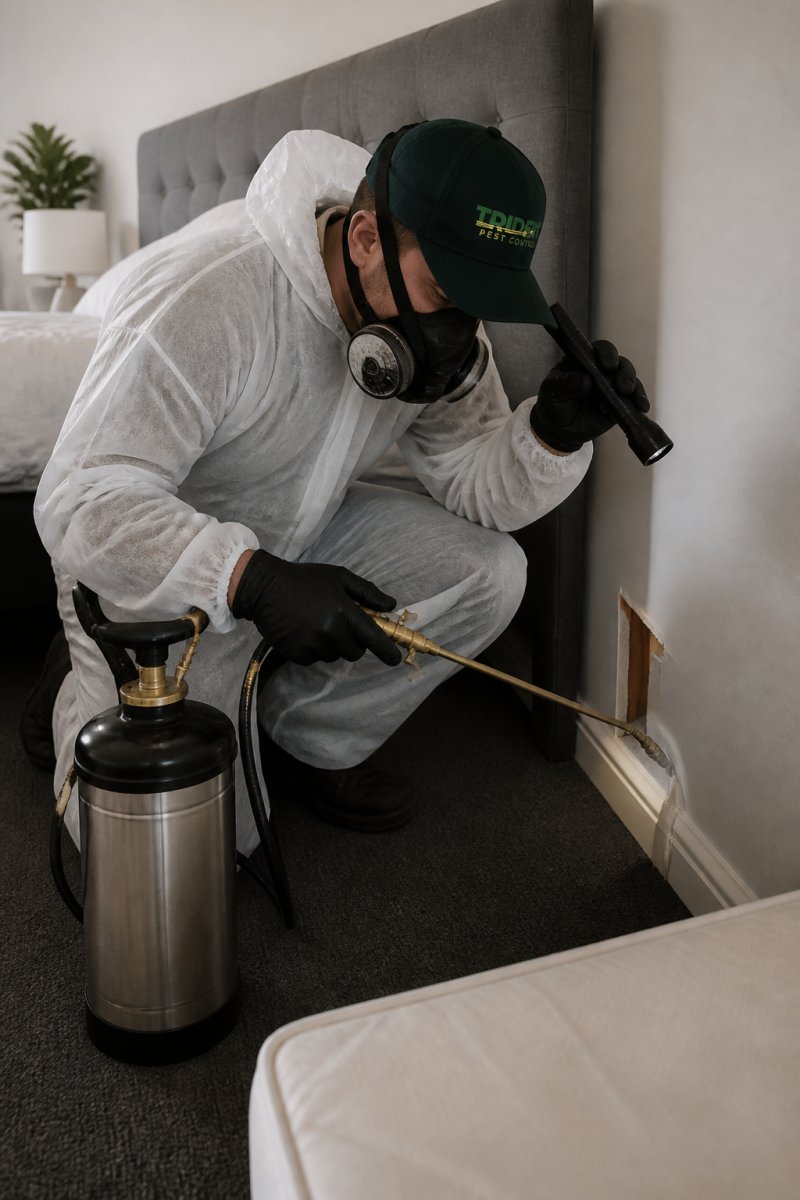
Professional operators conduct thorough property inspections, identifying exactly where bed bugs are hiding before treatment begins. This inspection data informs the treatment strategy, whether chemical treatment, heat treatment, or combination approach will work best for your specific infestation.
They use registered, professional-grade insecticides not available to consumers, and they apply them strategically to hiding spots rather than broadly spraying. They understand resistance patterns in your area and rotate between chemical classes to maintain effectiveness. They schedule follow-up treatments at the right intervals to catch eggs hatching after the initial treatment.
Most importantly, professional operators provide accountability. According to research from the Australian Environmental Pest Managers Association, professional treatment achieves eradication in 95%+ of cases when the full treatment protocol is followed. A case study of a staff accommodation complex showed how poor initial treatment by unfamiliar pest managers allowed bed bugs to spread from a single room to 20% of 320 rooms by June 2005, demonstrating that not all professional services are equal.
Trident Pest Control’s licensed and insured technicians follow the Australian Code of Practice for Bed Bug Infestations. We provide fixed pricing upfront, no hidden charges, and kid and pet-safe treatments. Same-day service is available for urgent situations. Our local expertise across Western Melbourne and surrounding regions means we understand the specific bed bug populations and resistance patterns in your area.
When you choose professional bed bug control, you’re choosing a systematic, evidence-based approach backed by expertise and accountability, not hope and a supermarket spray.
Bed bug infestations are stressful, but they’re solvable with the right approach. DIY methods fail because bed bugs hide in inaccessible places, develop insecticide resistance, and leave eggs behind to regenerate infestations. Professional bed bug control, by contrast, combines inspection, targeted treatment, follow-up protocols, and non-chemical methods to achieve genuine eradication.
If you’re dealing with bed bugs or suspect an infestation, the Australian Code of Practice for Bed Bug Infestations provides detailed guidance on best-practice control. Contact Trident Pest Control for a free quote and professional assessment of your situation. Our licensed technicians deliver safe, effective treatments with fixed pricing and no hidden fees, because complete peace of mind shouldn’t cost a fortune.
Frequently Asked Questions
Q: How do I know if I have bed bugs?
A: Look for live bugs, dark droppings on mattress seams, and itchy bite marks on your skin in a line or cluster pattern. Bed bugs hide in mattresses, bed frames, and furniture crevices. You may notice a musty smell in heavily infested areas. Early detection is critical because infestations spread rapidly, 78% of Australian bed bug samples show insecticide resistance, making professional identification and treatment essential.
Q: Can I get rid of bed bugs myself with supermarket sprays?
A: DIY treatments rarely work completely. Supermarket sprays kill some adult bed bugs but leave eggs untouched, allowing the population to regenerate. Bugs hide in inaccessible cracks that sprays cannot reach, and improper application can create health risks. Most infestations require two to three professional treatments spaced two to three weeks apart to account for eggs hatching after the first visit.
Q: What does bed bug treatment cost, and what affects the price?
A: Professional bed bug treatment costs vary depending on your property size, infestation severity, and treatment method. Fixed-price services eliminate hidden charges and give you certainty upfront. Contact Trident Pest Control for a free quote tailored to your specific situation.
Q: How can I prevent bed bugs from entering my home?
A: Inspect second-hand furniture before bringing it inside. When travelling, inspect hotel mattresses and keep luggage elevated. Seal cracks around baseboards and use protective mattress covers. Regularly vacuum and declutter to reduce hiding spots. Since 62% of new infestations start outside residential homes, vigilance when returning from travel or purchasing used items is essential for long-term prevention.
This article was written using GrandRanker