
Last Updated: November 4, 2026
Quick Summary
Rodent activity is the physical trace rats and mice leave behind as they feed, travel and nest, including droppings, grease marks, gnawed packaging and nesting scraps. In Melbourne kitchens, droppings cluster along skirting boards, in drawer corners and behind the fridge, and fresh soft dark pellets mean the infestation is active now.
- Mice leave small rice-grain shaped pellets, while rats leave larger capsule-shaped droppings.
- Pull out the fridge and oven and check the gap behind them with a torch.
- The kickboard at the base of cabinets is often clipped, not sealed, hiding a service void.
- Scratching usually peaks in the first hours after lights out, then again before dawn.
- Skip bait stations while investigating if you have kids or pets, and use flour trails instead.
Table of Contents
- What Rodent Activity in a Melbourne Kitchen Actually Looks Like
- Rodent Droppings in Kitchen Spaces: Reading the Evidence
- How to Check for Rodents at Home: A 15-Minute Walkthrough
- Rat and Mouse Entry Points Around the Kitchen
- Scratching, Scurrying and Other Nocturnal Clues
- Gnaw Marks, Rub Marks and Nesting Sites in Kitchen Cabinets
- Pet-Safe Detection: Monitoring Without Poison
- When to Call Professional Rodent Control in Melbourne
- Frequently Asked Questions
What Rodent Activity in a Melbourne Kitchen Actually Looks Like
Most people picture rats and mice as bold creatures that dart across the floor. In reality, signs of rodent activity in Melbourne kitchens are quieter and far easier to miss.
Rodent activity is the physical trace rats and mice leave behind as they feed, travel and nest. That trace includes droppings, grease marks, gnawed packaging and nesting scraps.
The kitchen often shows the first clues, because it offers food, water and warm shelter behind appliances.
Below, we outline what to look for, room by room, and how to check your own kitchen in a short walkthrough.
Rodent Droppings in Kitchen Spaces: Reading the Evidence
Droppings are the single most reliable sign you will find. Mice typically leave small, dark, rice-grain shaped pellets, while rats leave larger, capsule-shaped droppings.
Look along the back edges of shelves, inside drawers and behind the fridge. Rodents hug walls, so droppings cluster near skirting boards and corners rather than in open floor space.
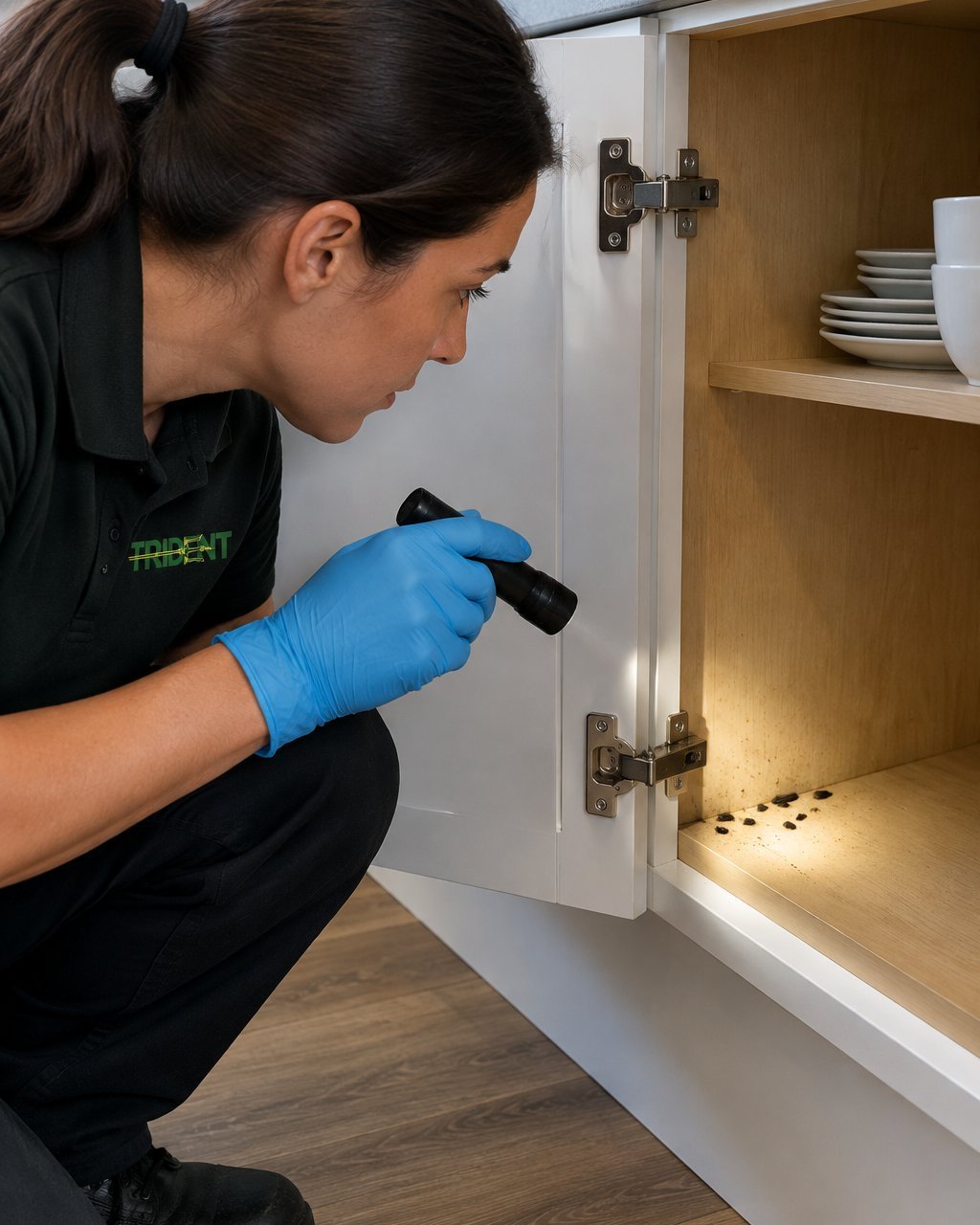
Telling Fresh Droppings From Old Ones
Fresh droppings are soft, dark and shiny. Old ones dry out, harden and turn grey. If you find fresh pellets, the infestation is active right now.
Never sweep droppings with a dry broom. That kicks dust into the air. Dampen the area first, wear gloves, and dispose of everything in a sealed bag.
How to Check for Rodents at Home: A 15-Minute Walkthrough
Learning how to check for rodents at home takes less time than making a cup of tea. Work through these steps in order:
- Pull out the fridge and oven and check the gap behind them with a torch.
- Open every pantry drawer and look at the back corners.
- Trace the skirting boards for droppings or smears.
- Check under the sink around pipe entry points.
- Inspect the ceiling in the kitchen for staining or sagging.
- Look for chewed food packaging in the pantry.
- Sniff the air near cupboards for a stale, ammonia-like smell.
Write down what you find and where. That record helps a professional pinpoint the problem fast.
Rat and Mouse Entry Points Around the Kitchen
Mice can squeeze through very narrow gaps, and rats need only a little more room. That is one reason the kitchen is often a common entry point, given the number of pipes, cables and appliances passing through its walls. Common rat and mouse entry points include:
- Gaps around pipes under the sink and behind the dishwasher
- Cracks in brickwork or mortar on the kitchen’s external wall
- Torn flyscreens and open vents, including rangehood and exhaust outlets
- Gaps under external doors, especially laundry-to-kitchen and patio doors
- Holes where cables, gas lines and water pipes enter the wall
Gaps are often sealed with steel wool finished with sealant, as foam alone can be chewed through by rodents.
Kitchen-Specific Structural Vulnerabilities
General ‘check your home’ advice misses where kitchens actually fail. Work through these three zones:
- Lower cabinetry and kickboards. The kickboard (toe-kick) at the base of cabinets is often fixed with clips, not sealed. Pull it away and you will find a service void running the length of the kitchen, warm, dark and full of crumbs. Rodents travel this void and surface through gaps around cabinet legs.
- Pantry seals. A pantry door with a brush seal that has worn flat, or a cupboard with no seal at all, gives a direct food route. Check the seal along the bottom edge and the hinge side; that is where gnawing starts.
- Appliance gaps. The void behind the fridge, the sides of the oven and the space under the sink are the three warmest, dampest spots in the kitchen. A fridge compressor gives off steady heat, which is why droppings behind the fridge are so common.
For a deeper walkthrough of spotting these gaps around the whole house, see our guide on how to identify rodent entry points in your house.
Werribee and Western Melbourne Factors That Raise the Risk
Werribee’s mix of open grassland and river corridor can mean rodents have access to water and cover nearby. Cold weather also drives mice indoors looking for warmth, and the kitchen is often the first warm room they find.
Housing style matters too. Our roundup of common pests in Werribee rental properties covers what else to watch for.
Watch out: sealing a gap while rodents are still inside can trap them in the void, so confirm activity has stopped before proofing the entry point.
Scratching, Scurrying and Other Nocturnal Clues
Rats and mice are nocturnal. That means the noises start after dark, when the house goes quiet. But not all night noise is rodent noise, and the difference matters before you spend money on treatment.
Listen for three distinct sounds:
- Light scratching in the ceiling, usually mice moving through insulation or along ceiling joists.
- Scurrying behind wall voids, the rapid patter of small feet, often in bursts as rodents move between nesting and feeding points.
- A faint rustle inside cupboards, the sound of packaging being investigated or nesting material being shifted.
These sounds usually peak in the first hours after lights out, then again just before dawn. If you hear noise in the middle of the night and again at first light, that pattern points to rodents rather than possums, which tend to be heavier and more deliberate.
Reading the Timing and Location
Where the noise comes from narrows down the species and the route:
- Ceiling, directly above the kitchen, rodents are using the roof void as a highway and dropping into the kitchen through a wall cavity or around a pipe penetration.
- Inside a wall behind the pantry or fridge, the void is being used as a nest site, not just a route.
- Under the floor, near the sink, often rats rather than mice, following plumbing runs.
A common pattern is that homeowners hear scratching for weeks, assume it is birds on the roof, and only find droppings when they pull out an appliance. If you hear scratching tonight, don’t wait until morning. Our 24-hour rat and mice control line lets you speak to someone immediately.
Other Nocturnal Clues Beyond Sound
Sound is only one channel. Check these the morning after you hear noise:
- Greasy rub marks along the skirting behind the fridge, left as rodents squeeze through the same gap nightly.
- Fresh droppings on the top shelf of the pantry or along the back edge of the bench.
- Disturbed packaging, a cereal box pushed back at an angle, or a bag of flour with a corner chewed.
- A stale, ammonia-like smell near cupboards, which builds up where rodents are urinating along a regular route.
Watch out: a single night of noise is weak evidence, so record the time and location for two or three nights before acting, that log is exactly what a technician needs to target the right void.
Gnaw Marks, Rub Marks and Nesting Sites in Kitchen Cabinets
Teeth marks are a clear giveaway. Look for chewed corners on cereal boxes, pasta bags and pet food. Rodents also gnaw wiring and insulation, which raises fire risk.
Rub marks are greasy smears left along walls as rodents travel the same path nightly. They show up as dark streaks near skirting boards.
Nesting material collects in warm, hidden spots. Check behind the dishwasher and inside the cavity under lower cabinets for shredded paper, fabric or insulation.
Pet-Safe Detection: Monitoring Without Poison
If you have kids or pets, skip bait stations while you investigate. Poison poses a real risk to curious dogs and cats, and to wildlife.
Try these safer detection methods instead:
- Flour or talc trails along skirting boards to capture footprints overnight
- Non-toxic glue boards placed where pets cannot reach
- A phone camera on a timer to record movement in dark corners
- Sealed snap traps set inside boxes pets can’t open
These confirm activity without putting anyone at risk. Once you know the scale of the problem, you can choose the right treatment.
When to Call Professional Rodent Control in Melbourne
Some jobs are DIY-friendly. A single mouse caught in a trap is one of them. But persistent scratching, fresh droppings after weeks of trapping, or gnawed wiring mean it’s time to call in help.
Professional rodent control in Melbourne can help find entry points, use methods suited to households with kids and pets, and proof the property against return.
At Trident Pest Control, our licensed and insured technicians handle rodent jobs across Werribee, Melbourne and Geelong. To book a visit, see our rodent pest control service.
| Sign | What It Tells You | Best Next Step |
|---|---|---|
| Fresh droppings | Active infestation now | Inspect entry points today |
| Scratching at night | Rodents in ceiling or walls | Book a professional inspection |
| Gnaw marks on wiring | Fire risk, urgent | Call a licensed technician |
| Rub marks along walls | Regular travel path | Seal gaps on that route |
| Nesting scraps | Breeding site nearby | Remove and proof the area |
For renters and buyers in the western suburbs, our rodent and bed bug extermination guide covers local signs and prevention.
Frequently Asked Questions
What are the first signs of rats or mice in a kitchen?
The earliest clues are usually droppings along the back of cupboards and under the sink, plus scratching or scurrying after dark. Look for gnaw marks on packaging, rub marks where fur brushes skirting boards, and nesting material such as shredded paper or insulation. A greasy smear along a wall edge is a strong indicator of a regular run. If you notice several of these together, treat it as active rodent activity and start a full check of the room.
How can I tell whether rodent droppings are fresh?
Fresh droppings are dark, soft and glossy, while older ones dry out, harden and turn grey or brown. Mouse droppings look like small dark grains of rice; rat droppings are larger and blunter. Wear gloves and never dry-sweep, because dust from droppings can carry bacteria. Note where you found them and check the same spot a few days later. New droppings in the same place mean the rodent activity is ongoing, not a one-off visit.
Can rodents get into kitchen cupboards and drawers?
Yes. Mice can squeeze through gaps as narrow as a pencil, so drawer runners, cupboard backs and the space behind kickboards are common routes. Check the back corners of pantry shelves, under cutlery trays and along the top of wall cabinets. Store dry goods in sealed hard containers rather than cardboard or thin plastic, and pull out appliances occasionally to inspect the wall behind them. Sealing gaps and removing food access are the two most effective prevention steps.
When should I contact a pest control professional about rodents?
Call a professional if you find droppings in more than one room, hear scratching in wall voids or ceiling cavities, or see gnaw marks on wiring. These point to an established infestation rather than a single visitor. DIY traps can handle a small, contained problem, but rodents that keep returning usually have entry points you cannot see. A licensed technician can locate the runs, seal rat and mouse entry points and set a monitoring plan so the problem does not come back.
Rodent problems rarely fix themselves, and a small clue today can become a chewed wire or a contaminated pantry within weeks. If you’ve spotted droppings, heard scratching, or found gnaw marks in your kitchen, don’t wait for it to get worse. Trident Pest Control offers licensed technicians, kid and pet-safe treatments, fixed pricing and same-day service across Werribee and western Melbourne. Get started with Trident Pest Control and get your kitchen checked properly.
