Table of Contents
- Why You Need a Professional Pest Control Expert
- Common Pests in Western Melbourne and How They Damage Your Property
- Signs of Pest Activity You Should Never Ignore
- Safe Pest Control Methods That Protect Your Family and Pets
- How Often Should Pest Control Be Done for Maximum Protection
- What Sets a Professional Pest Control Expert Apart
- Integrated Pest Management: The Approach That Stops Infestations Returning
- Frequently Asked Questions
Last Updated: September 4, 2026
Why You Need a Professional Pest Control Expert
A professional pest control expert brings more than just spray bottles and chemicals to your property. They bring systematic diagnosis, targeted treatment, and prevention strategies that stop infestations before they cause structural damage or health risks to your family.
Many homeowners try DIY approaches first, baits, sprays from hardware stores, online advice. These tactics occasionally work for minor issues. But when pests establish themselves in your walls, under your floors, or in your garden beds, a professional pest control expert identifies the entry points, breeding grounds, and damage patterns that DIY solutions miss entirely.
The real cost of waiting isn’t just the pest activity itself. It’s the structural damage termites cause, the disease vectors rodents introduce, the allergic reactions some family members experience from cockroach droppings, and the peace of mind you lose when you’re uncertain whether the problem is truly solved.
Common Pests in Western Melbourne and How They Damage Your Property
Western Melbourne’s warm, humid climate creates ideal conditions for several destructive pests. Understanding what you’re dealing with helps you recognise when professional intervention becomes essential.
Termites are the most expensive threat. They work silently inside timber, eating away structural integrity while leaving the surface looking normal. By the time visible damage appears, colonies have often been active for months. Rodents, rats and mice, contaminate food storage, chew through electrical wiring (creating fire hazards), and leave droppings that spread disease. Cockroaches thrive in kitchens and bathrooms, multiply rapidly, and trigger allergies in sensitive individuals. Spiders, whilst mostly harmless, accumulate in corners and create aesthetic problems that concern tenants and buyers. Ants establish massive colonies underground and in wall cavities, farming aphids on plants and occasionally invading kitchens in search of food.
A professional pest control expert understands the behaviour patterns specific to each species and applies targeted solutions rather than broad spraying that wastes chemicals and money.
Signs of Pest Activity You Should Never Ignore
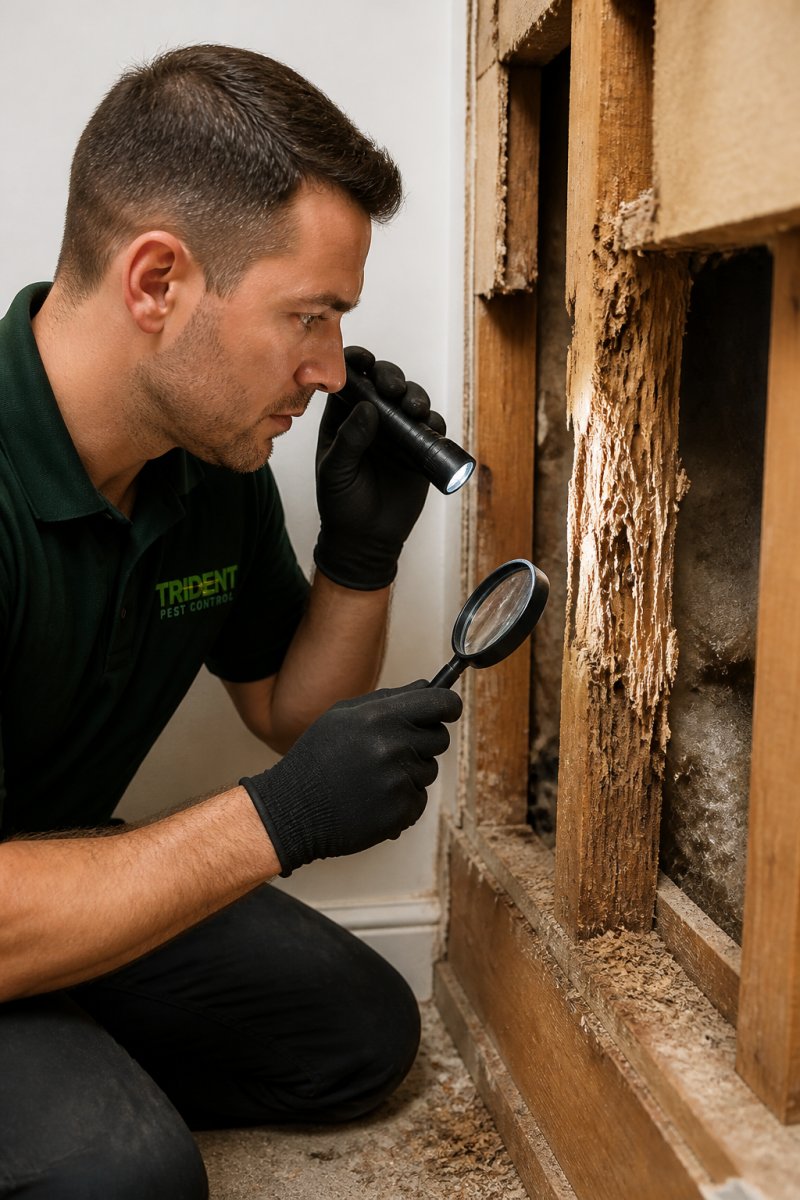
Early detection prevents expensive repairs. But knowing what to look for is only half the equation, knowing whether you can handle it yourself or need professional intervention is what separates a quick fix from a costly mistake.
Visual and Physical Signs
Mud tubes running up external walls or inside foundations signal termite activity; these tubes protect termites from exposure as they travel between soil and timber. Droppings (small dark pellets in corners, under sinks, or along skirting boards) indicate rodent presence. Wood that sounds hollow when tapped, or timber with small exit holes, suggests active boring insects. Cockroach droppings look like ground black pepper scattered in cupboards or behind appliances. Unusual odours, musty, ammonia-like smells in walls or under floors, often indicate pest nesting sites or dead animals.
The DIY Threshold: When to Call a Professional
Seeing a single pest doesn’t automatically mean you have a full infestation. But it does mean conditions favour pests, and more are likely nearby. The question is: can you solve this yourself, or is professional intervention necessary?
Call a professional immediately if:
- You find mud tubes, termite damage, or hollow-sounding timber. Termite colonies can consume structural timber for months before visible damage appears; by the time you notice it, the colony is often well-established and requires professional treatment to eliminate completely (peer-reviewed research).
- Droppings appear in multiple rooms or in large quantities. A few droppings might indicate a single rodent passing through; widespread droppings suggest an established population breeding inside your walls or roof space, requiring trapping, exclusion, and often multiple visits.
- You discover pests in food storage areas or see them during daylight hours. Cockroaches and rodents active during the day indicate high population density; this level of infestation rarely responds to over-the-counter treatments.
- You’ve already tried DIY treatments and the problem persists after two weeks. This signals that the source (entry points, nesting sites, breeding grounds) hasn’t been addressed, and a professional inspection is needed to locate what you’re missing.
- The pest is in a wall cavity, roof space, or under the house. These areas are difficult to access safely and require professional equipment and expertise to treat effectively without creating new entry points or missing hidden colonies.
When DIY might be sufficient:
- A single spider or occasional ant trail in the kitchen. These are often one-off visitors, not infestations.
- Ants in the garden (not in the house). Garden ant colonies can sometimes be managed with targeted baiting without professional help, though this depends on the species and your tolerance for ongoing monitoring.
- Occasional flies during warmer months, with no obvious breeding source inside. Improved bin management and drain cleaning often resolve this.
The cost of waiting for a professional when you should have called immediately, structural damage from termites, disease transmission from rodents, or a full cockroach infestation, far exceeds the cost of an inspection. A professional pest control expert assesses the extent of activity, identifies entry points and breeding sites, and recommends treatment only if warranted, giving you certainty rather than guesswork.
Safe Pest Control Methods That Protect Your Family and Pets
Safety concerns prevent many property owners from calling for help. The fear that treatments will poison children or pets, or leave residues on surfaces, keeps people tolerating active infestations instead.
Modern pest control methods have moved far beyond the indiscriminate spraying of decades past. Professional treatments now use targeted application, placing baits in tamper-proof stations where children and pets cannot access them, applying barriers to specific entry points rather than treating entire rooms, and using methods timed to minimise exposure (evening treatments when families are away, or sealed-off areas during application).
A professional pest control expert explains exactly which method suits your situation, how long you need to stay out of treated areas (often just a few hours), and what precautions to take. Trident Pest Control prioritises kid and pet-safe treatments, using secure, high-quality methods for every service.
How Often Should Pest Control Be Done for Maximum Protection
Frequency depends on your property type, local pest pressure, and whether you’re treating an active infestation or maintaining prevention. But in Western Melbourne, seasonal patterns significantly influence when pests are most active and when preventive treatment is most effective.
Understanding Western Melbourne’s Pest Calendar
The region’s warm, humid climate means pest activity doesn’t follow a simple on-off cycle. Instead, different pests peak at different times:
- Spring (September-November): Termites become more active as soil temperatures rise and moisture increases after winter. This is the critical window for termite inspections and preventive barriers before colonies expand. Ants also emerge from dormancy and establish new foraging trails. Spiders begin breeding and web-building accelerates.
- Summer (December-February): Cockroaches thrive in warm kitchens and bathrooms; populations peak. Rodents seek water sources during dry spells and food during harvest seasons. Mosquitoes breed in any standing water. This is peak season for active infestations.
- Autumn (March-May): Rodents intensify foraging as natural food sources decline; they’re more likely to enter buildings. Termites continue activity but at slightly reduced rates. Cockroaches remain active but populations begin to stabilise.
- Winter (June-August): Activity slows but doesn’t stop. Rodents shelter indoors. Termites work more slowly in cooler soil but continue consuming timber. This is an ideal time for preventive treatments because pest populations are lower and treatments can establish barriers before spring acceleration.
Treatment Frequency by Situation
Active infestations typically require multiple treatments spaced 2-4 weeks apart, allowing time for remaining pests to contact treated surfaces and for population decline to become measurable (peer-reviewed research). Once control is achieved, maintenance shifts based on your property type and local risk:
- Residential properties with no history of infestation: Quarterly visits during spring and summer (September-February), then annual inspections in winter. This covers peak activity periods without unnecessary over-treatment.
- Residential properties with previous termite activity or high-risk features (timber stumps, garden beds against walls, poor drainage): Bi-annual inspections (spring and autumn) plus annual termite barrier treatment in winter. The winter barrier application prevents spring colony expansion.
- Older properties with established gardens and multiple potential entry points: Quarterly or bi-annual service year-round. These properties accumulate more pest pressure over time.
- New estate homes in growing areas: Monthly or bi-monthly service during the first 12 months. Construction disturbs soil, creates entry points, and attracts pests; regular monitoring prevents establishment.
- Commercial properties (food handling, retail, offices): Monthly or bi-monthly service year-round. Higher foot traffic, waste generation, and food handling create constant pest attraction.
Why Seasonal Timing Matters
A professional pest control expert in Western Melbourne understands that a single annual visit often misses critical windows. Spring termite activity, for example, peaks when colonies are expanding; a winter inspection might find no evidence, but by spring, damage is accelerating. Similarly, summer cockroach treatments are most effective because populations are at their highest and reproduction is fastest; treating in winter when populations are lower is less efficient.
The most effective approach combines seasonal inspections (catching problems when pest activity is highest) with preventive treatments timed to disrupt breeding and entry before peak seasons. This isn’t about treating more frequently than necessary; it’s about treating at the right time to maximise protection and minimise pest pressure year-round.
What Sets a Professional Pest Control Expert Apart
Not all pest control services operate at the same standard. The difference between adequate and exceptional lies in several factors.
Licensed technicians have completed formal training and passed examinations demonstrating knowledge of pest biology, treatment safety, and application techniques. Insured businesses protect you if something goes wrong during treatment. Transparent pricing, fixed quotes with no hidden charges, means you know the cost upfront. Same-day service availability matters when you discover an active infestation on a Friday afternoon. Local expertise means understanding which pests dominate your specific area and which seasonal patterns drive activity.
Trident Pest Control combines all these elements: licensed and insured technicians, fixed pricing with no hidden charges, kids and pet-safe treatments, and same-day service availability.
Integrated Pest Management: The Approach That Stops Infestations Returning
The reason pests return after treatment often isn’t treatment failure, it’s that the conditions attracting them remain unchanged. Integrated Pest Management (IPM) addresses this by combining multiple strategies.
IPM starts with inspection and identification (what pest, how many, where are they living). It continues with environmental modification, removing food sources, sealing entry points, reducing moisture that attracts pests, clearing vegetation touching walls. Only then does targeted chemical treatment follow, applied only where needed. Finally, monitoring continues to catch early signs of reinfestation before populations rebuild.
Research from the Stakeholder co-design of sustainable urban pest management framework demonstrates that this layered approach provides longer-lasting control than chemical treatment alone. A professional pest control expert trained in IPM explains what conditions in your home or business favour pests and what changes reduce that attraction, turning your property into a place where pests struggle to establish themselves.
Pests don’t disappear because you ignore them. They multiply, damage property, and create health risks that compound over time. A professional pest control expert stops this cycle with systematic diagnosis, targeted treatment, and prevention strategies tailored to your property and family circumstances. Get your free quote from Trident Pest Control and discover how licensed, insured technicians deliver complete protection with fixed pricing, same-day availability, and treatments that keep your family and pets safe.
Frequently Asked Questions
How often should pest control be done to prevent infestations?
Frequency depends on your property type and pest pressure. Residential homes typically benefit from regular treatments as part of an integrated pest management plan, while high-risk properties may need more frequent visits. A professional pest control expert will assess your specific situation and recommend a tailored schedule. Regular treatments prevent infestations from establishing rather than waiting to react to active pest activity.
Are professional pest control treatments safe for children and pets?
Yes, when delivered by a licensed technician using approved safe pest control methods. Modern treatments use targeted application techniques and child and pet-safe formulations that comply with Australian safety standards. Always inform your pest control expert about the ages of children and types of pets in your home. Licensed professionals understand containment protocols and will advise on necessary precautions, such as temporary room access restrictions, to protect your family during and after treatment.
What signs of pest activity indicate I need to call a professional immediately?
Contact a pest control expert if you notice droppings, dead insects, unusual odours, or damage to timber and walls. Termite mud tubes, cockroach egg cases, or rodent gnaw marks on wiring or food packaging are urgent warning signs. Active infestations, seeing pests during the day, finding them in multiple rooms, or discovering structural damage, require assessment. Early intervention prevents property damage and stops pest populations from multiplying, making professional diagnosis critical.
Why is integrated pest management better than one-off treatments?
Integrated pest management (IPM) combines inspection, prevention, and targeted treatment to address root causes rather than just symptoms. A professional pest control expert using IPM identifies entry points, removes attractants, applies barriers, and uses safe chemicals strategically. This approach stops pests from returning, whereas one-off treatments often fail because conditions remain favourable for reinfestation. IPM is often more cost-effective long term and reduces the need for repeated emergency callouts.