Table of Contents
- Reactive Pest Control vs. Complete Pest Prevention: What’s the Real Difference?
- Integrated Pest Management Benefits for Homeowners and Businesses
- Cost-Benefit Analysis: Prevention Versus Eradication
- Identifying Common Household Pests and Their Entry Points
- Safe and Effective Pest Control Solutions Near Werribee
- Professional Pest Inspection Frequency: How Often Is Enough?
- Choosing the Right Pest Control Solutions for Your Property
- Conclusion
Last Updated: August 24, 2026
Pest prevention is one of those topics where the conventional wisdom gets it backwards. Most people treat pest control as a reactive problem: something goes wrong, you call someone, the problem goes away. Repeat. At Trident Pest Control, we see this cycle play out constantly across Western Melbourne, and the pattern is always the same. Reactive treatment costs more, takes longer, and rarely addresses the conditions that invited pests in the first place. This guide breaks down the real difference between safe and effective pest control solutions and complete protection from pests, so you can make a genuinely informed decision about how to protect your property.
Prevention beats eradication on almost every measure. Below, we’ll show you exactly how integrated pest management works, what a seasonal pest calendar looks like in practice, and why the cost-benefit case for prevention is stronger than most people realise.
Reactive Pest Control vs. Complete Pest Prevention: What’s the Real Difference?
Reactive pest control treats active infestations after pests have already established themselves in a property. Complete pest prevention is a proactive approach that combines habitat modification, exclusion methods, monitoring systems, and targeted treatment to stop infestations before they start. The distinction matters enormously in practice: reactive response deals with symptoms, while prevention addresses root causes.
What Reactive Pest Control Looks Like in Practice
A reactive approach typically follows a predictable pattern: you spot cockroaches in the kitchen, call a technician, get a spray treatment, and see results within days. The problem returns six weeks later because nothing changed about the conditions that attracted the pests. The entry points are still open, the moisture source is still there, and the food residues are still accessible.
Recurring infestations are the clearest sign that reactive treatment alone is failing. If you have had pest control out more than twice in two years for the same pest, the underlying conditions have not been addressed.
What Complete Pest Prevention Actually Involves
Complete pest prevention is a structured, ongoing process involving thorough inspection to identify entry points, moisture sources, and harborage areas; sealing cracks and structural vulnerabilities; habitat modification to remove food and water sources; monitoring systems to detect activity before infestation; scheduled preventative maintenance; and pest identification to understand life cycles. The result is long-lasting protection rather than a temporary fix, with higher environmental safety through reduced pesticide application over time.
Integrated Pest Management Benefits for Homeowners and Businesses
Integrated pest management is the gold standard framework for modern pest control. IPM is a systematic, evidence-based approach that combines biological control, mechanical barriers, habitat modification, and targeted chemical intervention to manage pests with minimal environmental impact.
According to Australia’s Department of Agriculture, Fisheries and Forestry guidance on pest management, integrated pest management prioritises non-chemical methods first, reserving pesticide application for situations where other controls are insufficient. For homeowners, the benefits are practical: fewer repeat treatments, lower chemical exposure for children and pets, and a property that is structurally less hospitable to pests. For businesses, IPM supports regulatory compliance and protects brand reputation.
Non-Chemical Methods: Exclusion, Trapping, and Habitat Modification
Non-chemical methods form the foundation of any serious prevention strategy. Exclusion methods focus on structural integrity: sealing cracks around pipes, weatherstripping doors, screening vents, and blocking entry points that pests use to access buildings.
Trapping techniques reduce existing pest populations without chemical exposure and function as monitoring systems that tell you which pests are present and in what numbers. Habitat modification is often the most effective intervention: eliminating food and water sources, reducing clutter, fixing leaks, and managing vegetation near the building removes the conditions pests need to survive.
The most overlooked exclusion point in residential properties is the gap between the wall and the floor near plumbing penetrations. A gap of just a few millimetres is enough for cockroaches and [rodents](/how-rodents-impact-homes-and-businesses/) to enter. Check these areas during any inspection.
When Pesticide Application Fits Within an IPM Framework
Pesticide application is one tool among many, working best when used strategically rather than reflexively. Within an IPM framework, chemical treatment is applied after non-chemical methods have been exhausted or when pest pressure is too high for mechanical controls alone. Responsible application means selecting products with appropriate toxicity levels, applying them in a targeted way that minimises exposure to non-target species, and timing treatments to the pest life cycle for maximum effectiveness.
Australian Pesticides and Veterinary Medicines Authority guidance on pesticide use sets the registration and use standards for pest control chemicals in Australia. Licensed technicians are required to work within these standards on every job.
Cost-Benefit Analysis: Prevention Versus Eradication
Eradication of an established infestation is almost always more expensive than the prevention measures that would have stopped it. Eradication involves multiple treatment visits, potential structural repairs if pests have caused damage, disposal of contaminated materials, and ongoing costs of repeat treatments if the root cause is not addressed. Termite eradication in particular can involve significant remediation costs that dwarf any prevention programme.
Prevention involves scheduled inspections, targeted treatments, and exclusion work with predictable costs spread over time, directly reducing the likelihood of expensive emergency call-outs.
| Approach | Timing | Typical Outcome | Long-Term Cost |
|---|---|---|---|
| Reactive treatment | After infestation | Temporary relief | Higher (repeat visits) |
| Prevention programme | Before infestation | Sustained protection | Lower (fewer emergencies) |
| Integrated pest management | Ongoing | Long-lasting results | Lowest over time |
The real cost of pest control is not the price of a single treatment. It is the cumulative cost of all the treatments you need when the underlying conditions are never fixed.
Identifying Common Household Pests and Their Entry Points
Pest identification is the starting point for any effective control strategy. Different pests use different entry points, respond to different treatments, and have different life cycles that affect when and how to intervene.
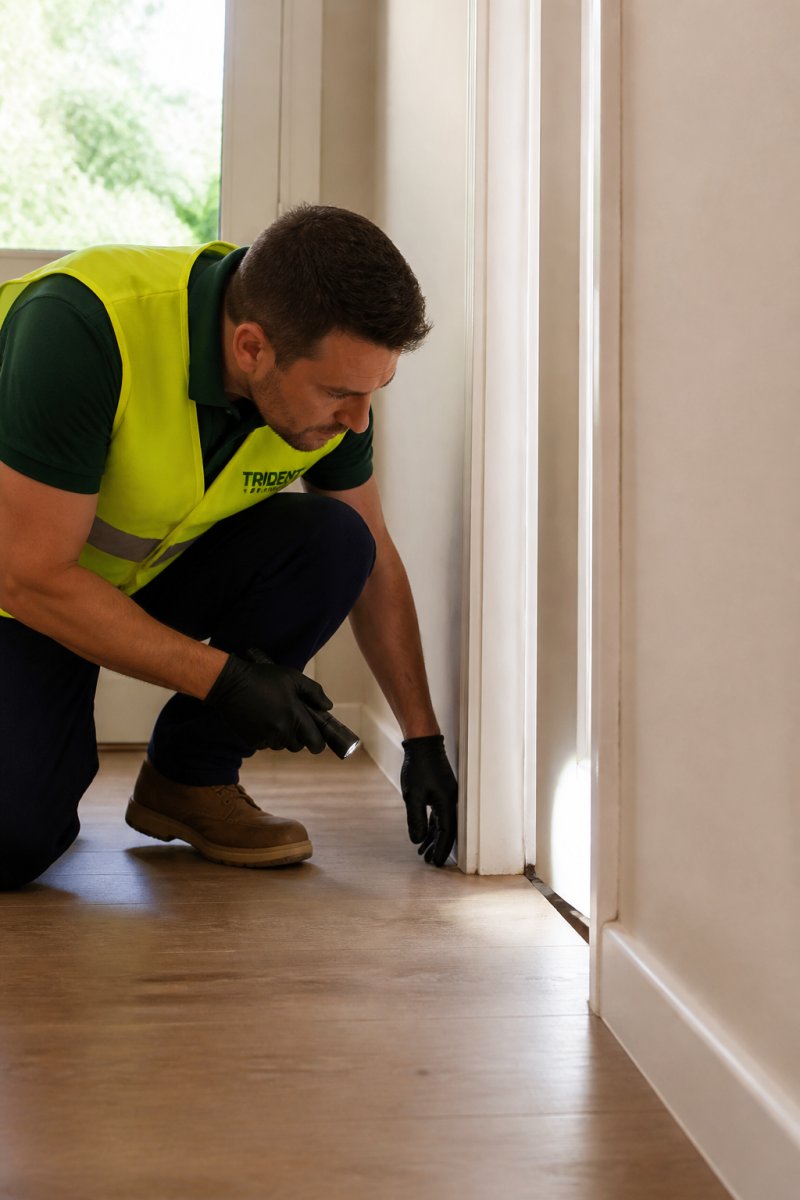
Common household pests and their typical entry points include:
- Cockroaches: Enter through gaps around pipes, drains, and utility penetrations. Attracted to moisture and food residues.
- Ants: Enter through cracks in foundations, gaps in weatherstripping, and around window frames. Foragers follow established trails.
- Rodents: Enter through gaps larger than roughly 6mm (mice) or 20mm (rats). Common entry points include roof cavities, weep holes, and gaps around pipes.
- Spiders: Enter through window gaps, vents, and poorly sealed doors. Often follow insect prey inside.
- Termites: Enter through soil contact with timber, cracks in concrete slabs, and via roof spaces. Require specialist inspection and monitoring.
According to CSIRO research on urban pest behaviour in Australia, many common urban pests are adapting to human environments, making thorough inspection and proactive sealing of entry points increasingly important.
Seasonal Pest Calendar: What to Watch for Each Quarter
Pest pressure in Western Melbourne follows clear seasonal patterns. Knowing what to expect each quarter allows for genuinely proactive pest management.
Summer (December to February): Peak activity for ants, cockroaches, and spiders. Hot, dry conditions drive pests indoors seeking water. Inspect and seal entry points before the season starts.
Autumn (March to May): Rodents begin seeking shelter as temperatures drop. Check roof cavities, weep holes, and gaps around pipes. This is the highest-risk period for rodent entry.
Winter (June to August): Cockroach activity moves indoors. Termite activity slows but does not stop; inspections remain important. Moisture management is critical during wet months.
Spring (September to November): Ant colonies emerge and expand. Spider populations increase. This is the ideal time for a thorough preventative inspection and treatment before summer pressure builds.
Safe and Effective Pest Control Solutions Near Werribee
Safe and effective pest control near Werribee requires licensed technicians who understand both the local pest pressures and the regulatory standards that govern treatment safety. Trident Pest Control operates across Western Melbourne with a specific focus on the Werribee region, delivering treatments that meet kids and pet-safe standards without compromising on effectiveness.
Kids and Pet-Safe Treatments: What the Standards Require
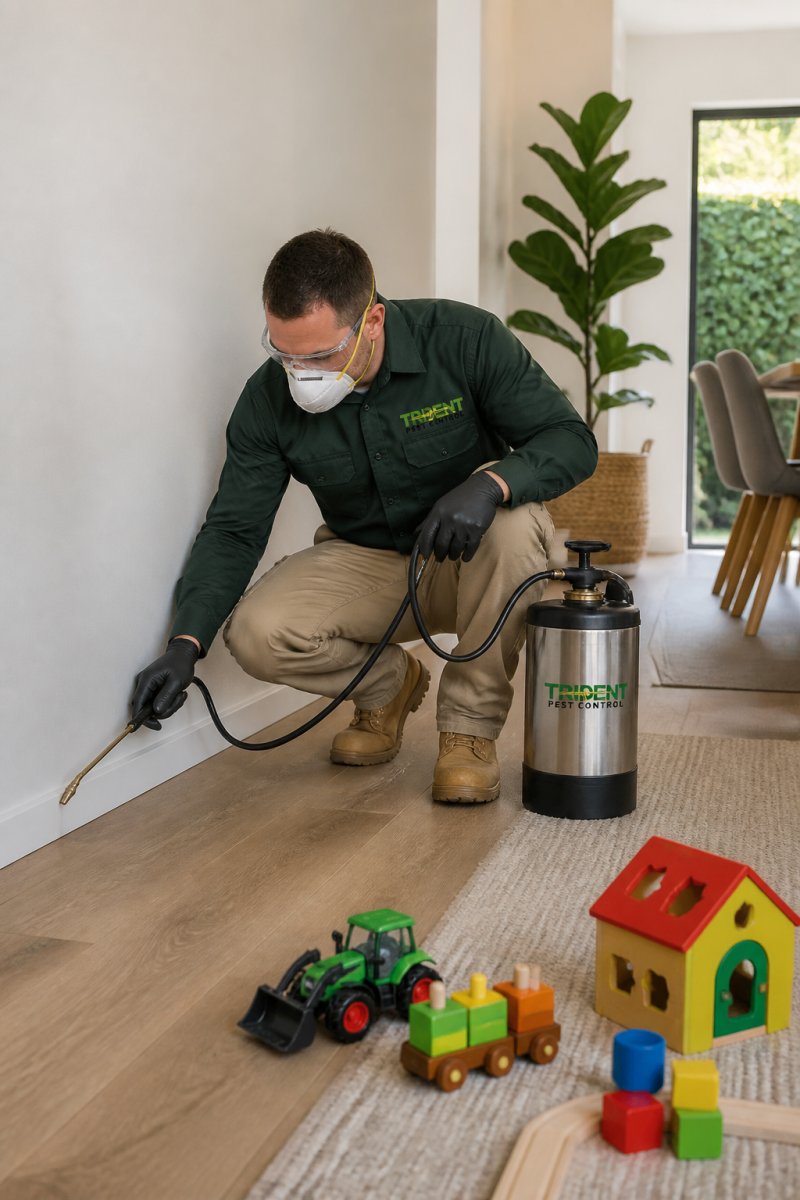
Kids and pet-safe pest control refers to a specific set of practices that govern product selection, application method, and re-entry timing. Under Australian standards, pest control products used in residential settings must be registered with the Australian Pesticides and Veterinary Medicines Authority. Licensed technicians are required to follow label directions precisely, which include specified re-entry intervals after treatment.
A kids and pet-safe approach involves selecting products with lower mammalian toxicity where effective options exist, applying treatments in targeted areas rather than broad-scale spraying, advising on appropriate re-entry times based on specific products used, and using gel baits, dusts, and other low-exposure formats where possible. The technician should always brief you on re-entry times before leaving.
DIY Eco-Friendly Alternatives vs. Licensed Professional Treatment
DIY pest control products are genuinely useful for minor, localised pest issues. Bait stations for ants, pheromone traps for moths, and diatomaceous earth for crawling insects are all non-toxic options that carry minimal risk when used correctly.
The limitation of DIY approaches is scope. For minor problems, they work. For established infestations, complex pest issues like termites, or situations requiring regulatory compliance documentation (such as end-of-lease flea treatments), licensed professional treatment is necessary.
| Scenario | DIY Approach | Professional Treatment |
|---|---|---|
| Minor ant trail, single location | Effective | Not required |
| Cockroach infestation, whole property | Partial control only | Recommended |
| Termite activity | Not appropriate | Required |
| End-of-lease flea treatment with certificate | Not accepted | Required |
| Rodent entry through roof cavity | Traps helpful | Full inspection needed |
Improper pesticide application can create safety hazards, and using the wrong product can cause pests to scatter rather than be eliminated, making subsequent professional treatment harder.
Professional Pest Inspection Frequency: How Often Is Enough?
Professional pest inspection frequency depends on the property type, pest history, and local risk factors. For most residential properties without a history of infestation, an annual inspection is a reasonable baseline. Properties with previous termite activity, older construction, or significant vegetation contact warrant more frequent inspections, typically every six months.
For commercial facilities, inspection frequency should reflect the nature of the business. Food handling environments, healthcare facilities, and warehouses face higher regulatory scrutiny and typically require quarterly inspections at minimum to maintain compliance and demonstrate due diligence.
The purpose of regular inspections is to identify conditions becoming conducive to pest activity, allowing intervention before an infestation establishes. This is the practical core of a proactive approach: acting on early warning signs rather than waiting for the problem to become visible.
Choosing the Right Pest Control Solutions for Your Property
The right pest control solutions for your property depend on three factors: the pests you are dealing with, the conditions of your property, and your tolerance for chemical exposure.
For families with young children or pets, the priority is treatments with low mammalian toxicity and clear re-entry guidance. For businesses, regulatory compliance and documentation are non-negotiable. For properties with a history of recurring infestations, the priority is identifying and addressing the underlying conditions rather than treating symptoms repeatedly.
A few practical principles apply across all situations:
- Always verify licensing. In Victoria, pest control technicians must hold a current licence issued under the Public Health and Wellbeing Act 2008. Ask for licence details before any work begins.
- Get a scope of work in writing. Fixed pricing with no hidden charges protects you from bill shock and ensures the technician is accountable for the agreed treatment.
- Ask about the prevention component. A treatment that does not include advice on exclusion, sanitation, or habitat modification is only addressing the symptom.
- Match the solution to the pest. General pest sprays do not address termites. Rodent baiting does not address cockroaches. Pest identification should drive product selection.
The difference between a one-off treatment and a complete protection programme is the difference between a temporary fix and a property that is genuinely resistant to infestation.
Recurring infestations are frustrating, expensive, and almost always preventable. Trident Pest Control delivers complete pest protection through licensed and insured technicians, fixed transparent pricing, and kids and pet-safe treatments designed to address the conditions that cause infestations, not just the symptoms. With same-day service available and local expertise across Western Melbourne, the right solution is closer than you think. Get your free quote from Trident Pest Control and stop treating pest control as a reactive problem.
Frequently Asked Questions
What is the difference between reactive pest control and preventative pest management?
Reactive pest control treats an infestation after it is already established, using pesticide application or trapping to eradicate pests that are visible or causing damage. Preventative pest management takes a proactive approach: sealing entry points, removing food and water sources, scheduling regular inspections, and applying targeted treatments before populations grow. Preventative methods typically produce longer-lasting results and lower overall costs because they stop recurring infestations rather than repeatedly treating the same problem.
Why is integrated pest management considered the gold standard for homeowners?
Integrated pest management (IPM) combines pest identification, habitat modification, mechanical barriers, biological control, and carefully timed pesticide application to minimise chemical exposure while achieving thorough pest eradication. Because it addresses the root causes of an infestation rather than just its symptoms, IPM reduces the likelihood of pests returning. It also aligns with Australian regulatory requirements around environmental safety and responsible pesticide use, making it the preferred framework for both residential pest control and commercial facility management.
How often should you schedule professional pest inspections for your home?
For most residential properties, a professional pest inspection every 12 months is the standard recommendation. Homes in high-risk areas, properties with a history of recurring infestations, or older buildings with structural integrity concerns may benefit from inspections every six months. Termite inspections in particular should follow Australian Standard AS 3660.2, which recommends at least annual inspections. Your licensed technician can advise on the right monitoring frequency based on your property's specific pest pressures and construction type.
Are chemical-free pest control methods effective for residential properties?
Non-chemical methods, including exclusion techniques such as sealing cracks, installing door sweeps, and removing harbourage sites, are highly effective at reducing pest pressure when applied correctly. Trapping techniques and habitat modification can manage many common household pests without any pesticide application. For minor infestations or as part of a broader IPM plan, eco-friendly and non-toxic DIY alternatives can deliver solid results. Severe infestations, particularly termites or large rodent colonies, almost always require professional treatment for complete protection.
What safety standards must licensed pest controllers follow in Australia?
Licensed pest controllers in Australia must hold a current licence under their state or territory's Work Health and Safety legislation and comply with the Australian Pesticides and Veterinary Medicines Authority (APVMA) requirements for pesticide registration and use. In Victoria, licensing is administered under the Public Health and Wellbeing Act 2008. Technicians must follow product label directions, use approved application methods, and advise occupants on safe re-entry times. Always ask to see a technician's VIC licence before any treatment begins.
This article was written using GrandRanker