Last Updated: November 5, 2026
Quick Summary
The best natural spider repellents for homes in Hoppers Crossing are deterrents, not treatments: they make surfaces less appealing but do not kill spiders or stop a population breeding in a roof void. Use peppermint spray, cedar blocks, vinegar, or diatomaceous earth as one layer of a wider plan with weekly reapplication.
- A 2018 study found peppermint and citronella oils reduced spider web-building activity.
- Mix 15 to 20 drops of pure peppermint oil into a 500ml spray bottle and reapply weekly.
- Cats lack liver enzymes to metabolise many essential oils, so keep them off treated surfaces until dry.
- Dust diatomaceous earth as a thin film in cracks and weep holes, and keep it dry.
- Reassess after four weeks and escalate to professional treatment if activity has not dropped.
Table of Contents
- How Natural Spider Repellents Work in Hoppers Crossing Homes
- Quick Comparison: Best Natural Spider Repellents for Homes
- 1. Peppermint Oil Spray: The Most Popular Natural Deterrent
- 2. Cedar Blocks and Pouches: Low-Mess Protection for Cupboards
- 3. Vinegar and Citrus Solutions: Cheap Pantry Staples That Help
- 4. Diatomaceous Earth: A Physical Barrier, Not a Scent
- 5. Commercial Natural Sprays and Pouches: What You Get for the Money
- How to Get Rid of Spiders: A Step-by-Step Home Plan
- When to Call Professional Pest Control
- Frequently Asked Questions
How Natural Spider Repellents Work in Hoppers Crossing Homes
A 2018 study in the Journal of Economic Entomology found that essential oils including peppermint and citronella altered spider behaviour and reduced web-building activity.
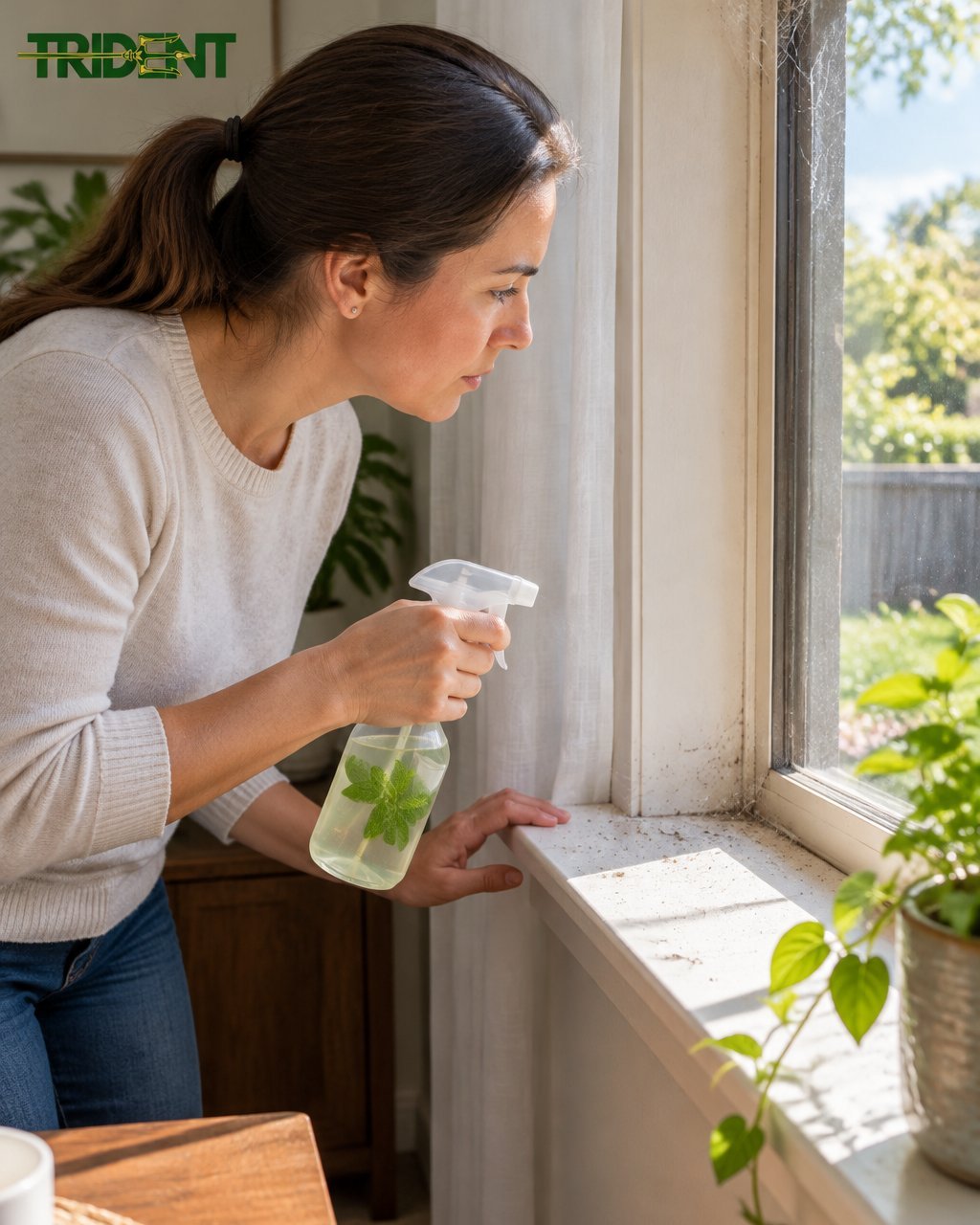
Here’s the short version: natural repellents are deterrents, not treatments. They make a surface or a corner less appealing. They do not kill spiders, they do not stop a population breeding in a roof void, and they fade faster than most people expect.
Quick Comparison: Best Natural Spider Repellents for Homes
| Option | Best For | Typical AUD Cost | Local Fit for Hoppers Crossing | Pet and Child Safety | Key Trade-Off |
|---|---|---|---|---|---|
| Peppermint oil spray (DIY) | Entry-point barrier on sills, frames, skirting | $12-$20 per 100ml bottle of pure oil; makes roughly 10-15 spray bottles | Good for brick-veneer estates where window seals and weep holes are the main entry | Keep cats and dogs away from treated surfaces until dry; cats are especially sensitive to concentrated essential oils | Needs weekly reapplication; can mark some painted surfaces |
| Cedar blocks and pouches | Wardrobes, linen cupboards, shoe racks | $8-$25 per pack | Works well in the enclosed storage typical of newer Hoppers Crossing townhouses | Generally low risk, but keep pouches out of reach of chews | Small coverage area; no effect on active spiders behind the cupboard |
| White vinegar and citrus | Wiping sills, frames, bench edges | $2-$5 per 2L bottle of white vinegar | Useful in laundries and garages where dust and debris build up fast | Very low risk once dry | Effect fades within hours; a cleaning aid, not a barrier |
| Diatomaceous earth (food grade) | Cracks, weep holes, behind skirting, roof voids | $15-$30 per 500g tub | Strong fit for the brickwork gaps and roof voids common in the Werribee corridor | Use a mask when applying; keep pets out of treated voids until settled | Must stay dry; a thin film works, a mound does not |
| Commercial natural sprays and pouches | Convenience and stronger concentration | $15-$35 per ready-to-use bottle or pouch pack | Good for renters who cannot seal structural gaps | Check the label, some ‘natural’ formulas still contain essential oils toxic to cats | Higher cost per use; still fades faster than synthetic residual sprays |
| Professional treatment | Established populations, redbacks, roof-void harbourage | Quote-based; fixed price agreed before booking | The practical option when webs return within weeks across a whole Hoppers Crossing property | Licensed technicians can advise on kid- and pet-safe methods | Requires booking; not a DIY option |
Natural repellents generally need regular reapplication and good coverage to be effective, so a single application is unlikely to give lasting results. The sections below explain how to use each one properly, and where the limits sit.
Watch out: ‘natural’ does not mean ‘safe for pets’. Several essential oils that deter spiders, including peppermint and eucalyptus, are poorly tolerated by cats in particular. Read the safety section before you spray anything indoors.
1. Peppermint Oil Spray: The Most Popular Natural Deterrent
Peppermint oil is the most cited natural spider deterrent, and for good reason: it is cheap, easy to mix, and genuinely changes spider behaviour on treated surfaces. The same oil that deters a spider can also harm a cat or a dog, so pet safety should be considered before use.
How to mix and apply peppermint oil
Mix 15 to 20 drops of pure peppermint oil into a 500ml spray bottle of water, add a few drops of mild dish soap to help the oil disperse, and shake before each use. Spray door frames, window sills, skirting boards, and the corners of garages and laundries. Reapply weekly through spring and summer, and after any rain if you have treated outdoor surfaces.
Pet and child safety: the part most guides leave out
Peppermint oil, eucalyptus oil, tea tree oil, and citrus oils are all commonly recommended as spider deterrents, and all of them are a concern around pets. Cats in particular lack the liver enzymes needed to metabolise many essential oils, and exposure through grooming, licking treated surfaces, or inhaling concentrated spray can cause drooling, vomiting, and lethargy (Updates on Essential Oils).
A practical safety routine for a household with pets or young children:
- Spray when pets and children are out of the room, and keep them out until surfaces are fully dry.
- Never spray bedding, pet beds, food bowls, or children’s toys.
- Store the mixed bottle and the pure oil out of reach, ideally in a locked cupboard.
Watch out: if a pet has walked through a freshly sprayed area and is showing drooling, vomiting, or wobbliness, contact your vet promptly and take the bottle with you.
Pros and cons
Pros: cheap, low-toxicity for humans at diluted strength, pleasant smell, and easy to make at home.
Cons: fades quickly, needs regular reapplication, and can be a hazard around cats and some dogs. It is not a treatment for a spider population already established in a roof void or wall cavity.
Best for: renters and homeowners who want a low-cost weekly barrier on accessible surfaces and have no cats in the home.
Skip if: you have a cat, a puppy, or a toddler who explores low surfaces, or if you are dealing with an established population rather than prevention.
2. Cedar Blocks and Pouches: Low-Mess Protection for Cupboards
Cedar blocks suit enclosed spaces where a spray would be impractical. Drop them in wardrobes, linen cupboards, shoe racks, and storage boxes, and the aromatic oils do the work with no residue and no mixing.
The limitation is range. A cedar block protects the drawer it sits in, not the room around it.
Best for: renters and anyone who wants zero mess.
Skip if: you are dealing with an active infestation rather than prevention.
3. Vinegar and Citrus Solutions: Cheap Pantry Staples That Help
White vinegar and citrus peel are the budget end of the market, and they earn their place. Wiping down window sills, baseboards, and bench edges with a diluted vinegar solution removes the dust and debris spiders use to anchor webs, and the acidity leaves a surface they tend to avoid.
Neither lasts long. Vinegar loses its effect once it dries, and the smell fades within hours. Treat these as cleaning agents with a deterrent side effect, not as a standalone barrier.
4. Diatomaceous Earth: A Physical Barrier, Not a Scent
Diatomaceous earth works differently from everything else here. It is a fine powder made from fossilised algae, and it damages the waxy outer layer of a spider’s body on contact, causing it to dehydrate.
Dust it lightly into cracks, gaps behind skirting, weep holes, and roof voids. The trick most people miss is that a thick pile is less effective than a thin, even film, because spiders simply walk around mounds.
5. Commercial Natural Sprays and Pouches: What You Get for the Money
Ready-made natural sprays and pouches cost more than a bottle of essential oil, and you are paying for concentration and convenience. A commercial peppermint formula is stronger than a DIY mix, and pre-filled pouches remove the mixing step entirely. Both are genuinely useful for people who will not keep up with a weekly spray routine.
What you do not get is persistence. A 2026 industry review noted that natural scents fade quickly, spread unevenly, and cannot match professional treatments for long-term protection, a point professional pest management guidance makes plainly. If you are weighing store-bought options against a professional visit, our guide to what drives pest control pricing explains the cost factors involved.
How to Get Rid of Spiders: A Step-by-Step Home Plan
Natural repellents work best as one part of a broader routine. Here is the sequence we recommend for a Hoppers Crossing home, and it applies equally whether you are in Werribee, Tarneit, or anywhere across the western suburbs.
- Remove the food source. Spiders follow insects. Reduce outdoor lighting, clear leaf litter, and keep bins sealed.
- Declutter storage areas. Garages, sheds, and roof voids are where populations build.
- Apply your chosen deterrent on a weekly schedule through the warmer months.
- Reassess after four weeks. If activity has not dropped, escalate.
If you have already tried the DIY route and the spiders are still there, our step-by-step spider removal guide covers the full process in more detail. For a dangerous spider or a growing population, emergency spider control across Melbourne is available around the clock, and Hoppers Crossing residents can reach our local emergency pest control team directly.
Seal entry points and remove webs
Walk the perimeter of your home and check window seals, door gaps, weep holes, and the junctions where brickwork meets render. Seal what you can with weather stripping or sealant, and vacuum existing webs rather than sweeping them down, which just relocates the spider. Our guide to preventing spider webs in your garden covers the outdoor side of the same job.
Apply deterrents on a seasonal schedule
Spider activity in Victoria peaks through spring and summer, so start your repellent routine in early spring rather than waiting for the first web. Reapply weekly through the warm months, then drop back to fortnightly or monthly over winter. A calendar reminder beats good intentions every time.
When to Call Professional Pest Control
Call a professional when you find dangerous species, when activity keeps returning after repeated DIY attempts, or when webs reappear within weeks of treatment. Licensed technicians can treat the harbourage areas a homeowner cannot safely reach, including roof voids and wall cavities.
Trident Pest Control provides spider control across Werribee and the surrounding region, with licensed and insured technicians, fixed pricing, and kid and pet-safe methods. Same-day service is available when you need it.
Frequently Asked Questions
What is the best natural spider repellent for Australian homes?
Peppermint oil is among the most commonly cited natural spider repellents. Research has reported that peppermint and citronella oils can alter spider behaviour. For best results, mix 15 to 20 drops of peppermint oil with water in a spray bottle and apply around entry points, window frames and skirting boards. Reapply every few weeks because the scent fades.
Do essential oils actually keep spiders away?
Research suggests they can help, but with limits. Some research suggests that volatiles from mint oil may deter spiders from settling. In practice, essential oils like peppermint, citrus, eucalyptus and tea tree work best as a short-term deterrent. The scent fades quickly, spreads unevenly and does not provide long-term protection. Combine oils with physical measures such as sealing gaps and removing webs for a more reliable result.
Are natural spider repellents safe for pets?
Many natural repellents are marketed as pet-safe, but essential oils can still irritate animals if inhaled or ingested. Cats are particularly sensitive to concentrated oils. Keep pets out of treated rooms until sprays have dried, and avoid applying oils directly to surfaces your pets lick or sleep on. Diatomaceous earth is non-toxic but can cause respiratory irritation if dust is inhaled, so use food-grade products and apply them carefully. Check product labels and consult your vet if unsure.
When should I call professional pest control in Hoppers Crossing?
Call a professional when you see repeated infestations, large numbers of spiders, or species you cannot identify. If DIY repellents and sealing have not reduced spider activity after several weeks, a licensed technician can inspect entry points and treat the source. Professional pest control is also worth considering if you have young children or pets and want a treatment plan tailored to your home. Trident Pest Control offers same-day service across Western Melbourne.
How can I spider-proof my house in Melbourne’s western suburbs?
Start by sealing gaps around doors and windows, repairing torn flyscreens and clearing webs from corners and eaves. Vacuum regularly and reduce clutter in storage areas. Apply a natural repellent spray on a seasonal schedule, focusing on entry points before spider season. Outdoors, trim vegetation away from the walls and keep outdoor lights off at night to reduce insect prey. Combining these steps with a professional inspection gives the most consistent protection.
Natural repellents are a sensible first line of defence, but they will not clear an established population, and that is the point at which most households stall. Trident Pest Control offers fixed pricing with no hidden charges, kids and pet-safe treatments, and same-day service across Melbourne’s west. Get started with Trident Pest Control and get a free quote for your property today.
