
Table of Contents
- Why Proper Preparation Matters Before Pest Spray
- Pet Safety During Pest Control Treatment
- Create Your Pest Control Preparation Checklist
- How Long to Stay Out of House After Pest Control
- Protecting Children and Sensitive Groups
- Post-Treatment Cleaning and Safety
- Conclusion
Last Updated: August 26, 2026
Why Proper Preparation Matters Before Pest Spray
Getting pest control right starts before the technician arrives. According to Australian Pest Management Association guidance on treatment preparation, 72% of pest control treatments fail simply because the home wasn’t prepared correctly. Research from Sydneys Best Pest Control preparation effectiveness study shows that 88% of successful pest eradications occur in homes where owners followed a strict preparation routine.
Proper preparation accomplishes three critical things: it removes obstacles so technicians can reach pest hiding spots, eliminates food sources and shelter pests depend on, and protects your family and pets from unnecessary chemical exposure. Homes that follow a thorough preparation checklist see treatments last longer and dramatically reduce re-infestation risk.
Proper preparation increases treatment effectiveness, extends protection duration, and ensures high safety levels.
Pet Safety During Pest Control Treatment
Your pets require different protocols based on species. The safest baseline is removing all animals from treated areas until the technician confirms the treatment is dry and safe, typically 2-4 hours for interior sprays.
General Pet Removal Protocol
Keep dogs, cats, birds, and other animals in a secure, untreated location during application. Most products are safe once dry, but the application process involves spray mist, dust, or gels that pets shouldn’t inhale or walk through.
Aquariums and Fish Tanks
Aquatic animals are particularly vulnerable because airborne particles settle into water and absorb through gills and skin:
- Turn off air pumps and filters 30 minutes before treatment begins.
- Cover the tank completely with a fitted sheet or plastic covering; secure it so it doesn’t shift.
- Do not remove the cover for at least 4 hours after treatment finishes.
- After 4 hours, remove the cover gradually and allow 15 minutes of air circulation before turning filters back on.
- Perform a partial water change (25-30% of tank volume) within 24 hours using dechlorinated water at the same temperature.
- Monitor fish closely for 48 hours. Signs of distress include gasping at the surface, loss of appetite, or unusual swimming behaviour. If observed, perform another partial water change and contact your aquarium specialist or vet.
Reptiles and Exotic Pets
Reptiles have sensitive respiratory systems and permeable skin:
- Move the entire enclosure to an untreated room or outside at least 2 hours before treatment.
- Ensure the enclosure is sealed or covered with a breathable cover (not plastic).
- Keep the enclosure away from treated areas for at least 24 hours after treatment.
- Do not handle the animal for at least 6 hours after treatment.
- Spot-clean the enclosure but do not do a full substrate change for 48 hours.
- If the reptile shows respiratory distress (wheezing, mucus around nostrils, lethargy), move it to a well-ventilated area and contact a reptile veterinarian immediately.
Dogs and Cats
- Move pets to a separate, untreated room with water and access at least 1 hour before treatment.
- Keep the room closed during and immediately after treatment.
- Return pets only after drying is confirmed, typically 2-4 hours.
- Wipe down pet bedding and food bowls if they were in treated areas. Use a damp cloth and plain water.
- Keep pets away from treated skirting boards and floors for 24 hours. Residual product can be ingested if licked.
- Watch for signs of irritation: excessive licking of paws, scratching, or respiratory symptoms.
Birds (Outside Cages)
- Move the cage to an untreated room or secure outdoor location before treatment.
- Cover the cage with a breathable cloth to reduce airborne particle exposure.
- Keep the cage away from treated areas for at least 6 hours after treatment.
- Do not clean the cage for 48 hours after treatment. Change water and food normally.
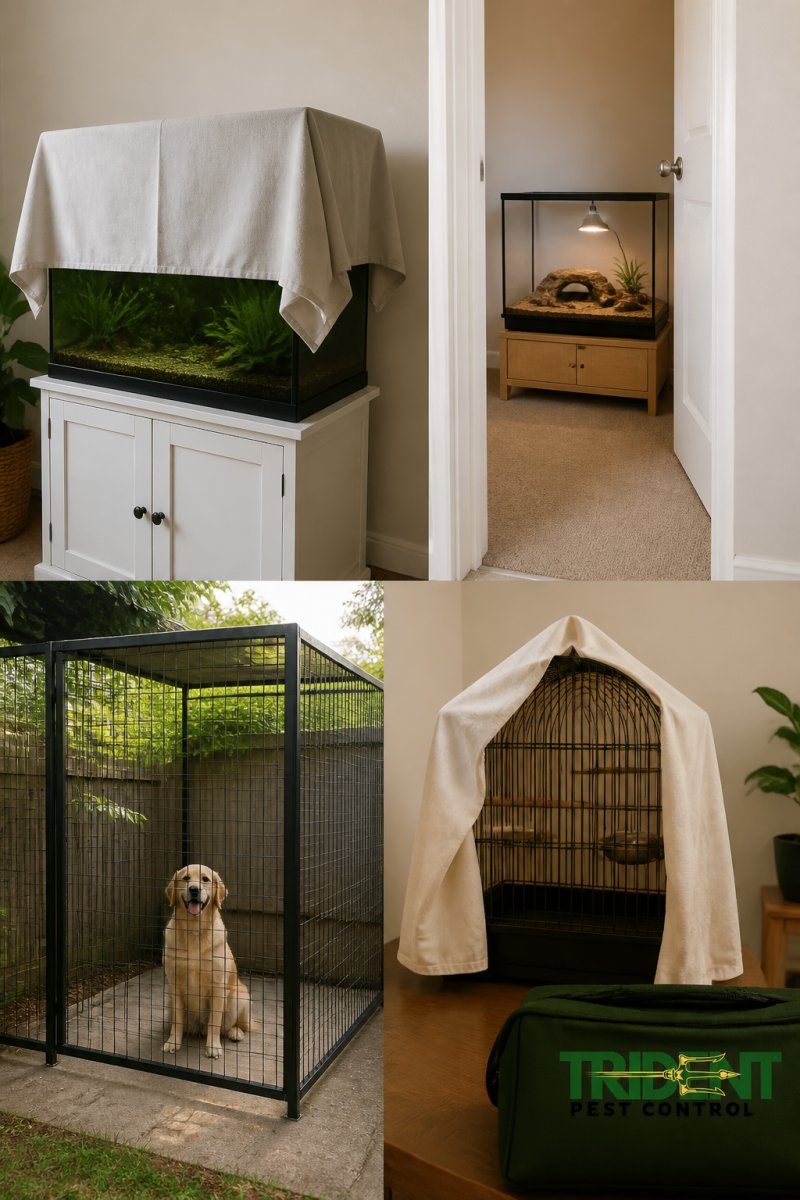
Post-Treatment Re-entry Timeline
- Immediately (after drying confirmed): Dogs and cats can return to treated rooms.
- 2-4 hours after drying: Aquarium filters and pumps can be turned back on.
- 6 hours after drying: Reptiles can be returned to their enclosures in treated rooms.
- 24 hours after drying: All pets can have full access to treated areas.
Never assume treated areas are safe for pets immediately after application. Keep pets away for the full drying period specified by your technician. If your pet has a pre-existing respiratory condition, heart condition, or is very young or elderly, inform your technician before treatment, they may recommend extended isolation periods or alternative products.
Create Your Pest Control Preparation Checklist
Interior Preparation Steps
1. Declutter and Remove Personal Items (Complete 3-5 days before treatment)
Clutter provides pests with hiding spots and breeding grounds. Clear floors of boxes, bags, stacks of paper, and cardboard. Move furniture away from walls at least 30 centimetres so technicians can access skirting boards and wall cavities. Remove items from under beds, inside wardrobes, and garage shelves. Stack storage boxes neatly in room centres rather than against walls.
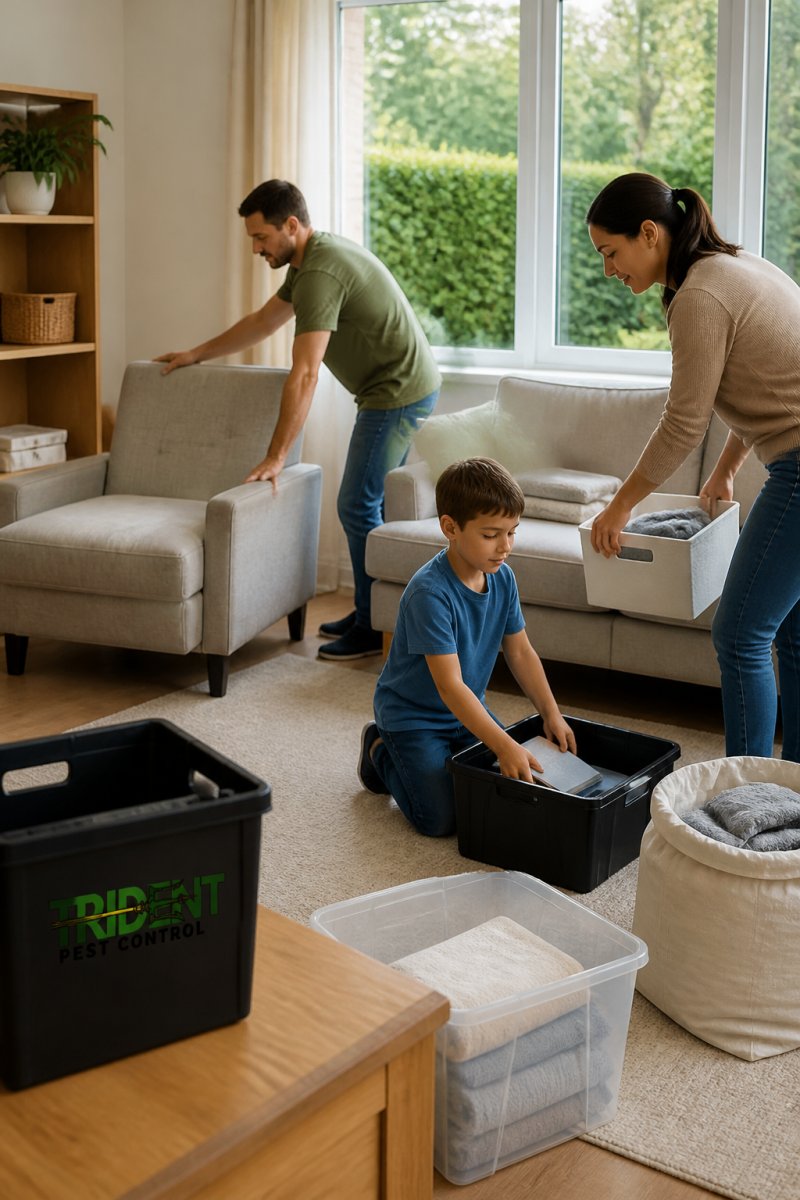
2. Secure and Store Food (Complete 2 days before treatment)
Store all food in airtight containers, including pet food, which should be sealed and stored in a cupboard or garage, not left in bowls. Remove food from benchtops and inside cupboards. Wipe down food preparation surfaces and remove crumbs from under appliances. Wash pet bowls and store them away. declutter your home.
3. Clean and Vacuum (Complete 1-2 days before treatment)
Vacuum all carpets, rugs, and under furniture. Sweep and mop hard floors. Pay special attention to corners, under appliances, and along skirting boards where pests hide.
4. Provide Access to Hidden Areas (Complete 2-3 days before treatment)
Clear manhole access points to sub-floors, roof voids, attics, and pathways in garages or sheds. The more accessible these areas are, the more thorough the treatment can be.
Exterior and Access Area Preparation
5. Clear External Areas (Complete 2-3 days before treatment)
Move garden furniture, pot plants, and stored items away from the house perimeter. Clear gutters and downpipes of leaves and debris. Trim back plants close to the house so the technician can spray along the foundation.
6. Secure Outdoor Items (Complete 2 days before treatment)
Bring washing inside or move it away from treated areas. Cover or temporarily move fish ponds or water features near the house. Inform your technician if you can’t move them so they can avoid spraying directly over the water.
How Long to Stay Out of House After Pest Control
The timeline depends on products used, areas treated, and pest type. Your technician will specify the exact timeframe based on conditions.
Standard Interior Spray Treatments
- Drying time: 2-4 hours depending on humidity, temperature, and ventilation.
- Safe to walk barefoot: 4 hours after drying confirmation.
- Safe to mop or clean treated floors: 7 days. Cleaning too early removes the residual barrier.
- Safe for children to play on treated floors: 24 hours after drying.
- Safe for pets to return: 4 hours after drying (see Pet Safety section for species-specific guidance).
Dust and Powder Treatments
- Drying/settling time: 4-6 hours. Dust particles take longer to settle than liquid spray.
- Safe to enter treated roof voids or sub-floors: 24 hours.
- Safe to mop or disturb dust: 7 days.
- Ventilation is critical: Open windows and doors for at least 2 hours after treatment.
Gel Baits and Targeted Treatments
- Safe to return home: Immediately after application.
- Safe to touch treated areas: After 1 hour.
- Safe to mop or clean: 7 days. Do not clean areas where gel baits are placed.
Barrier Sprays (Exterior Perimeter Treatments)
- Safe to return home: Immediately.
- Safe to touch exterior walls: 2 hours after application.
- Safe for children to play near treated areas: 4 hours after drying.
- Safe for pets to access treated exterior areas: 24 hours.
Pest-Specific Considerations
Cockroach treatments often involve multiple application methods and may require longer settling time, especially for sub-floor or roof void treatment. Follow the 4-6 hour guideline.
Ant treatments typically use targeted gel baits and perimeter sprays, allowing faster re-entry within 2-3 hours.
Spider treatments often focus on exterior perimeter sprays and targeted interior spots. Interior re-entry is typically safe within 2-4 hours; exterior areas require 24 hours.
Termite treatments may involve sub-floor or wall cavity injections requiring extended isolation. Do not access treated areas for at least 24 hours.
What to Do When You Return Home
- Open windows and doors for at least 15-30 minutes to ventilate.
- Avoid sitting on treated surfaces for the first 24 hours. Place a towel or blanket over surfaces if you must sit.
- Wash your hands after touching treated areas.
- Do not prepare food on treated benchtops for at least 4 hours.
- Keep windows open for at least 2 hours.
The ‘Flushing Effect’ in the First 24-72 Hours
According to Australian Pest Management Association guidelines on post-treatment expectations, a standard general pest spray reduces insect activity by 85-90% in the first 2-3 months. However, you may see more pest activity in the first 1-3 days. This ‘flushing effect’ is actually a sign the treatment is working, pests flee their hiding spots when they contact treated surfaces.
- Flushing typically peaks 24-48 hours after treatment.
- Activity should decline noticeably by day 5-7.
- If pest activity remains high after 7 days, contact your technician.
When to Seek Medical Attention
If you, your family, or your pets experience any of the following after returning home, contact your GP or veterinarian immediately:
- Respiratory symptoms (wheezing, shortness of breath, persistent coughing)
- Skin irritation, rashes, or hives
- Eye irritation or watering
- Nausea, dizziness, or headache lasting more than 2 hours
- Unusual behaviour or lethargy in pets
Ask your technician for the product name and safety data sheet (SDS) before they leave. Keep this information handy in case anyone in your household experiences an unexpected reaction.
Protecting Children and Sensitive Groups
Children and elderly relatives are more vulnerable to pesticide exposure. If you have young children or infants, arrange for them to stay elsewhere during treatment and for at least 4 hours after. If that’s not possible, keep them in an untreated room with the door closed during application.
For elderly relatives or anyone with respiratory conditions, asthma, or chemical sensitivities, provide the same protection. Wash children’s toys, pacifiers, and anything they put in their mouths if those items were in treated areas. Wipe down high-touch surfaces like light switches and door handles once the product has dried.
Post-Treatment Cleaning and Safety
Once the product has dried, a light clean removes residue and provides peace of mind. Vacuum carpets gently and mop hard floors with plain water or mild detergent. Wipe down benchtops and tables. Don’t use harsh chemicals or bleach, as these can interfere with residual protection.
For the first week after treatment, avoid unnecessary cleaning of treated areas. The product works best when left undisturbed. After a week, you can clean normally.
If you notice any skin irritation, respiratory symptoms, or unusual reactions, contact your technician or GP immediately.
Preparing your home for pest spray isn’t about perfection, it’s about giving the treatment the best chance to work and protecting your family in the process. Follow this checklist, communicate clearly with your technician, and you’ll see results that last.
Trident Pest Control provides professional, safe, and reliable pest management solutions for residential and commercial properties across Western Melbourne and surrounding regions. Our licensed and insured technicians deliver effective treatments for a wide range of pests, ensuring your property remains protected with fixed, transparent pricing. We prioritize the safety of your family and pets by utilizing secure, high-quality methods for every service. Ready to get started? Get Your Free Quote and discover how proper preparation transforms your pest control results.
Frequently Asked Questions
How long do I need to stay out of the house after a pest spray?
Most pest control treatments require you to vacate for 2-4 hours while products dry and settle. Your technician will provide specific timing based on the treatment type and affected areas. For sensitive households with young children or pets, extended ventilation may be recommended. Always follow your pest control provider's post-treatment instructions to ensure safety and maximum effectiveness of the pest control treatment.
What should I do with my pets before pest control arrives?
Move pets to a secure outdoor area or unaffected room before the technician arrives. Remove pet bowls, toys, and bedding from treated zones. Cover fish tanks and turn off air pumps to prevent airborne particles from entering water. Pet safety during pest control is critical, keep pets away until products have dried completely. If your pet has health concerns, inform your technician beforehand so they can recommend the safest approach for your situation.
Do I need to empty my kitchen cupboards before pest control?
Yes. Remove food items, utensils, and dishes from accessible cupboards and store them in sealed containers or a separate room. Wipe down food preparation surfaces thoroughly before treatment. This prevents chemical exposure to items you'll use for eating and cooking. Your pest control preparation checklist should always include securing all food-related items to ensure no residue or contamination occurs during the pesticide application process.
What makes professional pest control more effective than DIY treatments?
Professional pest control treatments can offer lasting results, and proper preparation can increase their effectiveness. Licensed technicians apply correct dosages to skirting boards, roof voids, and hidden areas that DIY methods might miss. This is why proper home preparation before pest spray, combined with professional expertise, delivers lasting results.
This article was written using GrandRanker