Last Updated: November 14, 2026
Quick Summary
The best pest control for ants in Werribee is a species-first treatment that combines gel bait or sealed bait stations with nest treatment and an external residual barrier, not a single surface spray. Bait works because foragers carry the insecticide back to the colony, with a noticeable drop in 3-7 days and colony collapse often in 1-3 weeks.
- Spraying a trail and then baiting the same spot kills the foragers before they carry bait home.
- Seeing more ants for the first day or two after baiting can mean the bait is being taken.
- Contact the provider if activity has not noticeably reduced after two weeks.
- Ant activity in Melbourne’s west peaks in warmer months, so late spring and summer treatments show faster bait uptake.
- A quote promising one spray will eliminate ants permanently is a warning sign, not a selling point.
Table of Contents
- Why Ants Keep Coming Back in Werribee Homes
- Ant Bait vs Spray: Which Works Better?
- How Long Does Ant Pest Control Take to Work?
- Ant Treatment Safety for Pets and Children
- How to Prevent Ants From Coming Back
- What to Look For in Professional Ant Pest Control
- Get Your Free Ant Control Quote
- Frequently Asked Questions
Why Ants Keep Coming Back in Werribee Homes
Pest control for ants starts with one fact: ants return to a Werribee home because the conditions that let them in never changed. Food scraps, moisture under sinks, and warm wall cavities give a colony everything it needs, and killing the ants you can see does nothing to the nest behind the skirting board.
Werribee sits on Melbourne’s western fringe, where new estates meet older weatherboard homes and the Werribee River corridor. That mix of soil, irrigation and slab-on-ground construction creates plenty of quiet entry points.
Ant control is the practice of removing a colony and blocking the routes it uses to reach food and water inside a building. Surface sprays kill foragers; nest treatment stops the cycle.
If you want to understand the entry points ants exploit in apartment blocks, read our guide to common entry points for ants in Melbourne apartment blocks.
Ant Bait vs Spray: Which Works Better?
Bait is generally the better core approach for household infestations, because ants carry the insecticide back to the colony and share it. Spray kills only the ants it touches.
Here is how the two compare in practice:
| Method | How it works | Best for | Main drawback |
|---|---|---|---|
| Gel bait | Foragers feed and share it with the nest | Kitchens, indoor trails | Slow, takes days |
| Bait station | Sealed bait the colony collects | Kids and pet households | Needs correct placement |
| Contact spray | Kills ants on contact | Quick knock-down of visible ants | No effect on the nest |
| Residual spray | Leaves a treated barrier | Outdoor perimeter work | Can be tracked indoors |
A common mistake is spraying a trail and then baiting the same spot. You kill the foragers before they can carry the bait home.
For a step-by-step walkthrough, see our guide on how to get rid of ants.
How Long Does Ant Pest Control Take to Work?
The honest answer depends on the treatment method and the species, not on a single number. Here is what to expect from each approach.
Timelines by treatment type
| Treatment | What you will see | Typical timeframe |
|---|---|---|
| Contact spray | Immediate knock-down of visible ants | Minutes to hours |
| Gel bait or bait stations | Activity may briefly increase as foragers recruit nestmates, then decline | Noticeable drop in 3-7 days; colony collapse often 1-3 weeks |
| Nest treatment | Gradual decline as the colony loses workers | 1-2 weeks |
| Residual external barrier | Fewer ants crossing treated surfaces | Ongoing while the residue remains active |
Bait is slow by design. Foragers collect the insecticide and share it through trophallaxis, the mouth-to-mouth transfer of food, so the active ingredient reaches the queen and brood only after enough workers have fed. That is why killing foragers with spray before or during baiting defeats the purpose.
What normal progress looks like
A common pattern after a professional baiting treatment is a short spike in visible ants for the first day or two, followed by a steady decline. Seeing more ants immediately after treatment is not necessarily failure, it can mean the bait is being taken.
When to call the provider back
Contact the provider if:
- Activity has not noticeably reduced after two weeks
- Ants are appearing in a new area that was not treated
- You see a different species from the one identified at inspection
A follow-up visit should reassess the nest sites and may involve a different bait matrix, because some colonies switch food preferences between protein and sugar sources through the season.
Seasonal timing in Werribee
Ant activity in Melbourne’s west typically peaks in the warmer months, when colonies forage more actively and reproduce. Treatments applied in late spring and summer often show faster bait uptake because foraging is at its highest. In cooler months, activity slows and treatments can take longer to register, even when they are working.
Watch out: expecting a single spray to end a persistent infestation is the most common reason people call a second company a month later.
Ant Treatment Safety for Pets and Children
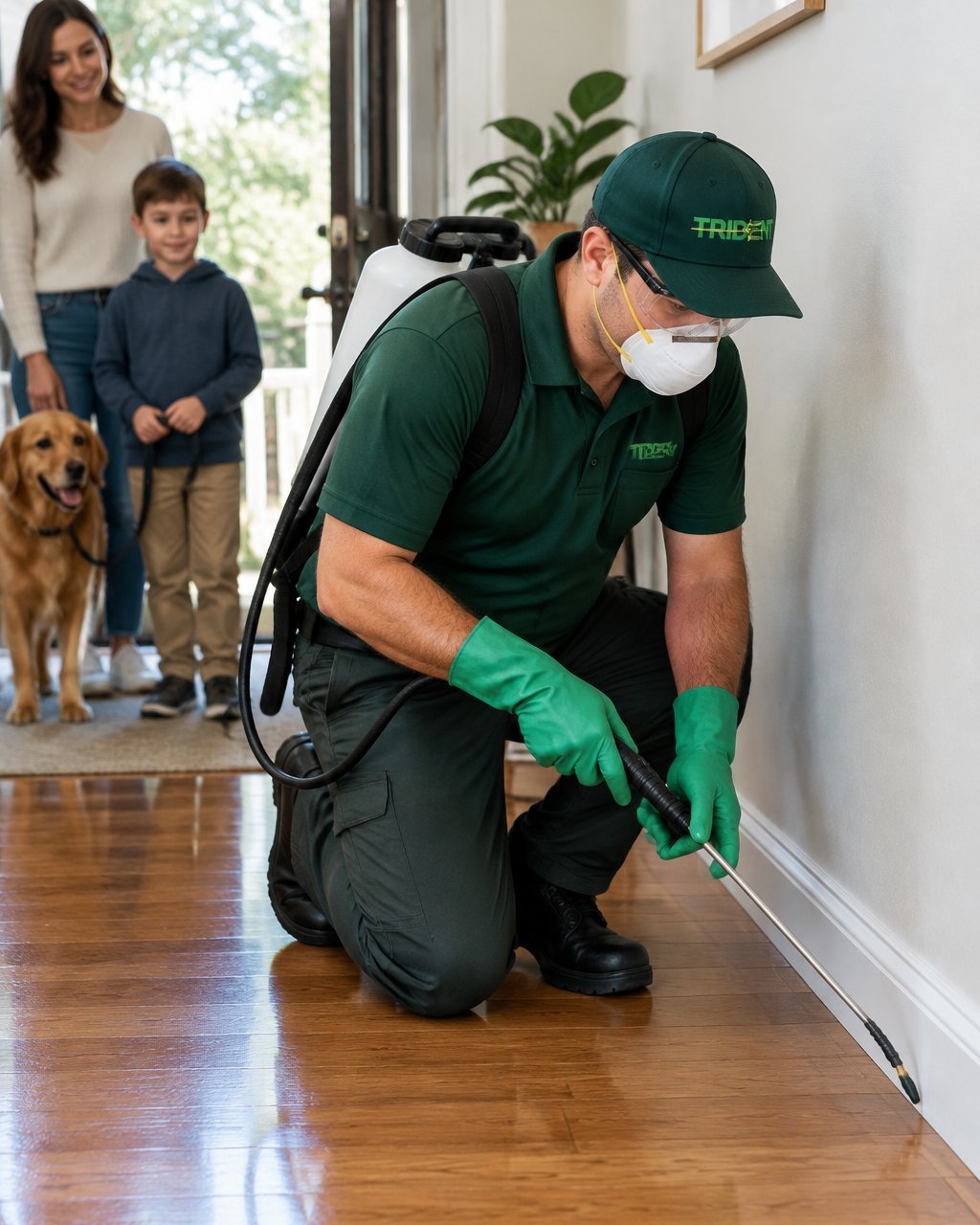
Safety comes down to product choice, application method and how long you stay off treated surfaces. Most professional ant treatments for family homes use targeted gel bait and sealed bait stations rather than broad spraying, which limits exposure.
Ask your technician three questions before they start:
- Which products are being applied, and where?
- How long should children and pets stay away from treated areas?
- What follow-up is included if activity continues?
For general guidance on pesticide use around the home, check the regulator’s official source for products sold in Australia. Always confirm the technician holds a current pest management licence.
How to Prevent Ants From Coming Back
Prevention is about removing access, not just cleaning. Ants follow scent trails, so breaking the trail matters as much as wiping the bench.
- Store food in sealed containers, including pet food
- Fix dripping taps and clear moisture under sinks
- Seal gaps around pipes, windows and door frames
- Trim plants and mulch back from external walls
- Wipe down benches and sweep floors nightly
- Keep bins sealed and rinsed
- Check potted plants for nests before bringing them inside
If you rent, our list of common pests in Werribee rental properties covers prevention duties that fall to tenants and landlords.
What to Look For in Professional Ant Pest Control
Most ant-control quotes look identical on paper. The differences sit in what the technician does before, during and after the visit, and those differences decide whether the colony is actually removed or just disturbed.
What a professional ant treatment should involve
Effective pest control for ants follows a sequence, not a single spray:
- Inspection and species identification. The technician should identify the ant species before choosing a product. Coastal brown ants, black house ants and fire ants behave differently, some nest in wall cavities, some in soil under slabs, some in gardens and mulch, and the treatment location and bait type change accordingly. In Werribee, the mix of new slab-on-ground estates and older weatherboard homes means the same species can nest in very different places from one street to the next.
- Nest location and trail mapping. Foraging trails are followed back to entry points and likely nest sites, including wall voids, subfloor areas, garden beds and potted plants.
- Targeted treatment. This usually combines gel bait or sealed bait stations for indoor trails, nest treatment where the nest is accessible, and a residual barrier around external entry points such as pipe penetrations, weep holes and door frames.
- Written record. You should receive a treatment report naming the products applied, the areas treated and any re-entry advice.
- Follow-up. A scheduled check visit is what separates a service from a one-off spray, because bait takes one to three weeks to work through a colony.
How to compare providers
Rather than comparing headline prices, compare what is included. Ask each provider the same questions and write the answers down:
- Licensing and insurance. Confirm a current Victorian pest management licence and public liability insurance. Confirm the technician’s licence details before work begins.
- Species-first approach. Does the technician identify the species before quoting a treatment, or apply the same product regardless?
- Treatment scope. Is the quote for baiting only, or does it include nest treatment and an external barrier? Are subfloor and roof void areas included?
- Follow-up and warranty. Ask how many follow-up visits are included and what happens if activity continues. Get the terms in writing.
- Safety advice. Clear instructions on re-entry times for children and pets, and what to do with food preparation surfaces.
- Fixed pricing. A confirmed price before work starts, with any call-out or after-hours charges stated upfront.
Watch out: a quote that promises a single spray will “eliminate ants permanently” is a warning sign, not a selling point, no treatment can guarantee against re-infestation from neighbouring properties.
Our guide on how to choose a pest control company in Werribee sets out the questions worth asking before you book.
Trident Pest Control is licensed and insured, and offers kids and pet-safe treatments, same-day service and fixed pricing across Werribee, Melbourne and Geelong.
Get Your Free Ant Control Quote
Ants rarely fix themselves, and a trail today is a satellite nest next month. If you are weighing up a DIY approach against a professional visit, the deciding factor is usually how long the problem has been running.
Trident Pest Control provides licensed, insured pest control across Werribee and Western Melbourne, with same-day service, fixed pricing and kids and pet-safe treatments.
Get started with Trident Pest Control and request a free ant control quote for your property.
Ant activity that keeps returning after DIY attempts usually points to an untreated nest. Trident Pest Control offers fixed pricing, no hidden charges, same-day service and kids and pet-safe treatments across Werribee, Melbourne and Geelong. Get started with Trident Pest Control and book a technician who will find the nest, not just the trail.
Frequently Asked Questions
What is the best pest control for ants in Werribee?
The best pest control for ants in Werribee combines a professional inspection, species identification and a treatment plan that targets the nest rather than just the ants you can see. A licensed technician will usually combine several treatment methods around entry points. For persistent infestations, follow-up visits help confirm the colony has been eliminated. Choose a local provider with fixed pricing and clear safety information for kids and pets.
Are ant baits or sprays more effective?
Baits and sprays work differently, so the right choice depends on the infestation. Ant bait is carried back to the nest by worker ants. Sprays kill ants on contact and give fast relief in high-traffic areas, but they do not reach the nest. For a lasting result, baits are usually the better core treatment, with targeted sprays used around entry points as part of a broader plan.
How long does professional ant treatment take to work?
Professional ant treatments often take some time to reduce activity, and full colony elimination depends on the species and the size of the infestation. Bait-based treatments are slower because the ants need time to carry the product back to the nest. Your technician should explain what to expect and schedule a follow-up if activity continues. Avoid spraying over treated areas, as this can disrupt the baiting process.
How can I keep ants out of my home after treatment?
To prevent ants from coming back, store food in sealed containers, wipe down benches and floors daily, fix leaking taps and pipes, and seal gaps around doors, windows and utility entry points. Keep compost and pet food away from exterior walls, and trim plants that touch the house. A professional can apply a residual treatment around the perimeter to create a barrier. If you see ant trails returning, book a follow-up rather than spraying yourself, which can break the barrier.
