
Table of Contents
- 5 Signs You Need Emergency Pest Control
- Sign 1: Visible Pest Activity and Droppings
- Sign 2: Structural Damage and Gnaw Marks
- Sign 3: Strange Noises and Nocturnal Activity
- Sign 4: Unexplained Bites, Odours, and Health Hazards
- Sign 5: Nesting Materials and Contaminated Food
- When Same Day Pest Control Becomes Necessary
- Emergency Pest Control Cost and What to Expect
- DIY vs Professional Response: Understanding Signs of Pest Infestation
- Frequently Asked Questions
Last Updated: August 30, 2026
5 Signs You Need Emergency Pest Control
One in three Australian homes will experience a termite infestation at some point. Rodents alone cause over $500 million in damage annually, with 20-25% of residential house fires linked to rodents gnawing through electrical wiring (csiro.au). This guide from Trident Pest Control covers five critical signs demanding immediate professional intervention. Understanding these signs can mean the difference between a contained problem and thousands of dollars in property damage.
Quick Picks:
- Sign 1: Visible pest activity and droppings indicate an active infestation requiring urgent treatment
- Sign 2: Structural damage and gnaw marks signal rodent activity that threatens your home’s integrity
- Sign 3: Strange noises and nocturnal activity confirm pests are nesting inside your walls
- Sign 4: Unexplained bites, odours, and health hazards demand same-day professional response
- Sign 5: Nesting materials and contaminated food prove the infestation has reached critical levels
Sign 1: Visible Pest Activity and Droppings
Visible droppings, urine stains, or live pests signal an established colony. Rodent droppings are small, dark pellets found along walls, in cupboards, or near food sources. Cockroach droppings appear as fine black specks on mattresses and bedding.
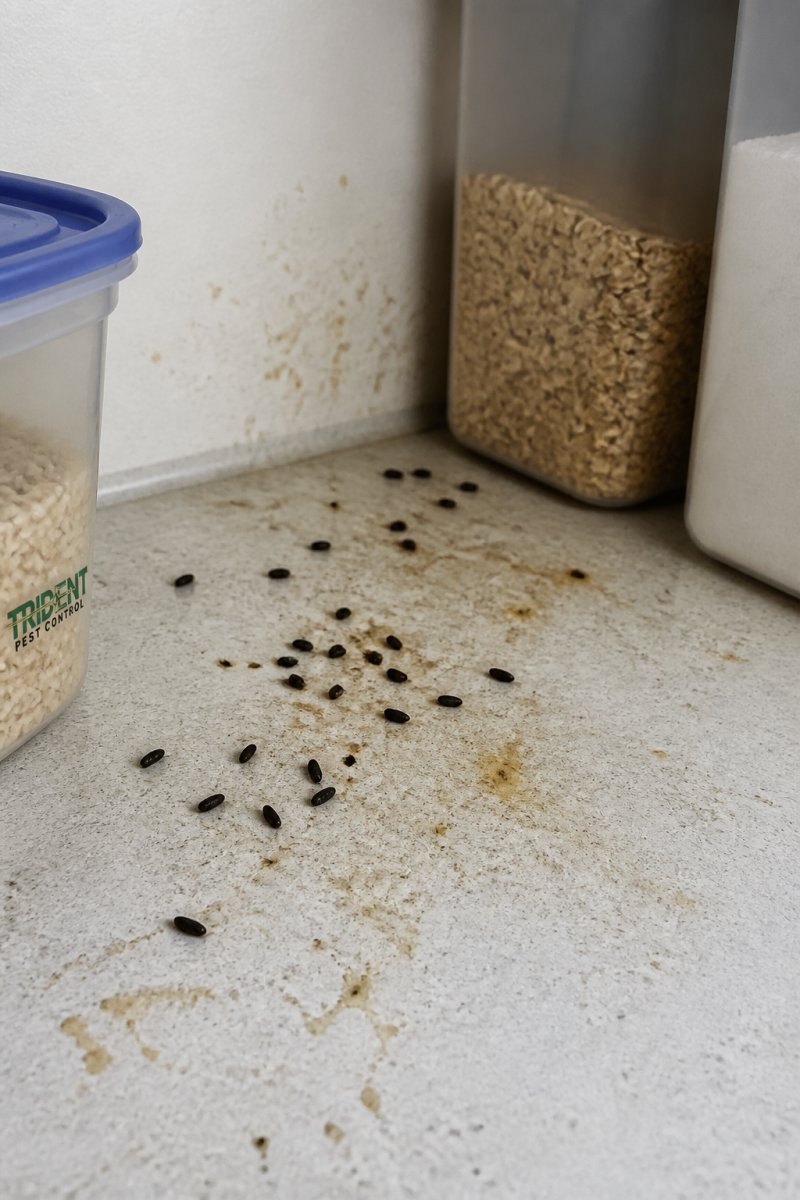
According to the Australian Environmental Pest Managers Association (AEPMA), 72% of DIY pest control attempts fail to fully resolve infestations, with 68% growing worse within three months (aepma.com.au). A $270 inspection every six months detects 92% of infestations early, when treatment costs only $500-$1,500. Delay until visible damage appears, and costs jump to $7,000-$20,000 or more.
Trident Pest Control’s licensed technicians identify the pest type, assess infestation level, and begin treatment the same day, preventing exponential population growth.
Sign 2: Structural Damage and Gnaw Marks
Rodent gnaw marks appear on wooden beams, door frames, electrical wiring, and insulation. Termite damage is subtler, look for hollow-sounding wood, buckling walls, or mud tubes running up external walls and internal timber.
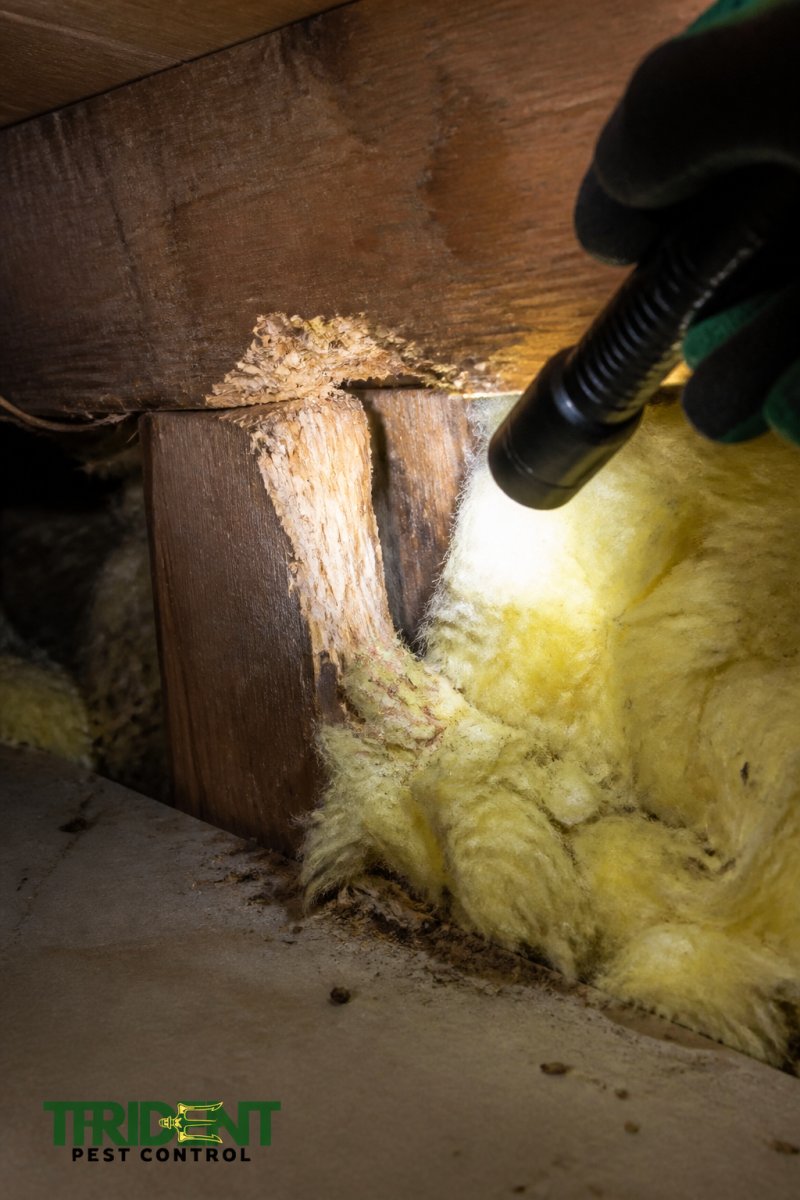
Termite activity causes an estimated 1.5 billion dollars in property damage annually across Australia. Rodents gnawing through electrical wiring pose an immediate fire risk; 20-25% of residential house fires are linked to rodent damage. Unlike droppings or noises, structural damage is irreversible, once wood is compromised, repairs are expensive and time-consuming.
Professional inspection identifies damage extent and stops further deterioration immediately. Trident Pest Control‘s fixed pricing means no hidden costs as treatment progresses.
Sign 3: Strange Noises and Nocturnal Activity
Scratching, scurrying, or squeaking sounds in walls, ceilings, or attics during night hours signal rodent or pest activity. Pests are primarily nocturnal; their movement intensifies after dark.
When Nocturnal Noises Become an Emergency
Emergency-level infestations produce consistent, loud, or escalating noise patterns:
- Frequency: Noises occurring every night or growing louder over consecutive nights indicate an established, breeding colony.
- Volume and intensity: Loud scurrying, repeated gnawing, or squeaking that wakes you from sleep signals a large population.
- Location spread: Noises appearing in multiple rooms simultaneously suggest the infestation has expanded beyond a single entry point.
- Accompanied by other signs: Nocturnal noise combined with visible droppings, structural damage, odours, or bites confirms an emergency-level infestation.
Why DIY Fails Against Nocturnal Pests
You’re treating during the day when pests are hidden in walls and ceiling cavities. Rodents spend 16-20 hours per day in nesting sites deep within your home’s structure. The Australian Pesticides and Veterinary Medicines Authority (APVMA) reports that 80% of over-the-counter products are applied incorrectly, reducing effectiveness by more than half.
Professional pest control targets hidden nesting sites with treatments that reach where surface sprays cannot. Technicians use thermal imaging and knowledge of pest behaviour to locate colonies within walls, attics, and subfloor spaces, then apply treatments directly to nesting areas and travel routes.
Immediate Steps While Waiting for Professional Help
- Seal entry points: Inspect the exterior for gaps larger than 5 mm. Use steel wool, caulk, or metal mesh to block entry points around pipes, vents, and foundation cracks.
- Remove food sources: Store all pantry items, pet food, and rubbish in sealed, airtight containers.
- Reduce clutter: Clear storage areas of cardboard boxes, newspapers, and fabric scraps that serve as nesting material.
- Document activity: Keep a log of when and where you hear noises to help the technician understand the infestation’s scope.
- Isolate sleeping areas: If bed bugs are suspected, move bedding away from walls, wash all bedding in hot water, and inspect mattresses for signs of infestation.
Same-day professional response is essential because nocturnal activity indicates a large, established colony that will continue breeding every night you delay.
Sign 4: Unexplained Bites, Odours, and Health Hazards
Unexplained bites in clusters or rows suggest bed bugs or other biting pests. A musty odour in specific rooms indicates pest urine, faeces, or decomposing pests. Bed bug bites cause allergic reactions and secondary skin infections. Rodent faeces and urine carry hantavirus and leptospirosis. Cockroach allergens trigger asthma and respiratory issues, particularly in children.
Health hazards demand immediate professional response. DIY treatments for bed bugs are notoriously ineffective because they don’t reach all harborage sites. A single missed egg can restart the infestation within weeks. Trident Pest Control uses comprehensive treatment protocols that eliminate both visible pests and hidden populations, protecting your family’s health from day one.
Sign 5: Nesting Materials and Contaminated Food
Finding shredded paper, fabric, insulation, or plant matter in corners, walls, or storage areas indicates active nesting. Contaminated food with pest droppings, gnaw marks, or insect parts is a clear health emergency. Never consume contaminated food; dispose of it immediately.
Nesting materials suggest pests have established permanent presence and are preparing to breed, meaning exponential infestation growth without intervention. This sign, combined with any others, requires emergency pest control. Trident Pest Control’s same-day service eliminates nesting sites and prevents further contamination before your family is exposed to additional health risks.
When Same Day Pest Control Becomes Necessary
Emergency vs. Urgent: A Decision Framework
TRUE EMERGENCY (Call today, within hours):
- Active rodent infestation with visible gnaw marks on electrical wiring or structural timber
- Confirmed bed bug infestation with active bites and nesting sites in sleeping areas
- Wasp, hornet, or aggressive bee nest within 2 metres of entry points or living areas
- Unexplained bites combined with visible droppings and musty odours
- Pest activity in food preparation areas with evidence of contamination
- Health symptoms triggered by pest exposure
URGENT (Call within 24 hours):
- Visible rodent or cockroach droppings in one or two locations
- Strange noises in walls occurring sporadically
- Musty odour in a single room without visible pest evidence
- Minor structural damage without active pest sightings
- Nesting materials found in storage areas but no active pest activity observed
Seasonal Emergency Triggers
- Spring (September-November): Termite swarming season. Winged termites emerging indoors indicate an active colony. Rodents begin nesting in preparation for winter.
- Summer (December-February): Cockroach populations peak. Bed bug activity increases as people travel. Wasp and bee nesting reaches peak activity.
- Autumn (March-May): Rodents seek shelter as temperatures drop. This is a critical window for rodent exclusion before winter.
- Winter (June-August): Rodent activity concentrates indoors as external food sources disappear. Infestations can explode as populations are confined to your home.
Immediate Actions: The First Hour
- Call a licensed pest control provider: Explain the signs observed and your location. Reputable providers will assess urgency and advise whether same-day service is necessary.
- Document the problem: Take photos or videos of droppings, damage, nesting materials, or pest sightings with location context.
- Isolate affected areas: Close doors to infested rooms to contain the pest population and prevent spread.
- Protect vulnerable people: Move anyone with asthma, allergies, or compromised immunity to a different area.
- Avoid DIY treatment: Resist the urge to spray or trap. DIY attempts often scatter pests or spread infestations to new areas.
Why Emergency Response Prevents Exponential Costs
A single female rodent produces 5-10 litters per year, each with 6-8 pups. A minor infestation of 3-5 rodents can become 50-100 within three months. A single pregnant cockroach can produce 400 offspring in a year. Same-day or next-day professional response stops infestations before they reach critical mass, making it the most economical choice long-term.
Emergency Pest Control Cost and What to Expect
Emergency pest control pricing depends on pest type, infestation severity, property size, and treatment areas. Trident Pest Control offers fixed, transparent pricing with no hidden charges. Standard residential pest control services typically start from $129 for common pests at a three-bedroom home. Emergency calls for severe infestations command premium pricing due to immediate response and specialised treatment.
What to expect during an emergency pest control visit:
- Initial inspection: Technicians identify the pest type, infestation level, and entry points
- Treatment plan: A licensed professional explains the treatment method and safety precautions
- Safe application: Kid and pet-safe treatments applied to affected areas
- Follow-up guidance: Clear instructions on re-entry timing and prevention measures
- Documentation: Written confirmation of treatment, warranty information, and next-step recommendations
DIY vs Professional Response: Understanding Signs of Pest Infestation
| Aspect | DIY Pest Control | Professional Emergency Response |
|---|---|---|
| Effectiveness | 28% break breeding cycles; 72% fail | Comprehensive treatment |
| Time to Results | Multiple applications over weeks | Same-day treatment with visible results |
| Safety | 80% applied incorrectly; risk of overexposure | Licensed technicians ensure safe application |
| Cost | Lower upfront; higher long-term due to recurrence | Higher initial cost; prevents expensive repairs |
| Coverage | Surface-level treatment; misses nesting sites | Reaches hidden colonies and entry points |
| Warranty | None; buyer assumes all risk | Professional guarantee; follow-up included |
DIY products address visible pests but rarely eliminate nesting sites or breeding colonies. The APVMA reports that 80% of over-the-counter products are applied incorrectly, reducing effectiveness by more than half. University of Melbourne research shows only 28% of DIY treatments break breeding cycles (unimelb.edu.au).
The real risk of DIY is cost creep. Multiple failed attempts can cost $200-$500 before you call a professional, at which point the infestation has grown and damage has accumulated. Trident Pest Control’s fixed pricing and same-day availability eliminate guesswork, delivering professional, effective treatment the first time with guaranteed results.
The Bottom Line
Recognising the five signs of pest infestation, visible activity, structural damage, strange noises, health hazards, and nesting materials, is the first step toward protecting your home. When any of these signs appear, emergency pest control is not an expense; it’s an investment in preventing far costlier damage.
Trident Pest Control delivers licensed, insured technicians with fixed transparent pricing and same-day service availability. Our kid and pet-safe treatments eliminate infestations at the source, breaking breeding cycles and preventing recurrence. Don’t wait for the problem to grow, get your free quote today and stop the infestation before it spreads.
===
Frequently Asked Questions
Q: What are the common signs of a severe pest infestation?
A: Severe infestations show multiple warning signs simultaneously: visible pest activity during the day, extensive droppings and urine stains, strong musty odours, structural damage like gnaw marks on wiring or timber, unexplained bites or skin irritation, and nesting materials scattered throughout. One in three Australian homes will experience a termite infestation at some point, and rodents cause over $500 million in damage annually. When you spot more than one sign, professional emergency pest control is essential to prevent escalating property damage.
Q: When does a pest problem become an emergency requiring same day pest control?
A: A pest problem becomes an emergency when it poses immediate health or safety risks, or when visible infestation is widespread. Call for same day pest control if you discover wasp or bee nests near living areas, venomous spider sightings, sudden large rodent infestations, uncontrolled bed bug outbreaks, or evidence of rodents near electrical wiring. A $270 inspection every 6 months detects 92% of infestations early, when treatment costs only $500-$1,500. Delaying professional help until visible damage appears can push costs to $7,000-$20,000+.
Q: Why do DIY pest control treatments often fail for emergency situations?
A: DIY treatments fail because 72% of DIY pest control attempts do not fully resolve infestations, and 68% of those cases grow worse within 3 months. Only 28% of DIY treatments break breeding cycles. The Australian Pesticides and Veterinary Medicines Authority reports that 80% of over-the-counter products are applied incorrectly, reducing effectiveness by more than half. More chemical spray does not equal better results, excess chemicals only kill visible pests, not nests, and increase exposure risks for your family and pets.
Q: How quickly can a pest infestation spread once you notice the first signs?
A: Pest infestations spread rapidly once visible signs appear. Most infestations start near leaks, poor drainage, or high humidity, 85% of infestations begin in these conditions. Once established, rodent colonies and insect nests multiply quickly, causing structural damage and health hazards. Early detection is critical: a professional inspection every 6 months catches infestations when treatment is affordable and non-invasive. Waiting until you see damage can result in exponentially higher treatment costs and property repairs.
This article was written using GrandRanker