
Table of Contents
- Why Early Detection of Rodent Infestations Matters
- Physical Evidence: Droppings and Gnaw Marks
- Auditory and Olfactory Signs of Rodent Activity
- Tracking Rodent Movement: Runways, Grease Marks, and Smear Marks
- Nesting Materials and Hidden Locations
- Signs of Rats in Roof Spaces and Upper Areas
- How to Tell if You Have Mice or Rats
- How to Prevent Rodent Entry Points
Last Updated: August 26, 2026
Why Early Detection of Rodent Infestations Matters
Spotting early warning signs of rodent infestation can mean the difference between a quick, manageable problem and a full-blown crisis. Most people don’t realise they have rodents until damage is already significant.
According to the Australian Environmental Pest Managers Association, rodent-related service calls increased by 12% in 2024, driven by changing climatic conditions that create ideal breeding environments. A single pair of Norway rats can produce over 2,000 descendants in one year, meaning minor issues become major infestations within weeks if left unchecked.
Early detection protects your family, pets, and property investment. This guide from Trident Pest Control breaks down how to identify physical, auditory, and olfactory signs of rodent activity before infestation spirals out of control.
The most common mistake homeowners make is waiting too long to act. By the time you see a rodent in daylight, the population is usually well-established. Early detection saves money, stress, and potential health complications.
Physical Evidence: Droppings and Gnaw Marks
The most reliable way to confirm infestation is identifying physical evidence. Droppings and gnaw marks are the strongest indicators of active rodent presence.
Identifying rodent droppings by size and shape
Fresh droppings are dark and moist; older ones are dry and brittle. Mouse droppings are small, dark, and pellet-shaped, measuring 3 to 6 millimetres long with pointed ends resembling rice grains. Rat droppings are significantly larger at 12 to 19 millimetres long, shaped like small beans or olive pits. Finding both sizes indicates both mice and rats are present.
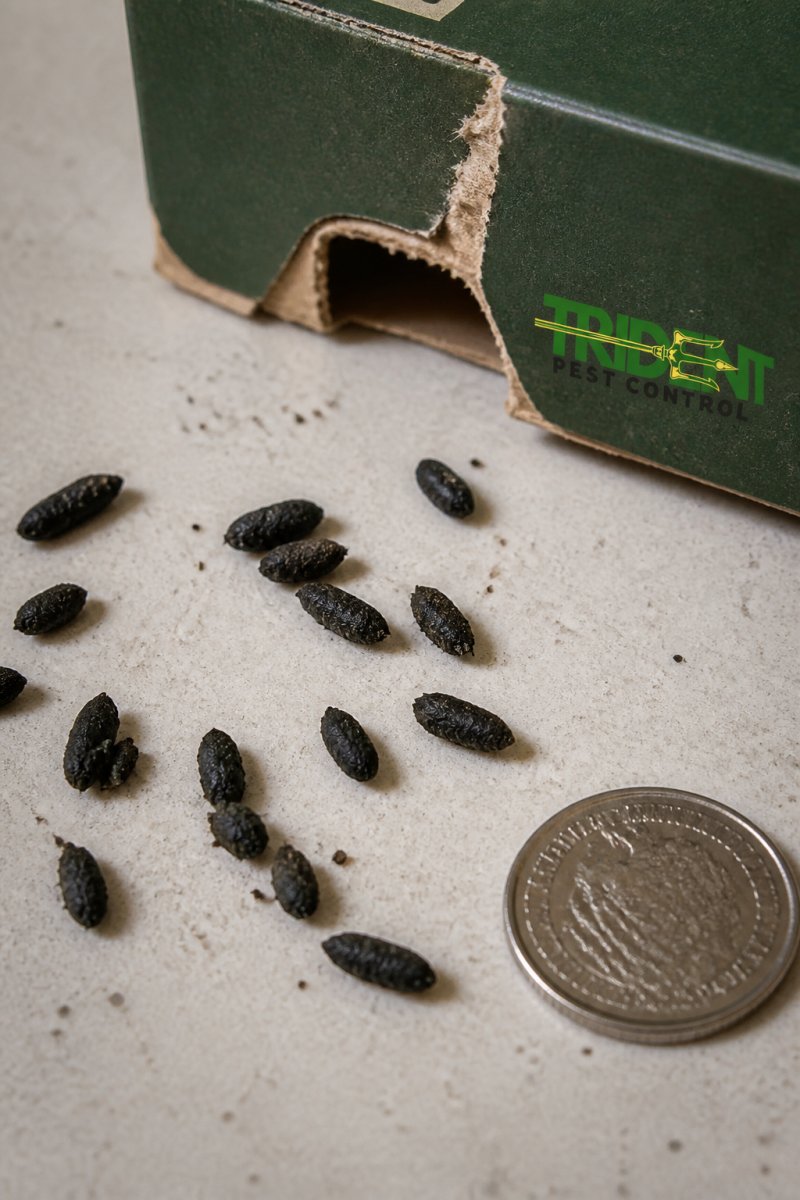
Look for droppings along baseboards, inside kitchen cabinets, under sinks, in attics and crawl spaces, and around food storage areas. Fresh droppings appearing every few days indicate active, growing infestation. DIY pest control can be less effective than professional services in fully resolving infestations, according to the Australian Environmental Pest Managers Association, because homeowners address symptoms rather than underlying causes.
Recognising gnaw marks on wiring, wood, and food packaging
Rodents have continuously growing teeth and must gnaw constantly to wear them down. Fresh gnaw marks are lighter in colour and darken over time. Look for bite marks on electrical wiring and cables (a serious fire hazard), wooden beams and joists, plastic pipes, food packaging, insulation, and drywall. Rats leave larger, deeper marks with rough edges; mice create smaller, delicate marks.
Chewed electrical wiring is a fire hazard. If you discover gnawed wires, avoid touching them and contact a professional pest controller immediately. Do not attempt repairs without addressing the rodent problem first.
Auditory and Olfactory Signs of Rodent Activity
Rodents are nocturnal, so you’ll often hear them before seeing them. Learning to recognise their sounds and smells is crucial for early detection.
Scratching and scurrying noises at night
Rodents are most active between dusk and dawn. Scratching, scurrying, and light gnawing noises commonly come from inside walls, above ceilings, under floorboards, and behind appliances. Consistent scratching and scurrying sounds at night, especially if new, indicate active rodent activity. Many property owners dismiss these sounds initially, thinking they’re settling noises or pipes, allowing the problem to escalate significantly.
Foul odours and musky smells
A strong, musky odour is one of the clearest signs of established infestation, coming from rodent urine and droppings accumulating in hidden spaces. A potent smell reminiscent of rotting cabbage or ammonia can indicate a dead, decaying rodent in walls or roof spaces, particularly common in winter when rodents seek shelter indoors.
Pay attention to odours in attics, under sinks, behind appliances, crawl spaces, and inside wall voids. If the smell is concentrated in one area, the nest or main activity zone is likely nearby.
Musky smells combined with scratching sounds at night are a strong indicator of active, established infestation. This combination warrants professional assessment rather than DIY attempts.
Tracking Rodent Movement: Runways, Grease Marks, and Smear Marks
Rodents follow established pathways between nests, food sources, and water. Over time, these routes become visible as grease marks and smear marks along walls and baseboards.
As rodents travel along established pathways, oils and dirt from their fur leave dark, greasy rub marks along walls and baseboards, frequently near entry points and along routes connecting nesting and feeding areas. In dusty areas like attics or crawl spaces, you may see small footprints or tail marks where rodents have disturbed fine materials.
Look for these marks along baseboards and wall edges, around door and window frames, near entry points and gaps, along pipes and cables, and in attics and crawl spaces. Light marks suggest recent activity; heavy, dark staining indicates long-established infestation. Multiple parallel tracks suggest multiple rodents using the same route.
Nesting Materials and Hidden Locations
Rodents build nests in quiet, secluded areas using soft materials they find. Common nesting materials include shredded paper and cardboard, fabric scraps, insulation material, natural fibres, and plastic bags. Rodents prefer dark, undisturbed locations close to food and water sources, protected from predators.
Typical nesting spots include attics and roof spaces, crawl spaces and subfloors, behind appliances, inside wall voids, under decking, and stored boxes. If you discover a nest, don’t disturb it. Removing one nest won’t solve the problem if entry points remain unsealed. Professional pest controllers address both nests and underlying access issues.
Signs of Rats in Roof Spaces and Upper Areas
Roof spaces are prime real estate for rats, offering shelter, warmth, and food access. Signs of rats in roof spaces include droppings along beams and joists, gnaw marks on timber framing and electrical wiring, shredded insulation, greasy rub marks, scratching sounds above ceilings, and musty odours. Rats can squeeze through surprisingly small gaps, a rat fits through openings as small as 12 millimetres, roughly the diameter of a 20-cent coin (aepma.com.au).
Common entry points include gaps around roof vents and flashing, damaged roof tiles, gaps where pipes or cables penetrate the roof, poorly sealed gutters, and gaps between roof and exterior walls. Roof infestations are particularly concerning because rats cause significant structural damage by gnawing on timber framing and electrical wiring.
If you suspect rats in your roof space, do not attempt to access the area yourself. Roof spaces can be dangerous, and disturbing an active rat nest can cause rodents to scatter into other areas. Professional inspection and treatment is essential.
How to Tell if You Have Mice or Rats
Understanding whether you’re dealing with mice or rats changes your treatment strategy and helps you assess problem severity. The two species have different behaviours, habitat preferences, and reproduction rates.
Size and appearance differences
Mice are small, typically weighing 20-35 grams with a body length of 7-10 centimetres. Rats are significantly larger, weighing 200-500 grams with a body length of 20-25 centimetres. Mice have triangular faces with large, prominent ears and tails as long as or longer than their body length. Rats have more rounded faces with smaller ears and tails shorter than their body length.
Droppings and damage patterns by species
Mouse droppings are consistently small (3 to 6 millimetres), dark, and pellet-shaped with pointed ends, scattered throughout spaces because mice are curious and move constantly. Rat droppings are larger (12 to 19 millimetres), darker, and bean-shaped, concentrated along walls, near nesting areas, and established routes. stop subfloor dampness.
Mice create smaller gnaw marks with clean edges and are more likely to damage food packaging. Rats leave larger, deeper gnaw marks with rough, splintered edges and can damage structural timber, plastic pipes, and electrical wiring. Mouse infestations typically involve many individuals; rat infestations may involve fewer animals causing more extensive damage.
According to research from Edith Cowan University, motion-sensored cameras and rodent detection dogs have greatly improved the ability to detect rats at low densities. Professional pest controllers may use advanced methods for detection.
How to Prevent Rodent Entry Points
Prevention is always more effective than treatment. Once you understand how rodents enter buildings, you can seal entry points and make your property far less attractive to them.
Sealing gaps and securing foundations
Rodents enter buildings through gaps and cracks. A rat needs only a quarter-sized opening (approximately 6 millimetres); mice can squeeze through gaps as small as a 10-cent coin (approximately 12 millimetres). Thorough inspection and sealing is essential.
Priority entry points include gaps around pipes and cables, spaces around door frames and door sweeps, window frames and wells, roof vents and flashing gaps, foundation gaps and concrete slabs, spaces between exterior walls and structures, openings in soffits and fascia boards, and gaps around air conditioning units.
Use appropriate sealing materials: concrete or mortar for foundation gaps, steel mesh or hardware cloth for larger openings (rodents chew through plastic and foam), weatherstripping for door and window frames, and caulk or foam sealant for small gaps around pipes.
Inspecting pipes, vents, and window frames
Regular inspection of pipes, vents, and window frames catches problems before rodents exploit them. Check where pipes enter the building from outside for gaps between pipe and wall, and inspect for damage or deterioration in pipe insulation. Ensure drains are properly sealed and vented.
Inspect roof vents for damage or gaps around edges, check that flashing is properly sealed, look for rust or corrosion creating openings, and ensure vent covers are intact. For windows and doors, check for gaps around frames and walls, inspect weatherstripping for damage, ensure door sweeps are present and in good condition, and look for cracks in frames or surrounding walls.
Sanitation alone can reduce rodent activity by up to 60% when combined with exclusion measures, according to the Australian Environmental Pest Managers Association. Sealing entry points (exclusion) combined with removing food and water sources (sanitation) is a powerful combination.
Create a simple inspection schedule. Check entry points seasonally (spring, summer, autumn, and winter) because weather changes, settling, and wear create new gaps. A quarterly 30-minute inspection prevents most infestations from starting.
Your DIY Inspection Checklist
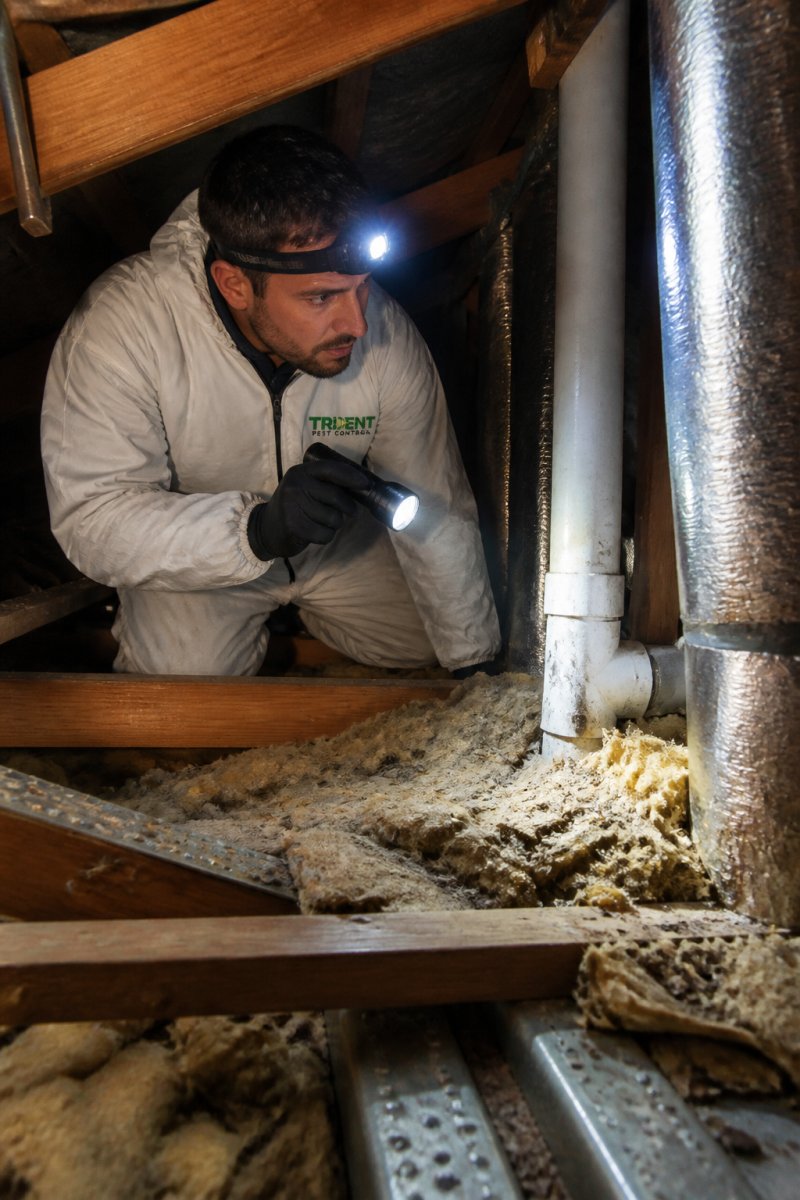
A systematic inspection helps you identify problems and determine whether professional help is needed.
Interior spaces to inspect:
- Kitchen and pantry for droppings, gnaw marks on packaging, and food contamination
- Under sinks and behind appliances for droppings, nesting materials, and grease marks
- Cabinets and cupboards for food storage damage and droppings
- Baseboards and wall edges for grease marks and smear marks
- Laundry and utility areas for nesting materials and droppings
- Bedrooms and living areas for scratching sounds and droppings
Upper areas to inspect:
- Attic or roof space for droppings, nesting materials, gnaw marks on timber, and damaged insulation
- Above suspended ceilings for droppings and nesting materials
- Inside wall cavities for nesting evidence and movement
Lower areas to inspect:
- Crawl space or subfloor for droppings, nesting materials, and grease marks
- Under decking or outdoor structures for burrows and nesting evidence
- Around the foundation for entry points and burrow holes
External inspection:
- Foundation gaps and cracks for entry points and burrows
- Roof vents and flashing for damage and gaps
- Pipes and cables entering the building for gaps around entry points
- Door and window frames for gaps and damage
- Gutters and downpipes for damage and gaps
Signs to document:
- Fresh droppings (moist, dark) versus old droppings (dry, brittle)
- Gnaw marks and their location
- Nesting materials and nest locations
- Grease marks and smear marks
- Entry points and gaps
- Scratching sounds and when they occur
- Odours and their location
If you find evidence of active infestation, fresh droppings, recent gnaw marks, nesting materials, or scratching sounds, professional intervention is warranted. Trident Pest Control can conduct thorough inspection, identify entry points, and develop tailored treatment plans. Our licensed technicians use proven methods to eliminate existing infestations and prevent recurrence.
Early detection of rodent infestations saves time, money, and stress. The signs outlined in this guide, droppings, gnaw marks, sounds, odours, and physical entry evidence, give you tools to spot problems before they escalate. If your inspection reveals active infestation, professional pest control is the most reliable solution. Trident Pest Control offers same-day emergency services, kid and pet-safe treatments, and fixed transparent pricing to eliminate rodents and seal entry points so infestations don’t return. Get your free quote today and protect your property from the ground up.
Frequently Asked Questions
How do I know if I have a rodent infestation?
Look for multiple signs together: fresh droppings near food storage or baseboards, gnaw marks on wiring or wood, scratching noises at night, grease marks along walls, or a strong musky odour. A single sign may not confirm an infestation, but several signs appearing within the same area suggest active rodent activity. If you spot these signs, contact a professional pest controller immediately, DIY control can be less effective for established infestations.
What is the difference between mouse and rat droppings?
Mouse droppings are small, dark, and pellet-shaped, measuring 3 to 6 millimetres long with pointed ends resembling rice grains. Rat droppings are significantly larger, measuring 12 to 19 millimetres long, and resemble small beans or olive pits with blunt ends. Fresh droppings are darker and moist; older ones are dry and brittle. Finding these droppings in concentrated areas near food sources or along baseboards indicates active rodent activity and the species present.
How can I tell if I have rats or mice in my home?
Rats leave larger gnaw marks (deeper and wider), bigger droppings, and create more substantial damage to structural materials. Mice produce smaller, more delicate gnaw marks and finer droppings. Rats are heavier and produce louder scurrying sounds; mice create lighter scratching noises. Rats typically nest in lower areas like foundations and subfloors, while mice prefer upper spaces like attics. Identifying which species you have helps determine the most effective control strategy.
Should I attempt DIY rodent control or call a professional?
Professional pest control is strongly recommended. DIY methods can be less effective because they address symptoms, not the source. Professional pest controllers identify all entry points, locate hidden nests, and apply targeted treatments. They also provide follow-up monitoring and prevention advice. For established infestations or if DIY attempts have failed, professional treatment ensures complete elimination and prevents re-infestation.
This article was written using GrandRanker