Table of Contents
- Why Property Protection Matters in Food Manufacturing
- Food Manufacturing Insurance Requirements
- Risk Management for Food Production Facilities
- Commercial Kitchen Pest Control Solutions
- Cybersecurity and Climate-Related Property Risks
- Home-Based Food Production and Property Protection
- Assessing Your Property Protection Needs
- Conclusion
Last Updated: August 26, 2026
Why Property Protection Matters in Food Manufacturing
Property protection for food manufacturing protects your entire operation from raw materials through finished products. The stakes are high. According to IMARC Group’s 2026 Australia Food Processing Market Overview, the food processing sector reached AUD 119 billion in 2025 and is projected to grow to AUD 190.2 billion by 2034, expanding at 5.19% annually. A single incident, contamination, equipment failure, cyber-attack, or natural disaster, disrupts supply chains, damages reputation, and can force closure. Lockton’s 2025 Key Operational Risks report recorded 95 food recalls in 2024 alone, each a reminder that regulatory compliance and property protection are inseparable.
The food manufacturing sector operates on tight margins with perishable products and demanding customers. One contamination event triggers recalls costing hundreds of thousands of dollars, destroys customer trust, and invites regulatory scrutiny that disrupts operations for weeks. Comprehensive property protection requires a layered approach: risk mitigation, contamination prevention, equipment safeguards, and tailored insurance policies.
Property protection for food manufacturing combines physical safeguards, compliance measures, and tailored insurance coverage to prevent total operational collapse from a single incident.
Food Manufacturing Insurance Requirements
Property protection starts with understanding what your insurance actually covers. Most businesses assume standard commercial policies protect them. They don’t. Food manufacturing requires specialist coverage addressing contamination liability, product recall costs, equipment breakdown, and supply chain disruption.
Product Liability and Recall Coverage
Product liability insurance protects you when your food causes injury or illness. Recall coverage pays for product retrieval, customer notification, and regulatory response. A product recall triggers immediate costs: product destruction, replacement stock, customer notifications, regulatory fines, and legal fees. More insidiously, it damages brand reputation, a single contamination incident can reduce customer confidence by 40-60%, with recovery taking years. Willis (WTW) Global Food, Beverage and Agriculture Risk Report 2026 found that food safety and health ranked as a top risk for 45% of food sector respondents in 2026, up sharply from 29% in 2024.
Your policy should cover product retrieval and destruction, public notification expenses, regulatory fines and legal defence costs, loss of income during recall, and replacement product costs. Without this coverage, a single recall can wipe out a year’s profit.
Property Damage and Business Interruption
Property damage coverage protects your building, equipment, and inventory. Business interruption coverage pays operating costs when you can’t produce, rent, wages, utilities, while your facility recovers from contamination or damage.
Food manufacturing facilities are capital-intensive. A fire, flood, or contamination event halts production entirely while customers expect deliveries, suppliers expect payment, and staff expect wages. Business interruption insurance covers these fixed costs during recovery.
Coverage should include replacement cost for damaged equipment and inventory, lost revenue during production stoppage, extra expenses to resume operations faster, and spoilage coverage for perishable stock lost due to cold chain failure. CRC Group’s 2026 Property State of the Market report noted that high-hazard manufacturing including food processing is seeing rate softening and broader terms, especially for well-performing accounts with strong loss control measures.
Bundle property damage and business interruption coverage. The combined cost is lower than buying separately, and you avoid gaps in coverage during transition periods.
Risk Management for Food Production Facilities
Insurance covers financial impact. Risk management prevents incidents from happening. The two work together: mitigation reduces claims frequency, lowering premiums; insurance protects you when mitigation fails.
Hazard Analysis and Contamination Prevention
Contamination is the existential threat in food manufacturing. A single pathogen in one batch triggers a recall affecting thousands of customers. Hazard analysis, systematically identifying where contamination can occur and implementing controls, is your first line of defence.
Food safety standards require documented hazard analysis. In Australia, compliance means following Food Standards Australia New Zealand (FSANZ) guidelines. Your facility must have a documented food safety plan identifying critical control points, documented procedures for monitoring and controlling each point, records proving compliance, and a tested recall procedure executable within hours.
Contamination doesn’t always originate inside your facility. Incoming ingredients, packaging materials, and air can introduce pathogens. Your risk management must address supplier verification through audits and documentation, receiving inspections for visible contamination or temperature deviation, physical segregation of raw materials and finished goods, staff training on contamination risks, and environmental monitoring of surfaces, water, and air.
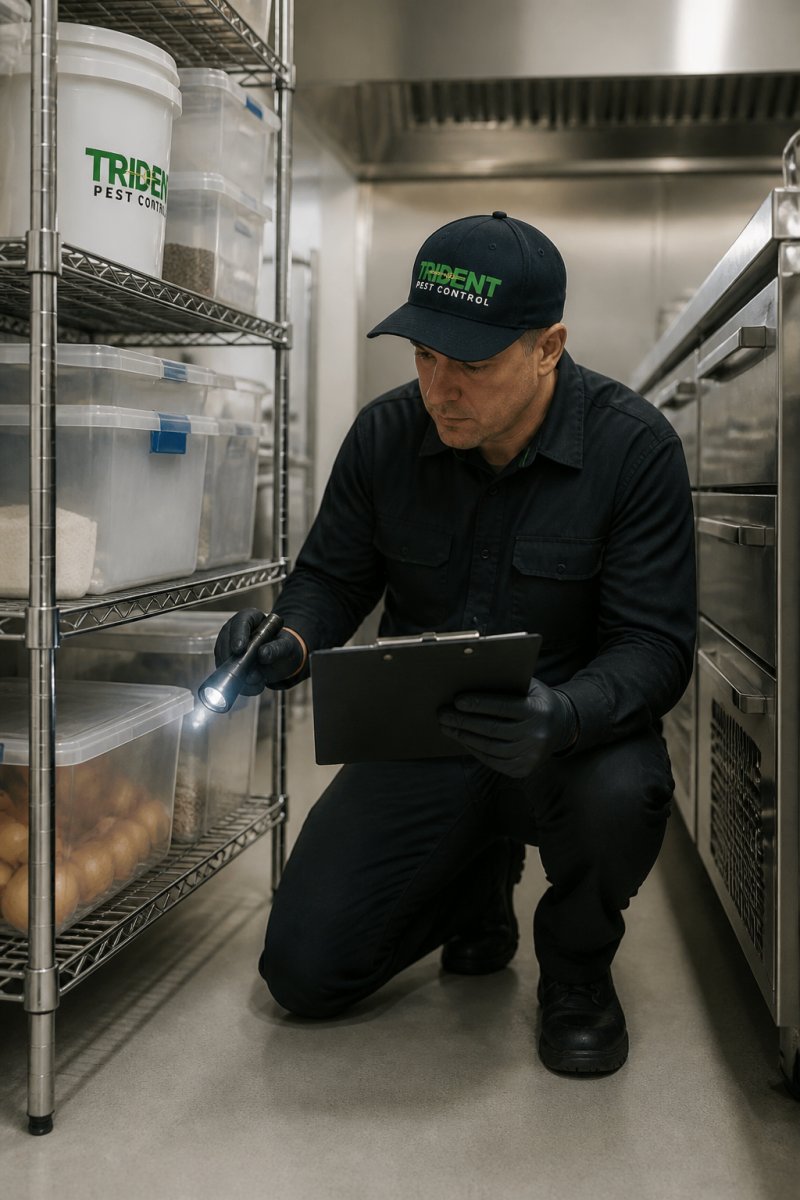
CSIRO’s Food System Horizons report calculated that Australia’s food system generates hidden costs ranging from AUD 98 billion to AUD 274 billion in net present value terms. Your contamination prevention program directly reduces these systemic costs and protects your business from regulatory exposure.
Equipment Breakdown and Cold Chain Logistics
Food manufacturing depends on equipment working perfectly. A refrigeration failure spoils an entire day’s production. Equipment breakdown insurance covers repair or replacement costs and lost income during downtime.
Cold chain logistics, maintaining precise temperatures from production through distribution, is critical for perishable products. Temperature deviation triggers spoilage, customer illness, and recalls. Your risk management must include redundant refrigeration systems, automated temperature monitoring with immediate alerts, documented procedures for temperature deviations, supplier alignment on cold chain standards, and regular preventive maintenance on all refrigeration equipment. TGA audit preparation.
Equipment breakdown insurance should cover repair or replacement of failed equipment, cost of product lost due to spoilage, lost revenue during repair, and emergency repair costs. Facilities with documented preventive maintenance, automated monitoring, and redundant systems attract better insurance terms and lower premiums.
Commercial Kitchen Pest Control Solutions
Pest control in food manufacturing is non-negotiable. A single rodent or insect can contaminate an entire batch, trigger a recall, and destroy customer trust. Comprehensive property protection includes strong pest management.
Pests pose two threats: direct contamination through droppings or dead insects in product, and pathogen transmission, rodents carry salmonella, insects carry listeria. Your pest control program must be proactive.
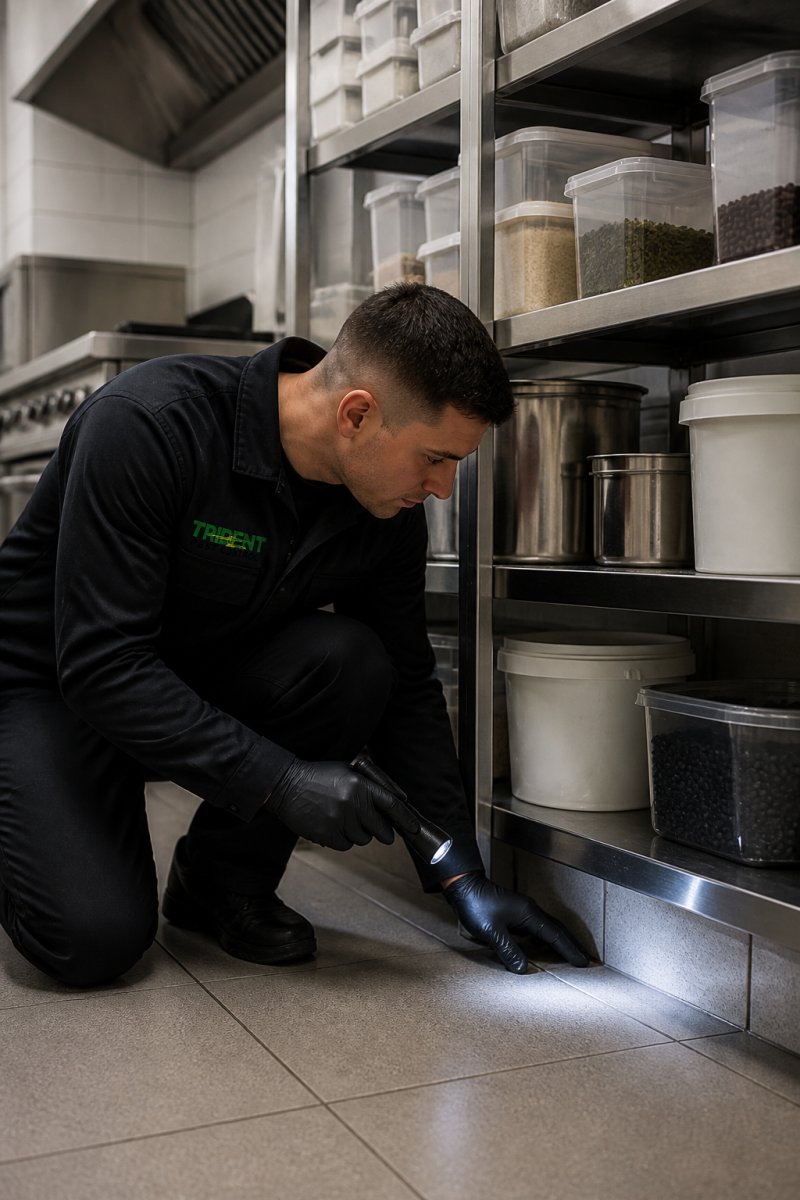
An effective pest management strategy includes exclusion by sealing entry points and gaps, sanitation to remove food debris and moisture, monitoring through traps and devices checked weekly, professional treatment from licensed providers understanding food manufacturing compliance, and documentation of all pest control activities for FSANZ and insurer requirements.
Trident Pest Control provides professional pest management for food manufacturing facilities across Melbourne, Geelong, and Werribee. Our licensed technicians understand food safety compliance and use treatments appropriate for commercial kitchens. We provide fixed pricing with no hidden charges and offer same-day service for active infestations. Regular monitoring and preventive treatment cost far less than managing a contamination incident.
A single pest sighting in a food facility can trigger a recall, even if no contamination occurred. Prevention is infinitely cheaper than remediation.
Cybersecurity and Climate-Related Property Risks
Property protection has expanded beyond physical threats. Two emerging risks demand insurance attention: cyber-attacks on automated facilities and climate-related property damage.
Protecting Against Cyber-Attacks in Automated Facilities
Modern food manufacturing relies on automated systems for temperature control, production sequencing, inventory management, and supply chain coordination. A cyber-attack can halt production, corrupt product data, or trigger false contamination alerts.
A 2026 cyber-attack on an Australian sugar manufacturer halted operations for 16 days and disrupted suppliers throughout the region. According to Claroty’s Food & Beverage Industry News report, Jason Pearce, Field Chief Technology Officer APJ, noted: "This incident shows how quick the effects of a successful cyber-attack can extend beyond one company. If a disruption occurs, the consequences can very quickly propagate throughout the region."
Your cyber risk management must include network segmentation isolating production systems from office networks, access controls limiting critical system access with multi-factor authentication, offline backups of critical data and configurations, and a documented incident response procedure.
Cyber insurance for food manufacturing should cover business interruption losses if systems are compromised, incident investigation and forensics costs, regulatory fines and legal defence, customer notification and credit monitoring, and reputational damage mitigation.
Climate Resilience and Natural Catastrophe Coverage
Natural disasters are becoming more frequent and severe. Insured losses from natural catastrophes surpassed USD 100 billion globally for the fifth consecutive year in 2024, with climate risk now a central driver of commercial property premium adjustments. Food manufacturing facilities, dependent on electricity, refrigeration, and precise environmental control, are particularly vulnerable.
Your climate resilience strategy must include facility hardening through elevated critical equipment and secured roof structures, supply chain diversification avoiding reliance on single suppliers, business continuity planning documenting critical operations and customer communication, and natural catastrophe insurance covering storms, floods, and earthquakes.
Natural catastrophe coverage should include damage to building and equipment, business interruption if you can’t operate after disaster, emergency expenses to resume operations, and supply chain disruption coverage if suppliers are affected. Facilities with documented risk mitigation, backup power, redundant systems, and elevated critical equipment attract better insurance terms and lower premiums.
Home-Based Food Production and Property Protection
Home-based food production is growing. Artisanal producers, small-batch manufacturers, and cottage food operations operate from domestic kitchens. Property protection includes these operations, though requirements differ from commercial facilities.
Home-based food producers face unique challenges. Residential property insurance doesn’t cover business use and explicitly excludes commercial activities. Operating a food business from home without proper coverage leaves you uninsured, and insurers can deny claims if they discover business use.
Your property protection strategy must include a business use endorsement on your homeowner’s policy allowing food production, product liability coverage even for small-batch producers, compliance with local council requirements for home-based food production, food safety documentation matching commercial producers, and commercial-grade pest management appropriate for food contact surfaces.
Trident Pest Control provides pest management for home-based food producers, using safe treatments and documenting all activities for compliance purposes.
Assessing Your Property Protection Needs
Determining your property protection requirements starts with understanding your specific risks. A generic approach won’t work. Your facility’s size, products, processes, and location all affect your risk profile and insurance needs.
Use this framework to assess your needs:
| Risk Category | Assessment Question | What to Document |
|---|---|---|
| Product Liability | What products do you manufacture? How do they reach customers? | Product list, distribution channels, customer types |
| Facility Risk | What’s your facility size, age, construction type? | Square metres, year built, materials, location |
| Equipment Risk | What critical equipment do you operate? What’s the replacement cost? | Equipment list, ages, maintenance records, PML studies |
| Supply Chain Risk | How dependent are you on specific suppliers? What’s your inventory value? | Supplier list, inventory value, backup supplier options |
| Contamination Risk | What contamination hazards exist in your process? | Hazard analysis documentation, FSANZ compliance records |
| Climate Risk | What natural disasters are likely in your region? | Historical disaster data, facility elevation, backup systems |
| Cyber Risk | What systems control your production? What data do you hold? | System inventory, data classification, backup procedures |
For each risk category, document your current controls and gaps. Your insurance broker uses this information to recommend appropriate coverage and negotiate better terms.
Underwriting for food manufacturing is rigorous. CRC Group’s 2026 Property State of the Market report emphasizes that risk engineering is critical in high-hazard manufacturing. Timely loss control inspections, engineering reports, property surveys, risk assessments, detailed process descriptions, and probable maximum loss (PML) studies are essential for competitive outcomes. Sprinklered facilities with clearly defined processes and effective loss control measures attract broader capacity and favourable terms.
Property protection for food manufacturing isn’t a one-time purchase. It’s an ongoing process of identifying risks, implementing controls, and ensuring your insurance coverage evolves with your business. The food manufacturing sector is growing rapidly, and your competitors are investing in risk management and insurance. The question isn’t whether you can afford comprehensive property protection. It’s whether you can afford not to have it.
At Trident Pest Control, we partner with food manufacturers to deliver pest management supporting your compliance and insurance requirements. Our licensed technicians understand food safety standards, use treatments safe for food contact surfaces, and provide documentation for regulatory and insurance purposes. We offer fixed pricing with no hidden charges, same-day service for active infestations, and preventive programs designed to eliminate pest-related claims before they occur. Get your free quote today and secure the pest management component of your comprehensive property protection strategy.
Frequently Asked Questions
What are the specific property risks in food manufacturing?
Food manufacturers face multiple property risks including product contamination, equipment breakdown, fire damage, supply chain disruption, and stock loss from spoilage. Property damage can halt production entirely, triggering business interruption losses. Natural disasters, cyber-attacks on automated systems, and pest infestations also threaten facilities. In 2024, insured losses from natural catastrophes exceeded USD 100 billion globally, and FSANZ recorded 95 food recalls in 2024 alone, highlighting the scale of potential losses. Comprehensive property protection addresses these exposures through property damage coverage, business interruption insurance, and specialised industrial special risks policies tailored to food manufacturing operations.
Do home-based food businesses need commercial property insurance?
Yes. Home-based food production requires commercial property protection despite operating from a residential address. Standard home insurance excludes business activities and will not cover product liability, contamination claims, or stock loss from manufacturing operations. Home-based producers need commercial kitchen coverage, product liability insurance, and compliance with food safety standards including HACCP principles. This protects both the business and the property itself, ensuring coverage for equipment, ingredients, finished products, and third-party claims if contamination occurs.
How can pest management be integrated into a property protection plan?
Pest management is a critical component of risk mitigation for food manufacturing. Regular pest control inspections and preventive treatments reduce contamination risks and support compliance with food safety standards. Integrating professional pest control into your property protection strategy helps avoid product recalls, equipment damage from pest activity, and supply chain disruption. Documentation of pest control protocols strengthens insurance underwriting assessments and may improve policy terms. For commercial kitchens, ongoing pest management demonstrates due diligence to insurers and regulators, reducing claims risk and protecting asset value.
What is the difference between general liability and property protection for food manufacturers?
General liability covers third-party bodily injury and property damage claims arising from your operations, such as a customer injured by contaminated product or damage to a supplier's equipment. Property protection covers damage to your own assets, including buildings, equipment, stock, and loss of income from business interruption. Food manufacturers need both: general liability protects against external claims, while property protection safeguards your facility, inventory, and operational continuity. Industrial special risks (ISR) policies combine these coverages with specialised food manufacturing protections, offering more comprehensive indemnity than standard policies.
This article was written using GrandRanker