
Last Updated: October 29, 2026
Quick Summary
To learn how to seal gaps under doors for pests, close the door and measure the gap at the left, centre and right, then fit a door sweep, brush seal or automatic seal using the largest measurement. A gap of just 5mm is enough to let a mouse through, so sealing it blocks the entry point.
- Measure the gap at three points and use the largest figure, since doors sag and floors slope.
- A brush seal suits uneven or sloping floors because the bristles bend to follow the surface.
- Door brush seal installation takes about 20 minutes per door and needs only a drill and a saw.
- Seal the sides, corners and hinge side too, not just the bottom of the door.
- Replace a door seal when it stops touching the floor, cracks, or light shows under the door.
Table of Contents
- Why Sealing Door Gaps Stops Pests Getting In
- What You’ll Need Before You Start
- How to Measure a Door Gap Correctly
- Choosing a Door Sweep for Pests
- Step-by-Step Door Brush Seal Installation
- How Often to Replace a Door Seal
- Common Mistakes That Let Pests Back In
- When to Book a Professional Pest Inspection
- Frequently Asked Questions
Why Sealing Door Gaps Stops Pests Getting In
If you want to know how to seal gaps under doors for pests, start with the number that matters: a gap of just 5mm is enough to let a mouse through. Cockroaches need far less. That thin strip of daylight under your back door is an open invitation, and it’s one of the cheapest fixes in pest control.
Pests don’t break in. They wander in through gaps you’ve stopped noticing.
Sealing those gaps blocks the entry point.
Which Pests Come Through the Gap Under a Door
Cockroaches, mice, rats, ants, spiders and even slugs use door gaps as a highway. For a local rundown of common pest problems in Melton and how to prevent them, see our area guide. Cockroaches and ants follow warmth and moisture. Mice squeeze through openings the width of a pencil. Spiders follow the insects in.
If cockroaches are your main worry, our guide on how to stop cockroaches getting into your home goes deeper on blocking them.
What You’ll Need Before You Start
Gather your gear first so you’re not crawling back to the shed mid-job. Here’s the short list:
- Tape measure
- Pencil
- Cordless drill and bits
- Hacksaw or tin snips
- Door sweep, brush seal or automatic seal
- Screws or adhesive strip, depending on the product
- Vacuum and a damp cloth for prep
Door sweep for pests: a strip that mounts on the door face and drags across the floor.
Pick a dry day. Adhesive-backed seals won’t stick to a wet or dusty door.
How to Measure a Door Gap Correctly
Measuring a door gap is simple: close the door, then measure the height of the gap at three points, left, centre and right. Use the largest figure.
Doors sag and floors slope. If you buy based on the smallest measurement, you may leave daylight at one end.
Write the numbers down. Then check the side gaps too, since pests use those as well.
Choosing a Door Sweep for Pests
The right door sweep for pests depends on your floor and how often the door moves. A flat concrete threshold suits a simple rubber sweep. A sloping or uneven floor needs a brush or automatic seal that flexes with the surface.
Sweeps vs Brush Seals vs Automatic Seals
| Type | Best for | Watch out for |
|---|---|---|
| Rubber sweep | Flat concrete or tile thresholds | Drags on uneven floors |
| Brush seal | Sloping or textured floors | Bristles wear over time |
| Automatic seal | High-traffic doors, uneven gaps | Higher cost, more moving parts |
Step-by-Step Door Brush Seal Installation
Door brush seal installation takes about 20 minutes per door and needs only a drill and a saw. Brush seals suit uneven floors because the bristles bend to follow the surface.
- Clean the bottom edge of the door and let it dry.
- Cut the seal to the door width with a hacksaw.
- Hold the seal against the door and mark screw holes with a pencil.
- Drill pilot holes to stop the timber splitting.
- Screw the seal into place, working from the centre out.
- Close the door and check for light. Adjust if you see any.
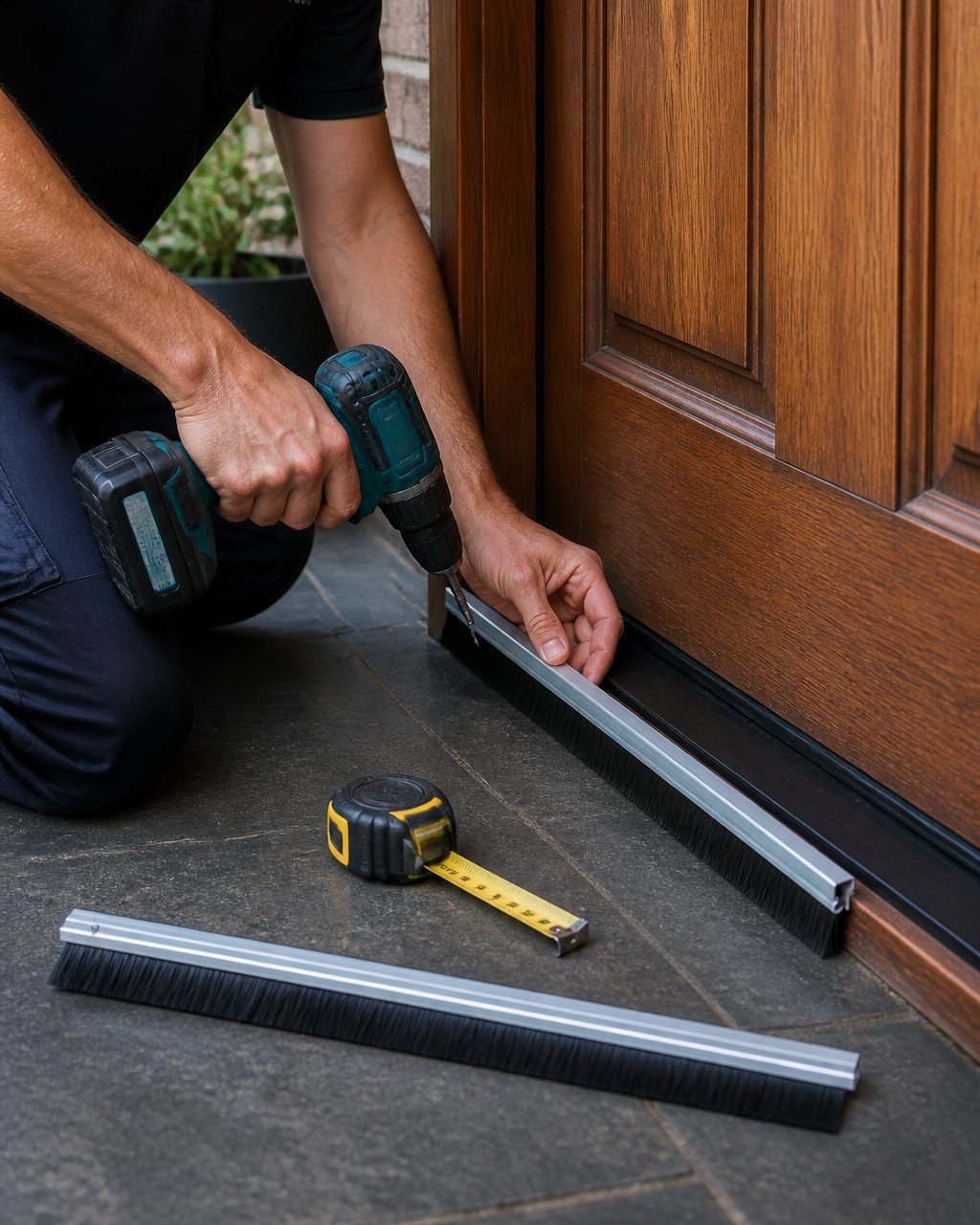
Expected result: no visible light under the door and the seal brushing the floor without dragging.
Fitting a Seal to an Uneven or Sloping Floor
For a sloping floor, fit a brush seal and trim the bristles slightly at the high end. Test the swing before you screw it down for good.
How Often to Replace a Door Seal
Replace a door seal when it stops touching the floor, cracks, or you can see light under the door again.
Check your seals each season. Run a hand along the bottom edge.
Common Mistakes That Let Pests Back In
The biggest mistake is sealing the bottom and forgetting the sides and corners. Pests use every gap, and a corner gap is easy to miss.
- Buying a seal before measuring the widest point
- Fitting to a wet or dusty door so the adhesive fails
- Leaving gaps at the hinge side
- Forgetting the garage and laundry doors
When to Book a Professional Pest Inspection
Book a professional pest inspection when you’ve sealed the gaps and still see pests, or when you spot droppings, gnaw marks or egg cases.
If you’re weighing up whether to call someone, our guide on why professional pest control matters lays out the case. And when you’re ready to hire, our rundown on choosing a pest control company helps you ask the right questions.
Trident Pest Control offers same-day service, with licensed and insured technicians and kid and pet-safe treatments.
Frequently Asked Questions
How do I seal a gap under a door to keep pests out?
Measure the gap at its widest point with the door closed, then fit a seal. Clean and dry the door edge first. Check the sides and top of the door too.
What is the best door seal to stop ants and spiders?
A brush seal with densely packed bristles is the most reliable choice for ants and spiders, because it moulds to small dips in the floor and closes gaps down to a few millimetres. Rubber sweeps work well on flat concrete or tiles but can leave gaps over uneven surfaces. For exterior doors, choose a seal rated for weather exposure so it does not harden or split within a season.
Can I install a door sweep without removing the door?
Yes. Most surface-mounted sweeps and brush seals screw or stick directly onto the inside face of the door, so you can fit them with the door still on its hinges. Open the door slightly to reach the bottom edge, or work from the inside with the door closed. Only automatic drop-down seals usually require the door to be lifted off, so check the product instructions before buying.
When should I call a pest controller about pests entering under a door?
Call a licensed pest controller if you have sealed the gaps and still see regular activity, if you find droppings, nesting material or live cockroaches indoors, or if pests keep returning after treatment.
Gaps under doors are the easiest entry points for pests to fix, and the easiest to overlook. If you’ve sealed what you can see and the problem keeps coming back, we can find what you’ve missed. Trident Pest Control offers fixed pricing, no hidden charges, and same-day service across Werribee and surrounding areas. Get your free quote and we’ll help you shut the door on pests for good.
