
Table of Contents
- Why You Need Professional Pest Control in 2026
- DIY vs Professional Pest Control: Why DIY Often Fails
- Pest Control Safety for Pets and Children: What You Need to Know
- Pest Control Frequency for Homes: How Often Is Enough?
- The Long-Term Cost Savings of Professional Pest Control
- Conclusion: Protecting Your Home and Family with Expert Care
- Frequently Asked Questions
Last Updated: September 29, 2026
Why You Need Professional Pest Control in 2026
If you’ve ever sprayed a supermarket can around the skirting boards and hoped for the best, you already know the answer to why you need professional pest control. It works for a week. Then the ants are back, marching along the same invisible highway. In 2026, pest management has shifted from emergency firefighting to planned prevention, and that shift is the whole story.
At Trident Pest Control, we see it every week across Werribee and the western suburbs: homeowners who’ve spent months and plenty of money on DIY fixes that never touched the source of the problem. This guide breaks down what licensed technicians actually do differently, how pest control frequency for homes really works, and why the long-term maths usually favours getting it done properly.
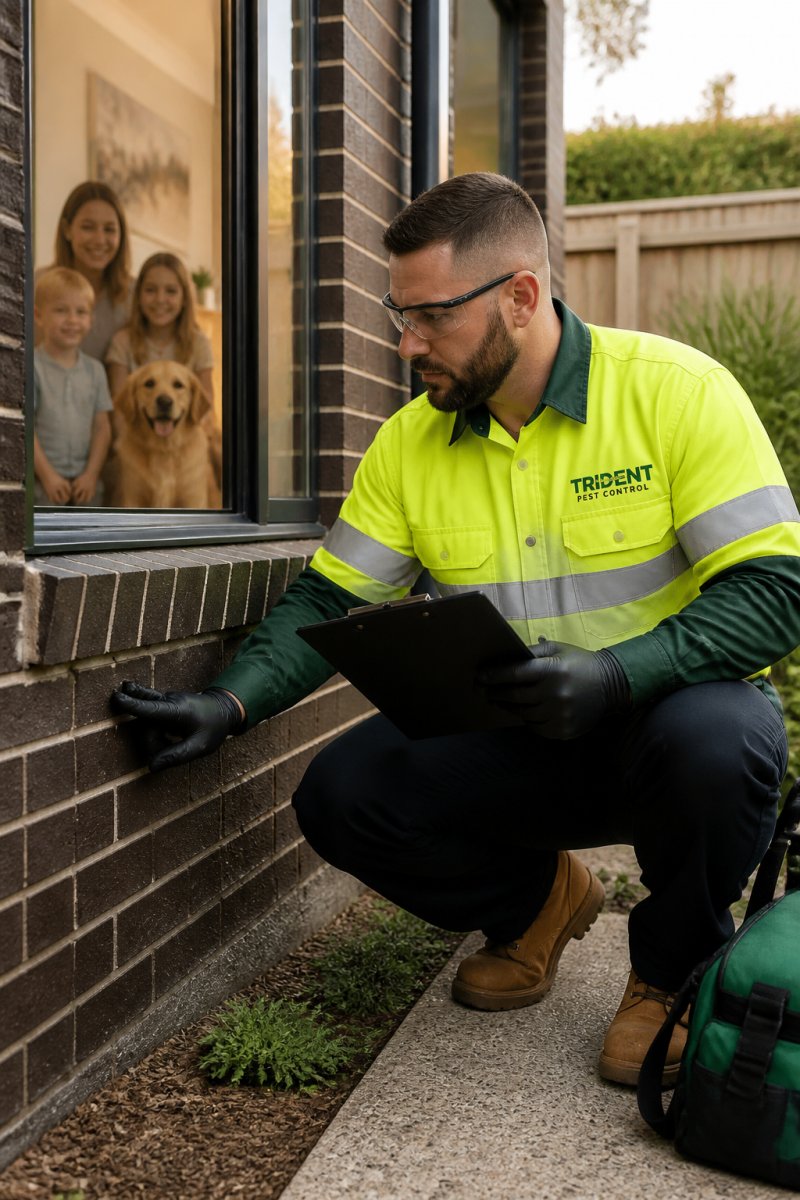
The Shift from Reactive to Proactive Pest Management
Pest control is moving from reactive problem-solving to proactive prevention, a change that reflects how households now think about home health, according to Mintel’s pest control market analysis. That’s a genuine shift in behaviour, not marketing spin.
The old model was simple: see a cockroach, call someone, spray, forget about it. The new model treats your home like a managed environment. Technicians inspect entry points, monitor activity between visits, and adjust treatments before an infestation establishes itself. It costs less to prevent an infestation than to eliminate one, and it’s far less disruptive to your household.
What Licensed Technicians Bring That DIY Cannot
A licensed technician brings three things a can of spray can’t: species identification, correct product selection, and legal accountability. DIY methods often fail because homeowners misidentify the pest species and apply treatments that simply don’t work on the actual problem, as Lookout Pest Control explains in their analysis of common DIY failures.
Ants are the classic example. The ants trailing across your kitchen bench might be a species that nests in wall cavities, not in the garden bed you’ve been drenching. Spray the wrong place and you kill the workers while the colony carries on. A technician identifies the species first, then treats the nest, the trail and the entry points together.
DIY vs Professional Pest Control: Why DIY Often Fails
DIY pest control fails for one main reason: it treats symptoms, not the colony. You can kill every visible ant today and still have thousands more hatching tomorrow.
There’s a second problem most people don’t consider. Pests build tolerance and behaviour patterns. Cockroaches avoid baits that have been used repeatedly in the same spot. Rodents learn to skirt traps. Professionals rotate products and methods specifically to stay ahead of that.
Then there’s the question of proof. Professional service reports document pest activity, the treatment applied and the corrective action taken, which matters for insurance requirements and for proving work was completed, as Pest Management App outlines. If you’re renting, that paperwork protects your bond. If you’re selling, it protects your disclosure position.
- DIY strength: fast, cheap for a single visible insect, no booking required
- DIY weakness: misidentification, wrong product, no follow-up, no documentation
- Professional strength: species ID, targeted treatment, monitoring, written report
- Professional weakness: costs more upfront than a single supermarket product
Pest Control Safety for Pets and Children: What You Need to Know
Pest control safety for pets and children comes down to three things: the products used, the application method, and the re-entry time your technician gives you. Get those right and the risk is very low.
Modern treatments used by licensed operators are applied at low concentrations to targeted areas, not fogged through every room. The most common mistake we see is homeowners assuming all pest control is the same, then either over-treating “just to be safe” or avoiding treatment altogether out of fear.
Ask your technician three questions before they start:
- Which products are being applied, and where?
- How long should children and pets stay off treated surfaces?
- What should I do if my pet licks a treated area?
A reputable operator answers all three without hesitation and puts the advice in writing. If they can’t, that’s your answer.
Pest Control Frequency for Homes: How Often Is Enough?
Pest control frequency for homes typically means a general treatment every 6 to 12 months, with more frequent visits during active infestations or in high-risk properties. There’s no single correct number, and anyone who quotes you one without inspecting your home is guessing.
What actually determines your schedule:
Situation | Typical frequency | Why |
|---|---|---|
Standard suburban home, no history | Every 12 months | Seasonal prevention, early detection |
Home with pets and young kids | Every 6 to 12 months | Higher food and moisture sources |
Recent infestation treated | Follow-up at 2 to 4 weeks | Confirm the colony is gone |
Bushland or waterway nearby | Every 6 months | Higher reinfestation pressure |
Rental property, end of lease | Once per tenancy | Compliance and bond protection |
Climate plays a role too. Warmer, wetter stretches drive ants, spiders and cockroaches indoors, which is why a treatment timed before summer does more work than one in the middle of it.
The Long-Term Cost Savings of Professional Pest Control
Professional pest control usually costs less over three years than repeated DIY attempts, because you’re paying once for a correct diagnosis instead of several times for guesses. That’s the honest version of the cost argument, and it holds up better than any headline figure.
Think about what an untreated infestation actually costs. Replacing pantry food. Resealing damaged timber. Replacing a chewed appliance cord. Flea treatment for three pets after a missed infestation. Emergency call-out rates when you need someone today rather than next week. Those costs stack up quietly.
Then there’s the structural side. Termites cause damage that home insurance typically won’t cover, because it’s classified as a maintenance issue rather than an insured event. Regular inspections are the only realistic way to catch activity early, and early detection is the difference between a targeted treatment and major repairs.
For anyone searching for pest control near me in Werribee, the practical advice is simple: get a fixed quote in writing before work starts, ask what’s included and what isn’t, and confirm the technician is licensed and insured. Fixed pricing means you know the number before anyone picks up a sprayer.
Conclusion: Protecting Your Home and Family with Expert Care
Getting pest control right is less about finding the strongest chemical and more about finding someone who diagnoses the problem properly. That’s the part DIY can’t replicate, and it’s why the same infestation keeps returning for so many households.
Trident Pest Control provides licensed and insured technicians, fixed pricing with no hidden charges, and kids and pet-safe treatments across Werribee, Melbourne and Geelong. Same-day service is available when you’re dealing with an active infestation, and every job comes with clear advice on what was treated and what to expect next.
Get your free quote from Trident Pest Control and protect your home with treatment that’s done once and done properly.
Frequently Asked Questions
Is professional pest control worth the money?
Professional pest control is worth the investment because it addresses the root cause of infestations, not just the visible pests. Licensed technicians identify entry points, nesting sites, and species-specific behaviours that DIY treatments miss. This prevents recurring problems and avoids the health risks and property damage that untreated infestations cause. For families in Melbourne, Geelong, and Werribee, professional services also provide documentation for rental compliance and insurance requirements.
How often should you get pest control in Victoria?
Most homes benefit from a professional pest control visit every 12 months, though properties in high-risk areas or with previous infestations may need quarterly or bi-annual treatments. Factors like local pest activity, building age, and surrounding vegetation affect the ideal pest control frequency for homes. A licensed technician can assess your property and recommend a schedule that balances protection with cost.
What are the benefits of hiring a licensed pest controller?
Licensed pest controllers bring several advantages over DIY methods. They have the training to correctly identify pest species, access to professional-grade treatments not available to the public, and the expertise to apply them safely around children and pets. They also carry insurance, provide written reports, and offer follow-up guarantees. In Victoria, licensed technicians must meet strict training and safety standards, giving you confidence in the quality of work.
Can DIY pest control be dangerous for pets?
DIY pest control can be dangerous for pets if you use the wrong products or apply them incorrectly. Many supermarket insecticides contain chemicals that are toxic to dogs and cats, especially if they ingest treated surfaces or come into contact with wet spray. Professional pest control safety for pets and children involves using low-toxicity products, applying them in targeted areas, and providing clear guidance on when it is safe for your family to return home.