Last Updated: November 13, 2026
Quick Summary
A pet safe flea treatment for homes only works when it targets every flea life stage, in every room, at the same time. Treat all pets on the same day, vacuum before spraying a registered household product to label, then repeat the cycle in 10 to 14 days.
- Fleas live in carpet, bedding and floorboard gaps, not just on your pet.
- Wash pet bedding in hot water and dry on high heat before spraying.
- Never use permethrin dog products on or around cats, as it is highly toxic.
- Keep pets and children off treated surfaces until completely dry per the label.
- Call a licensed pest controller if fleas persist after two proper treatment cycles.
Table of Contents
- Why Pet Safe Flea Treatment for Homes Fails Without a Whole-Home Plan
- How to Prepare Your Home for Flea Treatment
- How to Get Rid of Fleas in the House: A Sequenced Plan
- Flea Treatment for Carpets and Furniture That Reaches the Larvae
- How Long After Flea Treatment Can Pets Return?
- How to Judge Whether a Product Is Genuinely Pet Safe
- When to Call a Licensed Pest Controller or Vet in Werribee
- Booking a Pet-Safe Flea Treatment with Trident Pest Control
- Frequently Asked Questions
Why Pet Safe Flea Treatment for Homes Fails Without a Whole-Home Plan
Most flea treatments fail for one reason: they kill the adults you can see and ignore the eggs, larvae and pupae you can’t.
Fleas don’t live on your pet. They live in your carpet, your bedding and the gaps between floorboards.
Below, we’ll show you the exact sequence professionals use: prepare, treat, wait, repeat. Skip a step and you’ll be doing it all again next month.
How to Prepare Your Home for Flea Treatment
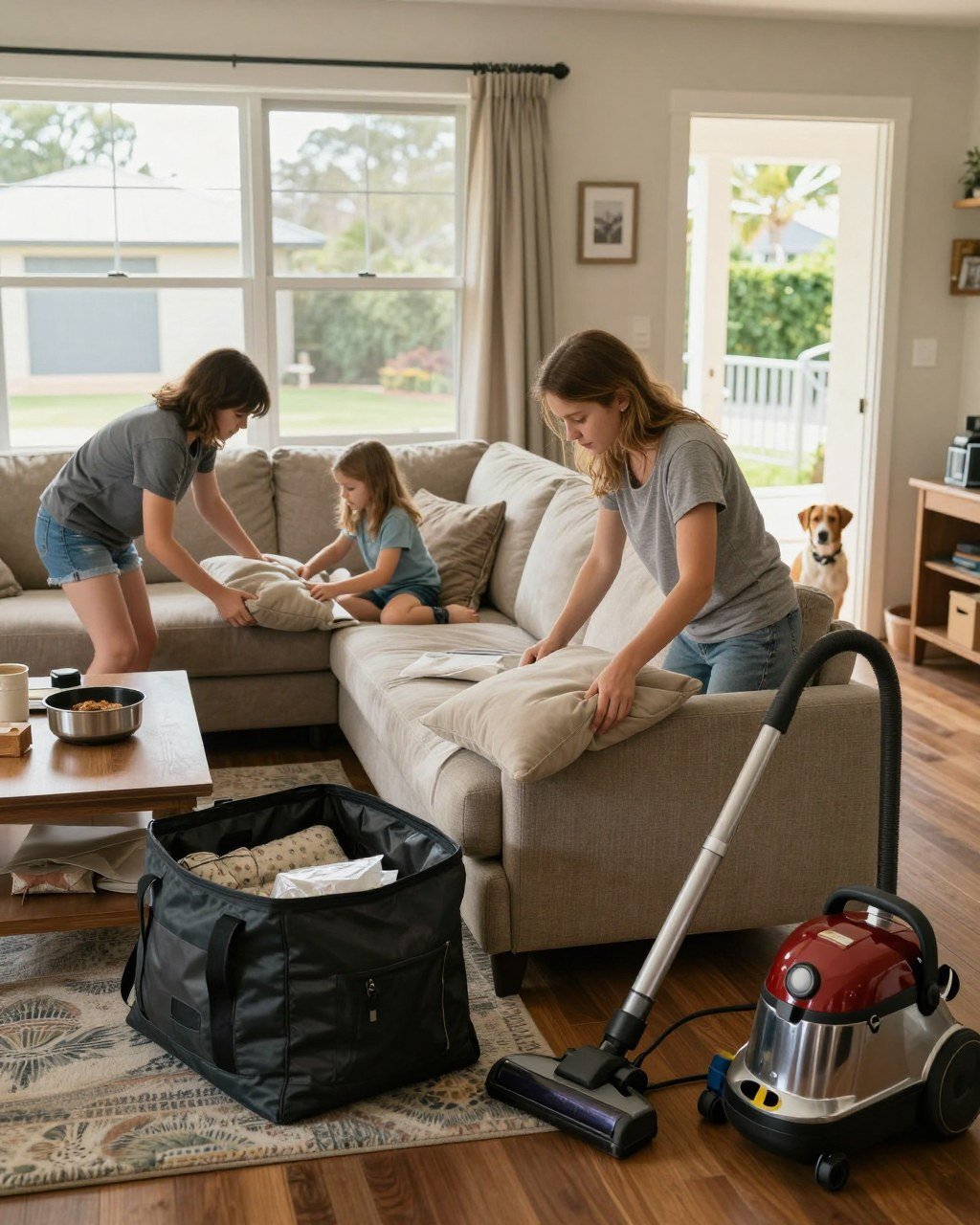
Preparation is where most DIY attempts fall apart. Before any spray touches a surface, you need to clear the clutter, wash the bedding and get the vacuum out.
Clearing Rooms and Covering Surfaces
Move furniture away from walls where you can. Pick up toys, bowls and floor rugs. Cover or remove food, water bowls and anything a child or pet puts in their mouth. Flea eggs and larvae hide in the gaps you can’t see, so the more floor and skirting board you expose, the better the product reaches them.
Washing Pet Bedding Before You Spray
Wash all pet bedding, blankets and throw rugs in hot water and dry them on high heat. This helps remove flea eggs and larvae. Vacuum first, then seal the vacuum bag and bin it outside. A common mistake is vacuuming after spraying, which strips the product before it has done its job.
For a fuller prep checklist, see our guide on how to prepare your home for pest spray.
How to Get Rid of Fleas in the House: A Sequenced Plan
Getting rid of fleas in the house means treating the pet and the environment together, then repeating the process on a schedule that matches the flea life cycle. The plan below sequences preparation, treatment, cleaning and follow-up so each step sets up the next.
Step 1: Treat Every Pet on the Same Day
Treat every cat and dog in the household on the same day, using a product registered for that species. Cats and dogs need different products, and some dog treatments, particularly those containing permethrin, are toxic to cats. If one pet is left untreated, it becomes a reservoir that reinfests the treated rooms within days. Note the treatment date so you can align the next dose with the household repeat cycle.
Step 2: Vacuum Before You Spray
Vacuum thoroughly before any product goes down. Vacuuming does two things: it removes eggs, larvae and adult fleas from carpet and furniture, and the vibration and warmth encourage pupae to hatch into adults that the spray can then kill. Go slowly, overlap passes, and use a crevice tool along skirting boards, sofa seams and under furniture.
Step 3: Apply a Registered Household Product to Label
Apply a registered household flea spray following the label rate exactly. More product is not better; it increases residue exposure for pets and children without improving kill. Pay attention to carpet edges, under furniture and along skirting boards, where larvae hide. Foggers and bombs rarely penetrate carpet pile or furniture seams and leave residue on every surface, so targeted spraying is the better approach.
Step 4: Wait for Surfaces to Dry, Then Vacuum Again
Keep pets and children off treated surfaces until they are completely dry, as directed on the label. Once dry, vacuum again after 24 to 48 hours. A second vacuum can help pick up dead fleas.
Step 5: Repeat the Cycle in 10 to 14 Days
Repeat the vacuum-and-spray cycle in 10 to 14 days. Repeating the cycle is an important step in managing the flea life cycle.
| Step | What You Do | When |
|---|---|---|
| Treat pets | Apply species-appropriate product to every pet | Day 1 |
| Vacuum | Carpets, furniture, skirting, pet areas; bin the bag outside | Day 1, before spraying |
| Spray | Apply registered household product per label | Day 1 |
| Second vacuum | Pick up dead fleas and trigger remaining pupae | Day 2-3 |
| Repeat | Redo vacuum and spray cycle | Day 10-14 |
How to Monitor Whether It Is Working
Judge progress by what you find, not by whether you still see a flea. After treatment, check the vacuum canister and white sock tests (walk through the room in white socks) for live fleas and flea dirt. Keep a simple log of dates, products used and what you saw, so you can tell a genuine treatment failure from normal emergence.
When Fleas Persist After Two Cycles
If live fleas are still present two weeks after the second cycle, work through the likely causes before repeating blindly: a pet was missed or treated late, the product was applied below label rate, vacuuming was skipped, or wildlife (possums, rodents, stray cats) is reinfesting the yard. If the cause is not obvious, or the infestation has spread through multiple rooms, that is the point to call a licensed pest controller. Alongside checking for reinfestation and missed treatment, practical steps for flea control can help reduce the irritation that persists while your cat’s skin recovers.
Flea Treatment for Carpets and Furniture That Reaches the Larvae
Flea treatment for carpets and furniture is most effective when the product reaches larvae hiding in the pile and seams.
Vacuum slowly and overlap your passes, paying attention to carpet edges, under furniture and along skirting boards. Use a crevice tool on sofa seams and cushions. Then apply a registered household flea spray, following the label rate exactly.
How Long After Flea Treatment Can Pets Return?
Pets can usually return once treated surfaces are completely dry, which typically takes a few hours, but the label on the product you used is the only reliable answer. Re-entry time varies by formulation, application method and ventilation, so read the label before you spray, not after. If the label gives a specific re-entry period, that period overrides any general rule of thumb.
Species-by-Species Re-entry Guidance
- Dogs: Most adult dogs tolerate returning once surfaces are dry, provided the label does not state otherwise. Puppies, senior dogs and dogs with skin conditions should be kept off treated areas longer and watched for irritation.
- Cats: Cats groom constantly, so any residue on paws or fur is ingested. Keep cats off treated carpets until fully dry and, where the label allows, longer. Never use a dog product containing permethrin on or around cats, it is highly toxic to them.
- Birds: Birds have sensitive respiratory systems. Remove birds and their cages from the room before treatment, cover cages if they cannot be moved, and ventilate thoroughly before returning them. Follow the label for any longer exclusion period.
Household Situations That Change the Wait
Toddlers and crawling infants deserve extra caution, because they spend time on treated floors and put things in their mouths. People with asthma or chemical sensitivities should stay out of the room during application and until it is ventilated. Pregnant women should avoid applying the product and follow label precautions for re-entry. If anyone in the household is unsure, err on the side of a longer exclusion period.
Ventilation and Drying
Open windows and doors during and after application where the label allows, and use fans to speed drying. Do not assume a room is safe because it feels dry to the touch, carpet pile and underlay can hold moisture longer than the surface. Keep pets and children out until the label’s stated drying or re-entry time has passed, and remove food, water bowls and toys before spraying.
If You Are Unsure
If the label is unclear, or a pet is very young, pregnant, elderly or unwell, ring your vet before returning the animal. The Australian Pesticides and Veterinary Medicines Authority publishes public guidance on registered products and label directions, and the Poisons Information Centre can advise on accidental exposure. When in doubt, a longer wait costs nothing; a shorter one can cost a vet visit.
How to Judge Whether a Product Is Genuinely Pet Safe
A product is generally considered pet safe when it carries Australian registration, states its active ingredient clearly, and gives species-specific directions on the label.
Check these before you buy:
- Is the product registered with the APVMA? Look for an approval number on the label.
- Does the label name which animals it’s safe for, and which it isn’t?
- Is the active ingredient listed, with a concentration?
Permethrin is the classic trap. It’s common in dog flea products and highly toxic to cats. For a deeper comparison of lower-risk options, read our guide to safe pest control alternatives for homes with pets.
When to Call a Licensed Pest Controller or Vet in Werribee
Call a licensed pest controller when fleas keep returning after two proper treatment cycles, when the infestation has spread through multiple rooms, or when you can’t safely apply products around young children and pets. Call your vet if a pet shows hair loss, relentless scratching or skin sores.
Warm, humid weather can speed up the flea life cycle, and pupae can sit dormant in carpets until conditions suit them. If you’re weighing up professional treatment versus doing it yourself, our breakdown of whether professional flea treatment is worth the cost covers the trade-offs. For local service details, see pest control in Werribee.
Booking a Pet-Safe Flea Treatment with Trident Pest Control
Whole-home flea control can be difficult to manage on your own, as the repeat cycle, species-specific products and timing all need to line up.
At Trident Pest Control, our licensed and insured technicians handle kid and pet-safe flea treatments across Werribee, Melbourne and Geelong, with fixed pricing and no hidden charges. Head to our flea pest control Melbourne service page to get started.
Get started with Trident Pest Control and stop the flea cycle for good.
Frequently Asked Questions
How can I get rid of fleas in my home safely when I have pets?
Treat the pet and the home on the same day, because adult fleas on your cat or dog keep laying eggs into the carpet. Use a registered household flea spray on carpets and furniture, wash all pet bedding in hot water, and vacuum daily for at least two weeks, emptying the canister or bag outside each time. Choose products labelled for use around pets and follow the label directions on re-entry times. Repeat the treatment at the interval the label specifies so you catch newly hatched fleas before they breed.
Can I use household flea spray around cats and dogs?
Only if the label says it is suitable for homes with pets, and even then the animals must be out of the treated area while it dries. Cats are particularly sensitive to some insecticide ingredients, so never apply a dog product to a cat or let a cat walk on a wet surface. Check the active ingredient and the label’s re-entry time, and keep pets off treated carpets until it has fully dried. If the label is unclear, ask your vet before spraying.
How do I know whether fleas are still in my home?
Set a simple trap: place a shallow dish of soapy water on a light-coloured floor under a desk lamp overnight. Fleas jump toward the warmth and drown. Check your pet’s coat with a fine-toothed flea comb for live fleas or black specks of flea dirt, and watch for new bites on your ankles. If you still find fleas two to three weeks after treatment, the eggs and larvae were not fully cleared and a repeat application or professional visit is needed.
When should I call a pest control professional for fleas?
Call a licensed pest controller when you have treated twice and fleas keep returning, when the infestation covers multiple rooms, or when a household member has a pet, a toddler or a respiratory condition and you want a supervised application. Ask for their Victorian licence and insurance before booking.
