Table of Contents
- Why Professional Pest Control in Brighton Matters
- Common Household Pests in Victoria and How They Damage Properties
- Residential Pest Control Prices and What Affects Costs
- Safe Pest Control Methods for Pets and Children
- Integrated Pest Management: Prevention Over Repeated Treatments
- What to Expect from a Licensed, Insured Technician
- Frequently Asked Questions
Last Updated: September 1, 2026
Why Professional Pest Control in Brighton Matters
The Australian pest control market reached USD 536.7 million in 2025 and continues growing. Pest infestations cost homeowners and businesses far more than professional treatment ever will. Structural damage from termites, contamination from rodents, and health risks from cockroaches demand licensed technicians who understand local pest behaviour and can guarantee results.
At Trident Pest Control, we’ve worked across Melbourne, Geelong, and Werribee long enough to see the pattern repeat: DIY attempts and budget services leave infestations half-treated, pests return, property damage worsens, and costs balloon. Professional pest control in Brighton is the only reliable way to protect your home or business.
Professional pest control in Brighton delivers certainty. Licensed technicians identify entry points, eliminate active infestations, and prevent recurrence. DIY methods and cheaper alternatives typically fail within weeks.
Termites can compromise structural integrity. Rodents carry disease and chew through wiring. Cockroaches breed faster than most treatments can eliminate them. Each week you wait, the infestation deepens and costs climb. A licensed, insured technician stops the problem at its source.
Common Household Pests in Victoria and How They Damage Properties
Victoria’s climate and urban density create ideal conditions for several destructive pests. Understanding what you’re dealing with, when it’s most active, and how to identify it early is the first step toward choosing the right treatment strategy.
Termites and Structural Risk
Termites are the most expensive pest problem in Australia. Subterranean termites, the most common species in Victoria, live in soil and tunnel into timber, eating from the inside out. By the time you spot visible damage, structural compromise is often advanced. A single colony can consume kilograms of timber per week.
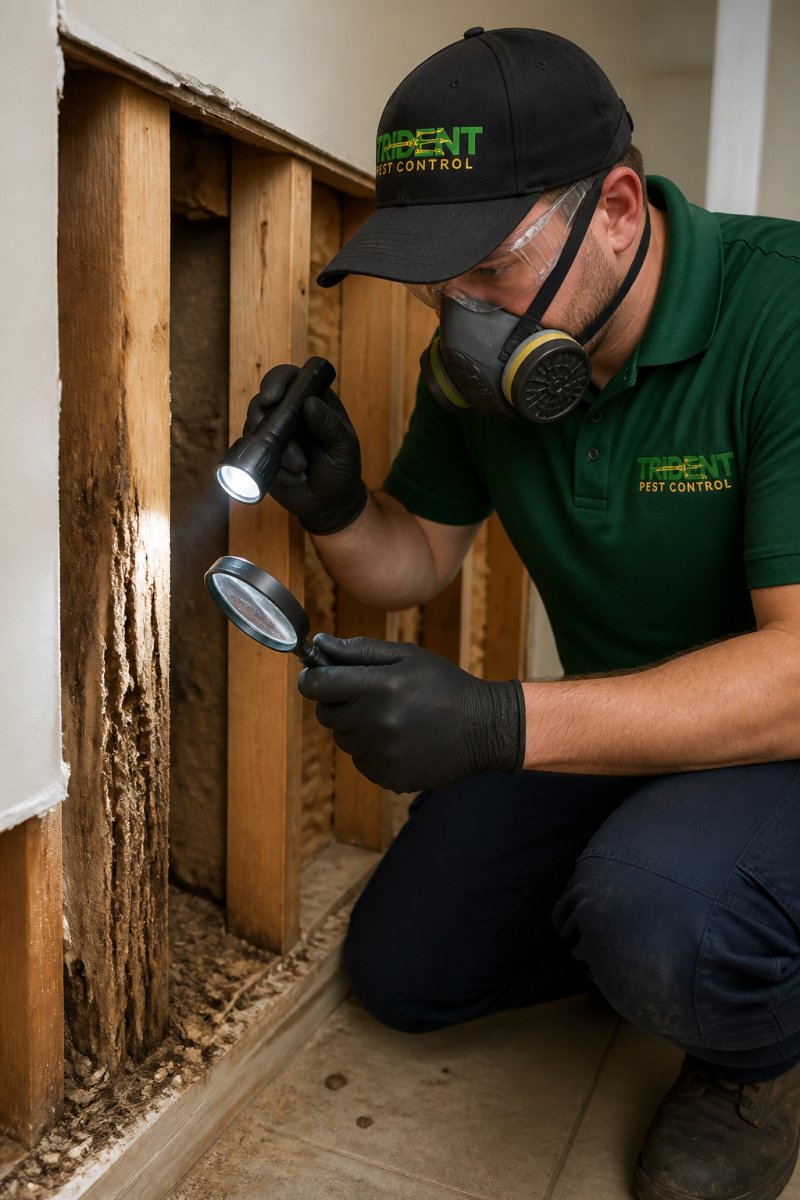
The cost of structural repairs from termite damage often exceeds AUD 50,000. Prevention and early detection save money and heartache. Annual termite inspections are standard practice for homeowners in Victoria. A licensed technician knows where termites hide, in wall cavities, under flooring, inside roof spaces, and can identify damage before it becomes catastrophic.
Identifying termite activity: Look for mud tubes (pencil-thin tunnels) running up external walls or inside foundations, hollow-sounding timber when tapped, or visible galleries (honeycomb patterns) inside wood. Termite droppings resemble fine sawdust and accumulate near entry points. Swarmers (winged termites) emerge in spring, typically October-November in Victoria, and indicate an established colony nearby.
According to ABARES pest animal and weed management survey, land managers across Australia report termites as a priority pest requiring ongoing management. Professional extermination uses targeted baiting systems and barriers that eliminate colonies without exposing your family to risk.
Rodents, Cockroaches, and Ants
Rodents breed rapidly and contaminate food, utensils, and surfaces with urine and faeces. They chew through electrical wiring, creating fire hazards. Cockroaches thrive in warm, humid environments and are notoriously hard to eliminate; they hide in cracks, breed prolifically, and develop resistance to many over-the-counter treatments. Ants establish colonies difficult to disrupt without professional intervention.
DIY rodent control kills a few visible rodents but misses hidden nests and entry points. Professional rodent control identifies where rodents enter, seals access points, and deploys targeted baiting in areas where homeowners cannot safely reach. The same logic applies to cockroach treatment and ant control; surface-level solutions fail because they don’t target the colony’s heart.
Identifying rodent activity: Fresh droppings (dark, rice-grain-sized pellets) along walls or under sinks indicate active infestation. Gnaw marks on food packaging, wiring, or timber are clear signs. Listen for scratching sounds in walls or ceilings, particularly at night. Rodent activity peaks in autumn and winter (March-August) when outdoor food sources diminish.
Identifying cockroaches: German cockroaches (the most common indoor species in Victoria) are small (12-15 mm), tan to brown, and fast-moving. They leave dark droppings resembling ground pepper in corners, under sinks, and behind appliances. American cockroaches are larger (25-40 mm) and reddish-brown; they prefer damp areas. A single female can produce 200+ offspring in three months.
Identifying ant activity: Black house ants and Argentine ants are most common in Victoria. Look for visible trails (ants marching in single file) leading to food sources or entry points. Ant nests in soil appear as small mounds near building foundations. Ant activity peaks in spring and summer (September-February).
Over-the-counter rodenticides pose serious risks to pets and children if misused. Improper placement can lead to poisoning of non-target animals, and dead rodents hidden in walls create odour and health hazards. Professional application ensures safety and effectiveness.
Seasonal Pest Activity Calendar
Understanding when pests are most active helps you time preventative treatments:
Spring (September-November): Termite swarmers emerge; ant colonies expand and forage actively; cockroach populations begin breeding cycles. This is the ideal window for termite inspections and preventative ant treatments.
Summer (December-February): Cockroach breeding peaks; rodent activity increases in food storage areas; ant colonies are at maximum size. Emergency pest calls spike during this season.
Autumn (March-May): Rodent activity increases as outdoor food sources diminish; termite colonies consolidate before winter; ant activity remains elevated. This is a critical window for rodent exclusion work.
Winter (June-August): Pest activity slows overall, but rodents remain active indoors seeking warmth. This is the best time to schedule preventative inspections and maintenance work at lower cost.
Residential Pest Control Prices and What Affects Costs
Pricing for pest control in Brighton depends on the type of pest, property size, infestation severity, and treatment method required. A simple ant treatment costs less than a full termite barrier installation. An emergency same-day service may carry a premium over scheduled appointments.
The Australian pest control market projects revenue of AUD 655.3 million by 2027, with pricing models ranging from one-off treatments to annual maintenance contracts. Fixed pricing, where you know the cost upfront with no hidden charges, is increasingly standard among professional providers.
Price Ranges by Pest Type
Pricing for specific pest control services varies. For current pricing, please request a quote from Trident Pest Control.
Seasonal Pricing Patterns
Seasonal demand can influence pricing. For current pricing, please request a quote from Trident Pest Control.
What’s Included in a Quote
When comparing quotes, focus on what’s included: the initial inspection, treatment method, follow-up visits, and any guarantee. A transparent quote should itemise:
- Initial inspection fee (or waived if treatment is booked)
- Treatment cost (labour and materials)
- Follow-up visits (number included and timing)
- Guarantee period (how long the provider warrants the treatment)
- Exclusion work (sealing entry points, if applicable)
Trident Pest Control operates on fixed, transparent pricing. Our licensed technicians conduct thorough inspections, apply proven treatments, and stand behind results.
Request itemised quotes that break down inspection, treatment, and follow-up costs separately. Beware quotes that seem unusually low, they often indicate corners being cut. Ask whether the quote includes follow-up visits; some providers charge extra, which can add 30-50% to the total cost.
Safe Pest Control Methods for Pets and Children
Your family’s safety is non-negotiable. Safe pest control methods eliminate infestations without harming the people and animals you love. This is where professional treatment differs fundamentally from DIY approaches.
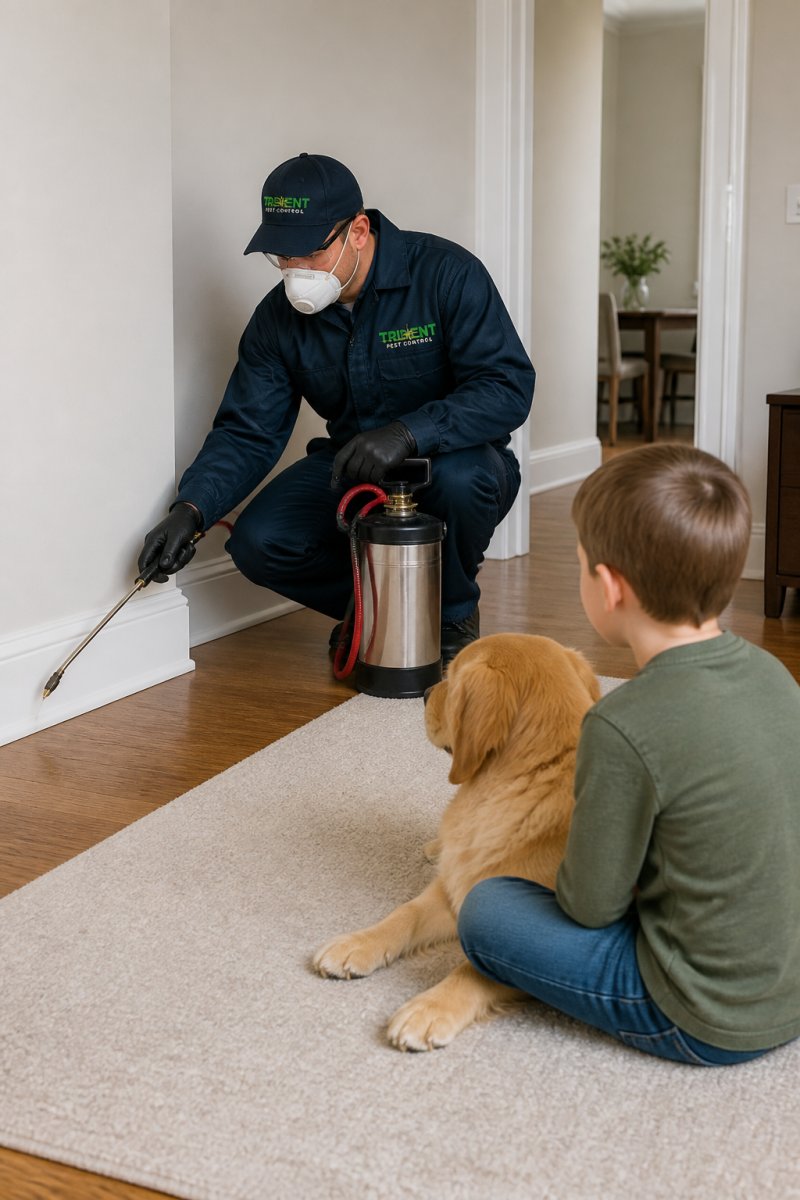
Professional technicians use integrated pest management (IPM) strategies that prioritise low-toxicity solutions. When chemical treatments are necessary, professionals apply them to specific areas, wall cavities, roof spaces, external perimeters, where your family and pets don’t go. Proper application timing and ventilation protocols ensure safety.
The University of Queensland has developed environmentally friendly spray technology as a safe alternative to traditional chemical pesticides, reflecting a broader industry shift toward solutions that eliminate pests while protecting human and animal health. Licensed technicians stay current with these advances and choose methods appropriate to your situation.
Before any treatment, professional pest control in Brighton includes a clear safety briefing: what areas are being treated, how long to keep pets and children away, and what to expect during and after treatment.
Integrated Pest Management: Prevention Over Repeated Treatments
Integrated Pest Management (IPM) is a strategic approach that treats pest control as an ongoing process, not a one-off event. Instead of spraying repeatedly, IPM identifies conditions that attract pests and eliminates them. This means sealing entry points, removing food sources, reducing moisture, and maintaining sanitation standards.
According to IMARC Group Australia pest control market analysis, companies are shifting toward long-term prevention measures and IPM systems that offer sustainable, continuous pest control. This transition reflects real results: properties managed with IPM see fewer recurrences and lower total costs over time.
A technician inspects your property, identifies conducive conditions (cracks in walls, moisture accumulation, food debris), and recommends exclusion measures alongside targeted treatment. They might seal gaps around pipes, improve drainage, recommend kitchen hygiene practices, and install monitoring devices. Follow-up inspections catch early signs of reinfestation before populations establish.
Repeated reactive treatments cost more and rarely solve the underlying problem. Professional pest control in Brighton using IPM principles breaks the cycle by addressing root causes.
IPM costs slightly more upfront but saves money long-term by preventing reinfestation. One thorough treatment with exclusion measures outperforms three reactive spray treatments.
What to Expect from a Licensed, Insured Technician
A licensed technician brings credentials, training, and accountability. In Australia, pest control technicians must meet regulatory standards and carry appropriate insurance. Licensing ensures they understand chemical safety, application protocols, and legal requirements. Insurance protects you if something goes wrong.
When a licensed technician arrives, they conduct a thorough inspection before recommending treatment. They explain findings clearly, outline treatment options, and answer questions. The technician then applies treatments using proper safety equipment and protocols, followed by monitoring visits to ensure results.
Always verify licensing before hiring. Ask for proof of current pest control license and public liability insurance. A legitimate provider has no problem sharing these credentials.
Trident Pest Control technicians are licensed and insured across Melbourne, Geelong, and Werribee. We prioritise same-day service availability for emergencies. Our fixed pricing means no surprises, and our commitment to kid and pet-safe treatments reflects our understanding that your family’s wellbeing comes first.
Professional pest control in Brighton protects your property, your family’s health, and your peace of mind. Infestations don’t resolve themselves; they worsen, spread, and cost more to fix. Trident Pest Control delivers licensed, insured technicians who use safe, proven methods to eliminate pests and prevent recurrence. We offer fixed, transparent pricing with no hidden charges, same-day service availability, and a commitment to keeping your home and family safe. Get your free quote today and take the first step toward a pest-free property.
Frequently Asked Questions
How do I know pest control treatments are actually safe for my kids and pets?
Licensed pest control technicians use products specifically formulated to be safe for families and animals when applied correctly. Before treatment, your technician will explain which products are being used, how long your family needs to stay out of treated areas (typically 2-4 hours for most residential treatments), and any precautions for pets. Ask your provider for Safety Data Sheets and confirmation that they use kid and pet-safe methods. Reputable services prioritise your family’s wellbeing and will answer all safety questions before starting work.
Why do pests keep coming back even after professional treatment?
One-off treatments address visible infestations but don’t eliminate the conditions that attracted pests in the first place. Entry points, food sources, moisture, and harbouring sites remain, allowing new pests to return. Integrated Pest Management (IPM) combines initial treatment with ongoing prevention: sealing entry points, removing food waste, reducing moisture, and scheduling regular inspections. This approach stops pests from returning rather than just killing existing ones. Ask your technician whether they offer an IPM plan alongside treatment.
Are there hidden fees beyond the initial quote for pest control?
Reputable pest control services provide fixed, transparent pricing with no hidden charges. When you request a quote, ask specifically whether the price includes the full treatment, follow-up inspections, or additional visits if pests return within a guarantee period. Some providers offer satisfaction guarantees that cover re-treatment at no extra cost. Always confirm the scope of work and any warranty terms in writing before booking.
How often should I have my property inspected for pests?
Annual termite inspections are recommended for all properties, as subterranean termites can cause significant structural damage before visible signs appear. For other pests, the frequency depends on your property’s history and location. Properties with previous infestations may benefit from quarterly inspections, whilst others need only annual checks. Your licensed technician can assess your specific risk and recommend an inspection schedule tailored to your home or business.
This article was written using GrandRanker