
Table of Contents
- Why Professional Flea Treatment Matters
- DIY Flea Treatment vs Professional: Key Differences
- Understanding the Flea Life Cycle and Treatment Strategy
- Flea Treatment for House Cost: What You’ll Actually Pay
- How Long Does Professional Flea Treatment Last?
- What to Expect During and After Professional Treatment
- The Real ROI: Professional Treatment vs Ongoing DIY Costs
- Frequently Asked Questions
Last Updated: September 1, 2026
Why Professional Flea Treatment Matters
A flea infestation isn’t just an inconvenience, it’s a genuine health risk. Flea allergy dermatitis (FAD) is the most common insect-derived skin complaint in Australian children under 10, according to the Australasian College of Dermatologists. Beyond allergic reactions, fleas can transmit serious diseases. In 2024, NSW Health recorded 27 confirmed cases of murine typhus across the state, with clusters in urban areas, many traced back to flea-borne transmission.
The question isn’t whether you need to treat a flea infestation. The real question is whether professional flea treatment justifies its cost compared to DIY approaches. At Trident Pest Control, we’ve seen families spend hundreds on repeated DIY attempts, only to call us months later when the problem returns. Understanding the true cost of inaction, and the real ROI of professional intervention, changes the calculation entirely.
The building pest control services market in Australia reached $1.8 billion in 2025, according to IBISWorld, reflecting how seriously households and businesses treat pest management. Yet many still hesitate at the upfront cost of professional treatment, unaware that the hidden costs of DIY failures often exceed what they’d pay for a single professional visit.
Fleas reproduce in cycles spanning weeks, and missing even one life stage means reinfestation. Professional treatment targets all stages simultaneously, something most DIY methods cannot achieve.
DIY Flea Treatment vs Professional: Key Differences
DIY methods and their limitations
DIY flea treatments range from budget-friendly aerosol bombs costing $15-20 to natural remedies like diatomaceous earth at $15-30 per kilogram. On the surface, they seem like sensible savings. But effectiveness tells a different story.
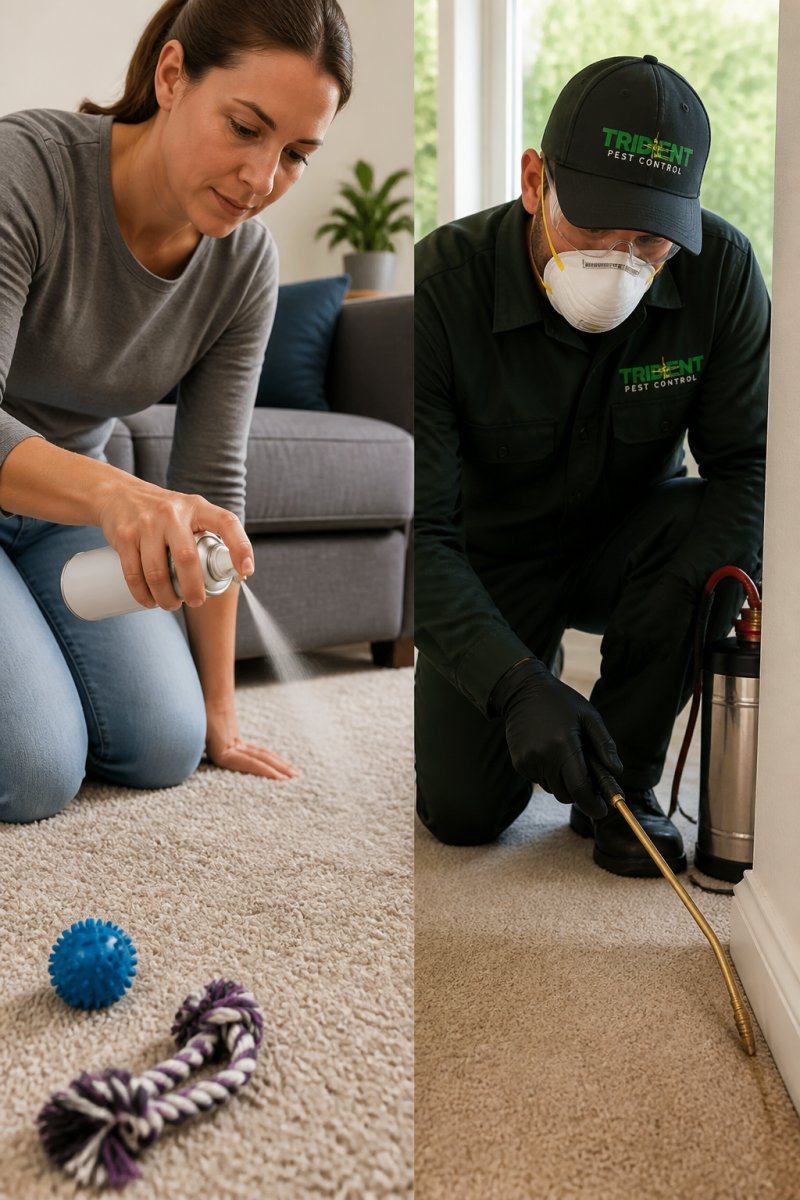
Most over-the-counter products kill visible adult fleas, and that’s where the problem stops. Flea eggs survive up to 100 days in carpet fibres in warmer climates, according to CSIRO research, compared to just 30 days in cooler regions. Larvae hide deep in carpet pile, under furniture, and in pet bedding. Pupae enter a protective cocoon that many chemical sprays cannot penetrate. DIY treatments typically address only the adult stage, leaving eggs, larvae, and pupae to mature and restart the cycle within weeks.
The research is clear: DIY is only realistic if the problem is caught within 7 days, the property has only hard floors, the pet is treated simultaneously with a vet-approved product, and there’s commitment to daily vacuuming and twice-weekly hot-water washing of all bedding for a full month. Most households cannot meet all these conditions.
Chemical safety is another often-overlooked risk. Over-the-counter flea bombs require evacuating the home for several hours and thorough ventilation afterward. Residual chemical exposure affects children and pets. Natural remedies like diatomaceous earth, while less toxic, require careful application to avoid inhalation and often demand repeated applications that prove messy and time-consuming.
Professional-grade treatments and efficacy
Professional pest control services use a fundamentally different approach. Licensed technicians apply insect growth regulators (IGRs) that disrupt the flea life cycle at multiple stages, preventing eggs from hatching and larvae from developing into adults. These professional-grade chemicals are not available over the counter and are applied at concentrations and in locations DIY treatments cannot reach.
The average cost for professional flea treatment ranges from $127 to $306 nationally, with most people paying around $195, according to Thumbtack data. In 2021, pest managers surveyed by Pest Pulse reported an average flea treatment price of $263, with a range from $120 to over $500 depending on property size and infestation severity.
Professional treatments also include environmental control, treating not just visible areas but baseboards, under furniture, pet bedding, and other harborage zones where fleas hide. This comprehensive approach targets all life stages simultaneously, dramatically reducing the risk of reinfestation.
Professional treatments often include a follow-up visit 10-14 days later to catch any fleas that emerged from surviving pupae. This second treatment is crucial and is rarely replicated in DIY efforts.
Understanding the Flea Life Cycle and Treatment Strategy
The flea life cycle is why one-time treatments often fail. Adult fleas lay eggs within 24-48 hours of feeding. Those eggs hatch into larvae within 3-12 days, depending on temperature and humidity. Larvae then spin cocoons and pupate, emerging as adults within 5-14 days, or sometimes remaining dormant in the pupal stage for weeks.
A single DIY spray might kill the adults you see. But the eggs laid before treatment continue developing. The larvae feed on organic debris in carpet. The pupae remain protected inside their cocoons, invisible to sprays. Within 2-3 weeks, new adults emerge, and the infestation appears to have returned, even though the homeowner treated it.
Professional pest control targets this entire cycle. Insect growth regulators prevent eggs from developing and larvae from maturing. Residual chemicals remain active on surfaces for weeks, killing newly emerged adults before they can reproduce. A follow-up treatment 10-14 days later catches any fleas that emerged from pupae after the first visit.
This is why the pest control service market in Australia is expected to reach US$655.3 million by 2027, growing at 5.9% annually, the market reflects genuine demand for solutions that actually work, not just cheap fixes that fail.
Flea Treatment for House Cost: What You’ll Actually Pay
Factors that influence pricing
Professional flea treatment cost varies significantly based on several factors. Property size is the primary driver: smaller homes might cost less, while larger properties could reach more. Infestation severity matters too, active infestations with visible fleas across multiple rooms require more aggressive treatment than isolated infestations caught early.
Trident Pest Control offers interior flea elimination services. Pricing depends on quantity, dates, and delivery. For properties over 2,500 square feet or with active infestations, a tailored quote is provided to reflect the actual scope of work required.
Regional pricing also plays a role. Urban areas typically see prices higher than rural regions due to travel costs and higher local demand. Indoor flea treatment in Melbourne typically costs more than in other regions, reflecting the regional market rate.
Hidden costs to watch for
The “starting price” trap catches many homeowners. A quote might apply only to small, lightly infested properties with straightforward access. Add a second treatment (almost always necessary), and costs increase. Exterior treatment, especially if fleas have infested outdoor areas where pets rest, can add to the cost. Furniture treatment or disposal of heavily infested items adds further costs.
Some providers charge per room or per square metre, making the final bill unpredictable. Others bundle treatments with additional services like sanitation or preventative spraying. The key difference with transparent providers is fixed pricing for standard scenarios, with clear communication about what triggers additional costs.
Trident Pest Control uses fixed pricing with no hidden charges for standard properties, with transparent communication about any additional work required before treatment begins.
Beware of providers quoting a single low price without a site inspection. A low quote for a 4-bedroom house with severe infestation is a red flag, either the price will balloon once they arrive, or the treatment will be inadequate.
How Long Does Professional Flea Treatment Last?
Professional flea treatment typically provides protection for 4-6 weeks, though this varies based on the products used and environmental conditions. Insect growth regulators remain active on surfaces longer than adult-killing insecticides, extending the protective window.
However, “lasting” doesn’t mean “permanent.” Fleas can be reintroduced through pets visiting infested areas, visiting animals, or infested items brought indoors. In 2025, 68% of Sydney flea infestations originated from household pets, 22% from visiting or stray animals, and 10% from infested items brought indoors, according to the Australian Environmental Pest Managers Association.
This is why veterinary flea prevention is so critical. Most veterinarians surveyed recommend year-round flea and tick medication for dogs, yet pet owners often reduce preventative use to 8-10 months annually, according to Merck Animal Health’s 2025 global survey of pet owners and veterinarians. This gap in prevention is a primary driver of reinfestation.
Professional flea treatment addresses the immediate infestation. Ongoing prevention, through pet medication, regular vacuuming, and washing of pet bedding, prevents new infestations from taking hold. The combination is what actually works long-term.
What to Expect During and After Professional Treatment
Preparation steps before arrival
Professional pest control technicians need clear access to infested areas. Before treatment, remove clutter from floors, move pet toys and food bowls, and ensure pets can be secured in a separate room or removed from the property during treatment. Some providers recommend vacuuming thoroughly beforehand to remove dead skin cells and organic debris that fleas feed on, this can improve treatment efficacy.
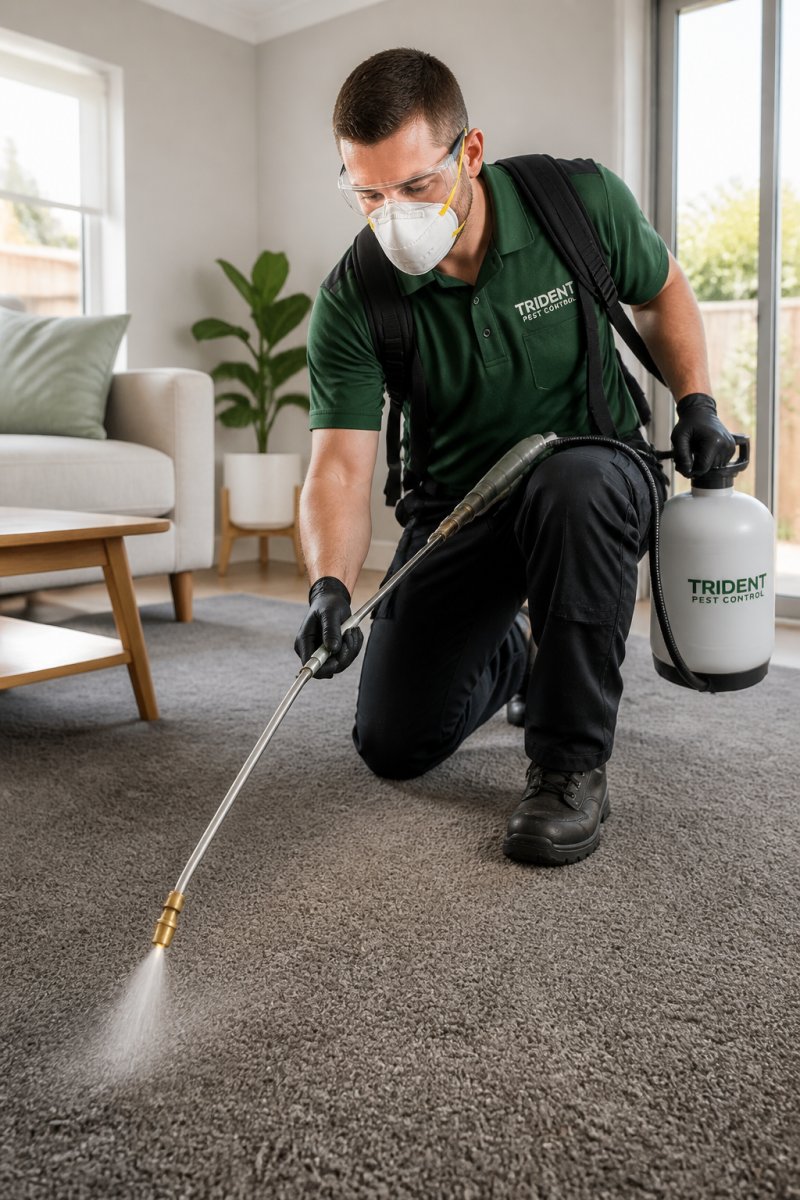
Ask your provider about safety precautions. Professional treatments use products approved for residential use, but ventilation and temporary evacuation may still be recommended. Clarify how long you need to stay out and when it’s safe to return. Ask whether children and pets can return immediately or if a waiting period is necessary.
Post-treatment expectations and reinfestation risks
After professional treatment, you’ll likely notice fewer fleas within 24-48 hours. But don’t be alarmed if you see a few fleas over the next week, these are often emerging from pupae that survived the first treatment. This is exactly why the follow-up visit 10-14 days later is essential.
Vacuuming after treatment is generally safe and actually beneficial. It removes dead fleas and stimulates any remaining pupae to emerge, making them vulnerable to residual chemicals. Wash pet bedding in hot water weekly for at least 4 weeks. Continue pet flea prevention without interruption, gaps in prevention are the primary cause of reinfestation.
Reinfestation risks remain if pets aren’t protected. A single flea brought indoors by a pet can restart the entire cycle. This is the hidden cost many homeowners miss: professional treatment is only effective if it’s paired with ongoing prevention.
The Real ROI: Professional Treatment vs Ongoing DIY Costs
Here’s where the math shifts. A single professional flea treatment costs more than DIY. A second treatment (necessary in most cases) brings the total to a higher amount. Add a single pet flea prevention product, typically $100-200 annually, and your total first-year investment is roughly $500-800.
Compare this to the DIY path most homeowners take: an initial $20 aerosol bomb that doesn’t work, followed by a second $30 attempt, then a third $40 product, then finally a call to a professional after 8 weeks of infestation. By then, the problem has spread to multiple rooms, requiring more intensive professional treatment. The total? Often $600-900, plus months of frustration and health risks.
The real ROI calculation should include:
| Scenario | Upfront Cost | Follow-up Costs | Timeline to Resolution | Reinfestation Risk |
|---|---|---|---|---|
| Professional treatment + prevention | Pricing depends on quantity, dates, and delivery | $100-200 annually | 2-4 weeks | Low (5-10%) |
| DIY attempts then professional | Pricing depends on quantity, dates, and delivery | $100-200 annually | 8-12 weeks | High (40-60%) |
| DIY only (repeated) | Pricing depends on quantity, dates, and delivery | $200-500 annually | 12+ weeks or ongoing | Very high (80%+) |
Professional treatment isn’t just cheaper in the long run, it’s faster, safer, and more reliable. The upfront cost is higher, but the total cost of ownership favours professional intervention decisively.
Trident Pest Control’s transparent pricing and same-day service availability means you’re not just paying for treatment, you’re paying for speed and certainty.
The question “Is professional flea treatment worth the cost?” has a clear answer: yes, if you want the infestation gone reliably and quickly. The question that matters more is “Can I afford NOT to treat it professionally?”, because the cost of delay, repeated DIY failures, and health risks almost always exceeds the cost of professional intervention.
Flea infestations are one of those problems where the cheapest option upfront becomes the most expensive option overall. Professional flea treatment delivers certainty: a licensed technician identifies the infestation severity, applies professional-grade treatments targeting all life stages, provides follow-up care, and guarantees results. Trident Pest Control offers fixed pricing with no hidden charges, same-day availability across Western Melbourne, and treatments that prioritise the safety of your family and pets. Get your free quote today and discover how professional pest control can protect your home with confidence.
=== FAQ ANSWERS (audit these too, same rules) ===
[1] Q: How long does it take for professional flea treatment to work?
A: Professional flea treatments typically begin eliminating adult fleas within 24-48 hours. However, because fleas have a multi-stage life cycle (eggs, larvae, pupae, and adults), complete eradication usually requires 7-14 days. Many pest control services recommend a follow-up treatment 10-14 days after the initial application to target fleas that have emerged from pupae. Your pets should also be treated simultaneously with a veterinary-grade flea preventative to prevent reinfestation.
[2] Q: Is DIY flea treatment as effective as professional pest control?
A: DIY treatments work only for mild, early-stage infestations caught within 7 days. Over-the-counter products like flea bombs address adult fleas but often fail to eliminate eggs and larvae hiding in carpets, upholstery, and bedding. Professional treatments use insect growth regulators and professional-grade chemicals that disrupt the entire flea life cycle. Studies show DIY approaches have a 40-60% failure rate for active infestations, leading to costly repeat treatments. Professional services achieve high success rates on first treatment when combined with proper pet preventatives.
[3] Q: What factors affect the cost of professional flea treatment for a house?
A: Pricing depends on property size, infestation severity, and treatment type. Smaller homes typically cost less than larger properties. Active infestations may require multiple visits, increasing total cost. Additional factors include whether exterior treatment is needed, the type of flooring (carpet vs hard floors), and the number of rooms. Regional pricing varies, and some services offer fixed pricing while others provide custom quotes. Always request a detailed breakdown before booking to avoid unexpected charges.
[4] Q: Can you ever completely eliminate fleas without professional help?
A: Complete elimination without professional help is possible only if the infestation is caught extremely early (within 7 days) and conditions are ideal: hard floors only, simultaneous pet treatment with vet-approved products, and strict daily vacuuming plus twice-weekly hot-water washing of all bedding for a full month. Carpet-heavy homes make DIY eradication nearly impossible because flea eggs and larvae survive deep in fibres for up to 100 days. Professional treatments eliminate this uncertainty by targeting all life stages simultaneously across your entire property.
[5] Q: Is professional flea treatment worth the cost compared to repeated DIY attempts?
A: Professional treatment offers better long-term value. A single professional service costs more than DIY attempts and solves the problem. DIY attempts typically cost $15-$30 per product but often require 3-5 applications over 4-6 weeks, totalling $50-$150 while still failing to eliminate the infestation. Failed DIY treatments lead to reinfestation and the need for professional intervention anyway, doubling your total spending. Professional treatment also eliminates health risks from mishandling chemicals and provides peace of mind through treatment guarantees.
Frequently Asked Questions
How long does it take for professional flea treatment to work?
Professional flea treatments typically begin eliminating adult fleas within 24-48 hours. However, because fleas have a multi-stage life cycle (eggs, larvae, pupae, and adults), complete eradication usually requires 7-14 days. Many pest control services recommend a follow-up treatment 10-14 days after the initial application to target fleas that have emerged from pupae. Your pets should also be treated simultaneously with a veterinary-grade flea preventative to prevent reinfestation.
Is DIY flea treatment as effective as professional pest control?
DIY treatments work only for mild, early-stage infestations caught within 7 days. Over-the-counter products like flea bombs address adult fleas but often fail to eliminate eggs and larvae hiding in carpets, upholstery, and bedding. Professional treatments use insect growth regulators and professional-grade chemicals that disrupt the entire flea life cycle. Studies show DIY approaches have a 40-60% failure rate for active infestations, leading to costly repeat treatments. Professional services achieve high success rates on first treatment when combined with proper pet preventatives.
What factors affect the cost of professional flea treatment for a house?
Pricing depends on property size, infestation severity, and treatment type. Smaller homes typically cost less than larger properties. Active infestations may require multiple visits, increasing total cost. Additional factors include whether exterior treatment is needed, the type of flooring (carpet vs hard floors), and the number of rooms. Regional pricing varies, and some services offer fixed pricing while others provide custom quotes. Always request a detailed breakdown before booking to avoid unexpected charges.
Can you ever completely eliminate fleas without professional help?
Complete elimination without professional help is possible only if the infestation is caught extremely early (within 7 days) and conditions are ideal: hard floors only, simultaneous pet treatment with vet-approved products, and strict daily vacuuming plus twice-weekly hot-water washing of all bedding for a full month. Carpet-heavy homes make DIY eradication nearly impossible because flea eggs and larvae survive deep in fibres for up to 100 days. Professional treatments eliminate this uncertainty by targeting all life stages simultaneously across your entire property.
Is professional flea treatment worth the cost compared to repeated DIY attempts?
Professional treatment offers better long-term value. A single professional service costs more than DIY attempts and solves the problem. DIY attempts typically cost $15-$30 per product but often require 3-5 applications over 4-6 weeks, totalling $50-$150 while still failing to eliminate the infestation. Failed DIY treatments lead to reinfestation and the need for professional intervention anyway, doubling your total spending. Professional treatment also eliminates health risks from mishandling chemicals and provides peace of mind through treatment guarantees.
This article was written using GrandRanker