
Table of Contents
- Why End of Lease Flea Control Decides Your Bond
- Practice 1: Check End of Lease Pest Control Requirements Victoria Sets
- Practice 2: How to Prepare for End of Lease Pest Control
- Practice 3: Treat Pets, Carpets and Yard Together, Not One at a Time
- Practice 4: Skip DIY Foggers and Book a Professional Flea Treatment Certificate
- Practice 5: Keep Records and a Follow-Up Plan After Moving Out
- Frequently Asked Questions
Last Updated: September 30, 2026
Why End of Lease Flea Control Decides Your Bond
Fleas are one of the few pest problems a property manager can pin directly on a tenant, and that makes end of lease flea control the difference between getting your bond back in full and losing part of it to a treatment you never booked. Real estate agents and landlords typically require a certificate of professional flea treatment before moving out to ensure bond return, according to Flick Pest Control’s end of lease guidance. This guide from Trident Pest Control covers the five practices that keep that process clean, from reading your lease to handing over paperwork your property manager will actually accept.
The trap most tenants fall into is treating fleas as a cleaning problem. They are not. Fleas spend most of their life cycle as eggs, larvae and pupae in carpet fibres and soil, not on the animal. Kill the adults you can see and the next generation hatches a week later. That single fact explains why so many renters pay for a treatment, pass the inspection, then get a call three weeks later.
Below, we break down what Victorian leases actually require, how to prepare a property properly, and why the cheap DIY option usually costs more in the end.
Practice 1: Check End of Lease Pest Control Requirements Victoria Sets
End of lease pest control requirements Victoria sets are not uniform. They depend on your lease agreement, the state of the property at entry, and whether pets were approved. The Residential Tenancies Act does not automatically make tenants pay for flea treatment. What it does is hold you responsible for damage or infestation caused by your own pets or negligence.
What Your Lease Agreement Actually Says About Fleas
Read the special conditions section, not the standard terms. Most Victorian leases include a clause requiring professional pest control if pets were kept at the property, and many specify that a receipt or certificate must be provided at vacate. Some leases go further and name the treatment type. If your agreement mentions fleas, ticks or “pest treatment”, assume it is enforceable and budget for it.
When a Property Manager Can Require Treatment
A property manager can require professional flea treatment when the entry condition report shows no existing infestation and fleas are present at exit. They cannot require it if the property was already infested when you moved in and you documented it. This is why the entry report matters more than most tenants realise. Photographs and notes from day one are your evidence.
If you skip a required treatment and the next tenant reports fleas, the property manager can deduct the cost from your bond plus a loss-of-rent claim for the days the property sat vacant. That second charge is often larger than the treatment itself.
Practice 2: How to Prepare for End of Lease Pest Control
Knowing how to prepare for end of lease pest control saves you money, because a technician who has to move furniture or vacuum first will charge for it or reschedule. Preparation is the tenant’s job, and it is straightforward.
Cleaning Steps to Complete Before the Technician Arrives
- Vacuum all carpet, including under beds and along skirting boards
- Empty and wipe out the vacuum canister outside the property
- Move furniture away from walls where possible
- Wash all pet bedding in hot water and dry it in sunlight
- Clear floors in wardrobes and cupboards
- Dispose of the old vacuum bag in an outside bin
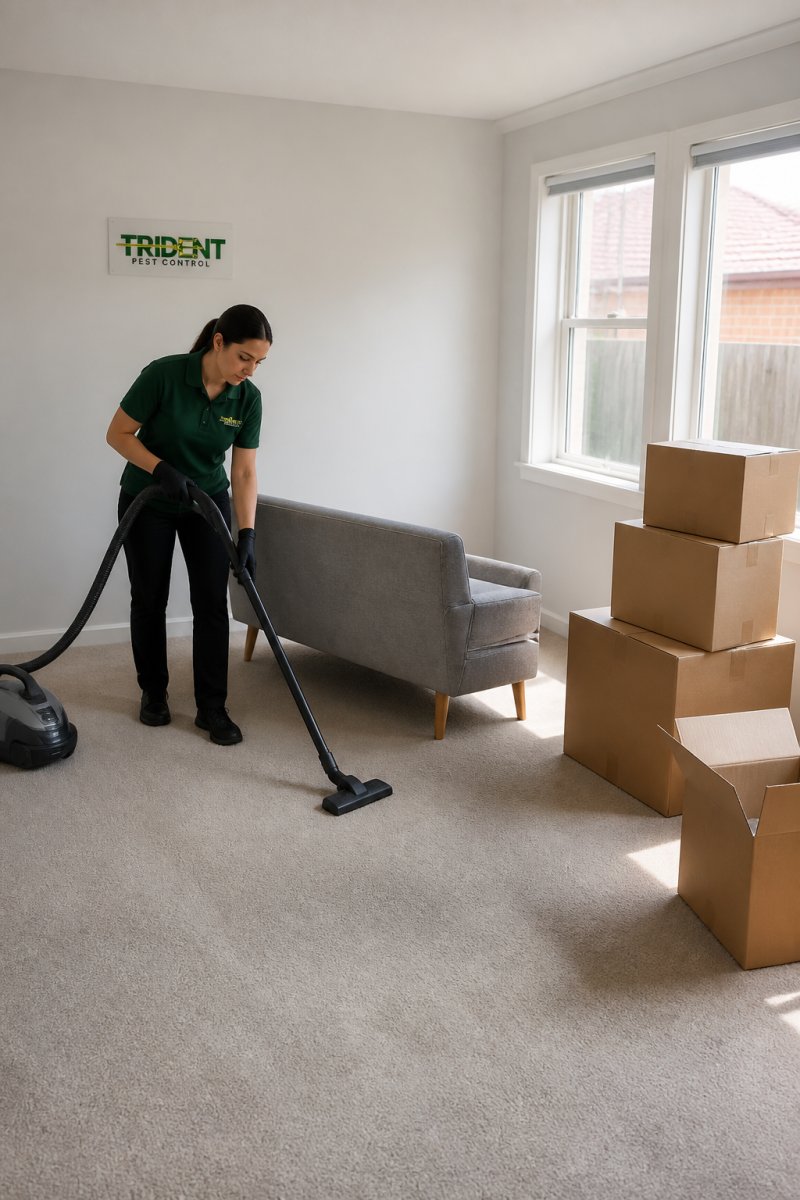
Vacuuming before treatment is not optional. It removes the debris that shields eggs and larvae from the treatment, and it stimulates adult fleas to emerge from their cocoons where the product can reach them. One insider point: vacuum the day of treatment, not a week before. Fleas that hatch after you vacuum will still be exposed. Consistent sanitation efforts must be paired with effective flea prevention methods to ensure that your pets do not reintroduce the infestation to the freshly treated environment.
Practice 3: Treat Pets, Carpets and Yard Together, Not One at a Time
Treating one area and hoping the problem resolves is the most common mistake in flea control. Effective control requires a combination of sanitation, treatment of the pet, and environmental treatment, rather than relying on a single method, as noted by Oklahoma State University Extension’s flea management guide.
That means three fronts at once. Your pet needs a vet-recommended flea treatment, applied on schedule, not just once. The interior needs a professional treatment that reaches carpet base, cracks and skirting. The yard needs attention too, because fleas breed in shaded, moist soil and leaf litter, then hitch a ride back inside on shoes and pets.
For a rental in Werribee, the yard point matters.
Practice 4: Skip DIY Foggers and Book a Professional Flea Treatment Certificate
A professional flea treatment certificate is the document your property manager needs to release the bond, and it is the one thing a supermarket fogger cannot give you. Foggers are often ineffective because they do not reach under furniture, cannot navigate around corners, and fail to address the full life cycle of fleas, per the same Oklahoma State University Extension research.
Here is the practical difference:
| Approach | Reaches under furniture | Breaks life cycle | Provides certificate | Bond accepted |
|---|---|---|---|---|
| DIY fogger | No | No | No | No |
| Surface spray only | Partly | Partly | No | Rarely |
| Professional treatment | Yes | Yes | Yes | Yes |
What a Compliant Certificate Needs to Show
- The licensed technician’s name and licence number
- The property address and treatment date
- The pest treated and the products used
- A statement of the treatment warranty period
- The company’s contact details
Trident Pest Control provides end of lease flea control across Werribee, Melbourne and Geelong, with licensed and insured technicians and fixed, transparent pricing so you know the cost before booking. If you need a same-day treatment before an inspection, that is available.
Book your treatment for a day when the property will be empty for at least four hours afterwards. Ask the technician exactly how long to stay out, and get that in writing. It is the question every parent with a toddler and two dogs asks, and a reputable operator will answer it plainly.
Practice 5: Keep Records and a Follow-Up Plan After Moving Out
Flea pupae can survive in carpet for months, which is why a single treatment sometimes is not enough. Keep your certificate, your receipt and any follow-up advice the technician gives you. If fleas reappear within the warranty period, you have grounds for a free return visit rather than a second bill.
Frequently Asked Questions
Is flea treatment mandatory for end of lease in Victoria?
Fleas are not covered by the general ‘fair wear and tear’ rule in Victoria, so treatment is usually required if you had pets at the property. Whether it is mandatory depends on your lease agreement, which often includes a pet or pest clause. Many landlords and property managers ask for a professional flea treatment certificate before releasing the bond, so check your agreement and confirm the requirement in writing before you move out.
How do I prove I have had professional flea control for my rental bond?
Ask your technician for a professional flea treatment certificate. It should show the date of treatment, the address, the method used, the technician’s licence details and the company’s contact information. Send a copy to your property manager as soon as the job is done. Combined with your entry condition report and any pet clause in the lease, this certificate is the strongest evidence that you met your end of lease flea control obligations.
Are DIY flea sprays sufficient for end of lease requirements?
DIY sprays and foggers rarely satisfy end of lease flea control requirements. Foggers often miss areas under furniture and around corners, and they do not address the full flea life cycle, so eggs and larvae survive and hatch weeks later. A licensed technician uses products and methods that target each life stage and can issue the certificate your property manager expects. DIY treatment may cost less upfront but can lead to a failed inspection and a second round of treatment.
What happens if I don’t get a flea treatment before moving out?
If your lease requires flea treatment and you skip it, the landlord or property manager can arrange treatment and claim the cost from your bond. You may also face delays in getting your bond back while the dispute is resolved. In the worst case, live fleas are found at the final inspection and you are asked to return for a second treatment. Following the end of lease pest control requirements Victoria sets out in your agreement avoids this entirely.
How long after flea treatment can I enter the property?
Most flea treatments allow you back inside once surfaces are dry, which is often a few hours, but the exact time depends on the product used. Ask your technician for the re-entry period in writing when you book. If you have a toddler or pets, wait the full recommended time, ventilate the rooms and wash any food surfaces before use. Your certificate should also note the re-entry advice for your records.
Flea treatment at the end of a lease is one of those jobs where the cheap option usually costs more, because a failed inspection means a second treatment, lost rent and a bond dispute. Trident Pest Control handles this properly: licensed and insured technicians, kids and pet-safe treatments, fixed pricing with no hidden charges, and same-day service across Werribee, Melbourne and Geelong. Get your free quote and walk out of your rental with your bond intact.