Last Updated: November 4, 2026
Quick Summary
Proactive pest protection is a scheduled, prevention-first approach that stops infestations before they start, breaking pest life cycles at their weakest point instead of paying emergency premiums later. It spreads the same work across planned visits, so each inspection costs less to run and catches issues early. Over time this protects your property value, reduces chemical use, and avoids the structural damage that reactive call-outs leave behind.
- Recurring plans account for 85.4% of residential revenue for pest control operators, per Webtonic’s analysis.
- IPM can cut pest complaints by 78% to 90% without long-term increases in expenditure, per the IPM Institute.
- A maintenance schedule is usually quarterly and timed to the seasons when specific pests become active.
- Compare the annual plan cost, one reactive event, and the damage itself over twelve months.
- A pest control service guarantee should specify covered pests, warranty period, re-treatment terms and your conditions.
Table of Contents
- Why Proactive Pest Protection Beats Emergency Call-Outs
- One-Off Pest Treatment vs Ongoing Pest Control: The Real Cost Difference
- What a Pest Control Maintenance Schedule Actually Looks Like
- Integrated Pest Management: The Method Behind Long-Term Results
- Early Detection, Property Value and Structural Protection
- Health, Safety and Fewer Chemicals in the Home
- What a Pest Control Service Guarantee Should Cover
- Booking Your First Proactive Protection Plan
- Frequently Asked Questions
Why Proactive Pest Protection Beats Emergency Call-Outs
Proactive pest protection is a scheduled, prevention-first approach to pest management that stops infestations before they start, rather than reacting once they’re visible. It’s the difference between servicing your car on schedule and waiting for the engine to seize.
The numbers back the case. According to Webtonic’s pest control lifecycle and retention analysis, recurring plans account for 85.4% of residential revenue for pest control operators, which tells you where the demand is heading. And PCT’s State of the Industry outlook found that 91% of pest management professionals are optimistic about the year ahead, largely on the strength of service-based protection plans.
Across Werribee and Melbourne’s west, homes that call in a panic about ants in the kitchen are often the ones with no maintenance history. Emergency call-outs cost more, take longer to resolve, and rarely fix the underlying cause. A proactive plan does the opposite.
Below, we’ll show you exactly what those long-term advantages look like in dollars, in property condition, and in household health. But first, here’s what most pest control guides get wrong: they treat prevention as a luxury add-on when it’s actually the cheaper option.
One-Off Pest Treatment vs Ongoing Pest Control: The Real Cost Difference
A one-off treatment fixes today’s problem. An ongoing plan stops next season’s problem from arriving at all. That distinction drives everything about cost.
Reactive treatments mean emergency response premiums, repeat visits for the same species, and damage that’s already happened by the time you call. Proactive plans spread the same work across scheduled visits, so each inspection is cheaper to run and catches issues early.
- Reactive: you pay per crisis, often at short notice, and the pest life cycle continues uninterrupted
- Proactive: you pay a predictable recurring cost and break the life cycle at its weakest point
- The hidden cost of reactive: structural damage, replacement food, and lost time off work
Pricing depends on property size, pest pressure, and visit frequency, so we quote each property individually. For a clearer picture of what drives those figures, see our commercial pest control cost guide for Melbourne.
What a Pest Control Maintenance Schedule Actually Looks Like
A pest control maintenance schedule is a fixed calendar of inspections and targeted treatments, usually quarterly, timed to the seasons when specific pests become active. It’s not a random spray-and-hope visit.
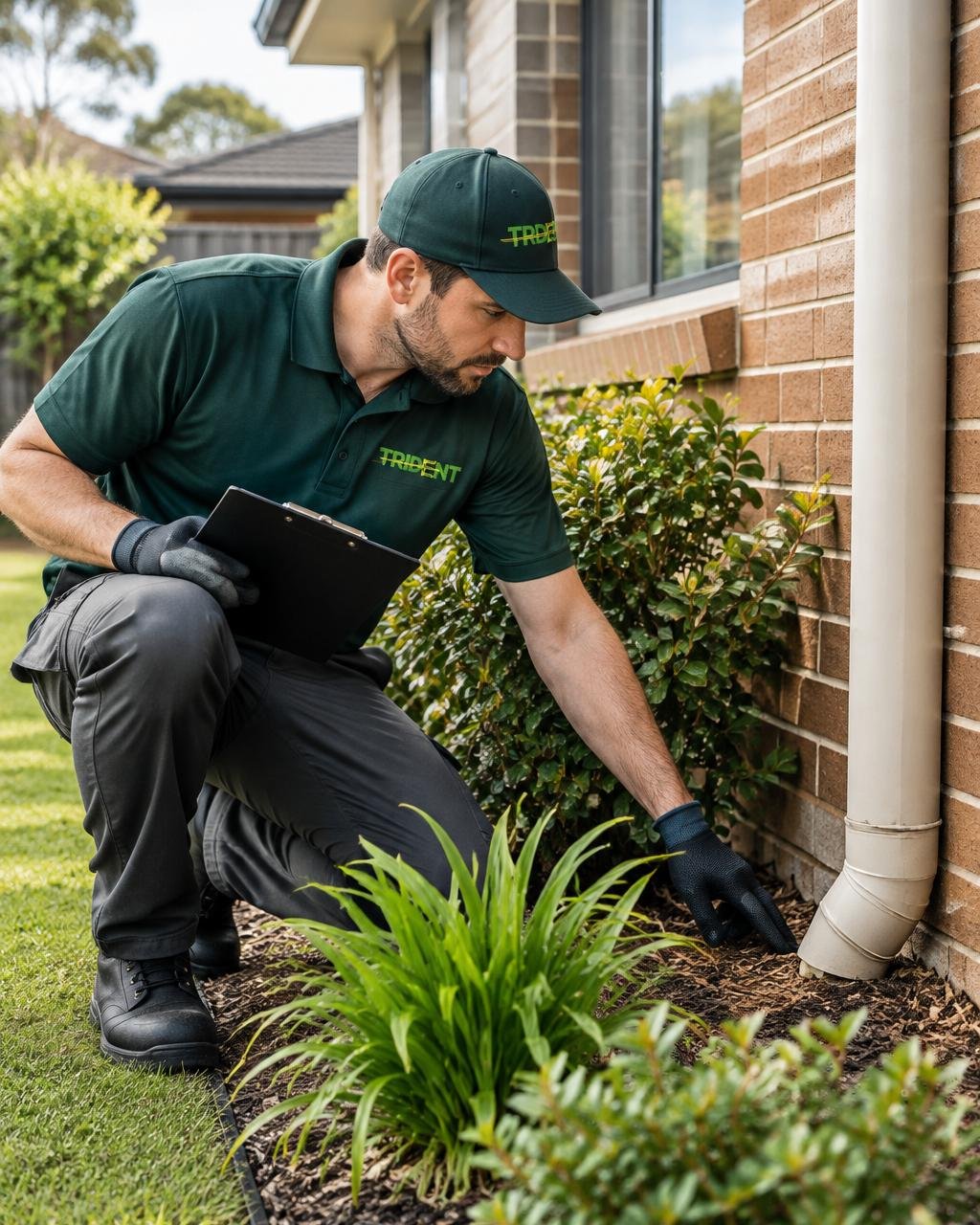
What separates a useful schedule from a generic one is that it is built around the pest pressures of the specific location. Local conditions in Werribee and the western suburbs, such as new-estate construction, irrigation-heavy gardens and nearby waterways, can shape which pests are most active. A schedule should account for:
- Subterranean termites active in the western growth corridors, where new slab-on-ground homes and landscaping timbers create ideal conditions
- Rodents moving along the river corridor and through new estate drainage and fencing lines
- Ants and spiders colonising freshly landscaped gardens and cavity walls in new builds
- Cockroaches and silverfish in the warmer, drier summers typical of the western suburbs
- Mosquitoes breeding in retained water and irrigation systems through the warmer months
A typical year for a home in this region can run roughly like this:
| Month | Focus | Why It Matters Locally |
|---|---|---|
| January-February | Cockroaches, ants, spider monitoring | Peak summer activity; new-estate gardens provide harbourage |
| March-April | Rodent monitoring as weather cools | Mice and rats begin moving toward shelter |
| May-June | Rodent control, internal checks, termite monitoring | Entry points and nesting become obvious; termite activity continues |
| July-August | Termite inspection, exclusion works | Winter is the practical window for sealing and barrier checks |
| September-October | Ants, spiders, termite monitoring | Warmth wakes colonies and foraging activity |
| November-December | Cockroaches, flies, mosquitoes, pre-summer barrier | Peak breeding and peak household movement |
A pest control visit can include a pest activity check, treatments where needed, and exclusion measures around entry points. The schedule should also be tied to the maintenance tasks you are already doing. Gutter cleaning in autumn is the moment to check for rodent runways and overflow points. Sealing gaps around downpipes and weep holes after landscaping is the moment to close entry points. Replacing weather strips before summer reduces cockroach and spider ingress. A good provider will tell you which of these tasks you can do yourself and which need a licensed technician.
If you’re comparing this with other arrangements, our breakdown of end of lease vs general pest control explains how maintenance plans differ from one-off compliance treatments.
Integrated Pest Management: The Method Behind Long-Term Results
Integrated pest management is a science-based approach that combines inspection, sanitation, exclusion, and targeted chemical application, using chemicals only where monitoring shows they’re needed. It’s the framework most Australian pest professionals now build their plans around.
The results are hard to argue with. research indexed by the National Center for Biotechnology Information found that IPM procedures support biodiversity and long-term pest suppression while delivering economic benefits. The IPM Institute of North America’s business case research reported that IPM can cut pest complaints by 78% to 90% without long-term increases in expenditure.
That last point matters. Chemical-only approaches treat the symptom. IPM addresses the habitat, the entry points, and the conditions that let pests thrive, which is why the results hold.
Early Detection, Property Value and Structural Protection
Early detection is the single biggest financial advantage of a maintenance plan. Termites, rodents, and moisture-loving pests all cause damage quietly, and the difference between catching them in month two versus month twelve is often thousands of dollars.
Most pest control articles stop there. The more useful question is how to actually calculate the return, because the plan only makes sense if the numbers stack up for your property. A practical way to frame it is to compare three figures over a twelve-month period:
- The annual cost of the plan, scheduled visits, monitoring and any included re-treatments
- The likely cost of one reactive event, emergency call-out, follow-up visits, and the repair or replacement that follows
- The cost of the damage itself, structural repair, replacement of affected materials, and any loss of use
Once the third figure is included, a maintenance plan often compares favourably, because damage costs are frequently the largest and least expected.
Consistent monitoring also protects property value. A documented pest management history is a genuine asset at sale time, and buyers’ building inspectors notice active termite pressure fast. In Melbourne’s west, where new estates sit alongside older housing stock, a clear maintenance record distinguishes a well-kept home from one that has been left to chance.
A common mistake is waiting for visible damage before acting, by which point the cheap fix has become the expensive one. The other common mistake is buying a plan without asking what the monitoring actually covers.
Watch out: a documented history is only useful if it is complete. Gaps in the record, or DIY treatments between professional visits, can undermine both the warranty and the resale value of the documentation.
Health, Safety and Fewer Chemicals in the Home
Fewer chemical applications is a health outcome, not just an environmental one. Proactive plans rely on monitoring and exclusion first, which means less product used, less often, and only where it’s actually needed.
That matters if you have kids, pets, or anyone with respiratory sensitivities. Kids and pet-safe treatments are part of our service, and we can walk you through what is being applied and any re-entry guidance before we start. If chemical exposure is your main concern, our guide to professional flea treatment and whether it’s worth the cost covers the safety side in detail.
More broadly, reducing pest activity can lower exposure to allergens from cockroaches and rodents and reduce the need for repeat emergency treatments. Environmental sustainability and household health pull in the same direction here.
What a Pest Control Service Guarantee Should Cover
A pest control service guarantee should specify the covered pests, the warranty period, what a free re-treatment involves, and the conditions you need to maintain. If a provider won’t put those in writing, that’s your answer.
Watch out: vague “satisfaction guaranteed” language usually means nothing enforceable. Ask specifically whether re-treatments between scheduled visits are included and whether the guarantee survives a missed payment or a DIY spray in between.
For a proactive plan, the guarantee should also cover the monitoring itself. You’re paying for early detection, so the warranty should reflect what happens when activity is found. Fixed pricing with no hidden charges is part of our service.
Booking Your First Proactive Protection Plan
Booking can start with a property assessment, where existing activity, entry points and local pressure can be considered before a visit frequency is recommended.
Here’s how we’d approach it in Werribee and across Melbourne’s west:
- Book an inspection and tell us what you’ve noticed, even if it’s minor
- Get a fixed quote based on property size and visit frequency
- Set your calendar for seasonal visits, with reminders before each one
- Keep records of every visit for warranty and resale purposes
Same-day service is available for active infestations, so if you’re already dealing with an emergency, start there. Otherwise, book emergency pest control in Melbourne or a standard assessment and we’ll take it from the first visit.
Frequently Asked Questions
What are the long-term advantages of a proactive pest protection plan?
A proactive pest protection plan keeps monitoring and barrier treatments running through the year, so pests are caught before they establish a breeding population. Recurring plans give operators and homeowners both predictable costs. The practical gains are fewer emergency call-outs, less structural damage from rodents and termites, reduced chemical use over time, and a documented service history that supports property value.
Is a pest protection plan better than booking one-off treatments?
One-off pest treatment vs ongoing pest control comes down to what you are solving. A single visit suits a known, contained problem such as ants in a kitchen. Ongoing pest control suits the reality that pest life cycles run all year: a treatment applied in spring loses residual strength by summer, and new pests move in. Maintenance plans include scheduled inspections that catch activity between visits, which is why IPM programs have been shown to cut pest complaints by 78% to 90%.
How often should pest control be carried out in Werribee?
Most homes in Werribee and the surrounding western suburbs sit on a quarterly or six-monthly pest control maintenance schedule, with quarterly visits more common for properties near waterways, parkland or new estates where rodent and spider pressure is higher. Your technician should adjust the frequency based on what monitoring finds, not a fixed calendar. Ask for the schedule in writing so you know exactly when follow-up visits are due and what each one covers.
Do pest control plans include follow-up visits or service guarantees?
A pest control service guarantee should state what happens if pests return between scheduled visits. Look for a plan that includes free re-treatment within a defined window, named target pests, and a clear response time for call-backs. Ask whether the guarantee covers the full treatment period or only a few weeks, and get it in writing before booking. Trident Pest Control offers fixed pricing with no hidden charges.
The real test of a pest plan isn’t the first month, it’s the second year, when the calendar is running, the records are building, and nothing has crawled through the kitchen in twelve months. Trident Pest Control builds plans around licensed and insured technicians, fixed pricing with no hidden charges, and kid and pet-safe treatments across Werribee, Melbourne, and Geelong. Get started with Trident Pest Control and put your property on a schedule that keeps pests out for good.
