Table of Contents
- How to Stop Pest Infestations Before They Take Hold
- What You’ll Need Before You Start
- Step 1: Learn the Signs of a Pest Infestation
- Step 2: How to Seal a House Against Pests
- Step 3: How to Keep Ants Out of the House
- Step 4: How to Stop Spiders Coming Into the House
- Step 5: Common Mistakes That Let Pests Return
- When to Call a Licensed Pest Controller in Werribee
- Frequently Asked Questions
Last Updated: October 13, 2026
How to Stop Pest Infestations Before They Take Hold
Knowing how to stop pest infestations starts with one simple idea: deny pests food, water and shelter before they settle in. That is the approach we take at Trident Pest Control, and it works far better than waiting for a problem to explode. This guide from our team walks you through the exact steps we would take in our own homes across Werribee, VIC and the wider western suburbs.
Pests rarely appear overnight. Most infestations build quietly for weeks behind skirting boards, under sinks and inside wall cavities. By the time you spot a trail of ants on the bench, the colony is usually well established.
Below, we’ll show you exactly how to spot the early signs, seal the gaps pests use, and keep ants and spiders out for good.
Prevention beats treatment every time. A few hours spent sealing gaps and cutting off food sources saves far more hassle than dealing with a full-blown infestation later.
What You’ll Need Before You Start
Gather these basics before you begin. Most are cheap and available at any hardware store.
- A torch for checking dark corners and cavities
- Silicone sealant and a caulking gun
- Expanding foam for larger gaps
- Steel wool or mesh for pipe entries
- A notepad or phone for logging sightings
- Gloves and a vacuum with a crevice tool
You do not need harsh chemicals for prevention. Sealing, cleaning and monitoring do most of the heavy lifting. Save the stronger treatments for when an active infestation needs professional attention.
Step 1: Learn the Signs of a Pest Infestation
The signs of a pest infestation are easy to miss if you do not know what to look for. Droppings, grease marks, shed skins and faint odours are the classic clues. Spotting them early is the difference between a quick fix and a full treatment.
Early Warning Signs Most Homeowners Miss
Most people wait until they see the pest itself. By then, the problem is bigger than it looks. Watch for these quieter signals:
- Small dark droppings along walls or in cupboards
- Grease smears or rub marks on skirting boards
- Shed skins, wings or egg cases near food storage
- A musty or oily smell in closed spaces
- Tiny holes in packaging or timber
- Pets scratching or staring at walls
How Often to Check Your Home
A quick check once a month keeps you ahead of trouble. Spend ten minutes in the kitchen, laundry and roof space with a torch. In warmer months, check fortnightly, because pests breed faster when it is hot.
Check behind the fridge and under the sink first. These spots stay warm and damp, which makes them prime real estate for cockroaches and rodents.
Step 2: How to Seal a House Against Pests
Learning how to seal a house against pests is the single most effective prevention step you can take. Most pests walk in through gaps you cannot see. Seal those gaps and you cut off the front door.
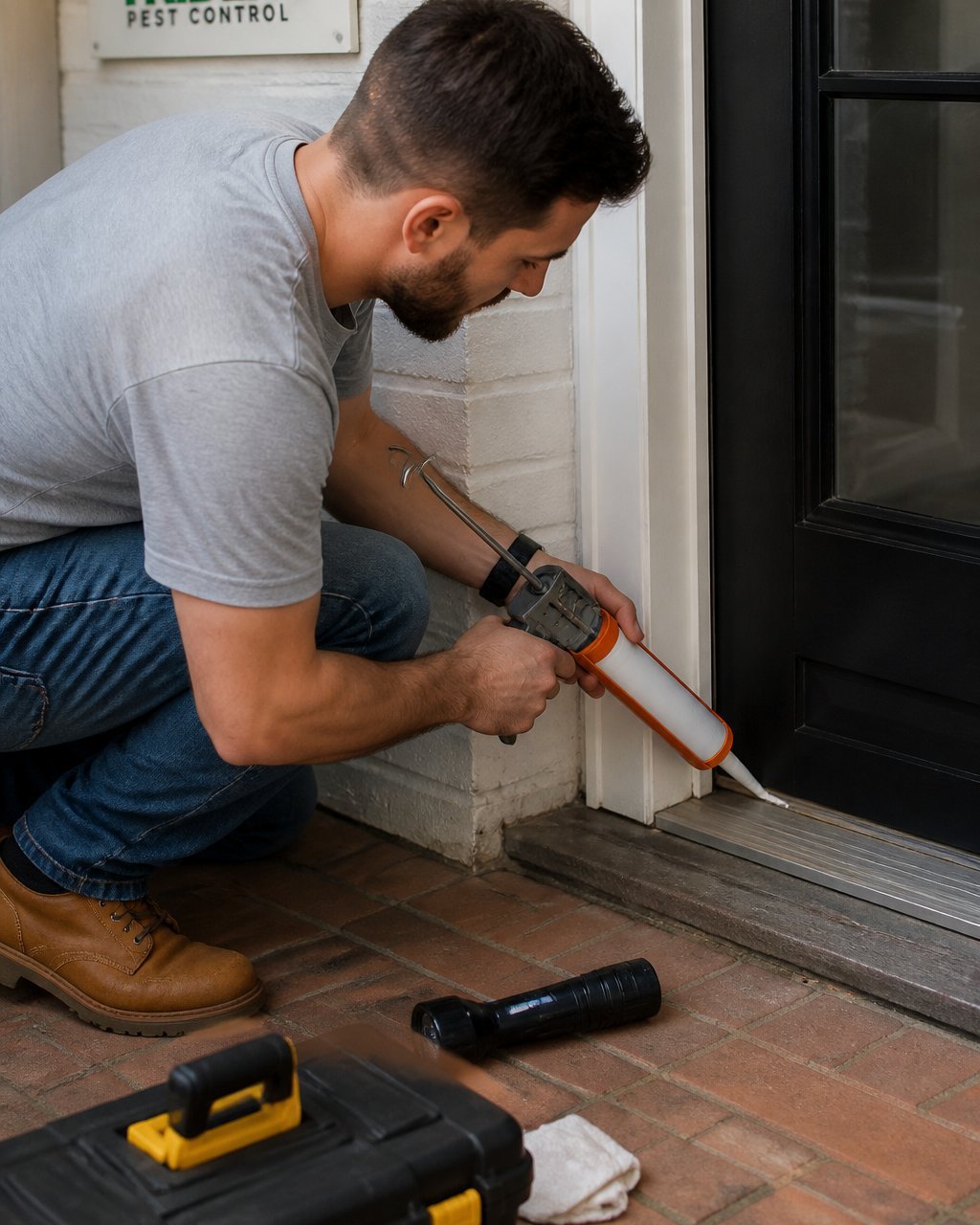
Walk the outside of your home with a torch and look for openings. Seal anything wider than a few millimetres. Pay attention to where pipes and cables enter the walls, because these are common highways for rodents.
The Entry Points Pests Use Most
Focus your effort on these spots:
- Gaps under external doors and garage doors
- Cracks in brickwork and foundations
- Pipe and cable entry points
- Weep holes and vents
- Roof tiles and eaves
- Window frames and flyscreen edges
Use silicone for small cracks and expanding foam for bigger gaps. Stuff steel wool into pipe entries before sealing, because rodents will not chew through it.
Step 3: How to Keep Ants Out of the House
To keep ants out of the house, you need to remove the trail and the food source at the same time. Ants follow scent trails, so cleaning the path matters as much as killing the ones you see.
Start by wiping down benches, floors and bin lids with vinegar and water. This breaks the scent trail. Store food in sealed containers and rinse drink cans before they hit the bin. Fix any dripping taps, because ants need water as much as food.
If ants keep returning, check for nests under paving, in wall cavities or beneath pot plants. Outdoor nests near the house are the usual source. Treating the nest, not just the trail, is what stops them coming back.
Spraying the ants you can see often makes things worse. It splits the colony and can scatter them into new areas of the house. Target the nest instead.
Step 4: How to Stop Spiders Coming Into the House
To stop spiders coming into the house, cut off the two things they want most: shelter and prey. Spiders follow other insects indoors, so controlling ants and cockroaches removes their food supply.
Keep the outside of your home clear. Move firewood, boxes and garden debris away from the walls. Trim plants so they do not touch the house, because foliage gives spiders a bridge straight to your eaves. Seal the same gaps you tackled in Step 2. Large entryways often serve as primary entry points for rodents and insects, making the process of sealing garage gaps an essential final measure for securing the perimeter of your foundation.
Inside, vacuum corners, ceilings and behind furniture often. Shake out shoes and gloves stored in garages before wearing them. Most bites happen when people reach into dark, undisturbed spots.
Step 5: Common Mistakes That Let Pests Return
The biggest mistake is treating the symptom and ignoring the cause. If you spray a trail of ants but leave the crumbs and the gap under the door, they will be back within weeks.
Here are the traps we see most often:
| Mistake | What It Causes | The Fix |
|---|---|---|
| Sealing gaps once | New gaps open over time | Recheck every season |
| Leaving food out | Constant ant and rodent traffic | Store food in sealed containers |
| Ignoring moisture | Cockroaches and silverfish thrive | Fix leaks promptly |
| DIY spray only | Pests return or scatter | Combine prevention with pro treatment |
| Skipping the roof space | Rodents nest unnoticed | Check the roof each month |
Another common error is using the same treatment again and again after it has stopped working. Pests build tolerance, and some products lose effect over time. Rotating methods and calling in a licensed controller breaks the cycle.
When to Call a Licensed Pest Controller in Werribee
Some jobs are worth handing to a professional. If you have tried the steps above and pests keep returning, the nest is likely hidden in a wall cavity, roof void or under the slab. That is when a licensed pest controller in Werribee earns their fee.
At Trident Pest Control, our licensed and insured technicians cover Werribee, Melbourne, Geelong and the surrounding western suburbs. We use kids and pet-safe treatments, offer fixed pricing with no hidden charges, and provide same-day service when you need it. If you are searching for pest control near me, our local team can find the source, not just the symptom.
Call us when:
- You spot droppings or damage in the roof space
- Ants or cockroaches return within weeks of treatment
- You need an end-of-lease flea treatment
- You want a safe option for a home with kids or pets
Frequently Asked Questions
How can I prevent pests from entering my home?
Deny pests the three things they need: food, water and shelter. Store food in sealed containers, fix leaking taps and clear crumbs from benches and floors. Seal cracks and gaps around doors, windows and pipes, and keep gardens, mulch and stored timber away from external walls. Check established entry points every few months, because sealant and weather strips wear out. These habits form the core of how to stop pest infestations before they take hold.
What attracts pests to a house?
Food scraps, standing water, clutter and easy access are the main draws. Ants follow food trails into kitchens, spiders follow the insects they feed on, and rodents shelter in stored boxes, roof voids and wall cavities. Outdoor lighting at night also attracts insects, which in turn attract spiders. Removing these attractions, rather than only treating the pests you see, is what makes prevention last.
Can sealing gaps help prevent pest infestations?
Yes. Sealing cracks and gaps around the home is an effective preventive measure. Focus on door bases, window frames, weep holes fitted with mesh, pipe penetrations and roof spaces. Pair sealing with good sanitation, because a sealed home with a food source will still attract pests.
What should I do if pests keep returning after treatment?
Repeated activity usually means the source was never addressed. Check for moisture problems, unsealed entry points or nearby nesting sites such as roof voids and garden debris. If pests return after two DIY attempts, booking a licensed pest controller can help address the issue.
Pest infestations rarely fix themselves, and the longer you wait, the deeper the problem goes. Trident Pest Control offers licensed and insured technicians, kids and pet-safe treatments, fixed pricing with no hidden charges, and same-day service across Melbourne, Geelong and Werribee. Get your free quote and stop pests before they take hold.