Last Updated: November 20, 2026
Quick Summary
Identifying common garden pests in Melbourne suburbs starts with the damage, not the bug: holes in leaves point to caterpillars, snails or beetles, curled sticky growth to aphids, and fine webbing to mites. Check leaf undersides and new growth first, and confirm the culprit before spraying.
- Check the underside of leaves first, where most garden pests hide.
- A strong blast of water knocks aphids off, and ladybirds finish the job.
- Snails and slugs shred soft seedlings overnight; hand-pick them at dusk.
- Fast, solitary hunters are usually predators, so leave them alone.
- Broad-spectrum sprays can kill ladybird, hoverfly and lacewing larvae alongside pests.
Table of Contents
- Start With a Symptom: A Visual Diagnostic Key for Garden Pest Identification
- Reading Garden Pest Damage on Leaves Before You Spray
- Aphids on Plants: The Cluster That Sits on New Growth
- Snails, Caterpillars and Beetle Larvae: Matching the Pest to the Plant
- Beneficial Insects in the Garden: Lookalikes You Should Leave Alone
- What’s Active When: A Werribee and Melbourne Suburbs Pest Calendar
- When to Stop Identifying and Book a Professional Inspection
- Frequently Asked Questions
Start With a Symptom: A Visual Diagnostic Key for Garden Pest Identification
Most gardeners reach for a spray before they know which garden pests they’re targeting. That’s backwards. Identifying common garden pests in Melbourne suburbs starts with the damage, not the bug. A chewed tomato plant, a sticky lemon tree, a wilted seedling, and a bottle of something generic already in hand are common starting points for many gardeners.
Here’s the good news. Garden pest identification is a skill you can learn in an afternoon. The trick is to read the plant like a clue.
Start with what the leaf is doing:
- Holes in the middle of leaves → caterpillars, snails or beetles
- Curled, sticky new growth → aphids
- Yellowing with fine webbing → mites
- Skeletonised leaves → beetle larvae or sawfly
Below, we’ll show you exactly how to match each symptom to a likely culprit. But first, here’s what most guides get wrong: they start with the insect. You should start with the plant.
Chewed Leaves, Holes and Skeletonised Foliage
Chewing damage is the easiest to spot. Something with a mouth has been at your plant.
Look at the edges. Ragged, torn edges usually mean caterpillars. Smooth, rounded holes often point to beetles. And if you can see nothing but a lacy skeleton, suspect beetle larvae or sawfly.
Yellowing, Wilting and Sticky Residue
Sap-sucking pests leave different clues. Yellowing leaves, wilting tips and a sticky film called honeydew all point to aphids, whiteflies or scale.
Black sooty mould often grows on that sticky residue. If you see it, you’ve had a sap-sucker problem for a while.
For a wider reference covering homes as well as gardens, see our guide to common pests in Melbourne homes and their control solutions.
Reading Garden Pest Damage on Leaves Before You Spray
Before you treat anything, inspect properly. A few minutes of checking saves a wasted spray and protects the good bugs.
Do this inspection routine:
- Check the underside of leaves first, where most pests hide
- Look at new growth, the softest and most vulnerable tissue
- Scan for eggs, larvae and nymphs, not just adults
- Check at dusk, when snails and caterpillars come out
- Photograph what you find for later comparison
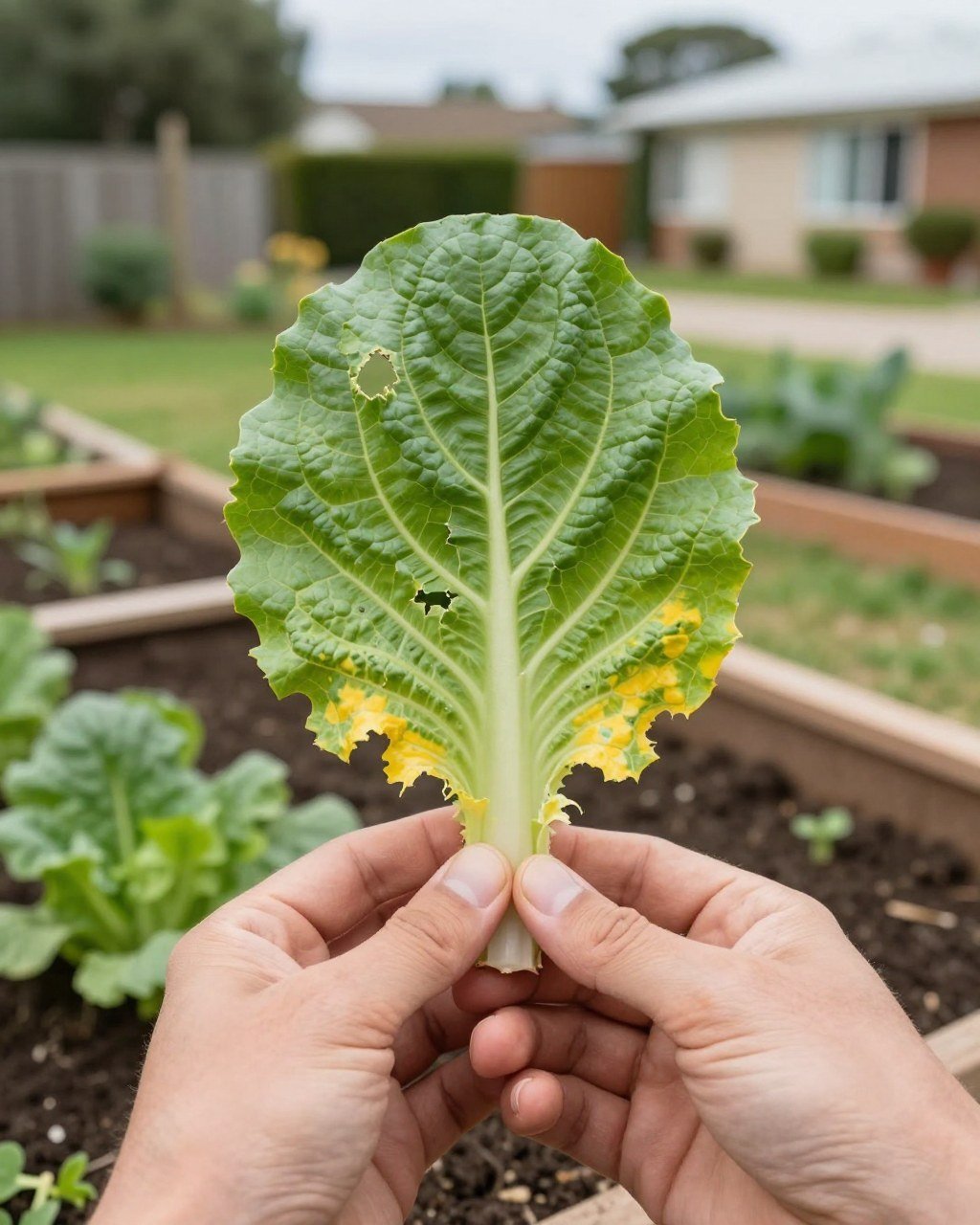
Garden pest damage on leaves tells you how urgent the problem is. A few holes on an established shrub? Monitor it. Every new leaf stripped? Act now.
Aphids on Plants: The Cluster That Sits on New Growth
Aphids on plants are tiny, pear-shaped insects that cluster in dense groups on soft new shoots. They come in green, black, brown and even pink. Look closely and you’ll spot them lined up along stems and buds.
Their damage shows as:
- Curled, distorted new leaves
- Sticky honeydew coating nearby foliage
- Ants running up and down the stems
A strong blast of water knocks aphids off. Ladybirds and lacewings usually finish the job. Spray only if the cluster is heavy and spreading.
Snails, Caterpillars and Beetle Larvae: Matching the Pest to the Plant
Different plants attract different chewers. Match the pest to the plant and you’re halfway to control.
Snails and slugs shred soft seedlings overnight. Caterpillars target leafy greens and brassicas. Beetle larvae chew roots and low foliage.
A simple comparison:
| Pest | Favourite Plants | Damage Sign | Best First Step |
|---|---|---|---|
| Snails and slugs | Seedlings, lettuce | Ragged holes, slime trails | Night hand-picking, barriers |
| Caterpillars | Brassicas, tomatoes | Chewed leaves, droppings | Remove by hand, netting |
| Beetle larvae | Roots, lawn, vegies | Wilting, root damage | Inspect soil, treat larvae |
If beetle larvae are already working through your soil, our 24/7 beetle control service can step in before they spread.
Beneficial Insects in the Garden: Lookalikes You Should Leave Alone
Some of the scariest-looking bugs in your garden are on your side. Beneficial insects in the garden eat the pests you’re trying to remove, and misidentifying them is one of the most common reasons home gardeners spray unnecessarily. Recognising helpful insects before reaching for a spray is part of identifying pests on leaves, where the same careful observation can distinguish damage from the creatures causing it.
The practical skill is telling a pest from a predator before you act. Use this comparison as a starting point.
| What you see | Likely pest | Likely beneficial lookalike | How to tell them apart |
|---|---|---|---|
| Small green or black insects clustered on new shoots | Aphids | None, aphids are always pests | Clusters sit still; predators move alone and fast |
| Tiny alligator-shaped larva on foliage | None | Ladybird larva | Ladybird larvae are armoured, segmented and hunt actively; they devour aphids |
| Green, slug-like larva near aphid colonies | None | Hoverfly larva | Hoverfly larvae are legless and taper to a point; they eat aphids |
| Brown, spiky larva on leaves | None | Lacewing larva | Lacewing larvae are spiky and hunt mites and small insects |
| Small, fast-moving beetle on the ground | Some ground beetles are pests of seedlings | Ground beetles and rove beetles | Fast, solitary hunters are usually predators; check before treating |
| Spiders in the garden | None | Almost all garden spiders | Spiders are predators; leave them unless they are inside the house |
| Black or brown ants running up stems | Ants farming aphids | None, ants are a warning sign | Ants protect aphids from predators; their presence usually means aphids are nearby |
The rule of thumb: if it moves fast and hunts alone, it is probably a predator. If it sits in a cluster and does not move, it is probably a pest. If it is being tended by ants, it is almost certainly a sap-sucker.
Watch out: broad-spectrum sprays and even some low-toxicity products can kill ladybird larvae, hoverfly larvae and lacewing larvae alongside the pests. A spray that solves the aphid problem in October can leave you with a mite problem in January because the predators are gone. Where possible, start with water pressure, hand removal and barriers, and reserve sprays for heavy, spreading infestations.
When in doubt, do not spray. Photograph the insect, note where it was and what it was doing, and check the comparison above before reaching for a product.
What’s Active When: A Werribee and Melbourne Suburbs Pest Calendar
Pest pressure in the Melbourne suburbs is not uniform through the year, and conditions vary by area and garden.
Use this month-by-month calendar as a monitoring prompt, not a rigid rule. Local microclimate, irrigation, mulch depth and the plants you grow will shift timing by a few weeks either way.
| Period | Pests most likely to appear | Werribee and western-suburbs context |
|---|---|---|
| Late winter (August) | Snails and slugs emerging from damp shelter; aphids on early stone fruit | Damp corners, retaining walls and dense groundcover hold snails longer in the western suburbs |
| Early spring (September-October) | Aphids on roses and citrus; caterpillars on brassicas; snails on seedlings | New growth after winter rain is the trigger for aphid clusters |
| Late spring (November) | Caterpillars on tomatoes and leafy greens; first whitefly on glasshouse and sheltered crops | Warm, still days suit whitefly build-up |
| Summer (December-February) | Mites on hot, dry foliage; whitefly; thrips on flowers; beetle adults | Hot north winds and dry soil push mite populations up faster than in coastal suburbs |
| Late summer (February-March) | Beetle larvae in soil and lawn; caterpillars on late brassicas | Lawns and vegie beds in new estates are common sites |
| Autumn (April-May) | Beetle larvae still active; slugs returning as soil moistens; aphids on autumn veg | Cooler nights and irrigation restart slug activity |
| Winter (June-July) | Snails and slugs sheltering; scale on citrus and evergreen shrubs | Scale is easier to spot on citrus in winter when canopy is thinner |
A common pattern in Werribee gardens is a spring aphid flush followed by a summer mite problem on the same plants. Treating the aphids with a broad-spectrum spray in spring can remove the predators that would have kept mites in check by January. That is one reason the calendar matters: it helps you anticipate the next wave rather than react to each one.
Distinguishing a seasonal outbreak from a persistent problem is the other half of the skill. A seasonal outbreak usually peaks and fades within a few weeks and is tied to a specific plant stage, new growth, flowering, fruit set. A persistent problem keeps returning across seasons, often because the pest is breeding in a sheltered spot (under pots, in dense hedges, in compost) or because the plant is stressed. If you see the same pest in three different months, stop treating the symptoms and look for the reservoir.
Monitoring through each season also keeps you ahead of the pest life cycle. Eggs, nymphs and larvae are far easier to interrupt than adults, and the calendar tells you when each stage is likely to be present.
When to Stop Identifying and Book a Professional Inspection
Some problems go past the home garden. If pests are spreading, returning after treatment, or moving into the house, call in a professional.
Watch out: repeated DIY spraying can wipe out beneficial insects and leave the real problem untouched.
Trident Pest Control provides licensed and insured technicians, fixed pricing with no hidden charges, and kids and pet-safe treatments across Werribee and the western suburbs. If you’re ready to stop guessing, our residential pest control service in Werribee is a good place to start. For a fast-moving infestation, read our guide on emergency pest control in western Melbourne to know what to do first.
Garden pests rarely solve themselves once they’ve settled in. If you’ve identified the culprit but the problem keeps coming back, Trident Pest Control can help. Our licensed and insured technicians offer same-day service, fixed pricing with no hidden charges, and kids and pet-safe treatments across Werribee and the wider region. Get started with Trident Pest Control and take back your garden.
Frequently Asked Questions
What are the most common garden pests in Melbourne suburbs?
The usual suspects in Melbourne backyards are aphids, snails and slugs, caterpillars, beetle larvae such as curl grubs, thrips, spider mites and scale. Fruit flies and nematodes also turn up in vegetable beds. Warm weather from spring through early autumn pushes activity up, and dense plantings in Werribee and the western suburbs give them plenty of cover. Learning a few damage patterns is faster than trying to memorise every species.
How can I tell what is eating my garden plants?
Match the damage to the culprit. Large ragged holes in leafy greens usually point to snails or caterpillars, while fine webbing and stippled leaves suggest mites or thrips. Sticky residue and sooty mould on new shoots is a strong sign of aphids on plants. Slime trails confirm snails. Check at dusk with a torch, because many feeders are nocturnal and hide during the day.
Which insects in my garden are beneficial rather than pests?
Ladybirds, hoverflies, lacewings, parasitic wasps and ground beetles all eat aphids or caterpillars, and bees and butterflies pollinate your crops. Before treating, watch the insect for a minute: predators move quickly and hunt alone, while pests cluster in dense groups on soft new growth. If you are unsure, send a clear photo to a licensed technician rather than spraying a whole bed.
When should I contact a pest control professional about garden pests?
Call a professional when the infestation keeps returning after two or three rounds of control, when pests move from the garden into the house, or when you cannot confirm the species from a photo. Trident Pest Control provides licensed, insured technicians across Werribee, Melbourne and Geelong, with fixed pricing and kids and pet-safe treatments. A free quote gives you a clear next step before the problem spreads.
