Last Updated: November 19, 2026
Quick Summary
DIY pest removal suits minor problems like a few ants or occasional spiders, but pest control Werribee professionals should handle termites, rodents and settled cockroach populations. Professional treatments usually show visible results within 24 to 72 hours, while DIY sprays often leave the colony untouched.
- Spring wakes ant colonies and cockroaches, while summer is peak pest activity in Werribee.
- Slow-acting baits beat contact sprays because foraging insects carry poison back to the nest.
- There is no reliable DIY termite treatment, and insurance rarely covers termite damage.
- Ask providers to break quotes into components and confirm whether follow-up visits are included.
- Check that technicians are licensed and insured before booking any treatment.
Table of Contents
- Pest Control vs DIY Pest Removal in Werribee: The Core Decision
- Werribee and Truganina Pest Risks and Seasonal Patterns
- DIY Pest Control Products and Tools: What Actually Works
- A Pest-by-Pest Guide: When DIY Is Enough and When to Call a Pest Controller
- How Long Does Pest Control Take to Work?
- Safe Pest Control Around Pets and Children
- Comparing Costs, Quotes and Provider Checks in Werribee
- Book a Werribee Pest Inspection with Trident Pest Control
- Frequently Asked Questions
Pest Control vs DIY Pest Removal in Werribee: The Core Decision
Most homeowners in Werribee reach for a supermarket spray can before they reach for the phone. That reflex is understandable, but it’s also why so many infestations drag on for months. The real choice between pest control Werribee and DIY pest removal isn’t about saving money. It’s about matching the method to the pest, the size of the problem, and the risk to your family.
Here’s the short version: DIY works for a handful of ants on a benchtop. It rarely works for termites, rodents or a settled cockroach population. Across pest control work, a common pattern is a few cheap products, a temporary lull, then a bigger problem two months later.
This guide breaks down exactly when to do it yourself and when to call a licensed technician. Below, we’ll show you how each pest behaves, what products actually do, and how to judge a quote without getting burned.
Werribee and Truganina Pest Risks and Seasonal Patterns
Werribee and Truganina sit on the western edge of Melbourne, where new housing estates meet established gardens, market gardens and open grassland. That mix creates pest pressure you won’t find in inner-city suburbs, and it changes month by month.
Spring (September to November). Warming soil and longer days wake ant colonies and cockroach populations. Ants trail indoors looking for moisture and food, while German cockroaches spread from neighbouring units into kitchens and laundries.
Summer (December to February). This is peak activity. Cockroaches breed fastest in warm, humid conditions, flies and mosquitoes rise around irrigation and standing water, and rodents remain active in gardens and compost.
Autumn (March to May). Rodents begin moving toward buildings as nights cool and outdoor food sources decline. Mice and rats slip into wall cavities, roof spaces and subfloors. Ant activity can spike again before winter as colonies store food.
Winter (June to August). Rodents are the main indoor call-out. Cockroaches concentrate around warm appliances and plumbing.
The newer estates around Truganina bring their own pattern. Fresh landscaping, stored building materials and disturbed soil push rodents and ants toward the nearest home.
Watch out: the biggest mistake is waiting until spring to act. By then, an overwintering colony has already established itself, and the first warm week simply makes it visible.
DIY Pest Control Products and Tools: What Actually Works
Store-bought products are not useless. They’re just limited. Here’s what genuinely helps and what tends to disappoint.
- Baits and gels: Effective for small ant and cockroach problems when placed correctly. Slow-acting baits work better than contact sprays because foraging insects carry the poison back to the nest.
- Traps: Useful for monitoring rodent activity. Snap traps and glue boards catch individuals but don’t solve an infestation.
- Insecticidal sprays: Kill what they touch. They don’t reach nests, eggs or harbourage areas.
- Sealing materials: Expanding foam and steel wool can block obvious entry points, but only if you find them all.
- Personal protective gear: Gloves, a mask and ventilation are non-negotiable when handling any insecticide.
The tools matter less than the diagnosis. If you don’t know which species you’re dealing with, you’re guessing.
Where Over-the-Counter Products Fall Short
The core problem is reach. A spray can treats a surface; a colony lives in a wall cavity, a subfloor or a garden bed. Products also lose effectiveness when applied to the wrong surface or at the wrong concentration.
Australian pesticide labels are legally binding. They specify where a product can be used, at what rate, and what safety precautions apply. Ignoring the label isn’t just ineffective, it can be unsafe. The Australian Pesticides and Veterinary Medicines Authority regulates these products, and its guidance is worth reading before you buy anything.
There’s a second issue most guides skip: re-infestation. If you seal one entry point but miss three others, the problem returns. Learning how to identify rodent entry points in your house is the difference between a temporary fix and a lasting one.
A Pest-by-Pest Guide: When DIY Is Enough and When to Call a Pest Controller
The right call depends entirely on the pest. Use this table as a quick decision guide before you spend anything.
| Pest | DIY Suitable? | Why | Recommended Action |
|---|---|---|---|
| Ants (minor) | Yes | Baits reach the nest | Bait stations, then monitor |
| Cockroaches (few) | Sometimes | Gels work early | Gel bait plus hygiene |
| Cockroaches (settled) | No | Harbourage in walls | Professional treatment |
| Spiders (occasional) | Yes | Web removal and sealing | Manual removal, reduce clutter |
| Rodents (signs present) | No | Breeding indoors | Professional rodent control |
| Termites | Never | Structural risk | Licensed inspection |
| Wasps and bees | No | Sting risk | Professional removal |
Termites, Rodents and Cockroaches: The High-Risk Pests
These three are where DIY most often fails, and where the cost of getting it wrong is highest.
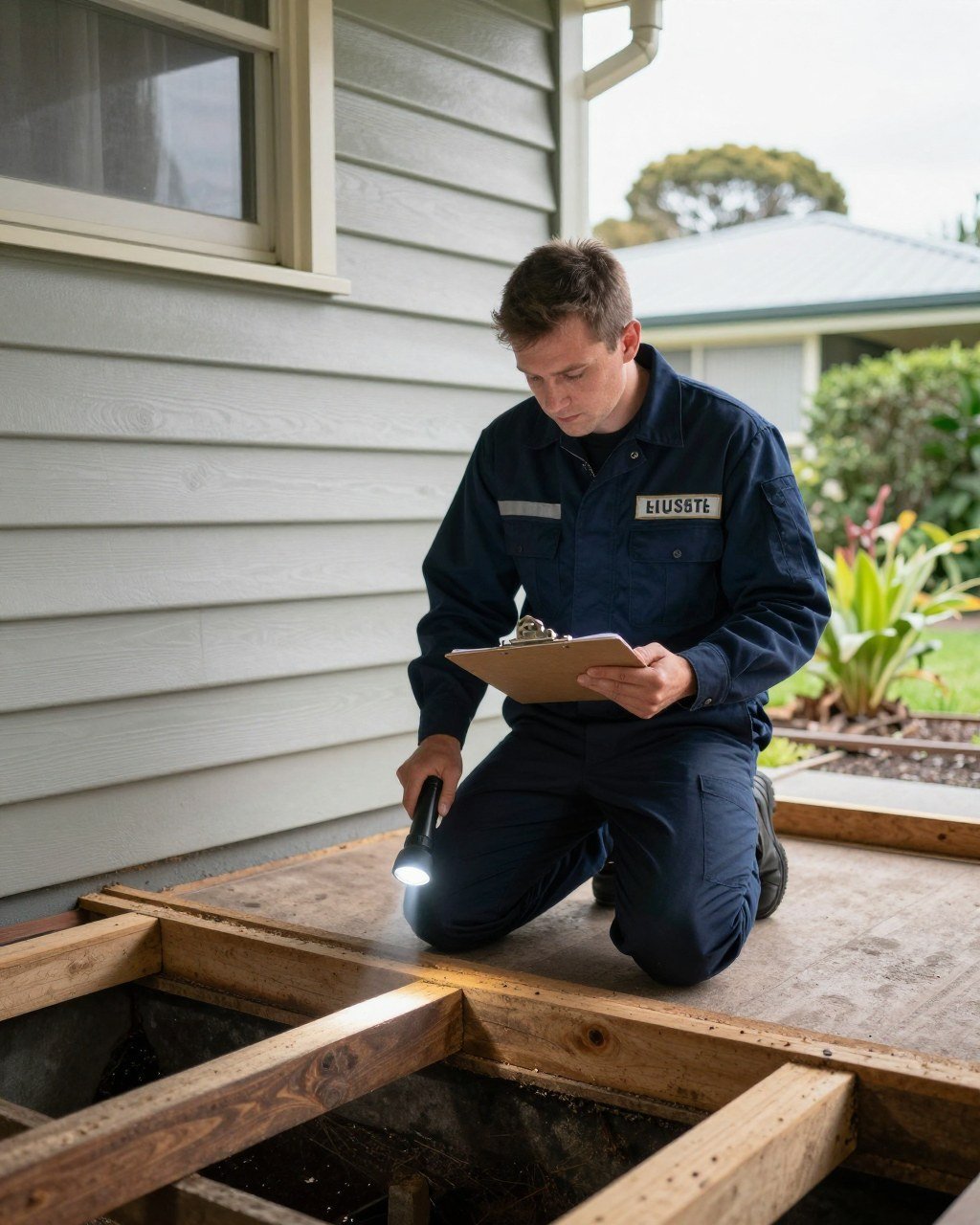
Termites cause structural damage that insurance rarely covers. There is no reliable DIY termite treatment. Detection requires a trained eye and proper inspection tools.
Rodents breed fast and gnaw wiring, which creates fire risk. Traps catch a few; they don’t address the nest. Our rodent and bed bug extermination guide covers the signs and treatment options in more depth.
Cockroaches carry bacteria across food surfaces and multiply in wall cavities. A settled population needs a targeted, follow-up treatment plan. If you want prevention advice, read how to stop cockroaches getting into your home.
How Long Does Pest Control Take to Work?
Most professional treatments show visible results within 24 to 72 hours, though full control of a settled infestation can take one to three weeks depending on the pest and the follow-up schedule.
Ask your technician for a clear timeline and follow-up schedule before treatment begins.
DIY products often look like they’ve worked within hours because contact sprays kill visible insects. The colony behind the wall is untouched, which is why the problem returns.
Safe Pest Control Around Pets and Children
Safety is the question we hear most, and it’s the right one to ask. Modern professional treatments are designed to be low-risk when applied correctly, but “safe” still depends on the product, the method and the instructions followed.
Before any treatment, ask three things:
- What product is being used, and is it registered for indoor use?
- How long should people and pets stay off treated surfaces?
- What ventilation or cleanup is required afterwards?
Ask your provider how long people and pets should stay out of treated areas, and wait until treated surfaces are dry before contact. Store all products, professional or otherwise, locked away from children and pets. Our guide on whether pest control treatments are safe for pets answers the specifics in detail.
Watch out: never transfer a pesticide out of its labelled container. The label carries the safety instructions and the legal use directions.
Comparing Costs, Quotes and Provider Checks in Werribee
Price is where DIY looks unbeatable, until you count the repeat purchases and the cost of a problem that never quite goes away.
What DIY actually costs. Store-bought products add up across repeat purchases, and many households buy several rounds before calling a professional. For termites, there is no reliable DIY product.
What professional treatment involves. A licensed pest control Werribee technician quotes the job according to its scope. Quotes vary with pest type, property size, access (subfloor, roof space, wall cavities) and whether baits, dusts, residual sprays or monitoring stations are used. Ask each provider to break the price into its components so you can compare like with like.
Variables that move a Werribee quote.
- Property size and layout: a single-storey brick veneer on a standard block is simpler than a double-storey with a suspended slab and multiple roof voids.
- Pest type: a general ant or spider treatment is usually simpler than a settled cockroach program or a rodent job with entry-point sealing.
- Access: subfloor clearance, roof space access and locked sheds all affect labour time.
- Follow-up: a quote that includes a return visit is not the same as one that excludes it, even if the headline number looks lower.
- After-hours or same-day service: confirm any extra charges before booking.
Checklist before you book.
- Is the technician licensed and insured?
- Is the quote fixed, or does it exclude follow-up visits?
- What pests and areas are covered?
- Is there a written treatment plan?
- Are there any hidden call-out or after-hours charges?
- What is the guarantee, and what does a return visit cost if the pest comes back?
- Are product labels and safety instructions provided?
The Victorian Government health guidance on pest control is a useful reference for what a legitimate operator should provide. For licensing verification, check the business against the Victorian Building Authority where relevant trades are concerned.
A cheap quote that excludes follow-up is rarely cheap. Ask directly: “If the pest returns in a month, what happens?” A clear answer tells you a lot about how the provider works.
Book a Werribee Pest Inspection with Trident Pest Control
The decision comes down to risk. For a few ants, DIY is fine. For termites, rodents or a cockroach problem that keeps coming back, a professional assessment saves money and stress.
Trident Pest Control provides licensed and insured technicians across Werribee and the surrounding western suburbs. We offer fixed pricing with no hidden charges, and kids and pet-safe treatments.
If you’re ready to stop guessing, book a Werribee pest inspection and get a clear plan for your home.
Pests don’t wait, and neither should you. Trident Pest Control brings licensed technicians, fixed pricing and kid and pet-safe treatments to homes across Werribee. Get your free quote and same-day service, and put the problem behind you.
Frequently Asked Questions
Is professional pest control better than DIY pest removal?
It depends on the pest and the size of the problem. DIY suits minor, isolated issues like a few ants in a kitchen or a single spider. Professional pest control Werribee residents book is built for infestations, termites and recurring problems, because a licensed technician can identify the species, find the entry points and apply registered treatments at the correct dose. DIY products sold over the counter often use weaker formulations and rarely include a follow-up visit, which is why infestations come back.
When should I call a pest controller in Werribee?
Call a pest controller when you see termite damage or mud tubes, hear rodents in the ceiling, find cockroaches in multiple rooms, or have treated the same pest more than twice in a year. Also call if anyone in the home has asthma or allergies, or if you are renting and need an end-of-lease clearance. A professional assessment confirms the species and the extent of the infestation before any chemical is applied, which stops you spending money on the wrong product.
Are DIY pest control products safe to use around children and pets?
Only if you follow the label exactly. In Australia, every registered insecticide carries instructions on dilution, application method, protective equipment and re-entry times. Problems start when people mix products, over-apply, or let pets back into a treated room too early. Safe pest control around pets and children means storing baits and traps out of reach, keeping kids and animals off treated surfaces for the stated period, and calling a professional when the label directions are hard to follow.
How long does professional pest control take to work?
How quickly pest control takes effect depends on the pest, the product and the season. How long does pest control take to work also depends on the pest, the product and the season. Your technician should give you a clear timeline and a follow-up window, so you know what is normal and when to call back.
