Last Updated: November 17, 2026
Quick Summary
A spider infestation is a sustained population of spiders living and breeding inside your home, shown by patterns rather than single sightings. Watch for webs returning within days of cleaning, egg sacs indoors, clusters of spiderlings, and repeated sightings of the same spider type. Finding a redback or funnel-web near living areas means acting quickly.
- One spider is a guest; twenty is a colony, so judge patterns not single sightings.
- Egg sacs look like small silk balls tucked into dark, secluded areas.
- Score 6 or more on the severity checklist and call a professional.
- Seal gaps around doors, windows and foundations to keep spiders out.
- Shake out shoes, gloves and gardening gear stored outside before use.
Table of Contents
- What a Spider Infestation Actually Looks Like
- Dangerous Spiders in Victoria You Should Know
- How to Identify Spiders in Your House
- A Practical Infestation Severity Checklist
- Bite Symptoms and When to Get Medical Help
- How to Keep Spiders Out of Your House
- When to Call Pest Control for Spiders
- Book a Professional Spider Inspection
- Frequently Asked Questions
What a Spider Infestation Actually Looks Like
A spider infestation is a sustained population of spiders living and breeding inside your home, not the odd huntsman wandering in from the garden. The signs of a dangerous spider infestation in your house show up as patterns, not single sightings. One spider is a guest. Twenty is a colony.
Here’s what separates a real infestation from normal household spider activity.
Frequent Sightings and Multiple Webs
Seeing the same spider type again and again is the first clue. So is spotting webs in spots you cleaned last week.
Look for:
- Webs reappearing within days of removal
- Spiders in the same corner, cupboard or window frame repeatedly
- Multiple webs in one room or along one wall
- Webs in low-traffic spots: behind furniture, under sinks, in the laundry
One web in the shed is normal. Five webs across the hallway is not.
Egg Sacs, Spiderlings and Hiding Places
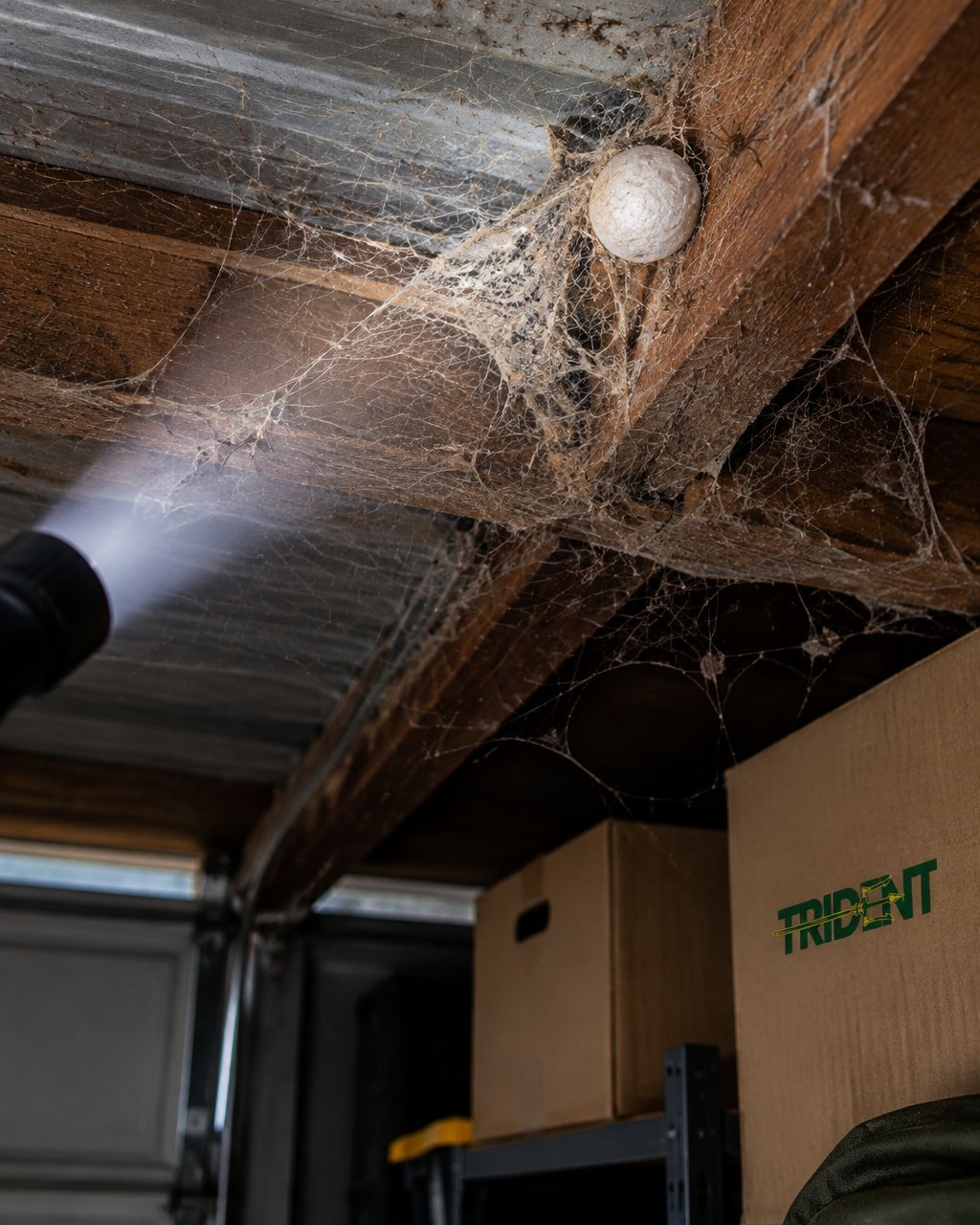
Egg sacs are the clearest sign of breeding. They look like small silk balls, often tucked into dark, secluded areas.
Check these spots:
- Garages and sheds, especially ceiling corners
- Attics and roof voids
- Behind stored boxes and clutter
- Under outdoor furniture and pot plants
- Gaps around doors, windows and foundations
A cluster of tiny spiderlings means eggs have already hatched. That’s a population, not a visitor.
Dangerous Spiders in Victoria You Should Know
Victoria has a handful of spiders worth taking seriously. Most household spiders are harmless. A few are medically significant, and knowing which is which changes how you respond.
The main ones Werribee residents encounter:
| Spider | Appearance | Where It Hides | Risk Level |
|---|---|---|---|
| Redback | Black body, red stripe on the upper abdomen; female is round and glossy, male is smaller with white markings | Sheds, letterboxes, under outdoor chairs, in dry sheltered corners, inside shoes and gloves left outside | High, venomous; bite can cause severe pain, sweating and nausea |
| Funnel-web | Large, dark, glossy; males roam in warmer months looking for mates | Burrows in damp ground, under rocks and logs, in cool shaded garden beds | High, venomous; bite is a medical emergency |
| White-tailed | Grey-brown, long body, distinctive white tip on the abdomen | Walls, cupboards, bedding, roaming indoors with no web | Moderate, painful bite; can cause local redness and swelling |
| Huntsman | Large, brown, flattened, fast; often mistaken for something more dangerous | Walls, ceilings, cars, behind curtains | Low, startling not dangerous |
| Wolf spider | Brown, striped, ground-dwelling | Garden, under rocks, in leaf litter | Low |
Redbacks and funnel-webs are the two that demand real caution. Redbacks favour dry, sheltered spots such as garden sheds, letterbox lids and footwear left outdoors. Funnel-webs are burrow dwellers, so they turn up in damp garden beds and shaded soil rather than in webs on the ceiling.
If you spot a redback or funnel-web near a child’s play area or a pet’s bedding, act quickly. Don’t handle either with bare hands, a jar and a photo are safer tools.
For a full rundown of local species, our spider overview covers the common culprits and when to escalate.
How to Identify Spiders in Your House
Identifying spiders in your house starts with three details: body shape, colour, and where it was sitting. Catch the spider in a jar or snap a photo before you move it.
A simple identification process:
- Note the location: web, ground, wall or burrow
- Check the body: fat and round, long and flat, or hairy
- Look for markings: stripes, a red patch, a white tip
- Check the web shape: messy cobweb, funnel, or none at all
- Compare against a reliable local guide
Redbacks typically sit in messy webs in dry, sheltered spots. Funnel-webs live in burrows rather than webs. White-tails roam walls and cupboards and often leave no web at all.
If you’re unsure, don’t handle it with bare hands. Photo and distance are your safest tools.
A Practical Infestation Severity Checklist
Use this checklist to judge how serious your situation is. Score each line, then add it up.
- I see spiders most days (1 point)
- Webs return within a week of cleaning (1 point)
- I’ve found egg sacs indoors (2 points)
- I’ve seen spiderlings or a cluster of babies (2 points)
- Spiders appear in bedrooms or kids’ rooms (2 points)
- I’ve spotted a redback or funnel-web (3 points)
- Someone in the house has been bitten (3 points)
How to read your score:
- 0-2: Normal activity. Monitor and tidy up.
- 3-5: Developing problem. Take action now.
- 6+: Serious infestation. Call a professional.
This scoring is a general guide, not a diagnosis.
Bite Symptoms and When to Get Medical Help
Most spider bites cause local pain, redness and swelling (Spider bites – treatment, symptoms and first aid). Some cause nausea, sweating or vomiting. A few need urgent medical attention, and the response differs depending on what bit you.
Watch for these symptoms:
- Sharp pain at the bite site
- Redness, swelling or a skin lesion
- Nausea or vomiting
- Sweating and muscle pain
- Headache or dizziness
If you suspect a redback bite: apply a cold pack to ease local pain, keep the person still, and call 000 if pain is severe, or if a child, elderly person or anyone with a heart condition is bitten. Symptoms in children can escalate quickly.
If you suspect a funnel-web bite: this is a medical emergency (Spider bites – treatment, symptoms and first aid). Call 000 immediately. Keep the person calm and still, apply a pressure immobilisation bandage to the bitten limb (firm, not tight, wrapping from the bite toward the body), and do not remove it, paramedics will manage it. Do not cut, suck or apply a tourniquet.
For non-urgent bites, call Healthdirect on 1800 022 222 for advice. The Australian Government health advice on spider bites is a reliable starting point, and the Poisons Information Centre on 13 11 26 can advise on exposures.
Photograph the site and note the time, it helps a clinician assess progression.
Not sure what bit you? Our guide on identifying spider bites walks through the common signs.
How to Keep Spiders Out of Your House
Keeping spiders out comes down to three things: sealing entry points, cutting off their food supply, and reducing hiding spots.
Start here:
- Seal gaps around doors, windows and foundations
- Clear clutter from garages, sheds and cupboards
- Remove webs and egg sacs as you find them
- Trim bushes back from the walls
- Reduce insect activity, since insects are spider prey
- Check deliveries and outdoor items before bringing them in
Fewer prey insects generally means fewer spiders.
For a deeper step-by-step, see our guide on how to get rid of spiders. And if you’d rather avoid sprays, we’ve tested which natural spider deterrents actually hold up.
Watch out: don’t store shoes, gloves or gardening gear outside without shaking them out first. That’s where redbacks love to settle.
When to Call Pest Control for Spiders
Call a professional when you score 6 or more on the checklist, spot a redback or funnel-web near living areas, or find egg sacs you can’t clear.
Signs it’s time:
- Repeated treatments haven’t worked
- Spiders keep returning to the same spots
- You’ve found dangerous species indoors
- Children or pets are at risk
DIY sprays handle the odd spider. They rarely fix a breeding population hidden in roof voids and wall cavities.
For Werribee and Melton South residents, our local spider control service targets the harbourage areas spiders actually use. That’s the difference between killing what you see and stopping what you don’t.
Book a Professional Spider Inspection
A proper inspection finds the harbourage points, not just the spiders in plain sight. That’s where a lasting fix starts.
Trident Pest Control offers licensed and insured technicians, fixed pricing with no hidden charges, and kids and pet-safe treatments. Same-day service is available across Melbourne, Geelong and Werribee.
If you’re seeing the signs above, don’t wait for the population to grow. Get a free quote and book a professional spider inspection with Trident Pest Control.
Spiders breed faster than most people expect, and a small problem becomes a household one within weeks. Trident Pest Control can inspect your property, identify the species present, and treat the harbourage areas with kids and pet-safe methods. Our licensed technicians work across Werribee, Melbourne and Geelong with fixed pricing and same-day availability. Get started with Trident Pest Control and take back your home.
Frequently Asked Questions
What are the clearest signs of a spider infestation in a house?
The clearest signs are repeated sightings of the same species, multiple webs in corners, garages and sheds, and egg sacs tucked into dark areas. Seeing spiderlings emerging from a sac is a strong indicator that breeding is happening indoors. Pair those signs with a steady supply of prey insects and you have the conditions for an ongoing spider infestation rather than a one-off visitor.
Which spiders in Victoria can be dangerous to people?
The main medically significant species are the redback spider, the funnel-web spider and the mouse spider. Redbacks favour dry, sheltered spots such as sheds, garages and outdoor furniture. Funnel-webs prefer cool, damp ground-level areas and are more common in some outer suburbs and bushland fringes. Treat any bite from these species as urgent and seek medical attention.
How can I keep spiders out of my house without harsh chemicals?
Seal gaps and cracks around doors, windows and foundations, reduce clutter in garages and sheds, and remove webs regularly. Cutting off prey insects by managing other insect activity removes the food source. Keep outdoor lighting to a minimum near entry points and trim bushes back from the walls. These steps reduce entry points and make your home far less attractive to household spiders.
When should I call pest control for spiders?
Call a professional when sightings are frequent, webs keep returning after removal, or you find egg sacs and suspect breeding indoors. It is also worth calling if you have seen a redback or funnel-web around living areas, or if children and pets share the space. A licensed technician can inspect hiding places, confirm the species and treat the property safely.
