Table of Contents
- Why Two Pest Control Quotes Never Match
- What Drives Residential Pest Control Cost
- Pest Control Cost Werribee: What Local Homes Face
- What a Pest Control Quote Should Actually Include
- How Long Does Pest Control Take?
- Pet-Safe Pest Control: What Changes and What It Costs
- Conclusion
- Frequently Asked Questions
Last Updated: October 12, 2026
Why Two Pest Control Quotes Never Match
Residential pest control cost is the total you pay for a technician to inspect, treat and follow up on a pest problem at your home, and it swings wildly because no two homes carry the same risk. At Trident Pest Control, we quote homes across Werribee, Melbourne and Geelong every week, and two neighbours on the same street can receive very different figures. One has a tidy brick veneer with sealed eaves. The other has a weatherboard extension, a shed out back and a dog bowl left on the lawn overnight.
That gap confuses people. It also makes cheap quotes look attractive until the pests return.
Below, we break down exactly what moves the number up or down, what a proper quote should list, and how to compare two quotes fairly. Keep reading, because the cheapest quote is rarely the cheapest outcome.
What Drives Residential Pest Control Cost
Four things decide your price: the size and layout of your home, the pest and how bad it is, how many visits the job needs, and how hard the treatment is to apply safely. A single-visit general spray sits at the simple end. A full termite management job sits at the other.
Property Size and Layout
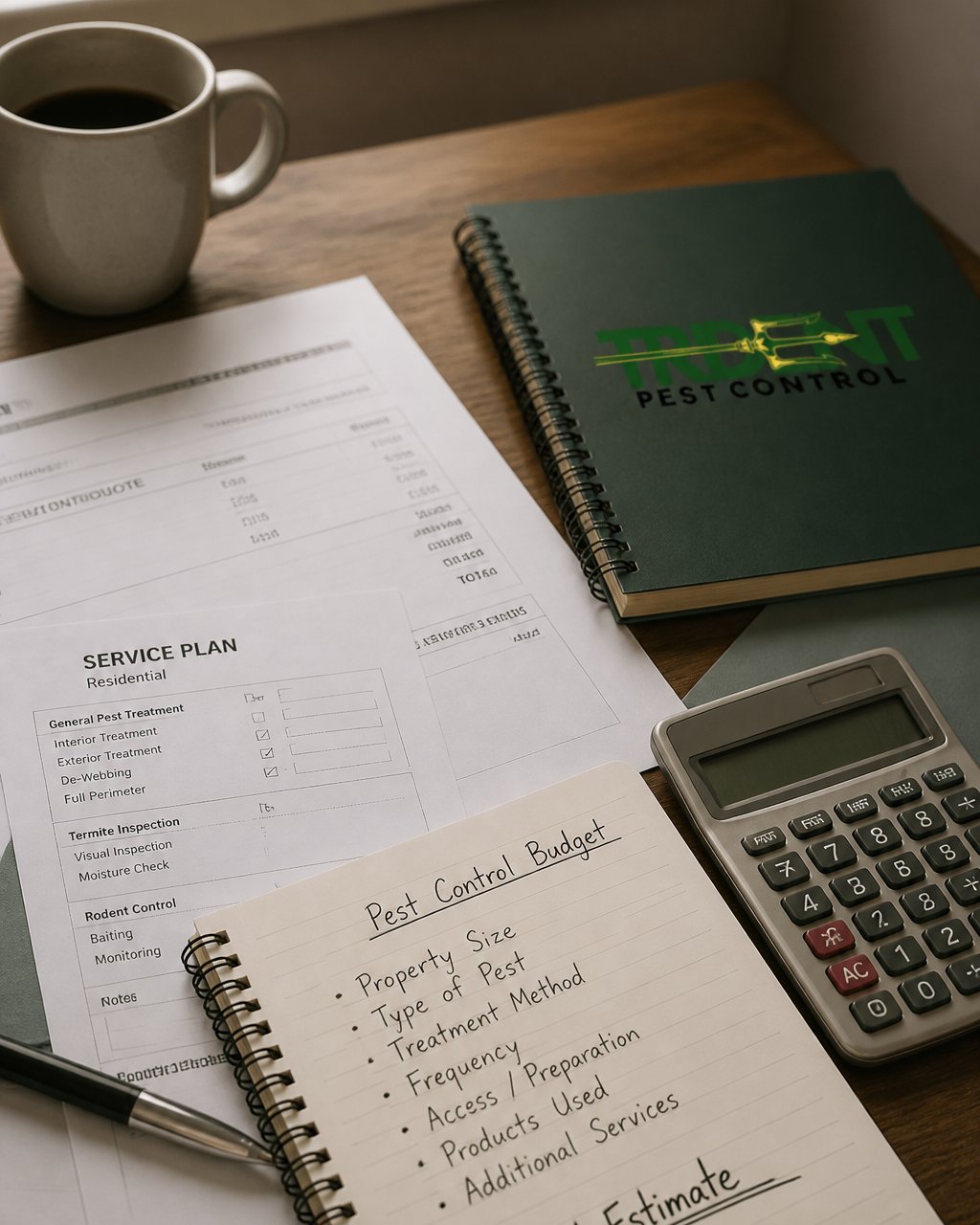
Bigger homes take longer, and time is the main cost. A three-bedroom house with a single roofline is quick. Add a double-storey section, a deck, a pergola and a detached garage, and the technician needs more product, more access points and more hours.
Layout matters as much as floor area. Cluttered subfloors, locked sheds and tight roof voids slow a job down. So does a home with multiple entry points that all need sealing.
Pest Type and Severity
Ants, spiders and cockroaches are usually a straightforward internal and external treatment. Rodents need baiting plus proofing, which takes longer. Termites are their own category, with inspections, monitoring and sometimes building work.
Severity changes the plan too. A light ant trail near a kitchen window is one visit. A widespread cockroach problem in a rental with a long-standing moisture issue often needs a follow-up.
Here is how the common jobs compare:
| Job Type | Typical Visits | Main Cost Driver |
|---|---|---|
| General spray (ants, spiders, cockroaches) | 1 | Home size and access |
| Rodent control | 1-2 | Bait stations and proofing |
| Flea treatment (end of lease) | 1-2 | Carpet area and pet access |
| Termite inspection and management | 2+ | Property layout and activity level |
| Wasp or bee removal | 1 | Height and nest location |
Ask any provider whether the quote covers a follow-up visit if activity continues. A single visit with no callback is where most “cheap” jobs quietly become expensive.
Pest Control Cost Werribee: What Local Homes Face
Werribee homes deal with a specific mix. The area’s mix of new estates and older weatherboard homes, plus the Werribee River corridor and surrounding grassland, keeps ant, spider and rodent pressure high through spring and summer. New builds on former farmland also tend to see ant activity in the first few years as soil settles.
That local picture shapes pest control cost Werribee residents pay. A home backing onto a reserve or a drainage line usually needs more external treatment than an inner-block townhouse.
We see three common patterns:
- New estate homes needing general external treatments for ants and spiders
- Older homes with subfloor access issues and rodent entry points
- Rentals needing end-of-lease flea treatments with a receipt for the agent
If you are searching for pest control near me in Werribee, ask whether the quote includes the subfloor and roof void. Some do not, and that is where the pests actually live.
What a Pest Control Quote Should Actually Include
A complete pest control quote lists the target pests, the treatment method, the number of visits, the warranty period and any exclusions. If a quote is one line and a number, it is not a quote. It is a guess.
Check for these items before you compare anything:
- The specific pests being treated, named
- Internal and external areas covered
- Number of visits included, and any follow-up
- Warranty length and what voids it
- Whether subfloor, roof void and shed are included
- Product type and any safety instructions
- Technician licence and insurance details
A quote that excludes the subfloor or roof void often means the technician never enters them. Pests treated only at ground level usually return within weeks.
How Long Does Pest Control Take?
Most residential treatments take one to three hours, depending on home size and pest type. A standard internal and external spray on a three-bedroom home usually runs about 60 to 90 minutes. Larger homes, rodent jobs and termite work take longer.
Here is a rough guide:
- General spray, small home: 45-60 minutes
- General spray, larger home: 90-120 minutes
- Rodent baiting and proofing: 2-3 hours
- Termite inspection: 1-2 hours
- Termite management: often a full day or more
You can usually return once surfaces are dry, though some products need longer. Ask your technician for the specific re-entry time before they start, especially with kids and pets in the house.
Pet-Safe Pest Control: What Changes and What It Costs
Pet-safe pest control uses products and application methods chosen to lower risk to dogs, cats and children, and it usually costs the same as a standard treatment. The difference is in product selection, placement and drying time, not in a premium tier.
What actually changes:
- Products are chosen for lower toxicity to mammals where suitable
- Baits and gels go into cracks and voids, away from pets
- Treated surfaces are allowed to dry fully before pets return
- You get clear re-entry instructions in writing
A common mistake is assuming “pet-safe” means you can stay home during the treatment. It does not. Most treatments still need you, your kids and your pets out of the treated areas until dry.
Pet-safe treatment is about product choice, placement and drying time. Ask for the re-entry period in writing, and follow it exactly.
Conclusion
Comparing pest control quotes is genuinely hard when every provider frames the job differently. The fix is to compare what is included, not just the number at the bottom.
Trident Pest Control is licensed and insured, offers fixed pricing with no hidden charges, and uses kids and pet-safe treatments. We cover Werribee, Melbourne and Geelong, with same-day service available when you need it.
Get your free quote from Trident Pest Control and get a clear, itemised price before anyone picks up a sprayer.
Frequently Asked Questions
What factors affect the cost of residential pest control?
The main drivers are property size and layout, the pest species involved, how severe the infestation is, and whether you need a one-off visit or an ongoing maintenance plan. Access matters too: a single-storey home with clear perimeter access takes less time than a double-storey property with a cluttered yard. Treatment method plays a part as well, since some pests need baiting programs or follow-up visits rather than a single spray. Because these factors vary so much, a pest control quote should always follow an inspection or a detailed phone assessment of your property.
What should a pest control quote include?
A proper pest control quote should spell out which pests are covered, the treatment method, the number of visits included, and whether follow-up treatments are part of the price. Ask whether the quote covers internal and external areas or just the perimeter, and confirm what warranty or re-treatment period applies if pests return. It should also state whether the technician holds current licensing and insurance. If a quote is vague about any of these points, ask for it in writing before you book, because that is where surprise charges usually hide.
How long does a residential pest control treatment take?
Most general pest treatments on a standard home take between one and three hours, depending on property size, pest type and how much preparation has been done beforehand. A straightforward internal and external spray on a single-storey home sits at the shorter end. Cockroach baiting programs, rodent work or heavy infestations take longer because the technician needs to place and check multiple stations. Termite inspections and treatments can take considerably longer again. Ask your technician for a time estimate when you book so you can plan around it.
Are pet-safe pest control treatments effective, and how long should pets stay away?
Pet-safe treatments use products and application methods selected so that pets and children can return once treated surfaces have dried, which is typically a few hours rather than days. Effectiveness depends on correct application and choosing the right product for the pest, not on how harsh the chemical is. A single-visit integrated pest management approach has been shown in research to reduce cockroach populations and allergen levels effectively. Always confirm the re-entry time with your technician, since it varies by product and treatment area.