
Table of Contents
- Why Strata Properties Need a Different Ant Control Approach
- Strata Pest Control Responsibilities in Victoria
- Common Ant Species in Melbourne Strata Buildings
- Commercial Ant Control Methods That Work
- Preventative Pest Control for Apartment Buildings
- Cost of Strata Pest Control in Melbourne
- Choosing a Commercial Ant Control Provider
- Conclusion
- Frequently Asked Questions
Last Updated: September 8, 2026
Why Strata Properties Need a Different Ant Control Approach
Ant infestations in strata properties are fundamentally different from those in standalone houses. When ants invade a single home, one treatment usually solves the problem. In a multi-storey apartment building, the colony often nests in shared walls, gardens, or structural cavities, meaning treatment in one unit rarely eliminates the source. This is why commercial ant control for strata properties Melbourne requires a coordinated, building-wide strategy rather than isolated spot treatments.
The stakes are higher too. A persistent infestation can spread through dozens of units, damage reputations with tenants, and create friction between owners. According to Market Data Forecast’s 2026 ant control market analysis, the global ant control market reached USD 631.62 million in 2025 and continues to grow, reflecting how seriously property managers now take this issue.
Effective strata ant control treats the building as one ecosystem, not a collection of separate homes.
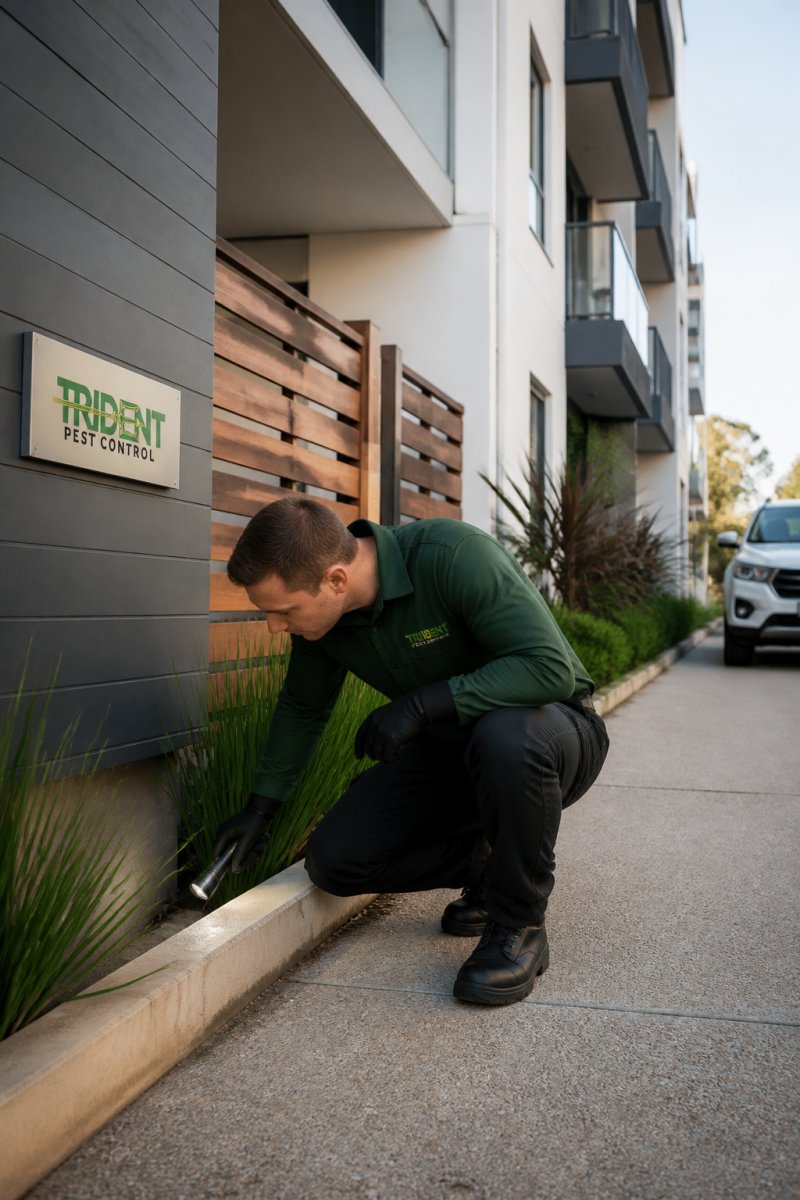
Strata Pest Control Responsibilities in Victoria
Determining who pays for ant control in a strata building often sparks conflict. The general rule in Victoria is that common property, including exterior walls, gardens, and shared lobbies, falls under the body corporate’s responsibility. Infestations originating inside a specific lot owner’s unit are typically that owner’s responsibility.
The reality is rarely that clean. Ants do not respect ownership boundaries, and disputes frequently arise about whether an infestation is a common property issue or an individual problem. StrataData’s guidance on strata pest control disputes notes that conflict commonly occurs between the body corporate and individual owners over exactly this question.
For this reason, strata pest control responsibilities Victoria should be documented in the owners corporation rules before an infestation occurs. A clear policy prevents delays, and delays matter. When body corporate management postpones necessary treatments, infestations in common areas escalate and spread into individual units, making the eventual fix more expensive and disruptive.
Common Ant Species in Melbourne Strata Buildings
Melbourne’s climate supports several ant species that thrive in apartment settings. Black house ants are the most frequent offenders, trailing along kitchen benches and skirting boards in search of sweet foods. Coastal brown ants prefer protein sources and often nest in wall cavities, making them harder to reach with surface sprays alone.
Argentine ants deserve particular attention in strata settings. Their supercolonies contain multiple queens and can stretch across entire suburbs, which means a building-wide infestation may connect to nests several properties away. Treating only the visible ants guarantees recurrence because the colony itself remains untouched.
Identifying the species matters because treatment strategies differ. A professional inspection should determine which species is present and where the colony is nesting before any product is applied. This is the difference between a temporary fix and long-term resolution.
Commercial Ant Control Methods That Work
Surface spraying alone fails in strata environments. Commercial ant control methods that deliver lasting results combine several approaches, starting with gel baits placed at active foraging trails. Baits are carried back to the colony, poisoning the queens and breaking the reproductive cycle rather than just killing visible workers.
Dust treatments in wall cavities and sub-floor areas target nesting sites directly. For exterior perimeters, residual barrier treatments prevent ants from entering the building in the first place. Each method has a specific role, and the most effective programs use them in combination based on the species identified and the building’s construction.
A common mistake is relying solely on over-the-counter surface sprays. These kill visible ants but leave the colony intact, guaranteeing the infestation returns within weeks. Professional-grade baits and targeted applications are required to eliminate the nest itself.
The shift toward integrated pest management (IPM) reflects this understanding. Rentokil’s 2026 guidance on strata pest management highlights how IPM strategies for strata properties focus on protecting assets from diverse pests including ants, rodents, and termites through coordinated, preventative programs rather than reactive treatments.
Preventative Pest Control for Apartment Buildings
The most cost-effective approach to strata ant control is stopping infestations before they start. Preventative pest control for apartment buildings involves regular scheduled inspections of common areas, sealing entry points around pipes and utility penetrations, and maintaining clean waste management areas that attract foraging ants.
Prevention programs also include monitoring. Technicians check known problem zones, identify new entry routes, and apply targeted treatments before ant activity becomes visible to residents. This proactive model costs less than emergency callouts and avoids the tenant complaints that accompany visible infestations.
Schedule preventative treatments quarterly rather than annually. Melbourne’s climate supports year-round ant activity, and a three-month cycle catches new colony establishment before it becomes a building-wide problem.
For commercial properties, structured pest management programs deliver measurable compliance and prevention outcomes. Case studies from Genera Pest Management’s commercial case studies demonstrate that implementing a structured program improves compliance monitoring and achieves long-term pest prevention results that reactive treatments cannot match.
Cost of Strata Pest Control in Melbourne
The cost of strata pest control Melbourne varies significantly based on building size, infestation severity, and the number of units requiring treatment. A single-unit treatment is relatively inexpensive, but building-wide programs involving multiple visits, baiting stations, and follow-up inspections cost considerably more.
Rather than quoting fixed prices, reputable providers assess the property first. Factors influencing cost include the number of storeys, the extent of the infestation, the ant species involved, and whether preventative maintenance is included. Owners corporations should obtain itemised quotes that specify what is covered, including follow-up visits if the initial treatment does not fully resolve the issue.
The cheapest quote is rarely the most cost-effective. A thorough treatment that eliminates the colony costs more upfront but prevents the repeated callouts that accompany incomplete surface treatments.
Choosing a Commercial Ant Control Provider
Selecting the right provider for commercial ant control for strata properties Melbourne requires checking more than price. Confirm the company is licensed and insured for commercial work in Victoria, and ask whether technicians have specific experience with multi-unit buildings. Strata work demands coordination with building managers and access arrangements across multiple units, which residential technicians may not handle efficiently.
Look for providers offering fixed, transparent pricing with no hidden charges. Ask what happens if ants return within a set period after treatment, because a confident provider stands behind their work with follow-up visits. Also verify that treatments are safe for children and pets, particularly in buildings with families and animals.
For owners corporations seeking commercial ant control near me in Werribee and surrounding areas, local expertise matters. A provider familiar with Melbourne’s building styles and ant species can identify problem points faster than a generalist. Trident Pest Control’s licensed technicians deliver commercial ant control for strata properties across Western Melbourne, combining fixed pricing, same-day service options, and treatments safe for families and pets.
Conclusion
Strata ant control fails when it treats symptoms rather than the colony. Buildings need coordinated strategies, clear responsibility agreements, and providers who understand multi-unit environments.
Managing a strata property comes with enough challenges without recurring ant infestations adding to the list. Trident Pest Control brings licensed, insured technicians and fixed, transparent pricing to commercial ant control for strata properties Melbourne. Our team handles everything from initial inspections to preventative maintenance programs, using treatments that are safe for kids and pets across Werribee, Geelong, and surrounding areas. Get your free quote today and protect your building from the colony, not just the ants you can see.
Frequently Asked Questions
Who is responsible for pest control in a strata property in Victoria?
Under Victorian law, the owners corporation must manage and maintain common property, which includes pest control for shared areas like hallways, gardens, and building exteriors. Individual lot owners are responsible for infestations within their own unit, unless the problem originates from common property. Disputes often arise, so check your strata’s rules and consult your building manager to clarify who arranges the treatment.
How do you get rid of ants in a large strata complex?
A commercial ant control treatment begins with a thorough inspection to locate nests and entry points across common areas. Technicians then apply gel baits, liquid treatments, or dusts in targeted locations. For large complexes, this may require coordinated access to multiple units and ongoing monitoring. A professional provider will develop a treatment plan that addresses the whole building, not just visible trails.
How often should strata properties schedule professional pest inspections?
For preventative pest control in apartment buildings, schedule professional inspections at least quarterly. High-risk properties, such as those near bushland or water, may benefit from monthly visits during peak ant season. Regular inspections help catch infestations early, prevent structural damage, and reduce the risk of infestations spreading between units.
What affects the cost of strata pest control in Melbourne?
The cost depends on factors like building size, the number of units, the severity of the infestation, and the treatment method required. A full-building commercial ant control program costs more than a single-unit service because it covers common areas and requires coordinated access. Get a fixed-price quote that outlines all included services to avoid unexpected charges.