
Table of Contents
- Identifying Your Ant Problem
- Step 1: Find Entry Points and Ant Trails
- Step 2: Remove Food Sources and Moisture
- Natural Ant Repellent Solutions You Can Make at Home
- Step 3: Seal Cracks and Create a Perimeter Defence
- Ant Prevention Tips for Homeowners
- When to Call Professional Ant Pest Control Services
- Frequently Asked Questions
Last Updated: September 4, 2026
Identifying Your Ant Problem
Effective ant control starts with identification. Different species require different approaches, and knowing whether you’re dealing with a minor nuisance or an established colony determines your treatment strategy.
Common Ant Species in Western Melbourne
The most frequent invaders across Keilor, Truganina, Point Cook, Williams Landing, and Werribee fall into three categories:
Sugar Ants (Black House Ants)
These are small (2-3 mm), dark brown to black, and move in tight, organised trails. They’re attracted to sweet foods and are the most common kitchen invader. Sugar ants nest outdoors but forage indoors year-round. They’re a nuisance rather than a structural threat, and respond well to baiting and sanitation.
Carpenter Ants
Larger (6-13 mm), usually black or reddish-black, and slower-moving than sugar ants. Unlike sugar ants, carpenter ants excavate wood to create nests, they don’t eat it, but their tunnelling can weaken structural timber over time. If you find sawdust-like debris near wooden beams, window frames, or door jambs, carpenter ants are likely present. These require professional identification and treatment because DIY methods rarely reach the main nest.
Pavement Ants and Coastal Brown Ants
Medium-sized (3-5 mm), brown or reddish, and often seen in large numbers around foundations and garden beds. Coastal brown ants are particularly aggressive and can bite. They’re more common in outer suburbs and respond to bait treatments, but large outdoor colonies may need professional management.
How to Identify What You Have
Observe the ants’ size, colour, and movement patterns. Capture a few in a clear container and examine them with a magnifying glass. Note body shape, some species have a distinct waist (petiole), others appear uniform.
Test food preference by setting out honey, cooked meat, and peanut butter separately. Sugar ants swarm honey; protein-seekers ignore sweets. This reveals which baits will work best.
Distinguish between a foraging group and an established colony. A few ants are manageable; hundreds streaming along baseboards signal a serious problem. Multiple sightings across rooms or activity persisting over a week despite cleaning indicates an established colony nearby.
Check your home’s perimeter in the early morning or late evening when ants are most active. Look for trails leading from outside entry points toward food sources. These trails often follow the same path repeatedly, that’s the pheromone scent marking the route for other worker ants. If you’re unsure of the species, photograph the ants and trails; local pest management services can often identify them from photos.
Step 1: Find Entry Points and Ant Trails
Ants don’t simply appear in your home. They follow established routes from their nest to your food sources. Finding these entry points and trails is where your treatment begins.
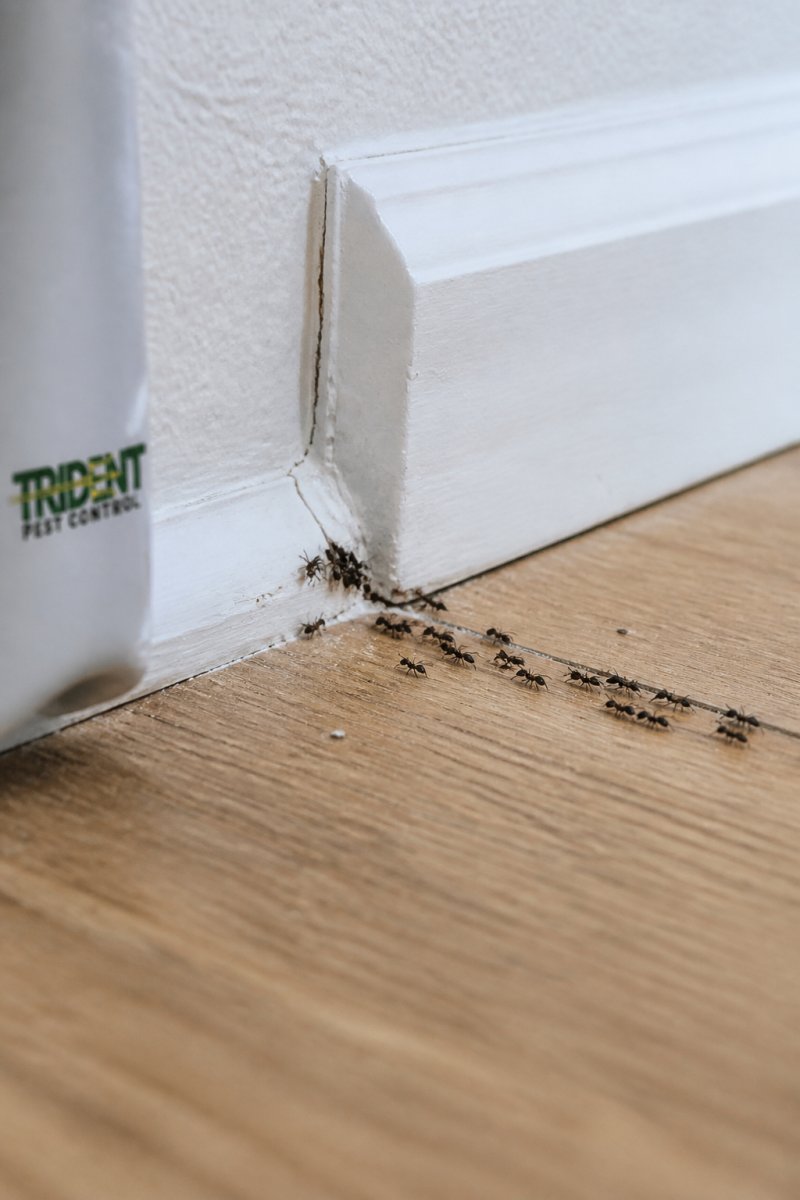
Trace ant activity through your home and follow trails backward to walls, windows, or doors. Mark these paths. Entry points typically appear where walls meet the foundation, around window frames, or in cracks in caulking.
Pay special attention to where pipes and electrical conduits enter your home, these are common entry routes. Mapping entry points prevents wasted effort on random spraying.
According to pest management guidance from PestWorld, the key is sealing entry points and eliminating the trails themselves, not just killing visible ants. The colony exists somewhere else, your home is just their foraging ground.
Step 2: Remove Food Sources and Moisture
Ants invade homes for two reasons: food and water. Remove these, and you remove their reason to stay.
Clean kitchens thoroughly and regularly. Wipe benches, sweep floors, and don’t leave dishes overnight. Store food in airtight containers. Remove pet food bowls between meals and take rubbish out daily, especially in warm weather.
Fix leaking taps, dry damp areas, and check under sinks for standing water. Address rotted wood, ants nest in damp timber. Dehumidifiers help in humid climates like Werribee and surrounding Western Melbourne areas.
Leaving food sources accessible while treating ants is like trying to stop a leak while the tap is still running. The treatment might kill some ants, but the colony will simply keep reproducing as long as resources are available.
Natural Ant Repellent Solutions You Can Make at Home
Natural solutions work best for small infestations or prevention. However, ‘natural’ doesn’t mean safe for all households, pet owners and families with young children must weigh effectiveness against toxicity risk.
Vinegar and Water Solution
Effectiveness: Low to moderate for minor infestations; ineffective against established colonies.
Pet Safety: Safe. Non-toxic to dogs, cats, and children.
How it works: White vinegar disrupts pheromone trails. Mix equal parts vinegar and water in a spray bottle and apply along ant trails, entry points, and affected areas.
Repeat every few days. This works well for minor activity and prevention but struggles against established colonies.
Borax and Sugar Bait
Effectiveness: Moderate to high for colonies; takes 5-14 days to show results.
Pet Safety: Toxic to pets and children. Requires careful placement and storage.
How it works: Mix one part borax with three parts powdered sugar and enough water to create a paste (pestworld.org). Soak cotton balls and place near ant trails and entry points.
Ants carry the poisoned bait back to the colony, spreading it through the nest. Critical safety note: Borax is toxic if ingested by pets or children. Store in clearly marked, sealed containers in high cupboards or locked drawers. Place only in areas pets and children cannot access. Skip this method if you have curious toddlers or chewing pets.
Diatomaceous Earth and Essential Oils
Effectiveness: Low to moderate as a standalone treatment; better as a barrier or preventative.
Pet Safety: Food-grade diatomaceous earth is non-toxic, but inhalation can irritate lungs. Essential oils vary, peppermint and tea tree oil can be toxic to cats and some dogs.
How it works: Sprinkle food-grade diatomaceous earth along baseboards, entry points, and ant trails. Its microscopic edges damage insect exoskeletons, causing dehydration. It’s non-toxic when ingested but loses effectiveness when wet.
Essential oils can enhance this approach. Mix drops with diatomaceous earth or spray diluted solutions around affected areas. Safety consideration: Avoid tea tree and peppermint oils if you have cats, they metabolise these poorly. Always dilute heavily (at least 10:1 water to oil ratio) and apply only where pets cannot lick or inhale.
Pet-Safe vs. Pet-Toxic Summary
| Method | Pets Safe? | Children Safe? | Effectiveness | Best For |
|---|---|---|---|---|
| Vinegar spray | Yes | Yes | Minor infestations | Prevention, small problems |
| Borax bait | No (toxic) | No (toxic) | Colonies | Homes without pets/toddlers |
| Diatomaceous earth | Yes (food-grade) | Yes | Barriers, prevention | Perimeter defence |
| Essential oils | Varies (risky for cats) | Yes (diluted) | Deterrent only | Supplementary only |
If you have pets or young children, borax-based baits are not recommended. Diatomaceous earth is safer but requires careful application to avoid inhalation. Vinegar spray is the only truly pet-safe option, though it’s slower and less effective against established colonies. If your infestation is severe and you have pets, professional pest control using [pet-safe, targeted baiting](/safe-pest-control-alternatives-homes-with-pets/) is a better choice than DIY methods.
Natural solutions work best as preventative measures or for minor infestations in pet-free or child-free homes. They’re slower than professional treatments and require consistent reapplication. If you’re dealing with a serious colony, or if household safety is a concern, these methods alone may not be sufficient. Vinegar is the safest DIY option; borax is the most effective but requires strict safety protocols.
Step 3: Seal Cracks and Create a Perimeter Defence
After removing food sources and disrupting trails, seal entry points to prevent new ants from entering.
Use caulk to seal cracks around windows, doors, and baseboards. Pay special attention to utility entry points. Weatherstripping around doors adds protection. These measures are especially important in Keilor, Truganina, and Point Cook where seasonal temperature changes expand and contract building materials.
Apply residual treatment strategically around your home’s foundation and entry points to establish a protective barrier new foragers encounter before reaching your home.
Ant Prevention Tips for Homeowners
Prevention is far more effective than treatment. Once ants establish a colony near your home, removing them becomes significantly harder.
Maintain consistent sanitation year-round. Store food properly, take rubbish out regularly, and fix moisture problems immediately. Inspect your home’s exterior quarterly for cracks or gaps. Trim vegetation away from walls, branches create bridges for ants.
Remove fallen fruit, avoid overwatering, and don’t create damp mulch piles against your foundation, these attract ants and encourage nesting nearby.
Check entry points monthly, especially during warmer months. Early detection catches smaller infestations that respond to simple interventions.
When to Call Professional Ant Pest Control Services
DIY methods work for minor infestations and prevention. They fail when you’re dealing with established colonies, recurring problems, or species that don’t respond to home treatments.
Signs You Need Professional Help
Call a professional if ants return within weeks of treatment or appear in multiple rooms at different times of day, these indicate an established colony your efforts haven’t addressed.
Carpenter ants and some species require professional identification and treatment. Allergic reactions to bites or stings also warrant professional help.
Recurring problems across seasons suggest professional assessment. What appears simple may indicate structural issues, moisture problems, or missed entry points that professionals can identify.
Why Professional Treatment Works Differently
Professional technicians use non-repellent insecticides and baits designed to reach colonies. Ants pick up treatment and carry it back to the colony, spreading it through the entire nest, unlike consumer sprays that create avoidable barriers.
Trident Pest Control uses proven methods tailored to your specific situation. Our licensed technicians identify entry points, assess moisture problems, and recommend structural solutions you might have missed. We apply treatments strategically rather than broadly, minimising exposure while maximising effectiveness.
Professional treatment reaches the queen and brood, worker ants are replaceable. Professional baiting systems eliminate the colony; surface sprays rarely do.
[Professional pest control](/pest-exterminator-melbourne/) is essential if you’ve tried DIY methods without success, if ants keep returning, or if you have children and pets and want guaranteed safe treatment. Residents in Williams Landing, Werribee, and surrounding Western Melbourne areas benefit from local expertise that understands regional ant species and seasonal patterns.
Getting rid of ants requires understanding their behaviour, eliminating what attracts them, and blocking their access to your home. DIY methods work for prevention and minor infestations, but established colonies need professional intervention. Recent pest management guidance emphasises that combining sanitation, sealing, and appropriate treatment delivers the best results. If your ant problem persists after implementing these steps, Trident Pest Control provides professional assessment and treatment designed specifically for homes and businesses across Western Melbourne. Our licensed technicians identify the root cause and deliver solutions that work, no hidden costs, just reliable protection for your family and property.
Frequently Asked Questions
What gets rid of ants immediately?
Contact sprays kill ants on sight, but they don’t eliminate the colony, so the infestation often returns. For immediate relief combined with lasting results, use ant baits alongside spraying entry points and sealing cracks. Boiling water poured directly on visible nests outdoors also works instantly, though it won’t prevent new colonies from forming. The most effective immediate approach combines spraying with baiting to target the queen and colony.
How can I prevent ants from returning to my property?
Prevention requires three steps: eliminate food sources by cleaning surfaces and storing food in sealed containers, remove moisture by fixing leaks and damp spots, and seal entry points with caulk or weatherstripping. Inspect your home’s exterior regularly, especially around foundations and windows. Industry guidance emphasises that sealing entry points and maintaining sanitation are more effective long-term than sprays alone. If ants return despite these steps, a professional pest control service can identify species-specific vulnerabilities and apply residual treatments that prevent re-entry.
Are there natural remedies to keep ants away from my kitchen?
Yes. White vinegar mixed with water (1:1 ratio) disrupts pheromone trails and deters ants from returning to the same routes. Borax mixed with sugar and water creates an effective bait that ants carry back to the colony. Diatomaceous earth (food-grade) sprinkled along baseboards and entry points is safe around children and pets. Essential oils like peppermint and cinnamon act as deterrents. However, natural remedies work best for small infestations; larger colonies require baiting or professional treatment to reach the queen.
When should I call professional pest control for an ant infestation?
Call a professional if DIY methods haven’t resolved the problem after two weeks, if ants return repeatedly despite treatment, or if you suspect a carpenter ant or other species that damages timber. Professional technicians can identify the species, locate the nest, and apply non-repellent insecticides and baits that ants don’t avoid. This is especially important if you have young children or pets, as professionals use kid and pet-safe methods and know which treatments are appropriate for your home’s situation.
This article was written using GrandRanker