
Table of Contents
- Why Spiders Keep Coming Back to Your Home
- Common House Spiders in Victoria: What You’re Dealing With
- 1. Seal Cracks and Gaps Around Your Home
- 2. Install and Maintain Window and Door Screens
- 3. Declutter Storage Areas and Garages
- 4. Clean Regularly to Remove Webs and Egg Sacs
- 5. Reduce Outdoor Harbourage Around Your Perimeter
- 6. Use Natural Deterrents as a Supporting Measure
- When DIY Isn’t Enough: Getting Professional Help
- Frequently Asked Questions
Last Updated: September 10, 2026
Why Spiders Keep Coming Back to Your Home
Spiders don’t invade your home because it’s dirty. They come in because it offers exactly what they need: shelter, moisture, and a steady supply of insects to eat. According to University of Kentucky Entomology Department’s guide to eliminating spiders, spiders prefer quiet, undisturbed areas such as closets, storage boxes, and corners. That’s why the same spots keep producing webs no matter how often you sweep them away.
This guide from Trident Pest Control walks through seven practical ways to prevent spiders in your home, from sealing entry points to reducing the insect populations that attract them in the first place.
If you’re in Werribee or anywhere across Western Melbourne and want the job handled properly, professional spider control removes the guesswork. But the habits below will make a real difference on their own.
Common House Spiders in Victoria: What You’re Dealing With
Most household spiders in Victoria are harmless, but a few species are worth knowing by name. Huntsmans are large, fast, and mostly harmless despite their reputation. Black house spiders build messy funnel webs in corners and window frames. Redbacks are the one to take seriously, favouring dry, sheltered spots like outdoor furniture, letterboxes, and shed corners.
Spiders That Matter Most in Werribee and Surrounds
Werribee’s mix of new estates, established gardens, and open grassland creates ideal habitat for ground-dwelling and web-building spiders alike. Redbacks turn up regularly in garages and under pot plants. If you’re searching for spider control near me in Werribee, the species you’re dealing with determines the treatment, which is why identification matters before you spray anything.
1. Seal Cracks and Gaps Around Your Home
Sealing gaps is the single most effective step you can take, because physical exclusion beats every scent-based deterrent on the market. Walk your exterior walls and look for gaps around pipes, cables, vents, and skirting boards. A flexible gap filler such as Selleys No More Gaps handles most of these spots and takes an afternoon to apply.
Pay attention to:
- Gaps where utility cables and pipes enter the wall
- Weep holes and brickwork cracks
- Worn weather stripping around doors
- Gaps under eaves and fascia boards
Spiders enter through gaps as thin as a few millimetres. Run a bead of sealant around every cable entry point, not just the obvious cracks. It’s the cheapest prevention work you’ll ever do.
2. Install and Maintain Window and Door Screens
Fine mesh screens keep spiders out while letting air through, which matters in a climate where you want windows open for most of the year. Check existing screens for tears and sagging, and replace damaged mesh before spider season peaks.
Bunnings stocks window fly screen mesh in fibreglass and aluminium, and it’s a straightforward DIY job for standard frames. The catch most people miss: screens only work if the frame seals properly against the wall. A screen with a gap around the edge is an open door.
3. Declutter Storage Areas and Garages
Clutter is spider habitat. Boxes stacked against walls, untouched for months, are exactly the quiet, undisturbed spaces spiders seek out. Clear storage areas and garages and you remove the shelter they’re relying on. maintaining a clean home.
Airtight plastic storage tubs solve most of this. They protect your belongings and eliminate the dark gaps between cardboard boxes where webs take hold. Stack them off the floor where possible, and keep a clear gap between stored items and the wall.
4. Clean Regularly to Remove Webs and Egg Sacs
Regular cleaning disrupts the spider lifecycle, because removing webs and egg sacs stops the next generation before it hatches. A long-handled cobweb broom reaches ceiling corners, light fittings, and window frames without a ladder. Sweep these areas fortnightly and you’ll notice far fewer spiders settling in.
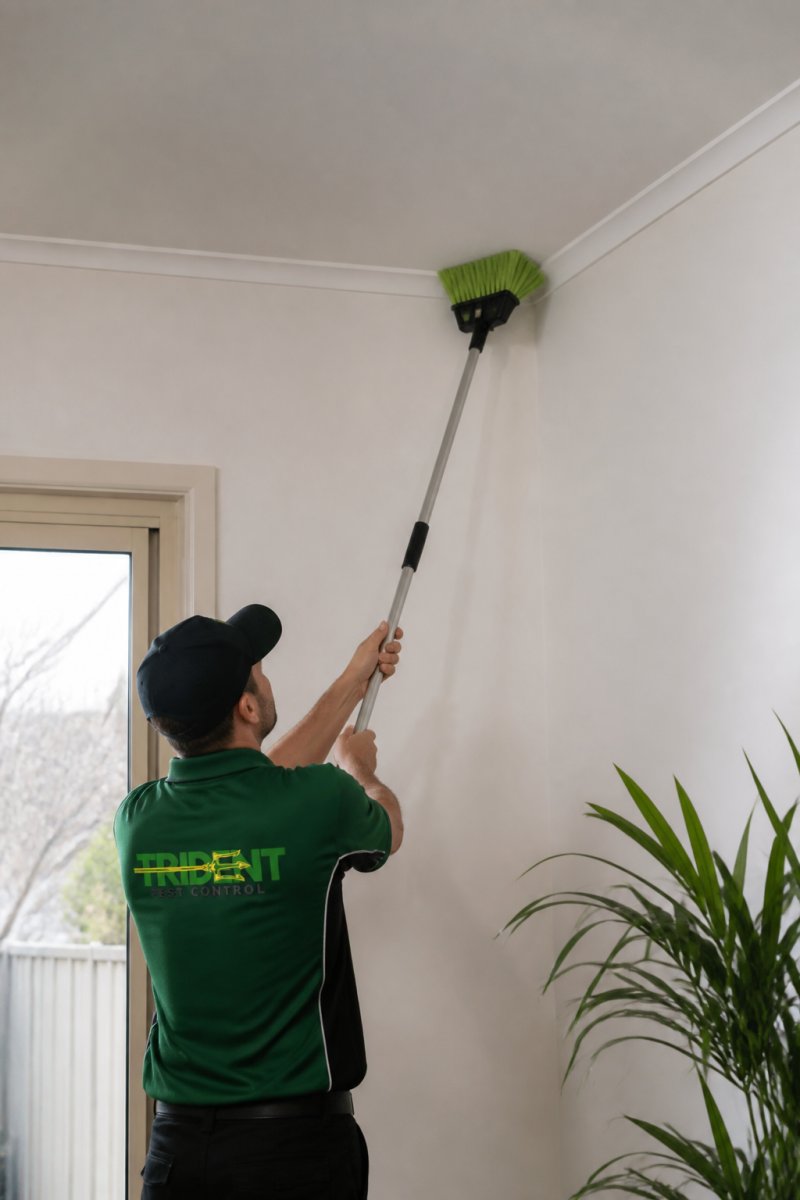
Vacuum skirting boards, behind furniture, and under beds. These are the spots where egg sacs hide, and each one you remove is dozens of spiders that never appear.
Never sweep down a redback web with bare hands. Redbacks build in dry, sheltered corners and their bite requires medical attention. Check the area first, and wear gloves.
5. Reduce Outdoor Harbourage Around Your Perimeter
Spiders live outside your home before they find a way in, so clearing the perimeter removes the staging ground. Rake up leaf litter, move firewood away from walls, and keep garden beds trimmed back from the house.
A garden rake and a few hours of work handles most of it. Focus on:
- Firewood stacks against the house
- Leaf litter in gutters and against foundations
- Overgrown shrubs touching exterior walls
- Debris under decks and pergolas
The goal is a dry, clear band around your home. Spiders lose their shelter and their route indoors.
6. Use Natural Deterrents as a Supporting Measure
Natural deterrents help, but they’re a supporting measure, not a solution. Essential oils like peppermint and tea tree are popular for a reason, and PEST UK’s overview of natural repellent trends notes growing reliance on these oils around entry points. The University of Kentucky Entomology Department is clear, though: physical exclusion and sanitation outperform scent-based deterrents.
If you want to try them, mix a few drops of tea tree or peppermint oil with water in a spray bottle and apply along window sills and door frames. Reapply weekly, because the scent fades fast.
| Method | Effort | Effectiveness | Best Used For |
|---|---|---|---|
| Sealing gaps | Medium | High | Permanent exclusion |
| Window screens | Medium | High | Windows and vents |
| Decluttering | Medium | High | Garages, storage areas |
| Regular cleaning | Low | Medium | Ongoing web removal |
| Perimeter clearing | High | Medium | Outdoor harbourage |
| Natural deterrents | Low | Low | Light reinforcement |
| Professional treatment | Low | High | Active infestations |
If you only do one thing, seal the gaps. It’s the highest-impact step on this list, and it costs less than a single pest control visit.
When DIY Isn’t Enough: Getting Professional Help
DIY prevention works well for keeping spiders out. It works far less well once you have an established infestation, particularly with redbacks. That’s where professional spider control in Werribee earns its place.
Trident Pest Control provides licensed and insured technicians across Werribee, Melbourne, and Geelong, with kids and pet-safe treatments and fixed pricing with no hidden charges. Same-day service is available when you’re dealing with an active problem.
Frequently Asked Questions
What is the best natural spider repellent for Australian homes?
Natural options like peppermint, tea tree, and citrus oils are popular for deterring spiders around entry points. However, research from the University of Kentucky Entomology Department shows that physical exclusion and sanitation are significantly more effective than scent-based deterrents. Use natural oils as a supporting measure alongside sealing gaps and regular cleaning.
Why do I have so many spiders in my house in Melbourne?
Spiders thrive in quiet, undisturbed areas such as closets, storage boxes, and corners, according to the University of Kentucky Entomology Department. In Melbourne and surrounding areas like Werribee, homes with clutter, unsealed gaps, and outdoor vegetation close to the building provide ideal harbourage. Reducing these conditions is the most reliable way to lower spider numbers.
Do peppermint oil sprays actually stop spiders?
Peppermint oil can deter spiders temporarily, but its effectiveness varies based on concentration and how often you reapply it. The scientific consensus, including research from the University of Kentucky, highlights that sealing cracks and improving sanitation are more effective long-term solutions. Use peppermint oil as part of a broader prevention plan, not as a standalone fix.
How do I stop spiders from building webs on my eaves?
Regularly remove webs and egg sacs from eaves using a long-handled cobweb broom. Then reduce outdoor harbourage by clearing leaves, firewood, and vegetation away from the house perimeter. For persistent issues on high eaves, professional spider control in Werribee can treat entry points and resting sites that are hard to reach safely.
How often should I have my home professionally treated for spiders?
Most homes benefit from professional spider treatment once or twice a year, depending on local spider pressure and the property’s surroundings. If you’ve had repeated infestations, a technician may recommend more frequent visits. Trident Pest Control offers fixed, transparent pricing and can advise on a schedule after inspecting your home.
Prevention takes consistency, and most households fall behind somewhere between sealing gaps and clearing the perimeter. If you’d rather not spend your weekends chasing webs, Trident Pest Control offers licensed technicians, kid and pet-safe treatments, and fixed pricing with no hidden charges across Werribee, Melbourne, and Geelong. Get your free quote from Trident Pest Control and keep spiders out for good.