Table of Contents
- Why Regular Pest Management Beats One-Off Treatments
- Benefit 1: Fewer Infestations, Fewer Emergency Call-Outs
- Benefit 2: A Healthier Home for Your Family
- Benefit 3: Safe Pest Control for Pets and Children
- Benefit 4: Protecting Your Property and Your Bond
- Benefit 5: Knowing How Often to Get Pest Control
- Benefit 6: Staying Ahead of Common Household Pests in Western Melbourne
- Your Pest Treatment Preparation Checklist
- Frequently Asked Questions
Last Updated: October 6, 2026
Why Regular Pest Management Beats One-Off Treatments
Most homeowners call a pest controller when they already have a problem. That’s the expensive way to do it.
Regular residential pest management works differently. It’s a planned approach to keeping pests out of your home all year, rather than reacting every time something crawls across the kitchen floor. The goal isn’t wiping out every insect on the property. As NC State Extension’s IPM handbook explains, integrated pest management focuses on monitoring and managing pest levels instead of chasing total elimination.
At Trident Pest Control, we see the difference every week across Werribee and the wider western suburbs. Homes on a set treatment schedule deal with fewer emergencies, less damage, and lower stress.
The cost of waiting for an infestation
A single ant problem is annoying. A termite problem is a different story.
By the time pests are visible, they’ve usually been there a while. Cockroaches multiply fast. Rodents chew through wiring. Termites eat timber quietly for months before you notice.
Emergency call-outs cost more than routine visits. They also come with repair bills on top. A planned schedule spreads the work across the year and catches problems while they’re small.
Regular pest management is cheaper than emergency pest control. You pay for prevention on a schedule instead of paying premium rates after damage is done.
Benefit 1: Fewer Infestations, Fewer Emergency Call-Outs
The main benefit of a regular schedule is simple: pests don’t get a chance to settle in.
A technician treats entry points, nesting spots, and problem areas before pests build up. When you book ongoing visits, you also get early warning signs. Small issues get handled at the routine visit instead of becoming a weekend emergency.
Here’s what changes with a set schedule:
- Entry points stay sealed and treated
- Activity gets spotted before it becomes an infestation
- You stop paying premium rates for after-hours call-outs
- Your technician learns your home’s specific problem areas
That last point matters more than people realise. Every property has weak spots. Once your technician knows yours, each visit gets more targeted.
Benefit 2: A Healthier Home for Your Family
Pests carry real health risks, and they don’t announce themselves.
Cockroaches spread bacteria across food surfaces. Rodents contaminate stored food and leave droppings that trigger allergies. Dust from cockroach waste is a known asthma trigger, particularly for children (Checking your browser).
Regular treatment keeps these populations down before they reach your kitchen. It also reduces the allergens that build up in hidden spaces like wall cavities and under appliances.
For families in Truganina and nearby suburbs, this matters. Newer housing estates sit close to open land, which means more wildlife and more pest pressure. A standing treatment plan keeps that pressure off your home.
Benefit 3: Safe Pest Control for Pets and Children
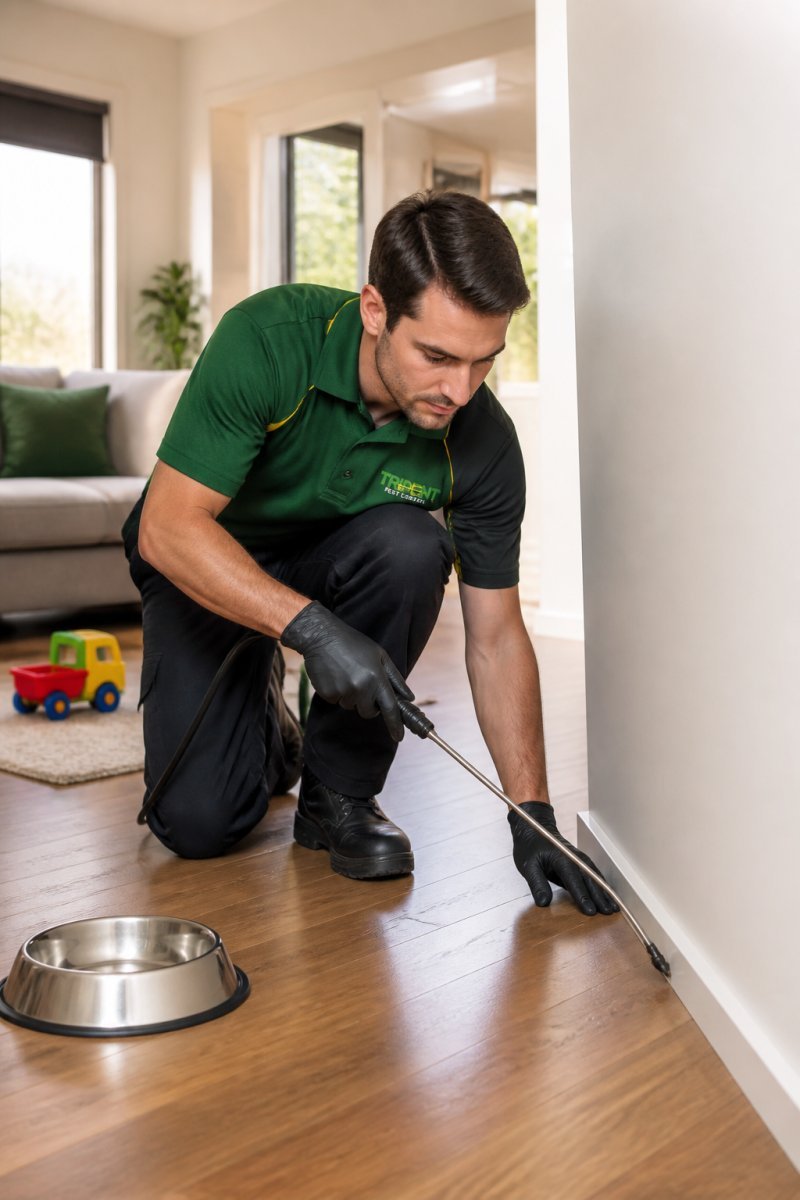
Modern pest control can be safe for pets and children when it’s done properly. The key is the product, the application method, and the advice you get afterwards.
We use kids and pet-safe treatments as standard. That doesn’t mean zero precautions. It means the products are chosen and applied so your household can get back to normal quickly.
What to ask before any treatment
Before you book anyone, ask these questions:
- What products will you use, and are they safe around pets and kids?
- How long should we stay out of treated areas?
- Do we need to cover food, fish tanks, or pet bowls?
- Are your technicians licensed and insured?
A good operator answers all four without hesitation. If they can’t, walk away.
Never let an unlicensed operator treat your home. You can be left liable if something goes wrong, and there’s no comeback if the treatment fails.
Benefit 4: Protecting Your Property and Your Bond
Pests damage more than your peace of mind. They damage the building itself.
Rodents chew wiring and insulation. Termites attack timber framing. Cockroaches and fleas leave stains and odours that are hard to remove. Fixing that damage costs far more than prevention ever would.
For renters, this connects directly to your bond. Most leases require you to return the property in the same condition, and end of lease pest control is often a condition of getting your bond back. A flea treatment is commonly required if you’ve had pets.
Landlords get the same benefit from the other side. A property on a maintenance schedule holds its value and avoids surprise repair bills between tenants.
Benefit 5: Knowing How Often to Get Pest Control
Most homes do well on a quarterly schedule, with extra visits for specific problems. How often to get pest control depends on your property, your pest history, and where you live.
Here’s a simple guide:
| Situation | Recommended frequency | Why |
|---|---|---|
| Standard family home, no history | Every 3 months | Keeps barriers active year-round |
| Home with pets or young kids | Every 3 months | Fleas and ticks need closer monitoring |
| Bushland or new estate nearby | Every 2-3 months | Higher wildlife and rodent pressure |
| Recent infestation | Monthly until clear, then quarterly | Breaks the breeding cycle |
| Rental, end of lease | One-off before handover | Meets lease conditions |
Seasonal timing matters too. Ants and spiders surge in warmer months. Rodents move indoors when it cools. A quarterly plan covers both shifts without you tracking them.
Benefit 6: Staying Ahead of Common Household Pests in Western Melbourne
Western Melbourne has its own pest profile, and it changes with the seasons.
Common household pests in Western Melbourne include ants, spiders, cockroaches, rodents, and fleas. Newer estates around Truganina and Tarneit sit near grassland and waterways, which brings in rodents and spiders. Older homes closer to Werribee’s centre deal more with cockroaches and ants in wall cavities.
Local knowledge changes the treatment. A technician who works this area knows which species show up, when they peak, and where they get in.
That’s the difference between a generic spray and a plan built for your street. If you’re searching for pest control near me in Werribee, ask whether the operator actually works your area regularly. It shows in the results.
Ask your technician to note entry points and problem zones on each visit. Over a year, that gives you a map of your home’s weak spots, and treatment gets sharper every time.
Your Pest Treatment Preparation Checklist
A little prep before your technician arrives makes the visit faster and more effective.
- Clear bench tops, floors, and skirting boards in treated areas
- Move pet bowls, toys, and bedding out of the way
- Cover or move fish tanks and turn off their pumps
- Store food in sealed containers or the fridge
- Wash and put away pet bedding if fleas are being treated
- Note any pest activity you’ve seen and where
- Confirm re-entry time with your technician before they start
- Keep kids and pets out of treated rooms until it’s safe
Most treatments take under an hour for a standard home. Re-entry times vary by product, so always ask rather than guess.
Getting this right comes down to one choice: react to pests, or stay ahead of them. Regular residential pest management keeps your home protected, your family safe, and your repair bills low.
Trident Pest Control handles routine and emergency pest control across Werribee, Melbourne, and Geelong. Our licensed and insured technicians use kids and pet-safe treatments, with fixed pricing and no hidden charges. Same-day service is available when pests won’t wait.
Get your free quote and lock in a schedule that keeps pests out for good.
Frequently Asked Questions
What are the benefits of regular pest control at home?
Regular pest management catches activity before it becomes an infestation, which reduces the need for emergency call-outs and repeated treatments. It also limits the conditions pests need to thrive, such as food, moisture and entry points. A 2024 review in PubMed Central found that integrated pest management, which relies on monitoring and managing pest levels rather than eliminating every pest, can support biodiversity and protect ecosystem services. For households, that translates to fewer surprises and steadier results.
How often should a home in Truganina have pest management?
Most homes in Truganina and the surrounding Western Melbourne suburbs do well with a treatment every 6 to 12 months, depending on the pests present, the age of the property and nearby construction or green corridors. Homes with young children, pets or a history of infestations may need closer monitoring. Ask your technician how often to get pest control for your specific property rather than following a fixed schedule, because the right interval changes with the season and the pest.
Is professional pest management safe for children and pets?
Safe pest control for pets and children starts with clear communication. Tell your technician about toddlers, dogs, cats and any allergies before the visit, and ask which products will be used and where. Follow the re-entry time they give you, which is usually a few hours for internal treatments, and keep pets away from treated surfaces until dry.
What should I do before a residential pest treatment?
A short pest treatment preparation checklist makes the visit faster and more effective. Clear benchtops and floors in the kitchen and bathrooms, move pet bowls and toys, and pull furniture slightly away from skirting boards. Vacuum and mop beforehand but leave the final clean until after treatment. Secure pets in a separate room or outside, and arrange for someone to be home if the technician needs access to the roof void or subfloor. Share any known pest hotspots so they can be targeted directly.