Last Updated: November 2, 2026
Quick Summary
To identify spider bites in Werribee, start with the circumstances rather than the mark: note whether you felt a sharp sting, were reaching under furniture or moving firewood, and whether a spider was visible. A bite mark alone cannot confirm a species, so record the time, symptoms and a photo, and seek help for any emergency sign.
- Call triple zero (000) immediately if you see drooling, muscle twitching, breathing difficulty or spreading numbness.
- Call the Poisons Information Centre on 13 11 26 for severe, spreading or persistent pain, or systemic symptoms.
- For a suspected funnel-web bite, apply a pressure immobilisation bandage over the bite and up the limb.
- Wash minor bites with soap and water, then apply a cold pack wrapped in cloth for 10 to 15 minutes.
- Spiders are most active in spring and early summer, so do prevention before that window.
Table of Contents
- Start With the Circumstances, Not the Mark
- Spider Bite Symptoms Australia: What to Look For
- Spider Bite or Insect Bite: Telling Them Apart
- Spider Bite First Aid Victoria: Step by Step
- Which Spiders in Werribee Matter Most
- Spider Prevention Werribee: Keeping Them Out
- Book a Spider Inspection for Your Home
- Frequently Asked Questions
Start With the Circumstances, Not the Mark
Most people get this backwards.
Here’s the uncomfortable truth: a skin mark alone rarely proves a spider did it.
So start with circumstance, the details that actually matter.
Ask yourself these questions:
- Did you feel a sharp sting or pinprick at the time?
- Were you reaching under furniture, moving firewood, or clearing the garden shed?
- Was there a spider visible, and can you describe it?
- Did the mark appear within minutes, or was it there hours later?
- Are there two tiny puncture marks close together?
A single painful sting while moving stored items points one way. An itchy cluster of bumps that appears overnight points somewhere else entirely.
The 7 methods below walk through each clue in turn. Get the circumstance right first, and the rest falls into place.
Spider Bite Symptoms Australia: What to Look For
Spider bite symptoms in Australia usually begin with localised pain, redness and swelling around a single point. Most reactions stay minor and settle within a day or two. The difficulty is that the same early signs can belong to a harmless garden spider or to something medically significant, so the useful skill is not memorising a symptom list but reading the direction of travel.
The First Hour: What Is Normal
Watch for these in the first 60 minutes:
- A sharp stinging sensation at the moment of the bite
- A red lump or raised welt forming quickly
- Localised pain that fades to a dull ache
- Itching and mild swelling confined to a small area
- A visible puncture wound or tiny blister
Most minor bites peak within a few hours and then ease. The mark may stay itchy for several days. A bite that is calmer at hour three than at hour one is behaving as expected. One that is worse at hour three, or that is spreading, is not.
A Simple Decision Pathway
Use this sequence rather than trying to name the spider from the mark.
Step 1, Is there any emergency sign? If yes, call triple zero (000) immediately and start first aid.
Step 3, Is it mild local pain, redness and itching only, with no systemic symptoms? Basic first aid and monitoring at home is usually appropriate.
Step 4, Is the mark worsening after 24 hours, or showing signs of infection such as increasing warmth, pus or fever? See a GP.
Emergency Warning Signs
Call triple zero immediately if you observe any of the following:
- Drooling or excessive saliva
- Muscle twitching or spasms
- Difficulty breathing
- Confusion or unusual drowsiness
- Numbness spreading around the mouth
These suggest a bite from a medically significant spider, and time matters enormously. In Victoria, suspected funnel-web bites are treated as a medical emergency from the outset.
What to Record While You Monitor
A short written record helps clinicians far more than a description from memory. Note the time of the bite, the time each symptom appeared, whether pain or swelling is spreading, any first aid applied and when, and a photo of the mark taken in consistent light.
Watch out: do not assume a lack of immediate pain rules out a significant bite, and do not wait for a full set of symptoms before seeking help.
Spider Bite or Insect Bite: Telling Them Apart
A spider bite or insect bite can look almost identical, and that’s the honest answer most guides dodge.
Use the pattern, not just the mark:
| Feature | Spider Bite | Flea Bite | Bed Bug Bite |
|---|---|---|---|
| Typical location | Anywhere exposed | Ankles and lower legs | Exposed skin during sleep |
| Pattern | Single mark | Clusters of small bumps | Lines or groups of three |
| Sensation | Sharp sting, then ache | Intense itch | Itch, often delayed |
| Timing | Noticed immediately | Noticed hours later | Noticed on waking |
| Visible sign | Red lump, possible puncture | Tiny red dots | Raised itchy bumps |
Flea bites usually cluster around the ankles and come with intense itching. Bed bug bites often appear in lines on skin exposed during sleep.
One rule holds firm. A bite mark alone cannot confirm a species. Anyone who tells you otherwise is guessing.
Spider Bite First Aid Victoria: Step by Step
First aid for a suspected spider bite in Victoria follows a simple order. Keep the person calm, keep them still, and call for help if symptoms are serious.
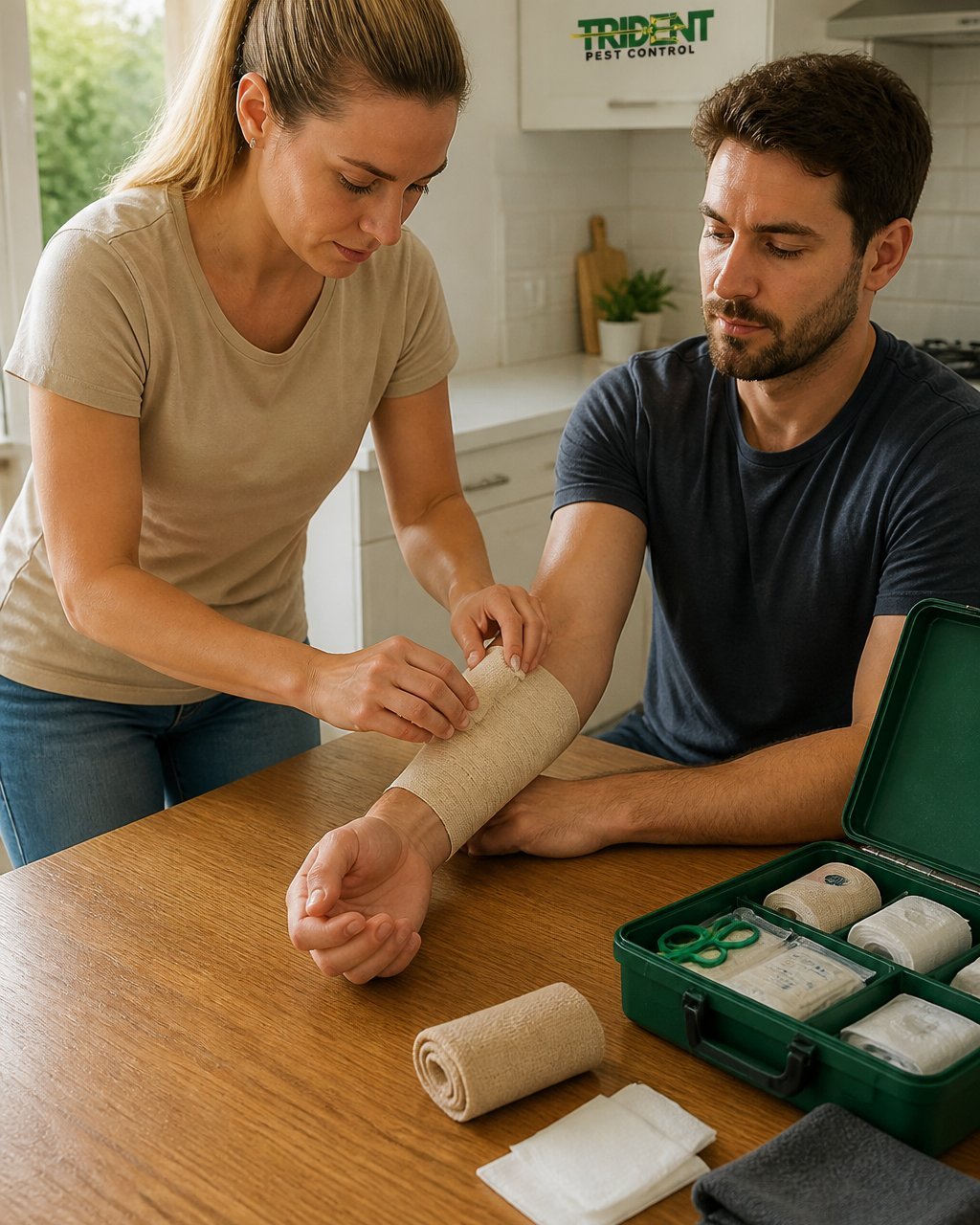
Here is the sequence we’d follow:
- Move away from the area so no one else is bitten.
- Keep the person still and calm. Movement speeds up venom spread.
- Call triple zero for any emergency symptom, especially severe pain, sweating or breathing trouble.
- For a suspected funnel-web bite, apply a pressure immobilisation bandage over the bite and up the limb, firm but not tight enough to stop blood flow.
- Keep the limb still and the person lying down.
- For minor bites, wash with soap and water, then apply a cold pack wrapped in cloth for 10 to 15 minutes.
- Note the time of the bite and record any changes in symptoms.
- Bring the spider for identification only if it is already dead and can be handled safely. Never risk a second bite.
Watch out: don’t cut, suck or apply a tight tourniquet to a bite. These old methods cause harm and delay proper care. If you’re wondering about home remedies, our comparison of natural alternatives to spider sprays covers what works.
Which Spiders in Werribee Matter Most
Werribee sits where new housing estates meet grassland, river corridors and established gardens, and that mix produces a fairly predictable cast of spiders around homes, sheds and outdoor areas. Most are harmless. A few warrant caution. What follows is a guide to the spiders residents are most likely to encounter locally, not a claim about how common any species is. For help telling dangerous spiders apart, see our guide to identifying common Australian spiders.
The Ones Worth Knowing
- Funnel-web spider: dark, glossy and ground-dwelling, often found in damp spots under rocks, logs or dense vegetation. Aggressive when cornered. A bite is a medical emergency and pressure immobilisation first aid applies.
- Redback spider: small and black with a red stripe, favouring sheds, under outdoor furniture, letterboxes and the undersides of garden pots. Bites cause significant pain and need medical review; an antivenom is available.
- Black house spider: dark and messy-webbed, common in window corners, eaves and fence lines. Bites cause local pain and swelling but are not dangerous.
- Garden orb-weaver: large and colourful, builds big circular webs overnight between shrubs and fences. Frightening to look at, harmless to people.
- Huntsman spider: big and fast, frequently indoors on walls and ceilings. Its bite is painful but not medically significant.
A common mistake is treating every large spider as dangerous. Size means very little. The redback is small and far more significant than the huntsman.
Why the Bite Mark Rarely Identifies the Spider
A bite mark alone cannot confirm a species, and two tiny puncture marks are not reliable evidence either. Spider fangs are small, and many bites leave a single red lump indistinguishable from an insect bite. Symptoms vary between people and between spiders of the same species. Because a wound alone cannot identify its cause, comparing its signs with those that distinguish staph infections can help keep other explanations in view.
Lookalikes to Rule Out
Before assuming a spider, consider the alternatives:
- Flea bites cluster around ankles and lower legs with intense itching.
- Bed bug bites often appear in lines or groups on skin exposed during sleep.
- Mosquito bites are usually raised, itchy and appear on exposed skin after dusk.
- Ant or wasp stings produce immediate sharp pain and a central mark.
- Minor skin infections can mimic a bite mark and worsen over days.
If you wake with rows of itchy bumps, bed bugs are a more likely culprit than a spider. Our guide on bed bugs vs fleas compares the patterns side by side.
If the Spider Is Still Available
Identification is far easier from the spider than from the bite. If it is already dead and can be handled safely with a container or tool, keep it for a clinician or pest technician.
Watch out: do not handle a live spider for identification, and do not assume a spider is harmless because it is small or because the bite did not hurt at the time.
Spider Prevention Werribee: Keeping Them Out
Prevention comes down to removing the two things spiders need: shelter and food. Do both and the population drops.
Start here:
- Seal gaps around doors, windows and pipes with weather strips and sealant
- Clear stored items away from walls in the garage and shed
- Shake out shoes, gloves and outdoor furniture before use
- Reduce outdoor lighting that attracts insects, which draw spiders
- Vacuum corners, eaves and skirting boards regularly
Timing matters: spiders are most active in spring and early summer, so prevention done before that window works best.
Book a Spider Inspection for Your Home
If you’ve found several spiders indoors, or you’re unsure what you’re dealing with, a professional inspection takes the guesswork out. We serve Werribee and surrounding areas.
Our licensed and insured technicians can help identify the pests present and treat the affected areas using kids and pet-safe methods, with fixed pricing and same-day service available.
Ready to sort it out? Get your free quote from Trident Pest Control. You can contact us by phone or online.
Frequently Asked Questions
Can you identify a spider from a bite mark alone?
No. A bite mark or skin reaction cannot reliably identify the spider. Most spider bites are minor and cause local irritation, and lay identification from the bite is unreliable. Identification is generally made from the spider itself, not the mark. If you can safely catch the spider in a container, keep it for identification. Otherwise, describe the circumstances, timing, and symptom progression to your doctor or pest controller instead.
What are the most common spider bite symptoms in Australia?
Most bites cause localised pain, redness, swelling, and itching around the site, sometimes with a red lump or visible puncture wound. Symptoms usually stay mild and settle within a day or two. More serious reactions can include sweating, nausea, vomiting, headache, muscle weakness or twitching, drooling, difficulty breathing, and confusion. Track when each symptom started and whether it is spreading. If symptoms progress beyond the bite site, seek medical attention promptly rather than waiting to see if it settles.
What should I do if I think a spider has bitten me in Werribee?
Move away from the area, stay calm, and keep the bitten limb still. Apply a cold pack wrapped in cloth for local swelling and itching. If a funnel-web or mouse spider is suspected, apply pressure immobilisation and call 000 immediately. For other bites, monitor for symptom progression over the next few hours. Record the time of the bite, the spider’s appearance if seen, and any symptoms. If pain worsens, or you notice nausea, sweating, or muscle twitching, contact a doctor or visit an urgent care service.
How can I reduce the chance of spiders entering my home in Werribee?
Seal gaps around doors, windows, and weep holes, and fit weather strips to external doors. Clear leaf litter, woodpiles, and stored boxes away from external walls, since these are common harbourage points. Check shoes, gloves, and outdoor furniture before use. Reduce outdoor lighting that attracts insects, which in turn attract spiders. Regular pest inspections help catch activity early, especially around garages, sheds, and subfloor areas. If you keep seeing spiders indoors, a professional spider treatment targets the harbourage areas rather than just the visible webs.
The hardest part of a suspected bite is not knowing what bit you, and that uncertainty is exactly when a professional set of eyes helps. Trident Pest Control offers licensed and insured technicians, fixed pricing with no hidden charges, and treatments designed to be safe around kids and pets. Get started with Trident Pest Control and get a clear answer on what’s living in your home.
