
Last Updated: November 3, 2026
Quick Summary
The signs of pest infestation in kitchen spaces include droppings and urine stains, gnaw marks on packaging, live insects or scratching noises at night, nests, shed skins and egg casings, grease marks, foul odours and gaps around pipes and doors. Fresh droppings appearing daily or live pests seen in daylight mean an active pest infestation you should treat as urgent.
- Fresh rodent droppings are soft, dark and shiny, while old ones are hard and crumble when pressed.
- Mice squeeze through gaps the width of a pencil, so check around pipes, door frames and windows.
- Never sweep or vacuum dry droppings because dust can carry harmful bacteria and viruses.
- A monthly ten-minute inspection of pantry, sink, fridge and bin areas catches problems early.
- Call a professional when you find a nest, see live pests in daylight or smell something untraceable.
Table of Contents
- The 8 Signs of Pest Infestation in Kitchen Spaces
- Common Kitchen Pests Melbourne Households Deal With
- A Room-by-Room Kitchen Inspection Checklist
- How to Tell Pest Evidence Apart and Gauge Urgency
- Safe Cleanup and Food Handling After You Find Evidence
- When to Book a Professional Pest Inspection in Werribee
- Safe Pest Control for Kitchens: Prevention That Works
- Getting Your Free Quote from Trident Pest Control
- Frequently Asked Questions
The 8 Signs of Pest Infestation in Kitchen Spaces
Spotting the signs of pest infestation in kitchen spaces early saves you money, food and stress. The same evidence keeps turning up in kitchens during inspections. Most people miss it for months because it hides in dark corners.
Below are the eight signs we check first. Work through them in order, torch in hand.
1. Droppings and Urine Stains
Rodent droppings look like small dark grains, usually along skirting boards and behind appliances. Cockroach droppings are finer, like coffee grounds. Urine stains show as dark patches or a stale smell that lingers after cleaning.
2. Gnaw Marks and Chewed Food Packaging
Look for torn paper, chewed cardboard and small holes in cereal boxes or flour bags. Rodents chew packaging to reach food, and their teeth leave rough, splintered edges. Check the back of the pantry where boxes sit untouched.
3. Live Insects, Rodents, or Unusual Noises
A single cockroach on a benchtop usually means more behind the cupboards. Listen for scratching in walls or ceilings at night. Flies gathering in one spot often point to something dead or decaying nearby.
4. Nests and Nesting Materials
Rodents shred paper, insulation and fabric into soft nests. Check behind the fridge, inside the pantry and in the space under lower cupboards. A nest means the infestation is established, not new.
5. Shed Skins, Wings, and Egg Casings
Cockroaches leave behind shed skins and empty egg casings as they grow. You may find these in cupboard corners or under the sink. Moth wings near the pantry signal stored product pests.
6. Footprints, Tracks, and Grease Marks
Rodents follow the same routes nightly, leaving smudged grease marks along walls and skirting boards. A light dusting of flour along a suspected path will show fresh footprints overnight.
7. Foul Odours and Unusual Smells
A musty, ammonia-like smell that does not clear with cleaning is a warning sign. Rodent urine soaks into timber and insulation. Dead pests behind walls create a stronger, sharper smell.
8. Holes, Gaps, and Entry Points
Mice squeeze through gaps the width of a pencil. Check around pipes, door frames and windows. Seal what you find.
| Sign | What It Usually Means | Urgency |
|---|---|---|
| Droppings and urine stains | Active rodents or cockroaches | High |
| Gnaw marks and chewed packaging | Feeding activity, recent | High |
| Live pests or noises | Established infestation | High |
| Nests and nesting materials | Breeding population | High |
| Shed skins, wings, egg casings | Growing population | Medium |
| Footprints and grease marks | Regular movement routes | Medium |
| Foul odours | Hidden infestation or dead pest | Medium |
| Holes and gaps | Entry points in use | Fix now |
Common Kitchen Pests Melbourne Households Deal With
Cockroaches top the list in most Melbourne kitchens, especially German cockroaches around warm appliances. Rodents come next, moving indoors as the weather cools. Ants trail along benchtops after rain, and pantry moths ruin stored food quietly.
Each pest leaves different evidence. Cockroaches leave droppings and egg casings. Rodents leave gnaw marks and grease trails. Pantry moths leave webbing in flour and cereal.
A Room-by-Room Kitchen Inspection Checklist
A structured inspection beats a quick glance. Take a torch and check these areas in order:
- Pantry: open every packet, check corners and the back shelf
- Under the sink: look for droppings, damp patches and gaps around pipes
- Behind the fridge: check the compressor area for warmth-seeking pests
- Cupboards: lift shelves, check hinges and corners for casings
- Benchtops: check under appliances and along the wall edge
- Skirting boards: follow the wall line for droppings and grease marks
- Bin area: check the base and lid for maggots or flies
- Ceiling and walls: note any scratching sounds or stains
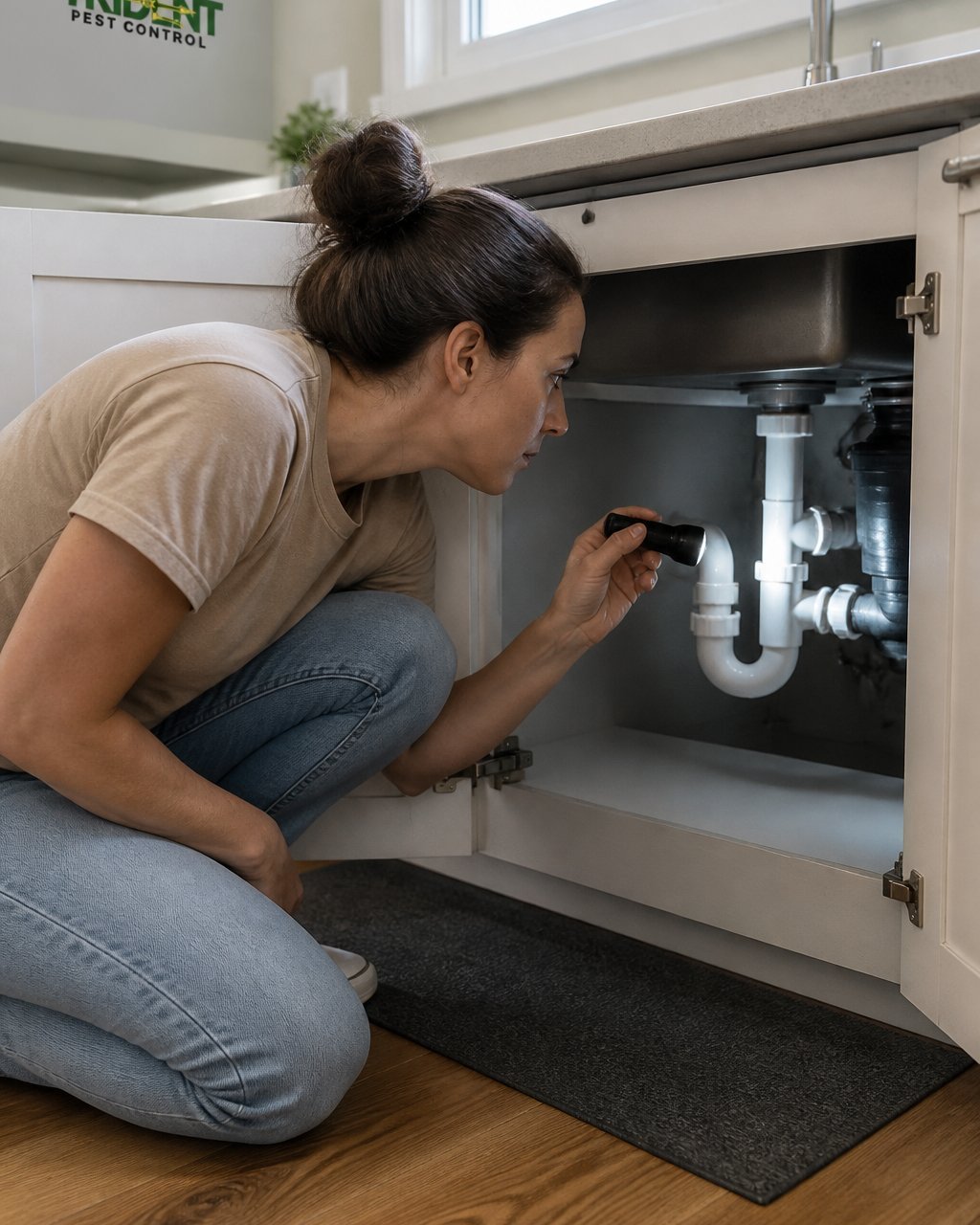
Do this monthly. It takes ten minutes and catches problems early.
How to Tell Pest Evidence Apart and Gauge Urgency
Not all evidence means the same thing. A single old dropping behind a cupboard is a very different finding from fresh droppings appearing every morning on a benchtop.
Fresh versus old evidence
- Droppings: fresh rodent droppings are soft, dark and slightly shiny; old ones are hard, dull and crumble when pressed. Cockroach droppings are finer and look like ground coffee or pepper; fresh ones smear, old ones brush away easily.
- Gnaw marks: fresh chew marks show pale, light-coloured wood or plastic underneath. Older marks darken and collect dust. Rough, splintered edges suggest recent activity.
- Grease marks: rodent fur leaves smears along skirting boards and wall edges. Marks that smear when wiped are recent; dry, dusty marks are older.
- Urine stains: fresh stains look darker and smell stronger; old stains fade but the odour can persist in timber and insulation.
- Shed skins and casings: intact, pale cockroach skins suggest recent moulting. Crushed or dusty casings are older.
Species clues
Different pests leave different signatures, and matching the evidence to the pest narrows down where to look next.
- Rodents (rats and mice): droppings along walls, gnaw marks on packaging and pipes, grease trails, scratching at night, and shredded nesting material.
- Cockroaches: fine droppings in cupboard corners and under sinks, shed skins, egg casings, and a musty, oily smell in warm spots near appliances.
- Ants: trailing lines along benchtops and skirting boards, often after rain or when food is left out.
- Pantry moths and beetles: webbing in flour and cereal, clumped grains, larvae in packets, and small moths flying near the pantry.
- Flies: clustering in one spot usually points to something decaying, often behind an appliance or in a bin base.
Three questions that set urgency
Work through these in order:
- Is there live activity right now? Live pests seen in daylight, fresh droppings appearing daily, or new gnaw marks overnight mean an active infestation. Act promptly.
- Is food being contaminated? Evidence in the pantry, on benchtops, or inside sealed containers means food safety is already compromised. Isolate and discard affected food, then treat.
- Is there a nest or breeding site? Nests, egg casings in numbers, or repeated sightings of juveniles mean a breeding population. This will not resolve on its own.
If you answer yes to any of these, treat it as urgent.
A simple evidence log
A common pattern among households that get on top of infestations quickly is keeping a short log.
Watch out: do not assume that because you have only seen one sign, the problem is small.
Safe Cleanup and Food Handling After You Find Evidence
Cleanup is not the same as treatment.
Before you start
- Put on disposable gloves and a mask.
- Keep children and pets out of the kitchen until you are finished.
- Open a window or turn on extraction for ventilation.
- Have rubbish bags ready so you are not handling contaminated material twice.
Step 1: Isolate affected food
Go through the pantry and cupboards and set aside anything with chewed packaging, droppings nearby, or visible webbing.
Step 2: Dampen before you clean
Never sweep or vacuum dry droppings. Sweeping sends fine dust into the air, and that dust can carry harmful bacteria and viruses.
Step 3: Clean surfaces in order
Work from the cleanest areas to the dirtiest so you do not spread contamination:
- Wipe benchtops, then cupboard shelves, then the floor.
- Pay attention to corners, shelf edges, hinges and the back of cupboards.
- Wash utensils and containers that may have been in contact with pests in hot soapy water.
- Disinfect food-contact surfaces after cleaning.
- Clean inside the fridge and freezer if evidence was found nearby.
Step 4: Deal with the bin and drains
Empty bins, rinse them inside and out, and check the base and lid for maggots or flies.
Step 5: Wash up and review
Wash your hands thoroughly after removing gloves. Check the area again over the next few days for fresh signs.
Watch out: disinfectant alone does not make an area safe if the source is still present.
When to Book a Professional Pest Inspection in Werribee
Call a professional when you find a nest, see live pests in daylight, or smell something you cannot trace. DIY sprays rarely reach the nest, and hidden infestations keep returning.
The National Center for Healthy Housing’s guidance on integrated pest management shows why prevention and inspection beat reactive spraying. A proper inspection finds the source, not just the symptoms.
For rodent evidence, contact Trident Pest Control for current pricing and a free quote. For urgent cases, ask about same-day service.
Safe Pest Control for Kitchens: Prevention That Works
Prevention is cheaper than treatment, every time. Our approach follows integrated pest management principles: identify the pest, remove its food and water, then seal entry points.
Start with these habits:
- Store dry food in sealed glass or heavy plastic containers
- Wipe benches and sweep floors nightly
- Fix leaking taps and pipes promptly
- Seal gaps around pipes, doors and windows
- Take bins out daily and rinse them weekly
- Check shopping bags and produce before storing
For families worried about kids and pets, ask about treatment options before booking.
Getting Your Free Quote from Trident Pest Control
Pest problems in the kitchen rarely fix themselves. The earlier you act, the simpler the treatment.
Trident Pest Control is licensed and insured, with fixed pricing and no hidden charges. We offer kid and pet-safe treatments and local coverage across Melbourne, Geelong and Werribee.
Request your free quote from Trident Pest Control today.
Frequently Asked Questions
What are the most common kitchen pests in Victoria?
The pests most often found in Victorian kitchens are cockroaches, rodents (rats and mice), ants, flies, and pantry pests such as weevils and silverfish. Cockroaches favour warm, damp spots under sinks and behind appliances, while rodents nest behind cupboards and leave droppings along baseboards. Ants follow benchtop trails to food sources, and pantry pests breed inside stored flour, rice, and cereal. Each leaves different evidence, which is why accurate identification matters before any treatment begins.
How do I know if I have a cockroach infestation in my kitchen?
Look for shed skins and egg casings in cupboard corners, droppings that resemble ground pepper along baseboards, and a musty, oily odour in closed spaces. Live cockroaches seen on benchtops during the day usually indicate a larger population hiding behind appliances and under the sink. Grease marks along wall edges and cupboard hinges are another clue. If you find several of these signs together, a professional pest inspection is the fastest way to confirm the extent of the problem.
Can a clean kitchen still get pests?
Yes. Cleaning removes food sources, but pests still enter through gaps around pipes, doors, and windows, and they nest in wall cavities and behind appliances where cleaning rarely reaches. A spotless kitchen in an older home can still harbour rodents or cockroaches if entry points remain open. Structural sealing and regular monitoring matter as much as hygiene. This is why a professional pest inspection in Werribee checks hiding places and entry points, not just visible surfaces.
What should I do if I find signs of rodents in my pantry?
Wear gloves and a mask, then throw out any chewed or contaminated food packaging without opening it. Clean shelves with hot soapy water, and avoid dry sweeping droppings, which can spread dust. Store remaining dry goods in sealed glass or heavy plastic containers, and check baseboards and wall gaps for entry points. Book a professional inspection to locate nests and confirm the extent of activity, since rodents often travel well beyond the pantry itself.
