Table of Contents
- What Are Commercial Pest Management Strategies?
- Integrated Pest Management for Businesses
- Signs of Pests in Commercial Buildings
- Commercial Pest Inspection Checklist
- Prevention and Exclusion Techniques
- Pest Control Maintenance Plan Essentials
- When to Call a Professional Pest Controller
- Frequently Asked Questions
Last Updated: October 20, 2026
What Are Commercial Pest Management Strategies?
Commercial pest management strategies are systematic approaches businesses use to identify, prevent, and eliminate pest infestations while maintaining safe, compliant operations. These strategies go far beyond a single spray treatment, they combine inspection, prevention, targeted interventions, and ongoing monitoring to create a protective barrier around your property.
The most effective commercial pest management strategies treat your facility as a unique environment with specific vulnerabilities. A warehouse faces different pest pressures than a retail space or office building. The goal of any commercial pest management strategy is to minimise pest activity whilst protecting your staff, customers, and reputation.
The foundation of commercial pest management strategies rests on understanding what attracts pests in the first place: food sources, water, shelter, and entry points. Remove or control these factors, and you’ve already solved half the problem. The other half involves professional expertise, knowing where pests hide, how they move through a building, and when to intervene before an infestation takes hold.
Most businesses treat pest control as a reactive service: call when there’s a problem. The real win comes from treating it as preventative infrastructure. A quarterly inspection costs far less than managing an active infestation or dealing with the reputational damage of pest activity.
Integrated Pest Management for Businesses
Integrated Pest Management (IPM) is a science-based framework that combines multiple control methods, prevention, monitoring, physical barriers, and targeted treatments, to manage pest populations with minimal environmental impact. For commercial operations, IPM isn’t optional. It’s the standard that regulators, insurers, and customers increasingly expect.
IPM works because it targets the root causes of pest problems rather than just the symptoms. Instead of spraying chemicals everywhere, you seal entry points, eliminate food sources, install monitoring devices, and only apply targeted treatments when data shows they’re needed. This approach reduces chemical use, lowers costs over time, and delivers more reliable results.
The IPM cycle runs continuously: inspect, identify, monitor, treat, evaluate, adjust. Each step informs the next. A professional conducting an inspection doesn’t just look for visible pests, they’re mapping conducive conditions, finding entry points, and predicting where problems will occur if left unchecked. That intelligence drives everything that follows.
For businesses in Werribee and across the region, IPM means your pest control contractor becomes a partner in your operational success, not just a service vendor. They understand your facility’s layout, your seasonal vulnerabilities, and your compliance requirements. That continuity is what separates effective pest management from expensive guesswork.
Signs of Pests in Commercial Buildings
Recognising early warning signs of pest activity can mean the difference between a minor intervention and a costly infestation. Most business owners miss these signals because they don’t know what to look for.
Common indicators include droppings (rodent droppings are typically dark and rice-shaped; cockroach droppings are smaller and scattered), dead insects in corners or near light sources, and gnaw marks on packaging, wiring, or structural materials. You might notice a musty odour in storage areas, often a sign of rodent activity, or see grease marks along walls where rodents travel regularly.
Pest activity often leaves traces in unexpected places. Cockroaches favour warm, humid areas near food preparation zones. Rodents create runways along baseboards and behind equipment. Termites leave mud tubes on exterior walls or wooden structures. Ants establish visible trails between food sources and nesting sites.
The timing of pest activity matters too. Seasonal shifts often trigger infestations. Warmer months bring increased insect activity. Cooler months push rodents indoors seeking shelter and food. A building that’s been pest-free in summer might face sudden rodent pressure in autumn if preventative measures aren’t already in place.
Ignoring early signs is expensive. A single cockroach sighting often means dozens more are hiding nearby. A rodent dropping found in a food storage area suggests an active population with access to your supplies. Early detection allows for targeted intervention before the problem spreads.
Commercial Pest Inspection Checklist
A thorough commercial pest inspection checklist ensures no vulnerability is overlooked. This systematic approach forms the foundation of any effective commercial pest management strategy.
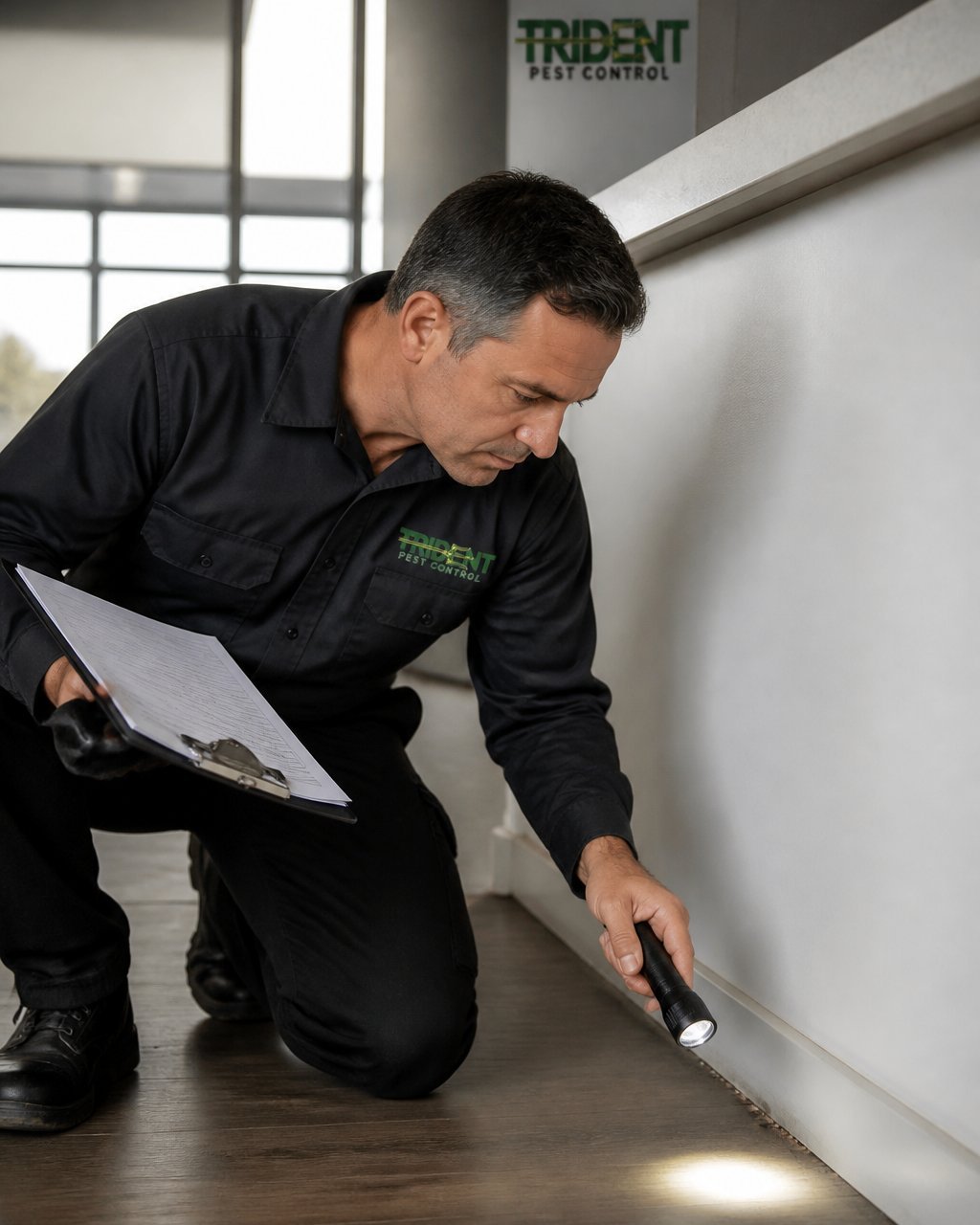
Exterior Assessment:
- Inspect foundation for cracks, gaps, and openings larger than 3mm
- Check door seals, window frames, and weatherstripping for damage
- Look for vegetation touching the building (creates pest highways)
- Examine gutters, downpipes, and drainage for standing water
- Scan roof vents, pipe penetrations, and cable entry points for gaps
- Identify potential rodent entry points around utility lines
Interior Inspection:
- Survey storage areas, particularly food storage and waste management zones
- Check for signs of rodent or insect activity: droppings, gnaw marks, dead insects
- Examine corners, behind equipment, and under sinks where pests hide
- Look for moisture sources, leaky pipes, condensation, poor ventilation
- Assess lighting near entry doors (attracts flying insects)
- Review sanitation practices and food handling procedures
- Inspect break room and kitchen areas thoroughly
Documentation:
- Photograph evidence of pest activity or conducive conditions
- Map entry points and high-risk areas
- Record moisture levels and temperature in key zones
- Note any previous pest incidents or treatments
- Document structural vulnerabilities
A professional inspection from Trident Pest Control goes beyond a checklist, it produces a detailed report with recommendations prioritised by risk level. That report becomes your roadmap for prevention and treatment decisions.
Prevention and Exclusion Techniques
Prevention is always cheaper than treatment. Exclusion, physically preventing pests from entering your building, forms the first line of defence in any commercial pest management strategy.
Seal all cracks and gaps in exterior walls, foundations, and around utility penetrations. Use appropriate sealants: caulk for small gaps, expanding foam for larger voids, metal mesh for areas subject to gnawing.
Install or upgrade door seals and weatherstripping. Doors are the most common entry point for pests. Self-closing mechanisms and air curtains reduce the window of opportunity when doors open. Dock seals and levellers prevent gaps during loading and unloading operations.
Manage waste effectively. Pests follow food sources. Secure rubbish bins with tight-fitting lids, store them away from the building, and arrange regular collection. Inside, use sealed containers for food storage and waste. Clean up spills immediately.
Control moisture and humidity. Many pests require water to survive. Fix leaking pipes, ensure proper drainage around the building, and maintain adequate ventilation in storage areas and basements. Dehumidifiers in damp spaces reduce the attractiveness of your facility to moisture-seeking pests.
Reduce clutter and improve sanitation. Pests need harborage, places to hide and nest. Remove unnecessary boxes, papers, and stored items. Keep shelving elevated off the ground. Maintain clear sight lines so pest activity becomes visible quickly. Regular cleaning removes food residue and odours that attract pests.
Pest Control Maintenance Plan Essentials
A maintenance plan transforms commercial pest management strategies from sporadic interventions into predictable, reliable protection. The best plans align with your facility’s seasonal vulnerabilities and operational needs.
A typical maintenance plan includes scheduled inspections, often quarterly, sometimes monthly in high-risk environments. Each visit includes a thorough walkthrough, monitoring device checks, and targeted treatments if warranted. The frequency depends on your facility type, local pest pressure, and previous activity history.
Monitoring devices, sticky traps, pheromone traps, and electronic monitors, provide early warning of pest activity before it becomes visible. These devices are strategically placed in high-risk areas and checked regularly. Data from monitoring informs treatment decisions: if traps show no activity, no treatment is needed. If activity increases, intervention escalates accordingly.
Documentation is essential. Every inspection, treatment, and finding should be recorded. This creates a historical record showing trends, seasonal patterns, and the effectiveness of interventions. For businesses subject to audits or compliance checks, this documentation proves due diligence and professional management.
Communication with your pest control provider matters. Share information about operational changes, new storage areas, equipment installations, seasonal staffing shifts, that might affect pest risk. Discuss any pest sightings or concerns between scheduled visits. A maintenance plan works best when it’s a genuine partnership.
A maintenance plan isn’t an expense; it’s insurance against costly infestations and reputational damage. The cost of routine prevention is a fraction of what you’d spend managing an active problem or dealing with regulatory violations.
When to Call a Professional Pest Controller
Knowing when to escalate from in-house management to professional intervention separates effective pest control from costly delays. Some situations demand professional expertise immediately.
Call a professional if you’ve confirmed pest activity, droppings, live insects, or structural damage like gnaw marks or mud tubes. Early professional intervention stops small problems from becoming large ones.
If you operate a food business, hospitality venue, or healthcare facility, professional pest management is non-negotiable. These environments face regulatory requirements and reputational risks that demand expert oversight.
Structural pest issues, particularly termites, require professional assessment. Termite damage can compromise building integrity. Only a qualified pest controller can identify the extent of damage, locate active colonies, and recommend appropriate treatment. Misdiagnosing or underestimating termite problems is expensive.
When in-house prevention hasn’t worked, professional intervention becomes essential. If you’ve sealed entry points, improved sanitation, and reduced clutter but pest activity continues, the problem likely requires targeted chemical treatment or specialised techniques only professionals can provide.
Trident Pest Control’s licensed and insured technicians conduct thorough assessments, identify the root cause of pest problems, and recommend solutions tailored to your facility and situation.
Pest infestations damage more than your property, they harm your reputation, violate compliance requirements, and create liability. Effective commercial pest management strategies combine prevention, professional monitoring, and targeted intervention to keep your facility protected year-round.
Frequently Asked Questions
What are the most effective commercial pest management strategies?
The most effective commercial pest management strategies combine integrated pest management (IPM), regular inspections, prevention measures, and targeted treatment. IPM focuses on identifying pest sources, sealing entry points, removing food and water sources, and using treatments only when necessary. Professional pest controllers use this multi-layered approach to achieve long-term control rather than relying on chemical treatment alone. Regular maintenance plans ensure ongoing protection and early detection of problems.
How often should a commercial property have pest inspections?
Most commercial properties benefit from inspections at least quarterly, though high-risk businesses like hospitality or retail may need monthly checks. The frequency depends on your industry, property size, location, and pest pressure history. A professional pest controller can recommend an inspection schedule tailored to your property. More frequent inspections catch problems early, preventing infestations from spreading and reducing treatment costs over time.
What should a pest control maintenance plan include?
A comprehensive pest control maintenance plan includes scheduled inspections, preventative treatments, monitoring of high-risk areas, documentation of findings, and staff training on pest reporting. It should detail treatment frequencies, the specific pests being targeted, exclusion measures being maintained, and how to respond to active pest sightings. A good plan also includes communication protocols with your pest controller and clear records of all treatments and outcomes for compliance purposes.
How does integrated pest management work for businesses?
Integrated pest management (IPM) for businesses works by combining inspection, identification, prevention, and targeted intervention. First, technicians inspect your property to identify pest species and entry points. Next, prevention focuses on removing conditions that attract pests: sealing gaps, eliminating food waste, fixing moisture issues, and reducing clutter. Treatment is used only when necessary and targets specific problems rather than blanket spraying. This approach reduces chemical use, costs, and environmental impact while delivering lasting results.
What are the signs of pests in commercial buildings?
Common signs include droppings, dead insects, damaged food packaging, grease marks on walls, unusual odours, and visible pest activity. Look for gnaw marks on materials, webbing, or egg casings. Rodents leave small dark droppings; cockroaches leave larger, smeared droppings and shed skins. Staff reports of sightings, especially at night, are also important indicators. Early detection through regular monitoring prevents small problems from becoming major infestations that disrupt business operations.
How can a business prevent pests from entering its premises?
Prevention starts with exclusion: seal cracks, gaps, and holes around pipes, doors, and windows. Install door sweeps and weather stripping. Keep waste in sealed bins and remove rubbish regularly. Fix leaks and reduce standing water. Maintain cleanliness, especially in kitchens and storage areas. Store food in airtight containers and off the ground. Trim vegetation away from building walls and keep gutters clear. Train staff to report potential entry points. These measures make your property less attractive to pests and harder for them to enter.
When should a business contact a professional pest controller?
Contact a professional pest controller immediately if you notice active pest activity, droppings, or damage. Businesses should also establish a regular preventative program even without visible problems. Professional intervention is essential if DIY efforts have failed, if you need compliance documentation for health and safety regulations, or if you operate in a high-risk industry. Same-day emergency services are available for acute infestations. Early professional involvement prevents costly damage and business disruption.