Table of Contents
- End of Lease Flea Treatment: What Tenants Need to Know First
- When Flea Treatment Is Actually Required
- End of Lease Pest Control Victoria: Your Obligations and Rights
- Your Flea Treatment Preparation Checklist
- How Long Does Flea Treatment Take, Start to Finish?
- Step-by-Step: How a Professional Flea Treatment Works
- Getting Your Flea Treatment Certificate for a Rental Property
- Common Mistakes That Cost You the Bond
- Frequently Asked Questions
Last Updated: October 13, 2026
End of Lease Flea Treatment: What Tenants Need to Know First
End of lease flea treatment is the professional pest service you arrange before handing back a rental, so the property is clear of fleas and you can show your property manager a written record of the work. It matters most when you’ve had pets indoors. At Trident Pest Control, we handle these jobs across Werribee, VIC and the wider western suburbs, and the same question comes up every time: will this actually protect my bond?
Here’s the short answer. Fleas are usually a pet-related issue, not a structural one, so the cost and responsibility often sit with you rather than your landlord. Get the timing wrong and you can pay twice.
Below, we’ll walk through when a treatment is genuinely required, what to do before and on the day, how long the whole thing takes, and the mistakes that quietly cost tenants their bond.
The single biggest factor in whether your flea treatment holds is preparation, not the spray itself. Vacuuming, clearing floors and treating your pets do more for the result than any upgrade you can buy.
When Flea Treatment Is Actually Required
Flea treatment is required when your lease says so, when fleas were present during your tenancy, or when the property had pets living in it. It is not a blanket rule for every rental in Victoria.
Your lease is the first place to check. Some agreements include a specific clause about pest control at the end of the tenancy. Others say nothing at all.
If there’s no clause and no flea problem, you generally don’t need to arrange treatment. If you kept a dog or cat indoors, expect your property manager to ask for it.
A few situations where treatment is almost always expected:
- You had a cat or dog living inside the home
- Fleas were spotted during routine inspections
- A neighbouring pet or wildlife brought fleas into the yard
- The previous tenant had pets and the issue was never fully resolved
The tricky part is proof. Without a receipt or certificate, it’s your word against the condition report.
End of Lease Pest Control Victoria: Your Obligations and Rights
End of lease pest control Victoria rules come down to one principle: you return the property in a similar condition to how you received it, fair wear and tear aside. Consumer Affairs Victoria sets out these general tenancy obligations, and your specific lease adds the detail.
So what does that mean for fleas?
If the property was flea-free when you moved in and fleas appeared during your tenancy, the treatment is usually on you. If fleas were already there, or the issue stems from a building problem, that’s a landlord matter.
Your rights matter here too. You’re entitled to:
- A clear written reason if treatment is requested
- A copy of any report or certificate relating to the property
- Fair wear and tear to be excluded from your responsibility
If a request feels unreasonable, ask your property manager to point to the clause. Most disputes at this stage are about communication, not the actual treatment.
Never book a treatment without first confirming what your lease actually requires. Paying for a service you weren’t obligated to arrange is money you won’t get back.
Your Flea Treatment Preparation Checklist
Preparation decides how well the treatment works. Skipping it is the most common reason fleas return within weeks.
Vacuum everything, then vacuum again. Flea eggs and larvae sit deep in carpet fibres, and a vacuum lifts them to where the treatment can reach. Pay close attention to skirting boards, under furniture and along carpet edges.
Here’s the checklist we give every tenant before we arrive:
- Vacuum all carpets, rugs and soft furniture
- Empty the vacuum canister or bin outside
- Wash pet bedding in hot water
- Clear floors of toys, clothes and clutter
- Move furniture away from walls where you can
- Treat your pets with a vet-recommended flea product
- Cover or store food, plates and pet bowls
- Arrange for pets and kids to be out during the visit
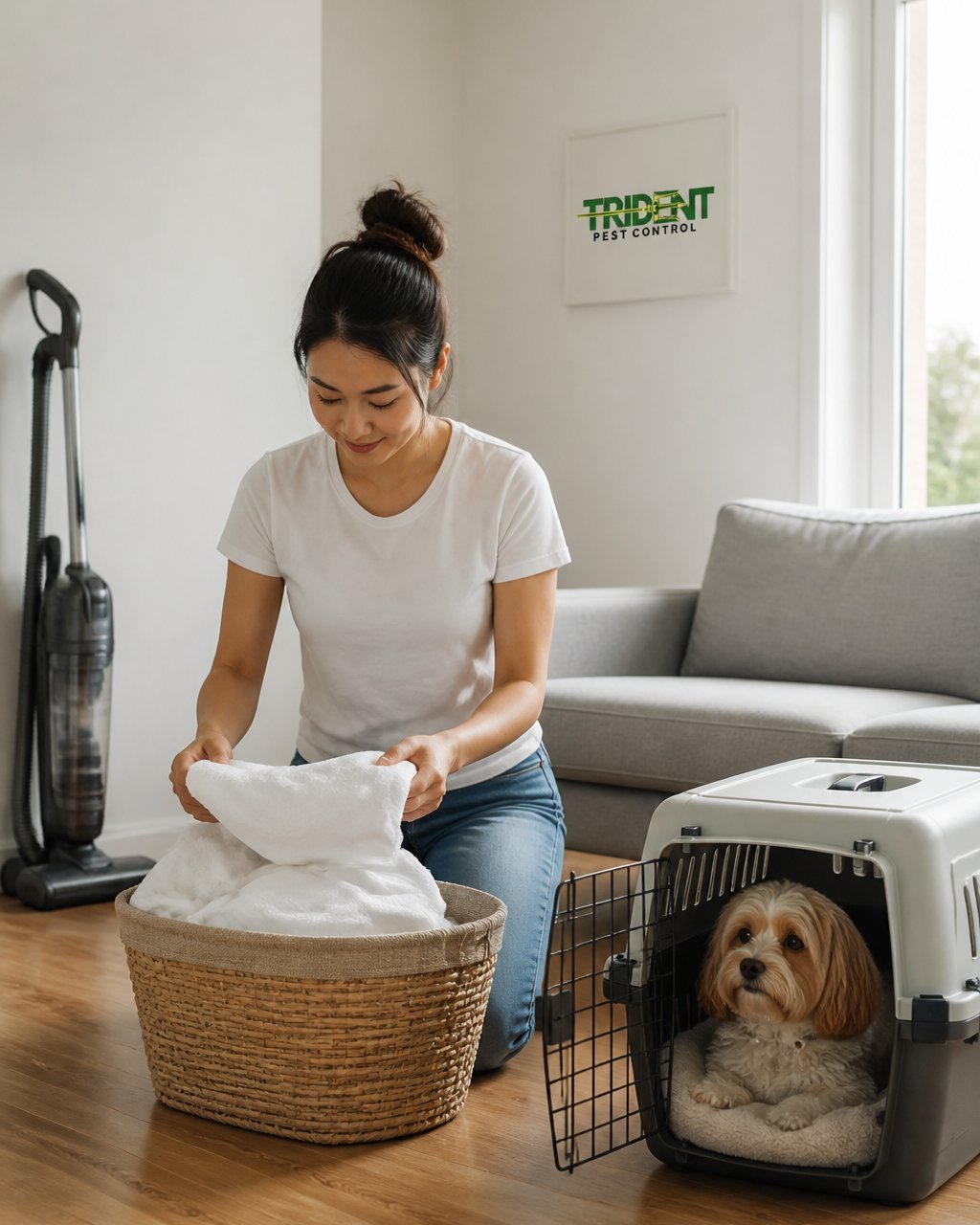
Treating your pets is the step people skip. If your dog or cat still carries fleas, they’ll reinfest the clean house within days.
What to Do on the Day
On the day, keep pets and children away from treated areas until everything is dry. Most treatments need a few hours of drying time, and your technician will tell you exactly how long.
Open a window or two once you return. Airflow helps the rooms settle faster. Don’t mop or vacuum treated floors for at least a few days, as this can strip the product before it finishes working.
How Long Does Flea Treatment Take, Start to Finish?
A standard flea treatment takes around one to two hours inside the home. The full process, from preparation to drying, usually spans most of a day.
Here’s how the time typically breaks down:
| Stage | Time Needed | Notes |
|---|---|---|
| Preparation | 1-2 hours | Vacuuming, clearing floors |
| Technician on site | 1-2 hours | Depends on home size |
| Drying time | 2-4 hours | Keep pets and kids out |
| Back to normal | Same day | Once dry, rooms are usable |
Larger homes, heavy carpet coverage or bad infestations push the on-site time up. A single room is quick; a full four-bedroom house with pets takes longer.
The waiting is the annoying part, not the treatment.
Step-by-Step: How a Professional Flea Treatment Works
A professional flea treatment works by breaking the flea life cycle, not just killing the adults you can see. That’s why one visit can hold for months when it’s done properly.
Here’s how the process runs:
- Inspection. The technician checks carpets, pet areas and skirting boards to find where fleas are concentrated.
- Preparation check. They confirm floors are clear and pets are out.
- Treatment. A licensed product is applied to carpets, floors and affected areas.
- Growth regulator. Many treatments include an insect growth regulator to stop eggs and larvae developing.
- Drying. The product is left to dry fully before anyone returns.
- Follow-up advice. You get guidance on vacuuming, pets and when to expect results.
The growth regulator is the part most people don’t know about. Adult fleas are only a small slice of the population. Eggs, larvae and pupae make up the rest, and they hide where sprays can’t easily reach. This is why a single spray that only targets adults often fails.
Ask your technician whether the treatment includes an insect growth regulator. It’s the difference between killing today’s fleas and stopping the next generation.
Getting Your Flea Treatment Certificate for a Rental Property
A flea treatment certificate for a rental property is the written proof your property manager needs to close out the tenancy. Without it, the treatment may as well not have happened.
The certificate usually records:
- The date of treatment
- The address and areas treated
- The product used and its registration details
- The technician’s licence information
- Any follow-up recommendations
Keep a copy for yourself and send one to your property manager. Store it with your condition report and bond paperwork.
If you’ve used a licensed provider, getting the certificate should be straightforward. Ask for it at the time of booking so there’s no delay when you hand back the keys.
Common Mistakes That Cost You the Bond
Most bond disputes over fleas come down to a handful of avoidable errors. None of them are about the quality of the spray.
The biggest one is leaving it too late. Booking treatment the day before your final inspection leaves no room for drying, follow-up or a re-visit if something goes wrong. Give yourself at least a week.
Other mistakes we see often:
- Skipping vacuuming, so eggs survive in the carpet
- Forgetting to treat pets, which reinfests the home
- Choosing the cheapest option with no certificate
- Not keeping the receipt for your property manager
- Vacuuming or mopping too soon after treatment
The cheap option rarely stays cheap. A treatment with no paperwork often means paying for a second one to satisfy the agent.
If you can’t produce a certificate or receipt, your property manager can treat the job as never done. That usually means a second treatment at your cost, deducted from your bond.
Frequently Asked Questions
Is flea treatment required at the end of a lease in Victoria?
It depends on your lease and whether pets were kept at the property. If your tenancy agreement includes a pet clause requiring professional flea treatment at the end of the lease, you are expected to arrange it before your final inspection. Without such a clause, it usually falls outside your obligations unless there is evidence of an active infestation. Check your agreement and confirm with your property manager in writing before you book anything.
How should I prepare a rental property for flea treatment?
Work through a flea treatment preparation checklist: vacuum carpets, rugs, and upholstery thoroughly, wash pet bedding and throws in hot water, clear floors and surfaces of clutter, and move furniture away from skirting boards where possible. Empty and clean pet bowls and litter trays. If fish tanks are present, cover them and switch off their filters as directed. These steps give the technician clear access and help the treatment reach flea eggs and larvae, not just adult fleas.
How long does flea treatment take to work, and when can I return?
The application itself usually takes one to two hours depending on the size of the property. Most treatments need to dry before anyone walks on the surfaces, which typically means staying off the floors for a few hours. Your technician will confirm exactly how long to stay out, and this can vary with the product used and whether pets or young children are in the household. Fleas may remain active for a short period after treatment as eggs hatch, so expect some activity before the infestation clears.
What proof of flea treatment should I give my property manager?
Ask your provider for a written flea treatment certificate for the rental property. It should list the property address, the date of service, the areas treated, the product used, and the technician’s licence details. Send a copy to your property manager before your final inspection and keep the original for your records. A proper certificate shows the work was done by a licensed technician and is the document most agents ask for when releasing a bond.
Handing back a rental with a flea problem is stressful, and getting the paperwork wrong makes it worse. Trident Pest Control takes the guesswork out of it. Our licensed and insured technicians use kids and pet-safe methods, and every end of lease flea treatment comes with fixed pricing and no hidden charges. We cover Werribee and the surrounding western suburbs, with same-day service available when you’re short on time. Get your free quote and hand back the keys with confidence.