Table of Contents
- 1. Seal Holes to Prevent Rodents From Getting In
- 2. Rodent-Proof Food Storage That Removes the Attraction
- 3. Cut Back Vegetation and Clear Clutter Around the House
- 4. Know the Signs of Rats and Mice in the Home
- 5. Fix Moisture and Water Sources Rodents Rely On
- 6. Set Traps and Baits Correctly (and Know Their Limits)
- 7. Book Professional Rodent Control in Werribee When DIY Stops Working
- Conclusion
- Frequently Asked Questions
Last Updated: October 12, 2026
1. Seal Holes to Prevent Rodents From Getting In
A mouse needs a gap the width of a pencil to slip into your home. That single fact explains why so many infestations start with a crack you’ve walked past a hundred times without noticing.
At Trident Pest Control, we’ve inspected enough Western Melbourne properties to know the entry points are rarely dramatic. They’re weep holes, pipe penetrations, garage door corners and gaps under weatherboards. Sealing them is the most reliable way to prevent rodents from ever getting a foothold.
Which Materials Actually Block a Rodent
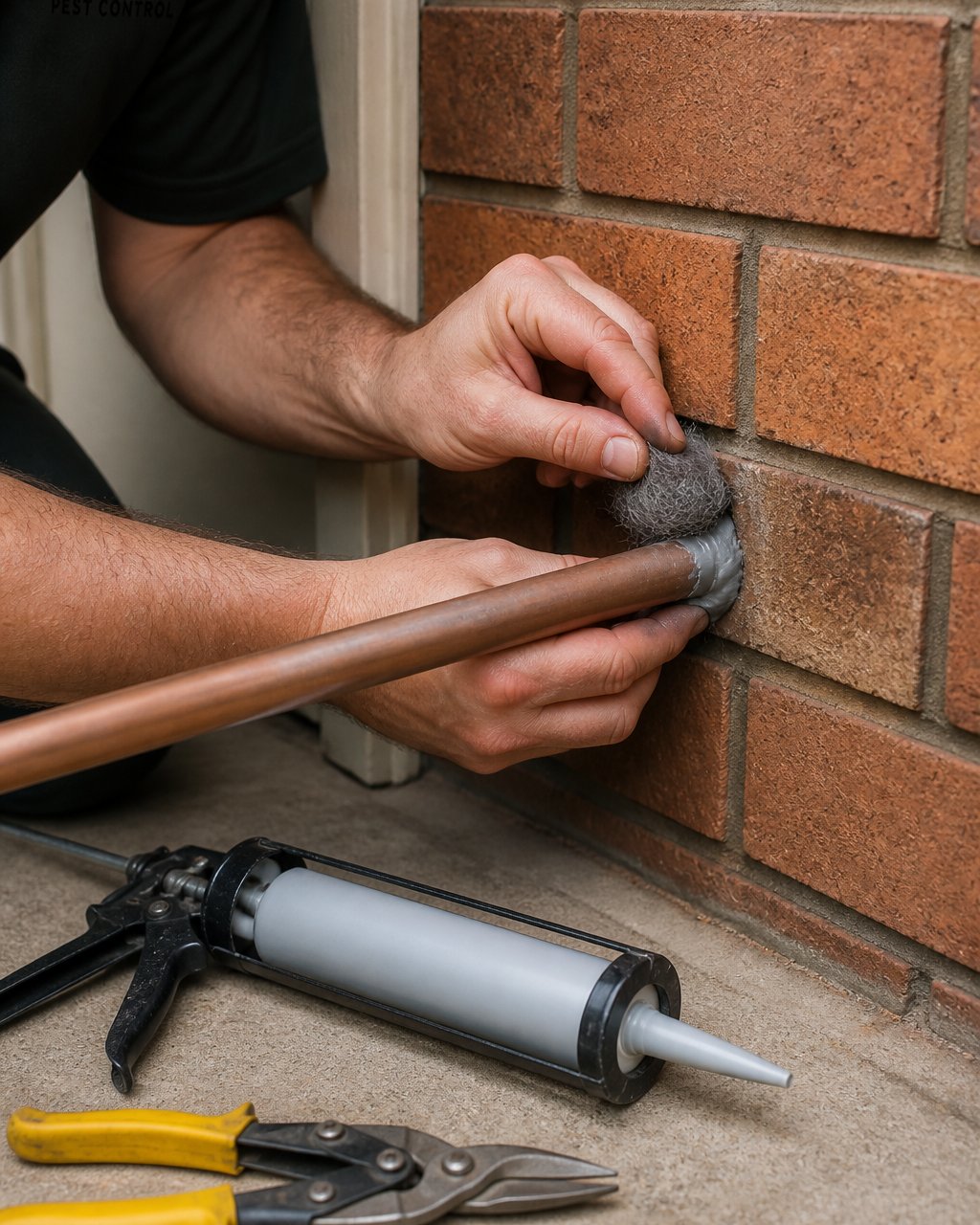
Steel wool works because rodents can’t chew through metal fibres. Push Grade 0000 steel wool into small gaps around pipes and conduits, then cover it with a flexible gap filler so it doesn’t rust or pull loose.
For larger openings, galvanised steel mesh with a small aperture is the better barrier. Cut it to size and fix it over vents, weep holes and subfloor gaps.
| Gap Type | Best Material | Why It Works |
|---|---|---|
| Pipe and conduit gaps | Steel wool plus gap filler | Rodents can’t chew metal fibres |
| Vents and weep holes | Galvanised steel mesh | Durable, weather-resistant barrier |
| Skirting and wall cracks | Flexible gap filler | Seals small internal gaps cleanly |
| Large subfloor openings | Steel mesh plus timber | Closes the gap permanently |
Stuffing a gap with expanding foam alone is a common mistake. Rodents chew straight through it within days, and you’ve wasted the effort. Always combine foam or filler with a metal layer.
::: Reinforcing these entry points creates a robust barrier, but true pest exclusion also requires managing outdoor waste to ensure that attractants do not draw intruders toward your foundation in the first place.
2. Rodent-Proof Food Storage That Removes the Attraction
If rodents can smell it, they’ll keep coming back no matter how well you’ve sealed the exterior. Rodent-proof food storage is about removing the reward, not just the access.
Cardboard boxes and thin plastic bags offer zero resistance. Mice chew through both in a single night. Airtight containers with silicone seals keep odours in and teeth out, which matters most for flour, grains, cereals and dry pet food.
- Transfer dry goods out of original packaging into sealed containers
- Store pet food in a lidded container, not an open bag on the floor
- Check the back of the pantry monthly for gnaw marks or droppings
- Keep fruit bowls off benchtops overnight
Pet Food and Bin Habits That Undo Your Efforts
Uneaten pet food left outside overnight is one of the most common reasons rodents keep returning, according to Oregon State University Extension guidance on keeping rats away. Bring bowls in after meals.
Your bin matters just as much. A tight-lidded bin stops food odours escaping, and emptying it regularly removes the scent trail that draws rodents toward the house in the first place.
3. Cut Back Vegetation and Clear Clutter Around the House
Branches touching your roof are highways. Rodents use overhanging vegetation to move from trees to gutters without ever touching the ground, and once they’re on the roof, finding a way in is easy.
Trim any branch within a metre of the roofline, and keep shrubs pruned back from exterior walls. The National Pest Management Association’s rodent deterrent guidance recommends exactly this, along with sealing exterior cracks as part of a broader exclusion approach.
Clutter is the second half of the problem. Stacked timber, old furniture and cardboard boxes against the house give rodents shelter and nesting material. Clear them, and you’ve removed a comfortable base camp.
Check your gutters after trimming. Leaf litter sitting in a gutter holds moisture and gives rodents a sheltered, elevated spot that most homeowners never think to inspect.
4. Know the Signs of Rats and Mice in the Home
Catching an infestation early is far cheaper than treating an established one. The signs of rats and mice in the home are consistent, and once you know them, you’ll spot activity within a day or two.
Droppings are the clearest indicator. Mouse droppings are small and pointed; rat droppings are larger and capsule-shaped. Fresh droppings are dark and soft, older ones grey and brittle.
Other signs worth checking:
- Greasy rub marks along skirting boards and wall bases
- Gnaw marks on food packaging, cables or timber
- Scratching or scurrying sounds in the roof at night
- A musky ammonia smell in enclosed spaces
- Nests made from shredded paper, insulation or fabric
If you’re finding multiple signs at once, the population is likely established rather than a single visitor passing through.
5. Fix Moisture and Water Sources Rodents Rely On
Rodents need water as much as food, and a leaking tap or dripping pipe is an open invitation. Fixing moisture problems removes a resource they depend on.
Check under sinks, behind the washing machine and around hot water systems. Damp subfloor areas and leaking gutters are common culprits in older homes. The CDC guidance on controlling rodent infestations notes that removing food, water and shelter sources is central to prevention, and water is the one most homeowners overlook.
Improving ventilation under the house also helps. Dry conditions are far less attractive to rodents than damp ones.
6. Set Traps and Baits Correctly (and Know Their Limits)
Traps work, but placement decides whether they catch anything. Rodents travel along walls rather than across open floor, so snap traps should sit perpendicular to the wall, with the trigger end against the skirting.
Bait stations have real limits. Rodents can become bait-shy, and baits placed incorrectly can be reached by pets or children. If you have young kids or animals at home, this is the point where professional help makes more sense than a hardware store kit.
Never use loose rodenticide in areas a toddler or pet can reach. Secondary poisoning is a genuine risk, and it’s the reason we recommend tamper-resistant stations or professional treatment for households with young children.
7. Book Professional Rodent Control in Werribee When DIY Stops Working
DIY gets you a long way, but there’s a point where it stops being effective. If you’ve sealed, stored, trimmed and trapped and you’re still hearing scratching at night, the problem is likely in a space you can’t reach.
Professional rodent control in Werribee starts with a proper inspection. Our licensed and insured technicians trace entry points you’d never find on your own, including roof voids and subfloor cavities. We use kids and pet-safe treatments, charge fixed pricing with no hidden charges, and offer same-day service when you need it.
If you’re searching for rodent control near me in Werribee or across Western Melbourne, that’s exactly the work we do.
Conclusion
Persistent rodent activity usually means an entry point or food source you haven’t found yet, and guessing wastes time you don’t need to spend. Trident Pest Control handles rodent control across Werribee, Melbourne and Geelong with licensed technicians, transparent fixed pricing and treatments designed around families and pets. Get your free quote today and we’ll find what’s getting in, not just what’s running across the kitchen floor.
Frequently Asked Questions
How small a gap can a mouse squeeze through?
A mouse can fit through a gap roughly the width of a pencil, about 6 to 7 millimetres, while a young rat needs closer to 20 millimetres. That is why checking along skirting boards, around pipe entries and behind appliances matters more than scanning for obvious holes. If you can poke a pencil into a gap, a mouse can likely use it. Fill those gaps with steel wool pushed in firmly, then cover with a flexible gap filler so the repair holds.
What should I use to seal holes that rodents can enter through?
Steel wool is the go-to for small gaps because rodents struggle to chew through it. Push it tightly into the hole, then seal over it with a flexible gap filler such as Selleys No More Gaps so it stays put. For larger openings, vents and weep holes, galvanised steel mesh with a small aperture works well and resists rust. Avoid expanding foam on its own, since rodents can gnaw straight through it.
Does keeping a home tidy prevent rodents?
Tidiness helps but it is not a barrier on its own. Clutter gives rodents somewhere to nest and move unseen, and crumbs or open food packets give them a reason to stay. Cleaning up removes the attraction, while sealing entry points removes the access. You need both. A spotless kitchen with a gap under the back door will still get mice, and a fully sealed house with pet food left out overnight will still draw them in.
When should I call a pest control professional about rodents?
Call a professional when you have seen droppings, heard scratching in the ceiling or walls, or found gnaw marks more than once, or when DIY sealing and trapping has not stopped the activity within a couple of weeks. Rodents often use entry points you cannot easily see, such as roof voids and subfloor gaps. A licensed technician can map those routes, treat the infestation and seal the property properly, which is hard to do with supermarket products alone.
Are rats and mice common around homes in Werribee?
Yes. Homes in Werribee and across Western Melbourne sit close to waterways, parkland and new housing estates, all of which give rodents cover and food. Cooler months push them indoors looking for warmth and shelter, so activity tends to rise in autumn and winter. Older homes with timber framing and newer builds with gaps around services both offer entry points, which is why sealing and regular inspections matter in this area.