
Table of Contents
- What Droppings Can (and Cannot) Tell You About a Pest
- Mouse Droppings vs Rat Droppings: Spotting the Difference
- Cockroach Droppings Identification: Small Specks That Matter
- Other Common Pests You Can Identify From Droppings
- How to Clean Pest Droppings Safely
- When to Call a Pest Controller for Droppings
- Common Mistakes When Identifying Pests From Droppings
- Conclusion
- Frequently Asked Questions
Last Updated: October 7, 2026
What Droppings Can (and Cannot) Tell You About a Pest
Yes, you can identify pests from droppings, but only to a point. Droppings are one clue, not a full answer. At Trident Pest Control, we see this mistake often: someone finds dark specks in a pantry, assumes mice, buys traps, and catches nothing because the culprit was actually cockroaches.
Here’s the honest truth. Droppings can point you toward a likely pest. They rarely confirm it on their own.
Cornell CALS guide to managing mice and rats recommends checking for droppings alongside gnaw marks, footprints, and grease marks. One sign alone can mislead you.
What droppings can tell you:
- Rough size range of the pest
- Whether you likely have rodents or insects
- Where the pest is active
What they cannot tell you:
- The exact species
- How many pests you have
- Whether the problem is new or old
Droppings narrow the field. They don’t close the case. Pair them with other signs before you act.
Mouse Droppings vs Rat Droppings: Spotting the Difference
Mouse droppings are small, thin, and pointed at both ends, roughly the size of a grain of rice. Rat droppings are larger, thicker, and blunt-ended, closer to the size of a small olive.
This is the single most useful comparison for anyone trying to identify pests from droppings. Get the size and shape right, and you’ve usually narrowed it to one or the other.
Size, Shape and Where You Find Them
| Feature | Mouse Droppings | Rat Droppings |
|---|---|---|
| Length | 3-6 mm | 10-20 mm |
| Shape | Pointed ends | Blunt, capsule-like |
| Texture | Smooth, dark | Shiny when fresh |
| Common spots | Pantry shelves, drawers | Along walls, near bins |
Mice tend to leave droppings scattered near food sources. Rats follow edges and wall lines. If you’re finding droppings in the back of a kitchen cupboard in Werribee, mice are the more likely suspect.
Cornell’s Integrated Pest Management blog notes that comparing shape is useful, but a professional may still be needed to confirm the species.
Cockroach Droppings Identification: Small Specks That Matter
Cockroach droppings look like ground coffee or black pepper, not like rodent droppings at all. That’s the key difference most people miss.
German cockroaches leave tiny specks, often clustered near warm, dark spots. Larger species leave bigger, ridged droppings. You’ll usually find them:
- Behind the fridge
- Under the sink
- Inside cupboard hinges
- Along skirting boards
A common mistake is mistaking these specks for dirt or coffee grounds and wiping them away. That erases your best evidence.
Never vacuum or wipe droppings before you’ve identified them. You lose the size and shape clues you need, and you risk spreading dust into the air.
If the specks smear when wiped, that’s a strong cockroach sign. Rodent droppings stay firm.
Other Common Pests You Can Identify From Droppings
Larger droppings belong to bigger animals. Possums leave droppings similar in size to a small dog’s, often on fences or roofs. Birds leave splattered droppings under rooflines and eaves.
Here’s a quick way to sort them:
- Possums: large, blunt, often on outdoor surfaces
- Birds: white-capped, splattered, under roosts
- Spiders: not identifiable from droppings at all
- Ants: leave no droppings you’d notice
So when someone asks whether you can identify pests from droppings, the answer changes by pest. Rodents and cockroaches are the easiest. Others need a trained eye.
How to Clean Pest Droppings Safely
Cleaning droppings safely means avoiding dust, wearing protection, and disinfecting properly. Never sweep or vacuum dry droppings, because that sends fine particles into the air where you can breathe them in.
What You’ll Need Before You Start
- Disposable gloves
- A face mask
- Paper towels
- A spray bottle with disinfectant
- Sealed rubbish bags
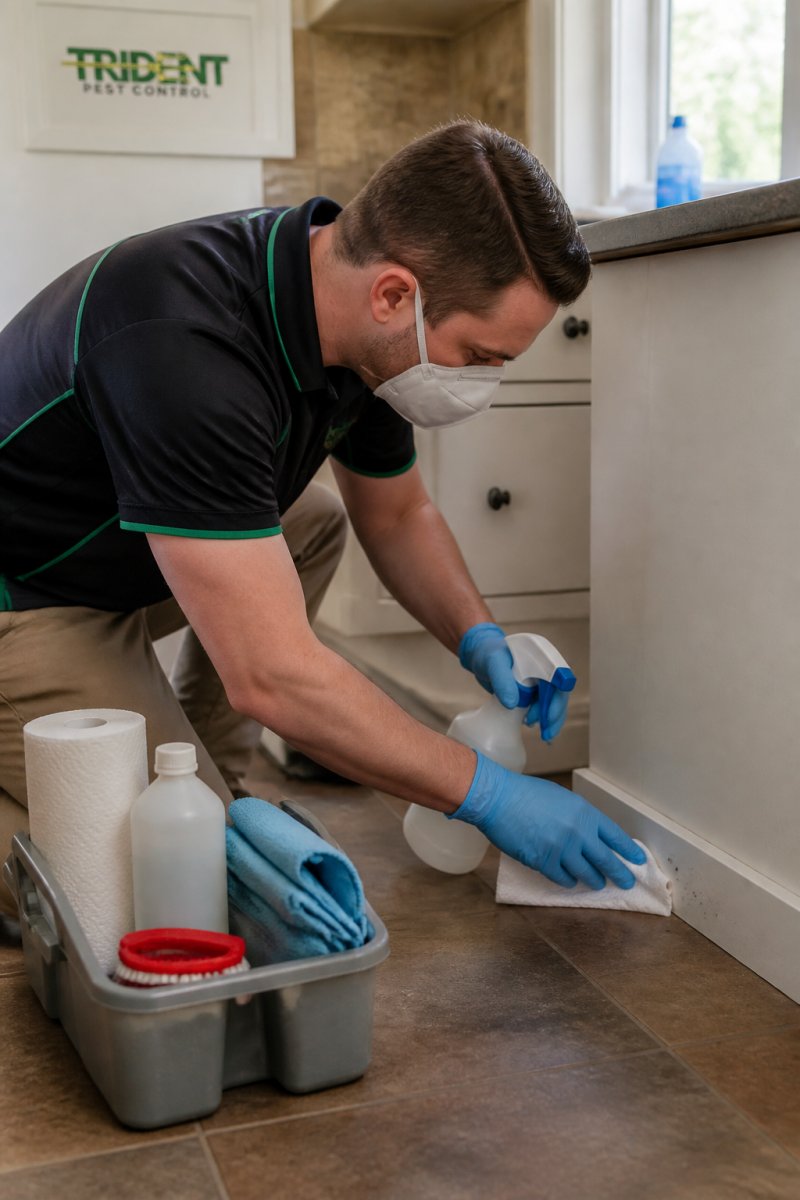
Follow these steps:
- Open windows for airflow
- Spray droppings until damp, never dry
- Wipe up with paper towel
- Seal waste in a bag and bin it outside
- Disinfect the whole area
- Wash your hands thoroughly
Healthdirect Australia advice on handling pest waste recommends gloves and masks for any cleanup where dust is possible.
Spray first, wipe second. A soaked dropping can’t release dust. This one habit cuts most of the health risk in cleanup.
When to Call a Pest Controller for Droppings
Call a professional when you can’t confirm the pest, when droppings keep returning, or when the area is hard to reach. Guessing wastes time and money.
Get help if:
- Droppings reappear after cleaning
- You find them in roof voids or wall cavities
- Anyone in the home has asthma or allergies
- You have young kids or pets
- The infestation looks widespread
For families across Werribee and Geelong, same-day help matters when droppings show up near food or play areas. Our licensed and insured technicians identify the pest first, then treat the cause, not just the mess.
Common Mistakes When Identifying Pests From Droppings
The biggest mistake is treating one sign as proof. Droppings vary with diet, age, and species, so shape alone can fool you.
Other common errors:
- Cleaning before identifying
- Assuming mice when it’s cockroaches
- Ignoring gnaw marks and footprints
- Treating the symptom, not the entry point
If you’re searching for pest control near me in Werribee, look for a team that inspects before it treats. A proper check takes minutes and saves repeat visits.
Conclusion
Sorting out which pest left the mess behind is harder than it looks, and guessing wrong just means the problem comes back. If you’d rather not play detective, we can do it for you. Trident Pest Control offers licensed and insured technicians, kid and pet-safe treatments, fixed pricing with no hidden charges, and same-day service across Melbourne, Geelong, and Werribee. Get your free quote and let us find the source, not just the droppings.
Frequently Asked Questions
Can you identify a pest by its droppings alone?
Droppings are one useful clue, not a final answer. You can often narrow down whether you are dealing with a rodent or a cockroach by size, shape and location, but Cornell’s Integrated Pest Management guidance recommends checking other signs too, such as gnaw marks, footprints and sebum smears. Where droppings are ambiguous, a licensed pest controller can confirm the species before treatment begins.
How can you tell mouse droppings from rat droppings?
Size is the quickest giveaway. Mouse droppings are small, roughly the size of a grain of rice, with pointed ends, while rat droppings are larger and capsule-shaped with blunter ends. Mouse droppings also tend to appear in scattered clusters along skirting boards and inside cupboards, whereas rat droppings are often found near wall edges, behind appliances and in roof voids. If you are unsure, a pest controller can confirm the species on site.
Is it safe to clean up pest droppings yourself?
Small amounts can be cleaned safely with the right precautions: wear disposable gloves and a mask, avoid dry sweeping or vacuuming, spray the area with disinfectant first, then wipe up with paper towel and seal it in a plastic bag. Wash your hands thoroughly afterwards. For heavy infestations, droppings in roof voids or food preparation areas, or if anyone in the home has asthma or allergies, it is safer to have a licensed pest controller handle removal and treatment.
When should I call a pest controller about droppings?
Call a pest controller if you find fresh droppings over several days, droppings in food storage or preparation areas, or signs of an active infestation such as gnaw marks, greasy rub marks or a musty odour. Recurring droppings after DIY attempts also point to a larger problem. A licensed technician can confirm the species, treat the entry points and set up a follow-up plan to stop the infestation returning.