
Table of Contents
- Why Ants Invade Suddenly After Rain
- How to Identify Ant Entry Points Around Your Home
- Natural Ant Deterrents for Australian Homes That Work
- Baiting vs Spraying: Why Killing Ants One by One Fails
- When to Call Professional Ant Treatment in Western Melbourne
- How to Handle a Sudden Ant Invasion: Step-by-Step
- Conclusion
- Frequently Asked Questions
Last Updated: September 22, 2026
Why Ants Invade Suddenly After Rain
Heavy rain is the number one trigger for a sudden ant invasion. When soil becomes waterlogged, ant colonies move upward and inward, pushing through the smallest cracks in your home.
If you live in Werribee or anywhere across VIC’s west, you have seen this. A wet weekend, then a kitchen bench covered in ants by Monday.
So why does it happen so fast?
- Ant nests sit in soil, under pavers, and inside wall cavities
- Rain floods those nests and forces the colony to relocate
- Ants follow pheromone trails, so they find the same entry point every time
- Warm, dry interiors look like a safe new home
Post-Rain Ant Invasion! How to Find & Seal Their Hidden Entry Points walks through exactly how colonies shift after heavy rainfall.
Here is the part most people get wrong: they treat the ants they can see. The colony is still outside, still active, and still sending foragers in. At Trident Pest Control, we see this pattern every wet season across Melbourne’s west.
How to Identify Ant Entry Points Around Your Home
Finding the entry point matters more than killing the ants. If you seal the trail, you cut the supply line.
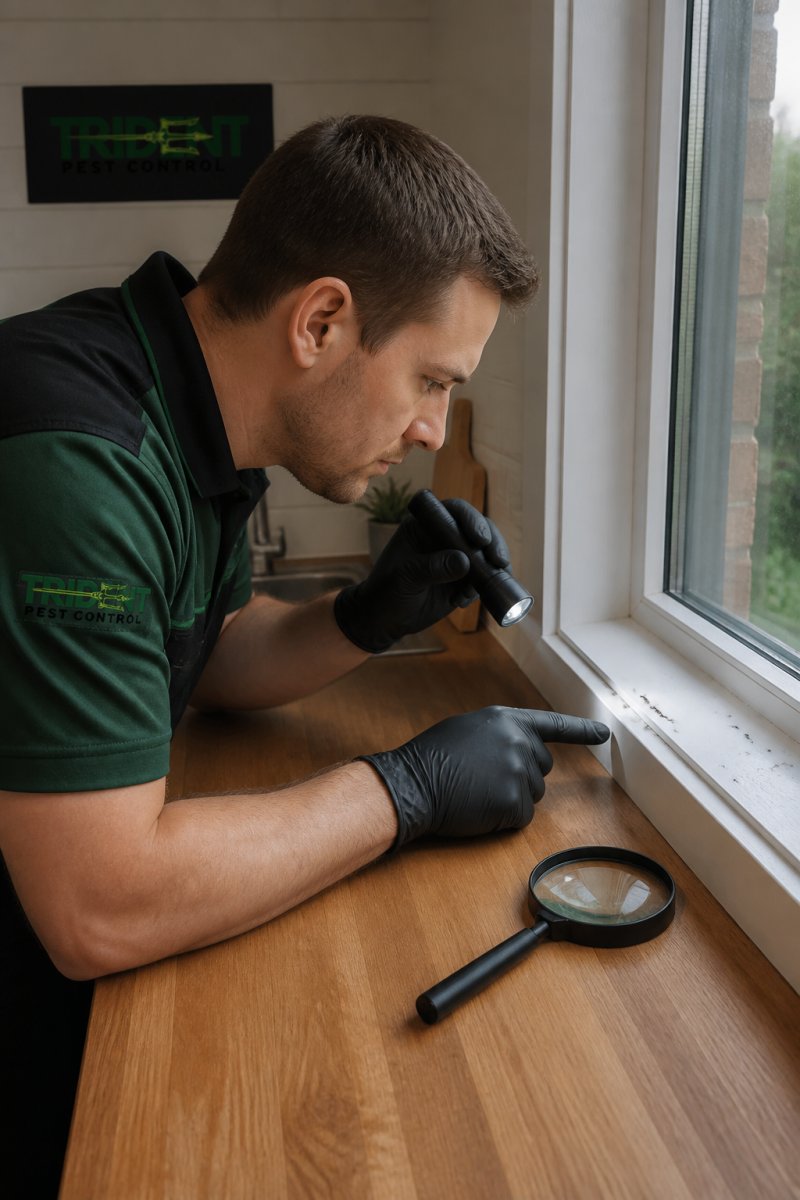
Grab a torch and check these spots:
- Window sills and frames, especially older timber ones
- Door thresholds and the gap under external doors
- Skirting boards and cornices
- Kitchen splashbacks and behind appliances
- Weepholes in brickwork
- Cracks in render, tiles, or expansion joints
- Pipe penetrations under sinks
Follow the trail backwards. Ants move in a line, so trace it to where it disappears into a gap.
A common mistake is sealing a gap while ants are still inside the wall. You trap the colony indoors and make the problem worse. Bait first, seal later.
Natural Ant Deterrents for Australian Homes That Work
Natural ant deterrents for Australian homes work best as a barrier, not a cure. They keep ants out of a zone. They do not wipe out a colony.
What actually helps:
- Vinegar and water: wipes out pheromone trails so ants lose the scent line
- Lemon juice: same idea, and ants dislike the citrus smell
- Cinnamon or chilli powder: a physical barrier along sills and thresholds
- Diatomaceous earth: dries out ants that walk through it
- Mint jelly mixed with borax: a bait-style mix some homeowners swear by
One homeowner-reported method describes a townhouse owner using mint jelly and borax to target the whole colony. It worked for them. Results vary, and you need to keep pets and kids away from any borax mix.
Never store borax baits where toddlers or pets can reach them. Borax is toxic if swallowed in quantity. Place baits inside sealed stations or behind appliances.
Natural deterrents buy you time. They rarely finish the job on their own.
Baiting vs Spraying: Why Killing Ants One by One Fails
Killing ants one by one does not work. You are removing workers while the queen keeps laying. The colony replaces them within days.
This is the core mistake. Spray kills the ants you see. Bait kills the colony you don’t.
| Method | What It Targets | Best For | Main Limitation |
|---|---|---|---|
| Surface spray | Visible foragers | Immediate relief | Colony survives |
| Gel bait | Workers who carry it back | Most indoor nests | Slow, takes days |
| Granular bait | Outdoor nests | Yards and gardens | Pets can access it |
| Professional treatment | Entire colony plus barrier | Recurring invasions | Requires booking |
[Consumer Reports on ant control(/pest-control/emergency-ant-control-melbourne/) | consumerreports.org] backs this up: baits beat sprays because they target the colony, not just the ants on your bench.
So why do so many people still reach for the spray can? Because it gives instant results. It feels like progress. It isn’t.
Place bait stations along the trail, not on top of it. Ants avoid areas crowded with dead ants. Give them a clean path to the bait and they will take it home.
When to Call Professional Ant Treatment in Western Melbourne
Call a professional when baits fail, when ants keep returning, or when you cannot find the nest. Professional ant treatment in Western Melbourne targets the source, not just the symptoms.
Signs it is time to book:
- Ants return within days of baiting
- You have found more than one species
- Nests are inside walls or under slabs
- You have a baby, toddler, or pets at home
- It is a rental and you need a documented treatment
Trident Pest Control handles ant control across Werribee, Melbourne, and Geelong. Our licensed and insured technicians use kid and pet-safe treatments, and we offer same-day service for active infestations.
If you are searching for “ant control near me” in Melbourne’s west, a local technician who knows the area’s soil and climate will solve it faster than a generic booking.
How to Handle a Sudden Ant Invasion: Step-by-Step
Here is the exact process for how to handle a sudden ant invasion without making it worse.
Step 1: Do not spray the trail. Spraying scatters the colony and splits it into new nests.
Step 2: Follow the trail. Trace it to the entry point. Note every gap.
Step 3: Clean the surrounding surfaces. Use vinegar and water to wipe away pheromone lines.
Step 4: Set bait stations. Place them along the trail, not on it. Leave them for several days.
Step 5: Wait. Baits take time. Resist the urge to spray.
Step 6: Seal the entry points. Once activity stops, seal gaps with sealant or filler.
Step 7: Book a professional if it returns. Recurring invasions mean the nest is out of reach.
Step 8: Prevent the next one. Keep food sealed, fix leaks, and clear debris near the house.
The single most effective move is baiting the colony and sealing the entry point. Killing visible ants alone will never end a sudden ant invasion.
Conclusion
A sudden ant invasion after rain is frustrating, but it follows a pattern. Find the entry point, bait the colony, seal the gap, and repeat if needed. If ants keep coming back, the nest is somewhere you cannot reach.
Trident Pest Control offers licensed and insured technicians, fixed pricing with no hidden charges, and kid and pet-safe treatments across Werribee, Melbourne, and Geelong. Same-day service is available for active infestations. Get your free quote and stop the invasion at the source.
Frequently Asked Questions
Why do I suddenly have so many ants in my house?
Heavy rainfall is the most common trigger. When soil becomes waterlogged, ants seek higher, drier ground and enter homes through small cracks around windows, doors, and pipes. Environmental shifts like this push entire colonies indoors, which is why you can go from seeing a few ants to hundreds within a day or two.
Are household ant sprays safe for pets in Australia?
Many supermarket sprays contain chemicals that can irritate pets if they walk on treated surfaces or lick them. Check the label for pet warnings and keep animals away until surfaces are dry. If you have a toddler or dogs at home, professional treatments using kid and pet-safe methods are a safer option. Ask your pest controller exactly what goes into the treatment and how long you need to stay out.
When should I call professional pest control for ants?
Call a professional if you have tried baits for two weeks without results, if ants keep returning after spraying, or if you see them in multiple rooms. A colony can contain thousands of ants and multiple nesting sites. A licensed technician can locate the nests, treat the source, and stop the cycle rather than just killing visible foragers.
Do ants in Truganina homes indicate a structural issue?
Sometimes. Most ant invasions are simply a response to weather or food sources, but certain species nest in wall cavities, under concrete slabs, or in damp timber. If you notice ants emerging from cracks in walls or floors, or if you see sawdust-like debris, it is worth having a professional inspect the property to rule out nesting inside the structure.