
Table of Contents
- Bed Bugs vs Fleas: Key Differences at a Glance
- What Flea Bite Patterns on Humans Actually Look Like
- Signs of Bed Bugs in Mattress Seams and Bedding
- Where Each Pest Hides: Habitats and Infestation Clues
- How to Identify Bed Bugs vs Fleas: A Step-by-Step Check
- When to Book a Professional Pest Inspection in Werribee
- Common Mistakes When Self-Diagnosing Bites and Bugs
- Frequently Asked Questions
Last Updated: September 14, 2026
Bed Bugs vs Fleas: Key Differences at a Glance
Bed bugs and fleas are both small, biting insects, but they leave different evidence and behave in completely different ways. Bed bugs are flat, oval, reddish-brown insects that hide in seams and crevices and feed mostly at night, while fleas are tiny, dark, jumping insects that live on pets and in carpet fibres. This guide from Trident Pest Control covers how to identify bed bugs vs fleas using bite patterns, physical markers, and habitat clues, so you can stop guessing and treat the right pest.
Here’s the part most people get wrong: a bite reaction is not proof of anything. According to research on bed bug identification published by the National Center for Biotechnology Information, bed bug bites are often recognised by three to five red bumps in a straight line or zigzag, yet individual reactions vary so widely that confirming the insect itself is far more reliable than reading your own skin.
| Feature | Bed Bugs | Fleas |
|---|---|---|
| Size and shape | Flat, oval, about an apple seed | Tiny, oval, sideways-flattened |
| Movement | Crawls slowly | Jumps long distances |
| Bite pattern | Often 3-5 bumps in a line | Usually scattered, often on ankles |
| Where they hide | Mattress seams, bed frames, skirting | Carpet, pet bedding, soil |
| Main host | Humans | Cats, dogs, wildlife |
| Key evidence | Fecal spots, bloodstains, shed skins | Live insects, flea dirt, scratching pets |
If you can catch the insect, you have your answer. Bite patterns are supporting evidence only, never the final word.
What Flea Bite Patterns on Humans Actually Look Like
Flea bites on humans typically appear as small, itchy red spots clustered around the ankles, lower legs, and feet, often in groups of two or three rather than a neat line. Because fleas jump from carpet or pet bedding, they attack the lowest part of the body first. People who sleep with a pet often notice bites on the forearms and wrists too.
Flea bite patterns on humans are messier than bed bug patterns. You will usually see scattered clusters rather than a tidy row, and the itch tends to start within minutes. Some people react badly, others barely at all, which is exactly why visual identification of the pest itself matters more than the marks it leaves, a point echoed in Healthline’s guidance on insect bite identification.
If your pet is scratching constantly and you are finding bites around your socks line, fleas are the likely culprit. Check the pet’s belly and the base of the tail for live insects or dark grit.
Signs of Bed Bugs in Mattress Seams and Bedding
Signs of bed bugs in mattress seams include dark brown or black fecal spots, rusty bloodstains, translucent shed skins, and live insects tucked into the folded fabric along the edge. Bed bugs gather in tight cracks, so the seam piping, the underside of the mattress, and the bed frame joints are where you should look first.
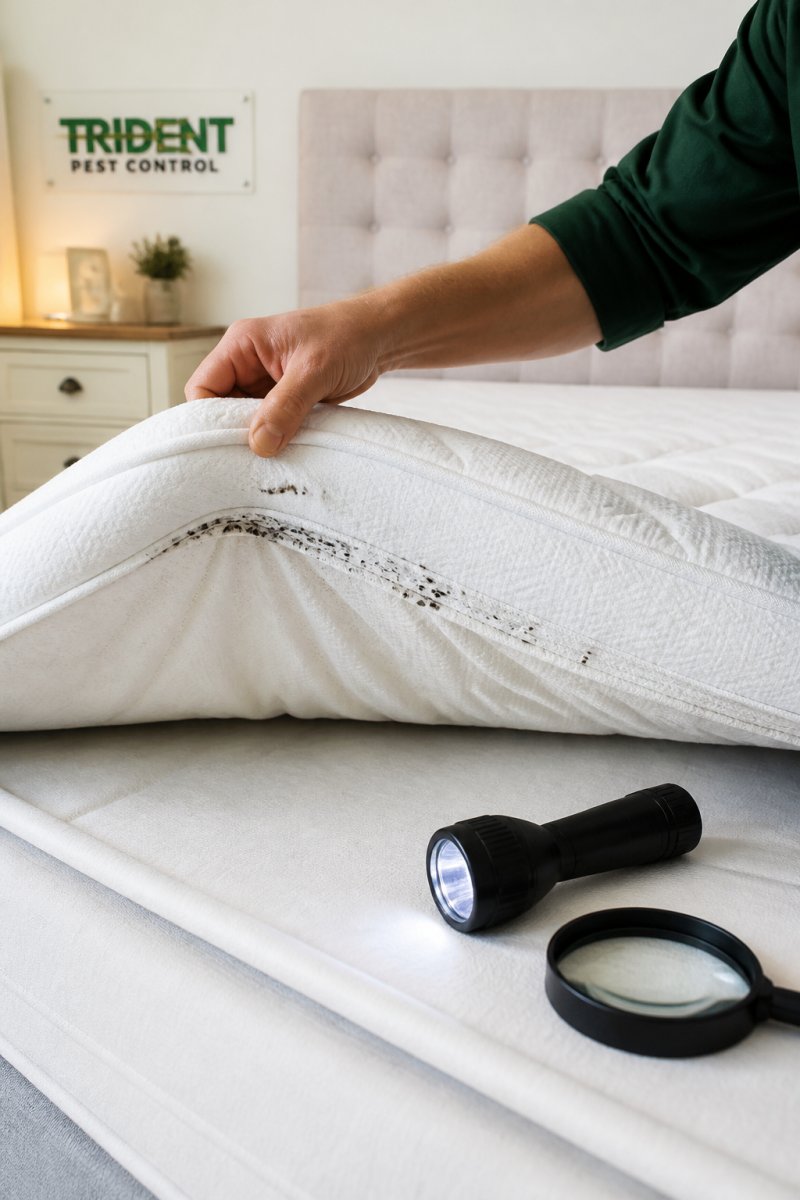
Run a torch slowly along every seam. A common mistake is checking only the top of the mattress and declaring it clear. The bugs are usually underneath and along the edges, and the fecal spots look like tiny ink dots that smudge when wiped with a damp cloth.
If you find live bed bugs or heavy spotting across multiple rooms, do not attempt a full DIY spray. Bed bugs hide in wall cavities and furniture joints, and a surface treatment will scatter them rather than eliminate them.
Where Each Pest Hides: Habitats and Infestation Clues
Bed bugs hide within a few metres of where people sleep: bed frames, headboards, skirting boards, bedside drawers, and the seams of curtains. Fleas, by contrast, spend most of their life cycle in the environment rather than on the host. Adult fleas live on pets, while eggs, larvae, and pupae sit in carpet, rugs, pet bedding, and shaded soil outdoors.
That difference shapes where you search. Bed bug evidence concentrates in the bedroom. Flea evidence concentrates wherever your pet rests, plus the yard or garden your pet uses. A flea problem in a home with no pets usually points to wildlife, such as possums or rodents, bringing fleas close to the house.
According to pest identification guidance from Bug Busters, identification relies on specific physical markers: bed bugs leave fecal spots and bloodstains on bedding, while fleas are associated with pet scratching and flea dirt. Look for the pest, not just the bite.
How to Identify Bed Bugs vs Fleas: A Step-by-Step Check
Knowing how to identify bed bugs vs fleas comes down to a short, systematic inspection. Work through these steps before you buy any treatment.
- Catch the insect if you can. Place clear tape over it or trap it in a jar. A flat, slow-crawling insect is a bed bug; a tiny, jumping insect is a flea.
- Inspect the bed. Lift the mattress and check seams, piping, and the frame for fecal spots, bloodstains, and shed skins.
- Check your pet. Part the fur at the belly and tail base. Live fleas or dark grit that turns red on a wet paper towel means fleas.
- Test with a white sock. Walk across the carpet in white socks. Fleas will jump onto the fabric, giving you a live sample.
- Place interceptor traps. bed bug interceptor traps available from Bunnings sit under furniture legs and capture bed bugs as they climb, confirming the species without chemicals.
- Repeat over several nights. Bed bugs feed at night, so evidence builds over a week rather than appearing all at once.
A flea collar on your pet, such as a Seresto collar, breaks the flea life cycle and helps rule fleas out as the cause. If bites continue after several weeks of consistent flea treatment, the problem is almost certainly bed bugs.
When to Book a Professional Pest Inspection in Werribee
Book a professional pest inspection in Werribee when you find live insects, when bites continue after two weeks of DIY treatment, or when you are renting and need documented evidence for your landlord. A licensed technician can confirm the species, map the infestation, and treat it correctly the first time.
Self-diagnosis has a real cost. Treating for fleas when you have bed bugs wastes money and gives the infestation weeks to spread through the house. Trident Pest Control provides same-day service across Werribee and Western Melbourne, with licensed and insured technicians, fixed pricing, and kid and pet-safe treatments. For tenants and landlords, an inspection report also supports end-of-lease flea treatment requirements.
If you are searching for pest control near me and want the pest identified before anyone sprays, an inspection is the fastest route to a straight answer.
Common Mistakes When Self-Diagnosing Bites and Bugs
The biggest mistake is treating the bites instead of the bug. Antihistamines calm the itch, but they tell you nothing about what is feeding on you, and the infestation keeps growing underneath.
Other errors we see regularly:
- Assuming a line of bites means bed bugs. Reactions vary, so pattern alone is weak evidence.
- Spraying only the mattress. Bed bugs hide in frames, skirting, and furniture joints, so partial treatment pushes them deeper.
- Skipping the pet check. If fleas are on the dog, treating the bedroom achieves nothing.
- Throwing out the mattress too early. It spreads bugs through the house and rarely solves the problem.
- Ignoring the car. Fleas travel in vehicles, so pets and carpets both need attention.
A quick, methodical inspection beats guesswork every time. Identify the insect, then treat for that insect.
Frequently Asked Questions
What do bed bug bites look like compared to flea bites?
Bed bug bites often appear as 3 to 5 red bumps in a straight line or zigzag pattern, according to PMC research from 2023. Flea bites tend to cluster around the ankles and lower legs, where fleas jump onto skin. Both cause itching, but reactions vary between people, so confirming the pest itself is more reliable than judging bites alone.
Do fleas live in beds like bed bugs?
Fleas do not usually live in beds the way bed bugs do. Adult fleas stay on warm-blooded hosts such as cats and dogs, and their eggs and larvae develop in carpets, floorboards and pet bedding. Bed bugs, by contrast, hide in mattress seams, bed frames and skirting boards. This difference matters when you are working out which pest you have.
Are flea bites more common on the ankles?
Yes, flea bite patterns on humans commonly appear on the ankles and lower legs because fleas jump up from the floor or carpet. Bed bug bites can appear anywhere skin is exposed during sleep, including the arms, neck and shoulders. If bites are concentrated low on the legs and you have pets, fleas are the more likely cause.
Do bed bugs jump like fleas?
No. Bed bugs cannot jump or fly. They crawl from hiding spots to feed, usually at night. Fleas have powerful hind legs and jump onto hosts. If you see an insect leaping from carpet onto a pet or your leg, it is a flea. Bed bugs are flat, oval and roughly apple-seed sized, found crawling near mattress seams.
How do I confirm whether it is bed bugs or fleas before treating?
Place interceptor traps under bed legs and check them weekly for crawling insects. Inspect mattress seams for fecal spots and bloodstains, and check pets for scratching and flea dirt. If evidence is unclear or bites continue, book a professional pest inspection in Werribee so a licensed technician can confirm the species and treat the right target.
Bed bugs and fleas demand different treatments, and guessing wrong costs you time and money while the infestation spreads. Trident Pest Control identifies the pest first, then treats it with licensed and insured technicians, fixed pricing, and kid and pet-safe methods across Werribee and Western Melbourne. Get your free quote and have the problem confirmed and handled properly.