
Table of Contents
- Why Werribee Homes Are a Target for Rodents
- 1. How to Keep Rats and Mice Out of Your House by Sealing Every Gap
- 2. Rodent-Proof Food Storage: Cut Off the Pantry Buffet
- 3. Manage Rubbish and Compost So Rodents Stop Coming Back
- 4. Make Your Garden and Yard Less Inviting
- 5. Signs of a Rodent Infestation You Should Never Ignore
- 6. Safe Rodent Control Around Pets and Children
- 7. When to Bring In a Professional for Rodent Infestations
- Frequently Asked Questions
Last Updated: October 8, 2026
Why Werribee Homes Are a Target for Rodents
Rodent infestations in Werribee are a year-round problem, and the reason is simple: the region gives rats and mice exactly what they need. New housing estates sit beside open grassland and drainage corridors, older homes have gaps that have widened over decades, and the Werribee River corridor runs through the middle of it all. Add a warming climate and steady suburban growth, and you have ideal conditions.
At Trident Pest Control, we work across Werribee and the wider Western Melbourne region, so we see the same pattern in street after street. If you want to know how to prevent rodent infestations in Werribee, the answer is seven practical steps, and this guide walks through each one.
Rodent infestations are the presence and breeding of rats or mice inside or around a property, usually identified by droppings, gnaw marks, greasy rub trails, and scratching noises in walls or ceilings.
A systematic surveillance study on rodent pests published in 2024 argued that sustainable rodent control depends on understanding local conditions, not just reacting to sightings. That is exactly how we approach it.
1. How to Keep Rats and Mice Out of Your House by Sealing Every Gap
The most effective way to keep rats and mice out of your house is to physically block every entry point wider than a ten-cent coin. A mouse needs only a gap the width of a pencil to squeeze through, and a young rat is barely bigger.
Walk your home’s exterior and check these spots:
- Weep holes in brickwork
- Gaps under external doors
- Roof and eave junctions
- Pipe and cable penetrations
- Garage and shed wall bases
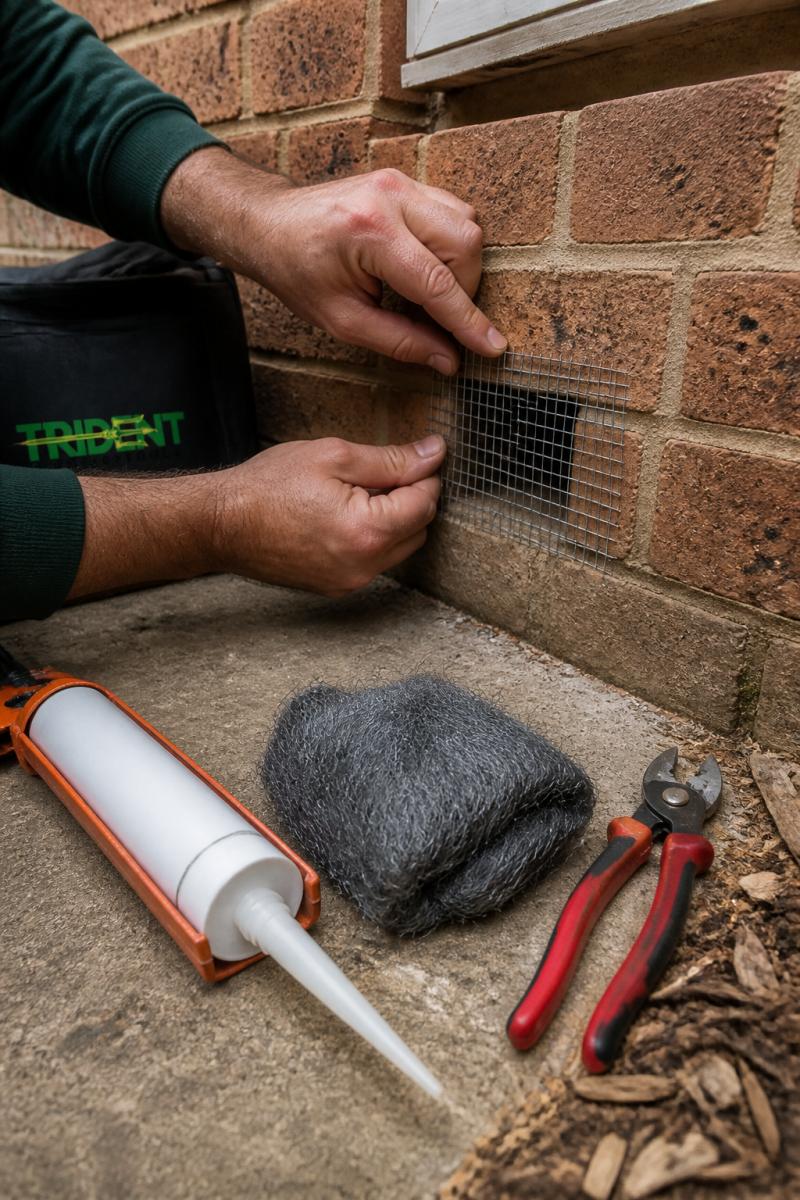
The Gaps Most Werribee Homeowners Miss
Weep holes are the big one. They are deliberately built into brick veneer homes for ventilation, and they are also a front door for mice. Cover them with heavy-duty galvanised mesh rather than blocking them completely, so airflow continues.
Stuff steel wool into awkward gaps before sealing over it. Rodents cannot chew through steel wool, and it holds caulk or filler in place while it sets.
2. Rodent-Proof Food Storage: Cut Off the Pantry Buffet
Rodent-proof food storage means moving dry goods out of cardboard and thin plastic into hard, sealed containers. Cardboard boxes and plastic bags are not barriers; they are packaging.
Go through your pantry and transfer these into airtight containers:
- Flour, rice, and pasta
- Cereal and oats
- Biscuits and crackers
- Nuts and dried fruit
- Pet treats
A single torn bag of flour can feed a mouse family for weeks. Once food is sealed, wipe down shelves and vacuum crumbs from drawer runners, because scent trails keep rodents returning to the same spot.
What to Do About Pet Food and Bird Seed
Pet food and bird seed are two of the most common food sources we find in infested homes. Leaving a bowl of dry food out overnight is an open invitation.
Feed pets on a schedule, pick the bowl up after meals, and store the bag in a sealed bin. Bird feeders should hang well away from the house, and spilled seed underneath needs sweeping up regularly.
Never leave baits or traps where pets or children can reach them. A curious dog or toddler can reach a trap in seconds, and the consequences are serious.
3. Manage Rubbish and Compost So Rodents Stop Coming Back
Rubbish and compost management is where most prevention plans quietly fall apart. Rodents do not need much: a bin with a loose lid and a compost heap with food scraps will sustain a population indefinitely.
Secure your bins with tight-fitting or locking lids, and never leave bags sitting beside them. If you compost, use a sealed tumbler or a well-managed heap, and keep cooked food, dairy, and meat out of it entirely.
4. Make Your Garden and Yard Less Inviting
Your garden is a rodent hotel if it offers cover and water. Long grass, stacked timber, dense groundcover, and piles of garden waste all provide shelter close to the house.
Keep these clear:
- Grass mowed and edges trimmed
- Firewood stacked off the ground and away from walls
- Garden waste removed regularly
- Shrubs trimmed back from the exterior
- Drip leaks and pooled water fixed
Rodents follow cover. Remove the cover and you remove the highway into your home.
5. Signs of a Rodent Infestation You Should Never Ignore
The clearest signs of a rodent infestation are droppings, gnaw marks, greasy rub marks along walls, and scratching or scurrying sounds at night. Any one of these means rodents are already inside.
Check these areas:
- Behind the fridge and dishwasher
- Under the sink
- In roof spaces and wall cavities
- Along skirting boards
- Inside garage and shed corners
Droppings are the most reliable indicator. Fresh droppings are dark and soft; older ones are grey and brittle. If you find them, act quickly. A small problem becomes a large one within weeks.
6. Safe Rodent Control Around Pets and Children
Safe rodent control around pets means keeping traps and baits completely out of reach, and choosing methods that carry no secondary poisoning risk. This matters most in homes with toddlers and dogs.
Snap traps placed inside locked bait stations work well in most homes. If you use bait, place it in tamper-resistant stations fixed to a wall, and never in the open.
Prevention beats poisoning. Sealing entry points and cutting off food removes the reason rodents come inside at all, which is safer for everyone in the house.
A 2022 review on rodent control approaches argued that rodenticides alone rarely solve an infestation. Food-waste reduction and exclusion usually do more of the work.
7. When to Bring In a Professional for Rodent Infestations
Call a professional when you have found droppings in multiple rooms, hear activity in roof spaces, or have already tried DIY methods without success. Rodents that keep returning are usually entering through a point you have not found.
At Trident Pest Control, our licensed and insured technicians inspect the full property, identify entry points and harbourage, and build a treatment plan around your household. We use kids and pet-safe methods, offer fixed pricing with no hidden charges, and provide same-day service across Werribee, Melbourne, and Geelong.
| Situation | DIY Approach | Professional Approach |
|---|---|---|
| One sighting, no droppings | Seal gaps, monitor | Not usually needed |
| Droppings in one area | Traps plus sealing | Worth a call |
| Activity in roof or walls | Hard to access safely | Recommended |
| Repeat infestations | Often misses entry points | Full inspection needed |
Frequently Asked Questions
How can I prevent rats and mice from entering my home in Werribee?
Start with the building itself. Walk the exterior and seal any gap wider than a pencil, since mice fit through openings around 6mm. Pay attention to weep holes, gaps under external doors, roof voids, and where pipes enter walls. Galvanised mesh, steel wool, and door sweeps all work. Then remove attractants: store food in sealed containers, keep bins lidded, and clear garden debris near the house. Physical exclusion plus removing food and shelter is what stops rodent infestations recurring.
What are the signs of a rodent infestation I should look for?
Droppings along skirting boards, inside cupboards, and behind appliances are the clearest sign. You may also notice gnaw marks on food packaging or timber, greasy rub marks along walls where rodents travel, and a musky odour in enclosed spaces. Scratching or scurrying sounds in the roof at night are common. If you find any of these, act quickly, because a small population grows fast once rodents have food and shelter.
Are rodent baits safe to use around pets and children?
Baits carry real risk in homes with pets or young children. Dogs and cats can eat bait blocks or poisoned rodents, and children can reach stations placed at floor level. If you use baits, secure them in tamper-resistant stations and place them where pets and kids cannot access them. Snap traps work without chemical residue but still need careful placement. For households with toddlers or free-roaming pets, professional safe rodent control around pets is the lower-risk route.
How should I store food and rubbish to deter rodents?
Move dry goods out of original packaging and into hard plastic or glass containers with silicone seals. Cardboard and thin plastic are no barrier. Never leave pet food out overnight; feed on a schedule and pick bowls up. Outdoors, use bins with tight-fitting lids and avoid overfilling them. Compost bins should be sealed and kept away from the house. Removing the food source is often what makes sealing and trapping actually work.
When should I call a pest control professional for rodents?
Call a professional if you have seen droppings or gnaw marks in more than one area, hear activity in the roof most nights, or have already tried traps and baits without lasting results. Recurring rodent infestations usually mean entry points you have not found or a nearby food source you cannot remove. A licensed technician can trace the entry points, treat the active population, and set up prevention so the problem does not return.
Rodents keep coming back when the entry points and food sources stay open, and that is the part most treatments skip. Trident Pest Control handles it properly: licensed and insured technicians, fixed pricing with no hidden charges, and kids and pet-safe methods across Werribee, Melbourne, and Geelong. Get your free quote and we will find how they are getting in, not just where they are now.